
Main Courses
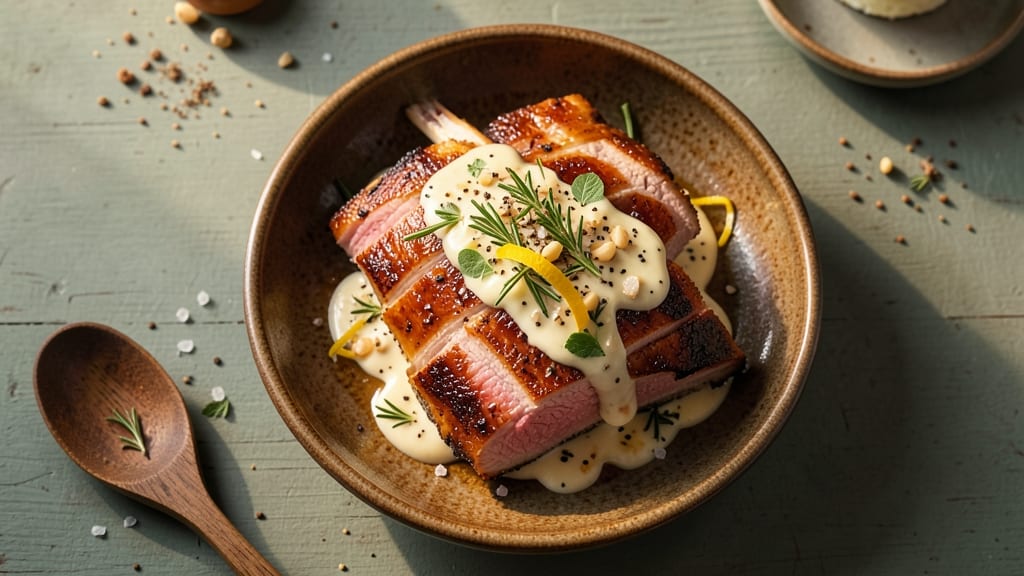
This 1.5 lb pork loin recipe delivers restaurant-quality results with a juicy, golden crust that's impossible to resist. After years of perfecting my technique at The Smoky Pig, I've simplified it for home cooks—no fancy equipment, just a hot oven and a handful of herbs.
The secret lies in a high-heat sear followed by a slow roast, ensuring the meat stays tender while developing that irresistible crust.
What sets this recipe apart is the herb crust—a blend of rosemary, thyme, and garlic that forms a flavorful bark while keeping the interior perfectly moist. I use a reverse sear method that's foolproof, even for beginners, and guarantees juicy, even cooking every time.
The pork rests just long enough to retain its natural juices, so you won't end up with dry meat.
By the time it emerges from the oven, you'll have a perfectly browned, aromatic pork loin with a tender interior that practically melts in your mouth. The crust is crisp enough to hold its shape, while the meat stays moist and flavorful.
This is the kind of dish that elevates a simple weeknight dinner into something special—without requiring hours in the kitchen.
Serve it with roasted root vegetables or a fresh herb salad to complement the rich flavors. The technique works equally well for grilling, making it versatile for any season. Let's get cooking!
Ingredients for 1.5 lb pork loin
The perfect mix of herbs, butter, and technique for pork loin that's juicy inside and golden outside.
| Ingredient | Amount | Notes |
|---|---|---|
| Bone-In Pork Loin 🐖 | 1 ½ lb | Center-cut, 1.5-inch thick |
| Unsalted Butter 🧈 | ½ cup | Cold, cut into 1-inch cubes |
| Fresh Rosemary 🌿 | ¼ cup | Finely chopped, stems removed |
| Fresh Thyme 🌿 | 2 tbsp | Leaves only, finely chopped |
| Garlic Cloves 🧄 | 6 cloves | Minced, skin-on |
| Diamond Crystal Kosher Salt 🧂 | 2 tsp | For seasoning, plus more for crust |
| Coarse Ground Black Pepper 🌶️ | 1 tsp | Freshly cracked |
| Extra-Virgin Olive Oil 🫒 | 2 tbsp | For searing |
| Yellow Onion 🧅 | 1 whole | Thinly sliced, for garnish |
| Fresh Parsley 🌿 | ⅛ cup | Chopped, for garnish |
| Apple Cider Vinegar 🍎 | 1 tbsp | For basting |
| Honey 🍯 | 1 tbsp | For glaze (optional) |
The pork loin is the star, so grab a center-cut, bone-in piece—it stays juicier during cooking. Costco or Whole Foods usually have the best quality, but any well-marbled loin works. Look for even thickness (about 1.5 inches) so it cooks uniformly. Fresh herbs are non-negotiable here—Trader Joe's sells pre-chopped rosemary and thyme in jars, but I always grab fresh for that extra aroma. The butter needs to be cold when you cube it, so pull it straight from the fridge (or freeze it for 15 minutes if your kitchen is warm).
No fresh rosemary? Dried works at one-third the amount, but it won't give that same fragrant crust. Short on thyme? Oregano or marjoram can step in, though the flavor will shift slightly. For the garlic, skin-on clovesextra-virgin—cheap oil burns too quickly. If you're out of apple cider vinegar, red wine vinegar works just as well. And if you skip the honey glaze, the crust will still be amazing—it's just a little extra shine.
Pork loin keeps best in the fridge for 3-4 days if you cook it ahead, but I recommend making it fresh for maximum juiciness. Wrap it tightly in plastic wrap and store it in the coldest part of your fridge. The herb crust stays crisp for about 2 days if you reheat it gently in the oven. For leftovers, slice it thin and serve on sandwiches—trust me, it's even better the next day. Freezing? Not ideal—pork loin gets tough when thawed, so save this for a fresh-cook meal.
Why You'll Love This Recipe
- Works for everything: a quick family dinner, a showstopper for guests, or even a Sunday lunch. The bone stays juicy, the edges caramelize, and it’s ready when you are—no last-minute scrambling.
- One-Pan Magic: I swear by this recipe because it’s all about minimal cleanup—just the pork, some butter, and herbs on a sheet pan. No fancy gadgets, no stressing over pots. The bone-in cut even bastes itself with rendered fat while it roasts.
- Herb-Crusted Perfection: That crispy rosemary-thyme crust? It’s the star. The butter melts into a golden seal while the garlic infuses every bite—rich, aromatic, and impossible to resist. Honestly, the first time I made this, my husband stole half before dinner.
- Weeknight to Weekend: Works for everything: a quick family dinner, a showstopper for guests, or even a Sunday lunch. The bone stays juicy, the edges caramelize, and it’s ready when you are—no last-minute scrambling.
Step-by-step instructions for herb-roasted pork loin
Here's how to transform a simple pork loin into a showstopping centerpiece with a juicy interior and crisp golden crust.
Prepare the Herb Butter and Season the Pork
In a small bowl, combine the 0.5 cup unsalted butter, 0.25 cup finely chopped fresh rosemary, 2 tablespoons finely chopped fresh thyme, 6 minced garlic cloves, 2 teaspoons Diamond Crystal kosher salt, and 1 teaspoon coarse ground black pepper. Mix until the butter is completely coated with the herb mixture and forms a thick paste. This herb butter will infuse flavor deep into the meat.
Pat the 1.5 lb bone-in pork loin dry with paper towels—this is crucial for developing that perfect crust. Spread half of the herb butter mixture evenly over the surface of the pork, pressing it gently into the meat. Turn the pork over and spread the remaining herb butter, making sure to cover all sides thoroughly. Let it sit at room temperature while you preheat the oven.
Sear the Pork for Maximum Flavor
Preheat your oven to 425°F. Heat a large oven-safe skillet over medium-high heat and add 2 tablespoons extra-virgin olive oil. Once the oil is shimmering, carefully place the pork loin in the skillet, fat-side down. Sear for 4-5 minutes until the fat begins to render and the bottom develops a deep golden brown crust. Flip the pork and sear the other side for another 4-5 minutes. This step creates a flavorful crust that locks in juices during roasting.
Transfer the skillet to the preheated oven. Roast the pork for 20-25 minutes until the internal temperature reaches 145°F when measured with a meat thermometer. The pork should still feel slightly springy to the touch—it will continue cooking as it rests.
Baste and Glaze for Extra Shine
While the pork roasts, combine 1 tablespoon apple cider vinegar and 1 tablespoon honey in a small bowl. After 15 minutes of roasting, remove the skillet from the oven and brush the pork generously with this glaze. Return it to the oven and continue roasting for the remaining 5-10 minutes until the glaze caramelizes slightly and the pork reaches 145°F internally.
This glaze adds a beautiful sheen and balances the richness of the pork with a touch of tangy sweetness. The vinegar also helps tenderize the meat slightly, ensuring it stays juicy even after resting.
Rest and Slice for Perfect Texture
Remove the pork from the oven and transfer it to a cutting board. Tent loosely with aluminum foil and let it rest for 10-15 minutes. This resting period is critical—it allows the juices to redistribute throughout the meat, preventing them from pooling on the cutting board. During this time, thinly slice the whole yellow onion and 0.125 cup fresh parsley for garnish.
After resting, slice the pork loin into ½-inch thick medallions against the grain for maximum tenderness. Arrange the slices on a platter, drizzle with any pan juices from the skillet, and garnish with the sliced onions and parsley. Serve immediately with roasted vegetables or a fresh salad to complement the rich flavors.
Pro Tips For Making 1.5 Lb Pork Loin
- USE A MEAT THERMOMETER: I learned this the hard way—bone-in pork loin can trick you. The bone stays hotter longer, so check the thickest part of the muscle (not near the bone) for 140°F internal temp. That’s when it’s actually done, not just "looking cooked."
- SALT THE PORK 24 HOURS EARLY: More salt than you think, especially with fresh herbs and butter. Sprinkle 1 teaspoon of kosher salt all over the loin and let it sit uncovered in the fridge. This keeps it juicy and lets the seasoning really penetrate—no dry, bland pork here.
- SEAR IN BATCHES: High heat. Seriously, crank it up for that crust, but don’t crowd the pan. Sear the loin first, then set it aside and render the garlic in the same butter until it’s golden. That’s where the flavor lives—don’t skip adding it back to the pork.
- STUFF THE CAVITY WITH HERBS: Sounds weird, but it works: chop the rosemary and thyme finely, then stuff half into the cavity with a few smashed garlic cloves. The rest goes on top. This locks in moisture and gives every bite that aromatic punch—no wasted herbs here.
Storing and reheating this 1.5 lb pork loin
Fridge Storage Essentials
Your herb-roasted pork loin stays fresh for 3-4 days in the fridge if stored properly. Wrap it tightly in plastic wrap, then place in an airtight container—I use Glasslock containers for maximum freshness.
Store in the coldest part of your fridge (usually the back of the bottom shelf) to maintain that perfect 40°F or below temperature. The herb crust remains crisp for about 2 days if reheated gently. 💫
Freezer-Friendly Tips
While pork loin isn't ideal for freezing, you can extend its life to 2 months if absolutely necessary. Wrap it tightly in plastic wrap, then place in a freezer bag with all air removed. For best results, slice it before freezing—½-inch thick medallions reheat beautifully.
Just know the texture will be slightly less tender after thawing. I only freeze pork loin when I'm prepping for a big family gathering. ❄️
Reheating Like a Pro
For leftover slices, the stovetop is your best friend. Heat a skillet over medium-low heat and add 1 tbsp olive oil. Place slices in the pan and warm for 3-4 minutes per side until reaching 165°F internal temperature.
For whole roasts, reheat at 325°F for 15-20 minutes covered with foil, then crisp the crust under the broiler for 2-3 minutes. 🔥
Microwave Shortcut
When you're in a rush, use the microwave with caution. Place pork slices on a microwave-safe plate, cover with a damp paper towel, and heat on 50% power for 1-2 minutes**.
Check the temperature—it should reach 165°F. Add a splash of water or broth if the meat looks dry. This method works best for thin slices, not whole roasts.
Leftovers Reinvented
Transform leftover pork into new meals! Slice thin and use for pork sandwiches with whole grain bread and spicy mustard. Or shred it for pork fried rice with frozen stir-fry veggies and soy sauce.
I also love making pork pot pie by mixing leftovers with cream of mushroom soup and baking under puff pastry. These ideas keep your pork loin exciting for days. 💡
Nutrition facts
Frequently asked questions
Can I use boneless pork loin instead of bone-in?
Yes, but the cooking time may vary slightly. Boneless pork loin will cook about 5-10 minutes faster than bone-in. Use a meat thermometer to check for 145°F internal temperature—it's the only reliable way to ensure perfect doneness. The reverse sear method still works perfectly, though the crust might form a little quicker.
What if my pork loin is thicker or thinner than 1.5 inches?
Adjust cooking time based on thickness: 1-inch thick needs 15-20 minutes after searing, while 2-inch thick may require 25-30 minutes. Always use a meat thermometer—145°F is the safe zone. For extra insurance, add 2-3 minutes per ¼-inch beyond 1.5 inches. The reverse sear method handles variations beautifully.
Why does the pork feel rubbery after cooking?
Overcooking is the #1 cause! Pork reaches 145°F safely, not 160°F like some cuts. If it feels rubbery, it's likely been cooked past doneness. Always let it rest 10-15 minutes before slicing—this redistributes juices. For extra tenderness, marinate the pork for 1-2 hours before cooking.
Can I grill this pork loin instead of roasting?
Preheat grill to medium-high (400-425°F) and follow the same sear method. After searing, move to indirect heat and cook until 145°F internal temp. The glaze works great on grills too—brush it on during the last 5 minutes. For best results, use a grill thermometer to monitor heat.
What's the best way to slice for maximum tenderness?
Always slice against the grain—look for the muscle fibers running lengthwise and cut perpendicular to them. Use a sharp chef's knife and slice into ½-inch thick medallions. For even more tenderness, slice slightly thicker (¾-inch) if serving to kids or elderly guests. The grain direction varies by cut—ask your butcher if unsure!