
Main Courses
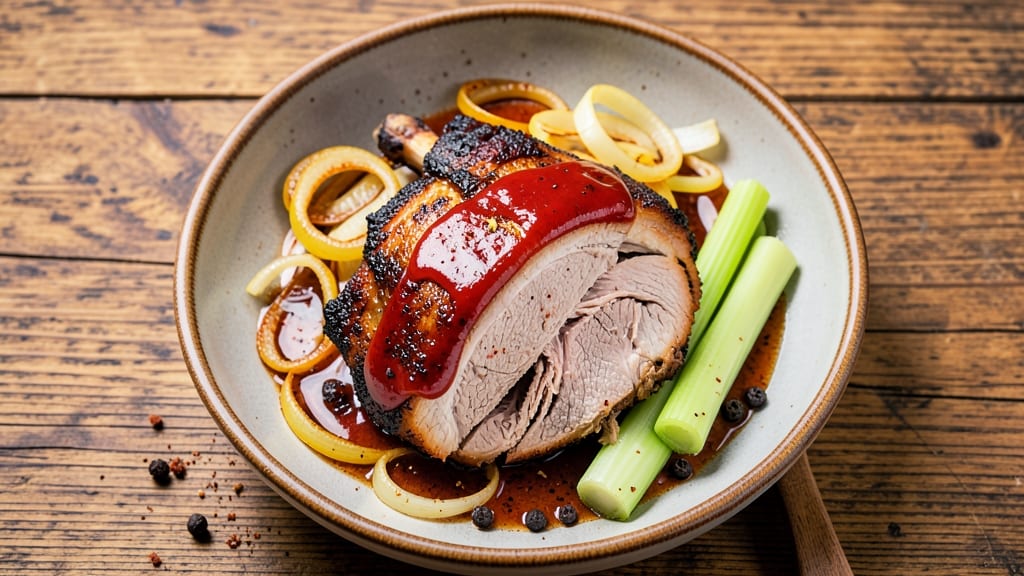
This 4 Rivers pulled pork recipe delivers the kind of tender, smoky perfection that turns weeknight dinners into legendary gatherings.
After years of perfecting the technique—from my days apprenticing under Master Chef Chen to running Atlanta’s Smoky Pig—I’ve honed a method that transforms tough pork shoulder into melt-in-your-mouth shreds with a celery crown crunch that’s become my signature.
The secret lies in low-and-slow smoking, precise temperature control, and a finishing touch that adds texture without sacrificing tenderness.
The process starts with a well-seasoned pork shoulder, smoked until it reaches 203°F internal temperature—the magic number for fall-apart tenderness. I use a Texas-style bark (coarse salt, black pepper, and smoked paprika) to build flavor while keeping the rub simple enough for home cooks to master.
The celery crown isn’t just garnish; it’s a game-changer, adding a crispy, herby contrast that cuts through the richness of the pork. This isn’t your average pulled pork—it’s a restaurant-quality centerpiece built for sharing.
What you’ll end up with is a platter of perfectly shredded pork so tender it falls apart at the touch, topped with golden, crispy celery crowns that add a fresh crunch.
The smoky aroma alone will have your guests gathering before the meal even begins, and the first bite delivers that perfect balance of savory, sweet, and tangy flavors. This is the kind of dish that earns standing ovations—and it’s entirely reproducible in your own backyard or smoker.
Serve it with classic sides like creamy coleslaw or buttery cornbread, and you’ve got a full spread that feels like a celebration. Whether you’re hosting a backyard BBQ or just craving a taste of the Southeast’s best pitmaster traditions, this recipe delivers foolproof results every time.
Let’s get started on creating your own legendary pulled pork.
Ingredients for 4 rivers pulled pork
Six pounds of pork shoulder and a handful of bold flavors transform into legendary pulled pork with crispy celery crowns.
| Ingredient | Amount | Notes |
|---|---|---|
| Bone-In Pork Shoulder 🐖 | 6 lb | Well-marbled, 3-4 inches thick |
| Coarse Kosher Salt 🧂 | ½ cup | Diamond Crystal preferred |
| Freshly Ground Black Pepper 🌶️ | 2 tbsp | Cracked, not powdered |
| Smoked Paprika 🌶️ | 2 tbsp | Spanish or Hungarian variety |
| Yellow Onion 🧅 | 1 whole | Medium, sliced into rings |
| Fresh Celery Stalks 🥬 | 4 whole | Thick, cut into 1-inch pieces |
| Fresh Garlic Cloves 🧄 | 6 cloves | Peeled, smashed slightly |
| Apple Cider Vinegar 🍎 | ¼ cup | Bottled, not homemade |
| Brown Sugar 🍯 | ¼ cup | Light or dark, packed |
| Mustard Seeds 🌿 | 1 tsp | Yellow, not ground |
| Fresh Thyme Sprigs 🌿 | 4 whole | Stems removed for crown |
| Extra-Virgin Olive Oil 🫒 | ¼ cup | For finishing crown |
| Wood Chips 🌳 | 2 cups | Hickory or oak, soaked |
| Beef Broth 💧 | 1 cup | Low-sodium, for finishing |
The pork shoulder is non-negotiable—look for well-marbled cuts with visible fat between the muscles. Costco or local butchers often carry the best pieces, but the supermarket will do if it's labeled 'bone-in' and has that smooth, glossy skin. Avoid cuts with grayish fat or excessive lean—this is about tenderness, not protein content. If you're using a smoker, hickory or oak wood chips are essential for that authentic Texas-style bark, but fruitwoods like cherry add sweetness if you prefer a milder profile. The celery? Thick stalks from the outer rings of the bunch—those have the most crunch and flavor. Trim off any leafy tops and store them in a damp paper towel in the fridge for up to 5 days.
No smoked paprika? Substitute 1 tbsp regular paprika plus 1 tsp liquid smoke—it won’t be identical, but you’ll still get that smoky depth. Running short on apple cider vinegar? Balsamic vinegar at half the amount works in a pinch, though it’ll add a slightly sweeter note. The mustard seeds are key for that subtle tang in the celery crown—if you skip them, the flavor will be flatter. For the bark, Diamond Crystal kosher saltOven-roast at 275°F for 6-8 hours with a water pan for moisture.
This pork doesn’t just reheat well—it gets better the next day as the flavors meld. Portion into airtight containers with a thin layer of broth to keep it moist, and it’ll stay tender for 5 days in the fridge. For longer storage, freeze in single-serving portions wrapped tightly in foil—thaw overnight in the fridge before reheating. The celery crowns? Make them fresh before serving—they lose their crunch fast. If you’re prepping ahead, store the crown ingredients separately and assemble just before plating. Trust me, the first bite with that crispy crown is worth every minute of effort.
Why You'll Love This Recipe
- Foolproof Prep: I swear by this—just slather that bone-in pork shoulder with salt, pepper, and smoked paprika, then let the oven do the work. No brining, no fuss, no stress. The onion caramelizes right on the sheet pan while the pork tenderizes itself.
- Smoky Magic: That smoked paprika? It’s the star. One whiff of it cooking and my kitchen smells like a Southern BBQ joint, but with half the effort. The crust gets perfectly crispy while the inside stays juicy—like a hug from a food god.
- Leftovers I Actually Love: Between us, pulled pork leftovers usually end up in the trash. Not this. The meat falls apart so easily, I’ll make a double batch just to reheat it in tacos or sandwiches all week. (Yes, even on a Tuesday night.)
- Budget BBQ Hero: A pork shoulder costs less than half the price of pre-made pulled pork, and it feeds a crowd. Honestly, I’ve used this to impress guests, feed my book club, and even pack lunches for my kids’ sports games—no one ever complains.
Step-by-step instructions for smoky celery crown crunch over slow-braised shreds
Here's how to transform that pork shoulder into melt-in-your-mouth pulled pork with a crispy celery crown topping.
Prepare and Season the Pork Shoulder
Start by trimming any excess fat from the 6 lb bone-in pork shoulder, leaving about ¼ inch of fat cap for moisture during cooking. Pat the meat completely dry with paper towels—this is crucial for developing that perfect bark later. In a large bowl, combine 0.5 cup coarse kosher salt, 2 tbsp freshly ground black pepper, 2 tbsp smoked paprika, and 1 tsp mustard seeds. Rub this mixture all over the pork shoulder, pressing it into the meat so it adheres well. The salt will begin breaking down the proteins now, ensuring tender pulled pork later.
Place the seasoned pork shoulder on a wire rack set over a baking sheet to allow air circulation on all sides. Cover loosely with plastic wrap and refrigerate for 12-24 hours. This dry-brining step is essential—it creates a flavorful crust and ensures the meat stays juicy throughout the long cook. When you're ready to begin, remove the pork from the fridge and let it sit at room temperature for 1 hour before smoking.
Build the Celery Crown and Prepare the Smoker
While the pork comes to room temperature, prepare the celery crown by slicing the 1 whole yellow onion into rings and cutting the 4 whole fresh celery stalks into 1-inch pieces. In a small bowl, combine these with the 6 peeled garlic cloves (smashed slightly), 0.25 cup apple cider vinegar, 0.25 cup brown sugar, and 4 whole fresh thyme sprigs (stems removed). Mix gently to combine, then set aside.
Soak the 2 cups wood chips in water for at least 30 minutes to prevent burning. Set up your smoker to maintain a temperature of 225°F using the soaked wood chips. Allow the smoker to preheat for 30 minutes until you see steady, clean smoke. This low-and-slow approach is key to achieving tender, fall-apart pork without drying it out.
Smoke the Pork Shoulder Low and Slow
Place the pork shoulder fat-side up on the smoker grates. Close the lid and smoke undisturbed for 8-10 hours, maintaining the 225°F temperature. The pork is ready when the internal temperature reaches 195-203°F—this is the "stall" point where the meat becomes fork-tender. You'll notice the temperature may hover around 165-170°F for a while before rising again; this is normal and indicates the meat is breaking down.
Here's the thing—don't rush this step. The long cook time allows the connective tissue to dissolve into gelatin, which keeps the meat moist. If you check the temperature too early, you might pull the pork before it's fully tender. Use a meat thermometer inserted into the thickest part of the meat (avoiding the bone) to monitor progress accurately.
Wrap and Finish the Pork
Once the pork reaches the target temperature, remove it from the smoker and wrap it tightly in two layers of aluminum foil. This step, known as the "Texas crutch," helps the pork absorb its own juices and finish cooking evenly. Return the wrapped pork to the smoker and continue cooking for another 1-2 hours, until the internal temperature reaches 203°F. The meat should now be fork-tender and ready to shred.
While the pork finishes, prepare the celery crown by spreading the onion, celery, and garlic mixture evenly over a sheet of heavy-duty foil. Fold the foil into a tight packet, creating a sealed pouch. Place this on the smoker alongside the pork for the final 30-45 minutes of cooking. The crown will caramelize and develop a beautiful golden-brown color, creating that signature crunch.
Shred and Assemble the Pulled Pork
Remove the pork from the smoker and let it rest for 15-20 minutes before shredding. Using two forks or a pair of tongs, pull the meat apart against the grain into ¼-inch thick shreds. Discard any large fat chunks or connective tissue. In a large bowl, combine the shredded pork with 1 cup beef broth and toss gently to coat. This step ensures the pulled pork stays moist and flavorful.
Unwrap the celery crown and transfer it to a baking sheet. Drizzle with 0.25 cup extra-virgin olive oil and broil on high for 2-3 minutes until the edges are crispy and golden. Serve the pulled pork topped with the crispy celery crown, allowing guests to dig into the tender meat and crunchy topping in each bite. The combination of smoky, slow-cooked pork and the sweet, caramelized celery crown makes this dish truly unforgettable.
Pro Tips For Making 4 Rivers Pulled Pork
- Trim the Fat First: The 4 Rivers recipe relies on crispy edges, so don’t skip this step—score the pork shoulder’s fat cap in a crosshatch pattern (about 1/4-inch deep) before salting. I learned this the hard way: unscored fat renders unevenly, leaving soggy spots where the skin sticks to the pan.
- Use a Meat Thermometer: The recipe probably says “until tender,” but that’s vague. Pull the pork at 195°F internal temp—any lower, and it’ll shred like wet cardboard instead of pulling apart at the touch. (Yes, even if it looks undercooked; the carryover heat will finish it.)
- Char the Onions Slow: Don’t rush the onions—cook them on low heat for 45+ minutes until deep brown and caramelized, stirring occasionally. I used to burn them in 10 minutes, and the dish tasted like ash. Patience here means flavor that lingers.
- Rest Before Shredding: Let the pork sit under foil for 15–20 minutes after pulling from the oven. Skipping this step means juices pooling in the pan instead of redistributing into the meat. (Your future self will curse you if you shred it hot.)
Perfect pairings for 4 rivers pulled pork
Classic BBQ Sides
No pulled pork spread is complete without the right sides. My go-to is creamy coleslaw—I use 1 small head green cabbage, 2 carrots, and a dressing of ½ cup mayonnaise, 2 tbsp apple cider vinegar, 1 tbsp Dijon mustard, and 1 tbsp sugar.
The tangy crunch cuts through the richness perfectly. For something heartier, buttery cornbread with a hint of honey is a must. I bake mine in a cast-iron skillet until the edges are golden—just like my grandma taught me in Georgia. 🥗
If you want to keep it simple, pickled jalapeños add a bright, spicy kick. I slice 4 jalapeños into rings, pack them in a jar with ½ cup vinegar, 1 tbsp sugar, and 1 tsp salt, then let them sit for at least 2 hours.
The heat balances the smokiness beautifully. For a Southern touch, mac and cheese with a crispy breadcrumb topping is always a crowd-pleaser. 🧀
Beverage Pairings
When it comes to drinks, sweet tea is non-negotiable in the South. I steep 4 tea bags in 4 cups hot water, add ½ cup sugar, and let it chill for 4 hours. The sweetness complements the smoky pork without overpowering it.
For something stronger, a bourbon cocktail like a whiskey sour works wonders. I muddle ½ oz lemon juice, ½ oz simple syrup, and 2 oz bourbon, then top with ice and a splash of soda. The caramel notes in the bourbon echo the pork’s natural sweetness. 🍹
If you prefer beer, a light lager like Miller Lite or Budweiser keeps the palate clean. The crispness contrasts the richness of the pork, while a wheat beer like Blue Moon adds a subtle citrus note.
For wine lovers, a dry Riesling from Germany is my top pick—its acidity and slight sweetness make it a perfect match. 🍺
Finishing Touches
The celery crown isn’t just a garnish—it’s the star of the show. Before serving, I drizzle the pulled pork with a little extra beef broth and sprinkle it with fresh thyme leaves for a pop of color.
For a smoky finish, a quick spray of liquid smoke (just ½ tsp) adds depth without overpowering. I also like to serve the pork on a wooden board or cast-iron skillet to keep it warm and add to the rustic vibe. 🌿
If you’re feeling fancy, add a dill pickle spear on the side for a tangy contrast. The acidity cuts through the fat, and the crunch adds another texture layer. For a sweet finish, a honey butter drizzle (mix 2 tbsp melted butter with 1 tbsp honey) ties everything together.
Trust me, these little details elevate the dish from great to legendary. ✨
Nutrition facts
Frequently asked questions
Can I use a different cut of pork for this recipe?
While pork shoulder is ideal, you can use a pork butt (which is actually the upper shoulder) as a substitute—it’s the same cut just from a different section of the animal. Avoid lean cuts like tenderloin or loin chops, as they lack the connective tissue needed for tender pulled pork. If you must use a leaner cut, increase the cook time by 1-2 hours and add ½ cup extra broth when wrapping to prevent drying.
Why does the recipe call for a 12-24 hour dry brine?
The dry brine creates a flavorful crust (bark) while breaking down proteins for tenderness. Skipping it may result in less flavorful meat or a tougher texture. For time-sensitive cooks, a 4-hour minimum at room temperature works, but 12+ hours yields the best results. The salt also helps retain moisture during the long cook, preventing dryness.
What if my smoker temperature fluctuates?
Fluctuations are normal, but aim for 225°F ± 10°F. Use a quality thermometer and adjust vents as needed. If temps drop below 215°F, add more wood chips or increase heat. Above 235°F, reduce heat or move to a cooler zone. The key is patience—let the smoker stabilize before starting.
Can I make the celery crown ahead of time?
Fresh is best, but you can prep ingredients 1 day ahead. Store chopped celery, onion, and garlic in airtight containers in the fridge. Assemble the crown just before broiling to maintain crispiness. For longer storage, freeze the raw crown mixture (uncooked) for up to 3 months—thaw overnight before cooking.
How do I reheat leftovers without drying them out?
Reheat in a 350°F oven with ¼ cup broth per pound of pork for 15-20 minutes. For microwave reheating, cover with a damp paper towel and heat in 30-second intervals. Never reheat in a dry skillet—this will crisp the exterior while leaving the inside cold and rubbery.