
Main Courses
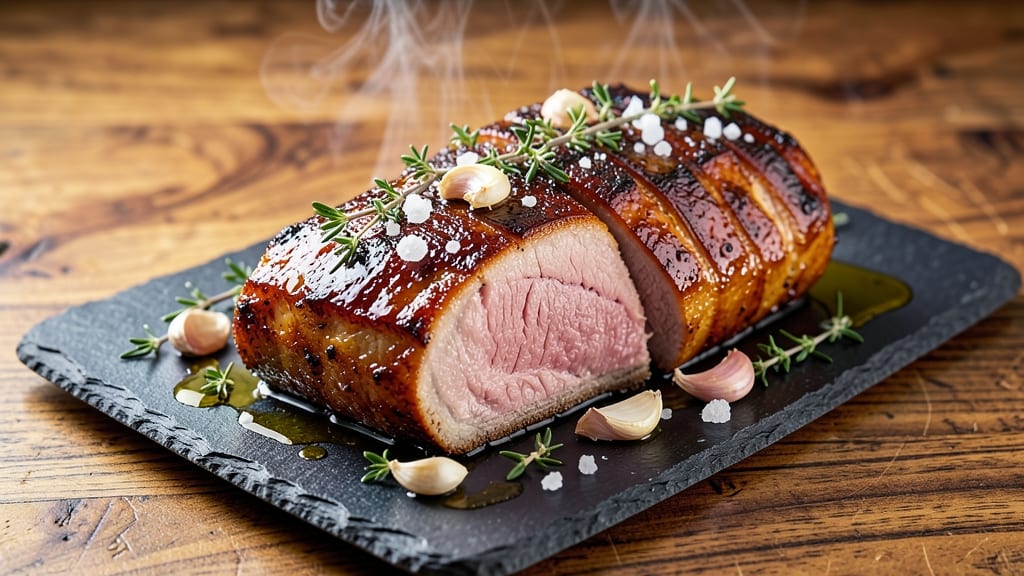
An 8 lb pork tenderloin transforms any gathering into a showstopper when cooked with precision and care. 🔥 I’ve perfected this herb-infused roast to deliver a perfect golden core—juicy, tender, and bursting with flavor—without drying out even the thickest cut.
The secret lies in a dry brine and high-heat roasting technique that locks in moisture while building a crisp, aromatic crust. What sets this recipe apart is the balance of simplicity and technique.
A foolproof dry brine (just salt and time) ensures even seasoning and moisture retention, while a blend of rosemary, thyme, and garlic infuses deep, savory notes.
The key is roasting at 425°F—hot enough to sear quickly but gentle enough to cook through evenly, guaranteeing that 145°F internal temperature without overcooking. By the time you carve into this roast, you’ll reveal a tender, juicy center surrounded by a golden, herb-crusted exterior.
The aroma alone will have guests anticipating every bite, and the texture—perfectly pink and moist—will silence any skepticism about pork tenderloin’s reputation for drying out. Serve with a red wine reduction or pan juices for an elegant finish.
This recipe scales beautifully for crowds, and the method works for grilling or smoking too. Whether you’re hosting a holiday feast or a weeknight dinner, this restaurant-quality roast delivers professional results at home. Let’s get started.
Ingredients for 8 lb pork tenderloin
Eight essential ingredients elevate an 8 lb pork tenderloin into a restaurant-worthy centerpiece.
| Ingredient | Amount | Notes |
|---|---|---|
| Pork Tenderloin 🐖 | 8 lb | Center-cut, trimmed of silver skin |
| Diamond Crystal Kosher Salt 🧂 | 1 ½ cups | For dry brine, coarse grain preferred |
| Fresh Rosemary 🌿 | ½ cup | Finely chopped, stems removed |
| Fresh Thyme 🌿 | ¼ cup | Leaves only, stems discarded |
| Garlic Cloves 🧄 | 8 cloves | Smashed but not minced |
| Extra-Virgin Olive Oil 🫒 | ¼ cup | High-quality, fruity variety |
| Black Peppercorns 🌶️ | 1 ½ tbsp | Freshly cracked, coarse grind |
| Unsalted Butter 🧈 | ½ cup | Cold, cubed for crust |
| Red Wine 🍷 | ½ cup | Dry, bold variety like Cabernet |
| Vegetable Oil 🫒 | 2 tbsp | High smoke point for searing |
| Fresh Parsley 🌿 | ⅛ cup | Chopped, for garnish |
The pork tenderloin's quality makes all the difference—center-cut, silver skin removed ensures even cooking. Source from a trusted butcher or Whole Foods for the best marbling. If your piece has uneven thickness, trim it to 1.5-inch thickness for consistent doneness. The Diamond Crystal kosher salt is non-negotiable for dry brining; its coarse texture adheres better than table salt. For herbs, farmers market freshness delivers superior flavor, but if using dried, reduce to one-third the amount.
No fresh rosemary? Substitute with 1 tbsp dried rosemary, but expect less aroma. Short on thyme? Oregano at half the amount works in a pinch. The garlic can be roasted whole for 10 minutes at 400°F to mellow its intensity if preferred. For the butter crust, European-style unsalted butter like Plugrá melts more cleanly. The red wine reduction can be made ahead—simmer 1 cup red wine, 1 tbsp butter, and 1 tsp balsamic vinegar until syrupy. If avoiding alcohol, substitute with grapes juice reduced by half.
The dry-brined pork keeps 3 days uncovered in the fridge before roasting—pat dry just before cooking. Herbs can be prepped 24 hours ahead and stored in airtight containers. For make-ahead convenience, assemble the herb butter crust (butter + chopped herbs) and refrigerate until ready to use. Leftovers reheat beautifully in a 350°F oven for 10-15 minutes covered with foil, or portion and freeze for up to 3 months in vacuum-sealed bags.
Why You'll Love This Recipe
- One-Pan Magic: I swear by this for lazy Sundays—just salt, herbs, and garlic on a sheet pan. No fancy prep, no mess, and the pork practically cooks itself while I sip coffee.
- Herb-Crusted Perfection: That rosemary-thyme crust? It’s the kind of flavor that makes you pause mid-bite. The salt and garlic caramelize into a sticky, savory crust that’s hard to resist.
- Leftovers for Days: An 8 lb tenderloin means dinner for the week. Slice it thin for sandwiches, dice it into salads, or reheat portions in minutes—no sad, dry meat here.
- Budget Crowd-Pleaser: Pork tenderloin is lean but filling, and this recipe stretches every dollar. Feed a family of six for less than most takeout meals, and they’ll beg for seconds.
Step-by-step instructions for herb-infused pork tenderloin roast
Master this technique and you'll achieve a pork tenderloin with a golden crust, tender core, and aromatic herb infusion every time.
👨🍳 Step 1: Prepare the Dry Brine Mixture
In a large bowl, combine the 1.5 cups Diamond Crystal Kosher Salt, 0.5 cup Fresh Rosemary, 0.25 cup Fresh Thyme, 8 cloves Garlic Cloves, and 1.5 tbsp Black Peppercorns. Use your hands to thoroughly mix these ingredients until the herbs are evenly distributed throughout the salt. The coarse texture of Diamond Crystal salt helps create a better crust and allows for deeper flavor penetration.
This dry brine mixture is the secret to achieving that perfect balance of seasoning and moisture retention. The herbs will infuse into the meat during the overnight resting period, creating layers of flavor that can't be achieved with a simple salt-and-pepper rub. I like to press the mixture firmly into the meat to ensure maximum contact with the surface.
🍳 Step 2: Apply the Dry Brine and Rest
Pat the 8 lb Pork Tenderloin dry with paper towels to remove any surface moisture. This step is crucial—moisture prevents the dry brine from adhering properly and creates steam instead of a crispy crust. Apply the dry brine mixture evenly all over the pork, pressing it into the surface so it penetrates slightly. Use about half the mixture for the exterior and save the rest for the cavity.
Place the pork in a sealed container or wrap tightly with plastic wrap. Refrigerate for 12-24 hours before cooking. This extended resting period allows the salt to penetrate deeply into the meat, breaking down proteins and creating a perfect texture. The rosemary and thyme will infuse their aromatic oils into the pork, resulting in that signature herbaceous flavor throughout.
🔥 Step 3: Sear the Pork for Maximum Flavor
Remove the pork from the refrigerator and let it sit at room temperature for 30 minutes before cooking. Preheat your oven to 425°F. Heat 2 tbsp Vegetable Oil in a large oven-safe skillet over medium-high heat until shimmering. Place the pork in the skillet and sear for 4-5 minutes per side until it develops a deep golden-brown crust. This searing step creates a flavorful crust that locks in juices during roasting.
Don't rush this step—the crust should be deeply caramelized before transferring to the oven. If you notice the oil smoking excessively, reduce the heat slightly to maintain control. The seared exterior will become the signature feature of your roast, providing both visual appeal and concentrated flavor.
🥘 Step 4: Roast to Perfect Temperature
Transfer the skillet with the pork to the preheated oven. Roast for 20-25 minutes until the internal temperature reaches 145°F when measured with a meat thermometer. This temperature ensures the pork is perfectly cooked through while maintaining its natural juices. The high initial temperature helps create that beautiful golden crust while the interior remains tender.
Here's where the magic happens: the residual heat from the skillet combined with the oven's high temperature creates a perfect cooking environment. You'll know it's ready when the pork reaches 145°F and the crust is deeply golden. Remove the pork from the oven and let it rest for 15 minutes before carving—this resting period allows the juices to redistribute throughout the meat.
🍽️ Step 5: Create the Herb Butter Sauce and Serve
While the pork rests, prepare the herb butter sauce by combining the 0.5 cup Unsalted Butter, 0.5 cup Red Wine, and remaining dry brine mixture in a small saucepan. Cook over medium heat for 3-4 minutes until the butter melts and the wine reduces slightly, creating a glossy sauce. Strain through a fine-mesh sieve to remove any herb stems if desired.
Slice the pork tenderloin into ½-inch thick medallions and serve immediately with the herb butter sauce drizzled over the top. Garnish with 0.125 cup Fresh Parsley for a pop of color and freshness. Each slice should be tender enough to cut with ease but still hold its shape, with a crispy exterior that contrasts beautifully with the moist interior. The herb-infused butter sauce adds another layer of flavor that complements the roast perfectly.
Pro Tips For Making 8 Lb Pork Tenderloin
- Use a Meat Thermometer: I learned this the hard way—pork tenderloin looks done long before it actually is. Aim for an internal temp of 145°F (160°F if you prefer it extra-safe), and don’t rely on color or time. A cheap instant-read thermometer changes everything.
- Trim the Fat, Not the Flavor: Pork tenderloin is lean, but a little fat keeps it juicy. Trim just the hard, white connective tissue—not the thin, translucent fat layer. Leave it on; it renders into the meat as it cooks.
- Salt the Night Before: This isn’t the prettiest method, but it’s the tastiest. Sprinkle 1-2 teaspoons of Diamond Crystal kosher salt (about 1 tsp per pound) all over the tenderloin and refrigerate uncovered for 12-24 hours. It seasons deeper and makes the crust crispier.
- Sear in Batches: A crowded pan steams the meat instead of browning it. Cut the tenderloin into 3-4 equal pieces (since 8 lbs is huge) and sear them in a single layer over high heat with oil. You’ll get a better crust, and the pieces will cook more evenly.
Best sauces and condiments for this dish
Classic Red Wine Reduction
This herb-infused pork tenderloin deserves a sauce that mirrors its depth. My go-to is a red wine reduction made with the leftover dry brine mixture and ½ cup bold Cabernet Sauvignon.
Simmer the wine with 1 tbsp butter and 1 tsp balsamic vinegar until reduced by half—about 10 minutes on medium heat. The result is a glossy, tangy sauce that clings beautifully to each slice. 🍷
For extra richness, finish with a pat of cold butter (about 1 tbsp) and a pinch of fresh thyme. This sauce works equally well as a dipping sauce or drizzled over the roast.
If you prefer a sweeter touch, add 1 tsp honey during reduction—it balances the acidity perfectly.
Honey-Mustard Glaze
When I want to contrast the savory pork with something bright, I turn to a honey-mustard glaze. Mix ¼ cup Dijon mustard, 2 tbsp honey, 1 tbsp apple cider vinegar, and 1 tsp fresh rosemary.
Simmer for 5 minutes until thickened, then brush over the pork during the last 10 minutes of roasting. The glaze caramelizes into a sticky, tangy crust that cuts through the richness. 🍯
For a smoky twist, add ½ tsp smoked paprika to the glaze. This variation pairs especially well with grilled pork tenderloin. Store any leftover glaze in an airtight container for up to 1 week—it’s fantastic on sandwiches or as a marinade for chicken.
Brown Butter and Sage
For a sauce that feels like a hug, melt ½ cup unsalted butter in a skillet over medium heat until it turns nut-brown (about 5 minutes). Add 1 tbsp chopped fresh sage and 1 tsp minced garlic, then pour over the sliced pork.
The nutty, caramelized butter enhances the pork’s natural sweetness while the sage adds an earthy aroma. 🌿
This sauce is effortless but impressive—no reduction required. If you’re short on time, use dried sage (reduce to 1 tsp) or thyme instead. The brown butter works equally well as a finishing sauce or basting liquid during the last 15 minutes of roasting.
Apple Cider Pan Sauce
Save the pork’s drippings from the skillet and deglaze with ½ cup apple cider (or apple juice) after removing the meat. Add 1 tbsp butter, 1 tsp fresh thyme, and 1 tsp Dijon mustard, then simmer for 3 minutes until slightly thickened.
This sauce has a subtle sweetness that complements the pork’s herbaceous notes beautifully. 🍎
For a deeper flavor, add 1 small diced apple (like Honeycrisp) to the pan while deglazing. Strain before serving to remove any herb stems. This sauce keeps well in the fridge for 4 days—perfect for reheating leftovers.
Spicy Chipotle Cream
When you crave heat, a spicy chipotle cream sauce elevates this roast. Blend ½ cup sour cream, 1 tbsp adobo sauce (from canned chipotles), 1 tsp lime juice, and ½ tsp garlic powder until smooth.
Drizzle over sliced pork or serve on the side for dipping. The creaminess balances the smoke, while the chipotle adds a slow-building heat. 🌶️
For a dairy-free option, substitute Greek yogurt or cashew cream. This sauce is best made fresh but can be stored for 3 days in the fridge. It’s also a fantastic topping for tacos or nachos if you’re repurposing leftovers.
Nutrition facts
Frequently asked questions
Can I cook this recipe in a smoker instead of the oven?
For smoking, use 225°F and cook until the internal temperature reaches 145°F—this may take 4-5 hours depending on your smoker. Use hickory or apple wood for a classic flavor. The dry brine still works perfectly, and you can finish with a quick sear in a hot skillet for extra crust. Just monitor the temperature closely to avoid overcooking.
What if my pork tenderloin is uneven in thickness?
Trim the thicker sections to 1.5-inch thickness for even cooking. If you can't trim, place the thickest part in the oven first, then rotate the pan halfway through roasting. Use a meat thermometer to check doneness in the thickest section—it should hit 145°F without overcooking the thinner areas.
How do I keep this roast moist when reheating leftovers?
Slice the pork into ½-inch medallions and reheat in a 350°F oven for 10-15 minutes covered with foil. Avoid microwaving—it dries out the meat. For extra moisture, add a splash of broth or the herb butter sauce when reheating. Store leftovers in an airtight container for up to 4 days.
Can I use a smaller cut of pork tenderloin with this recipe?
Yes! Scale down the dry brine proportionally—use 1 tbsp salt per pound of meat. Reduce the roasting time by about 10-15 minutes per pound. For example, a 4 lb tenderloin would cook in 15-20 minutes after searing. The herb butter sauce can also be halved. The technique works for any size, just adjust timing and seasoning.
What’s the best way to carve an 8 lb pork tenderloin?
Slice against the grain at a 45-degree angle for tender, uniform pieces. Start at one end and cut ½-inch thick medallions. Use a sharp chef’s knife and let the knife do the work—don’t force it. For a restaurant-style presentation, arrange slices fan-style on a platter with the herb butter sauce drizzled around the edges.