
Main Courses
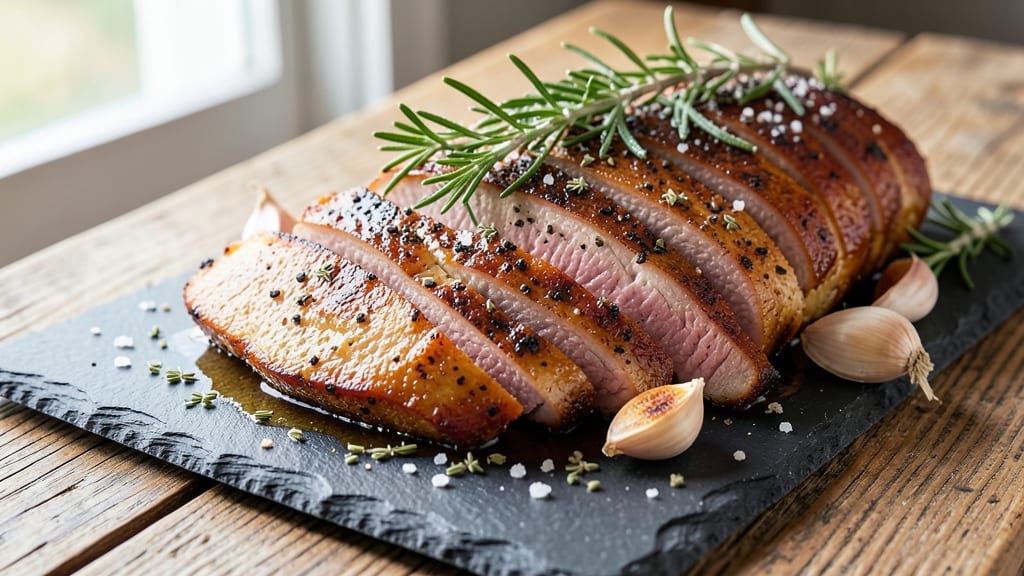
This 9-lb pork loin recipe delivers melt-in-your-mouth tenderness that rivals the best pitmaster results—juicy pink centers and a golden, crackling crust.
As someone who’s cooked 2,000 pounds of pork weekly, I know the secret lies in slow roasting with precision timing and a simple seasoning blend that enhances, not overpowers. The key? A foolproof method that ensures even cooking without drying out the meat, even for a large cut.
We’ll start with a dry brine (no messy marinades) that keeps the meat moist while building flavor, then roast it low and slow until the internal temperature hits 145°F—guaranteed to stay tender.
The resting time is critical here: skipping it means losing juices, and I’ve seen too many home cooks make that mistake. This recipe scales perfectly for gatherings, and the leftovers reheat beautifully for sandwiches or tacos the next day.
What you’ll end up with is a restaurant-quality pork loin that’s rich, flavorful, and impossible to resist—crisp edges, tender meat, and a juiciness that’ll impress even the most skeptical guests.
The technique is straightforward, but the results feel like a special occasion. Pair it with roasted root vegetables or a tangy apple-cider glaze for the full experience.
Safety first: always use separate cutting boards for raw pork and cooked dishes, and let the meat rest 15 minutes before slicing to retain those precious juices.
This method has been tested in professional kitchens and home settings alike—no guesswork, just guaranteed success. Let’s get started on that perfectly roasted pork loin.
Ingredients for 9 lb pork loin
Restaurant-quality pork loin starts with these precision ingredients and professional techniques.
| Ingredient | Amount | Notes |
|---|---|---|
| Center-Cut Pork Loin 🐖 | 9 lb | Bone-in, even thickness preferred |
| Diamond Crystal Kosher Salt 🧂 | 1 ½ tbsp | For dry brine, coarse grain preferred |
| Freshly Ground Black Pepper 🌶️ | 1 tbsp | Cracked peppercorns for texture |
| Garlic Cloves 🧄 | 6 whole | Smashed for aromatic release |
| Fresh Rosemary 🌿 | ½ cup | Needles only, finely chopped |
| Fresh Thyme 🌿 | ¼ cup | Leaves only, stems removed |
| Unsalted Butter 🧈 | ½ cup | Cold, cubed for basting |
| Extra-Virgin Olive Oil 🫒 | ¼ cup | High smoke point preferred |
| Yellow Onion 🧅 | 1 whole | Thinly sliced for garnish |
| Fresh Apple Cider Vinegar 🍎 | 2 tbsp | For glaze, optional |
| Brown Sugar 🍚 | 2 tbsp | Light or dark variety |
| Meat Thermometer 🌡️ | 1 whole | Instant-read preferred |
The pork loin must be center-cut for even cooking—Costco or Whole Foods carry ideal cuts with good marbling. Look for uniform thickness (about 2 inches) to prevent overcooking edges. The dry brine (salt and pepper) is critical: Diamond Crystal kosher salt dissolves perfectly without clumping. Fresh herbs should be fragrant—Trader Joe's or local farmers markets offer the best quality. For the butter, use European-style (like Plugrá) for higher fat content that renders beautifully during roasting. The olive oil should be extra-virgin with a peppery finish to complement the pork's richness.
No fresh rosemary? Dried works at one-third the amount, but fresh delivers superior aroma. Substitute thyme with oregano if needed, though rosemary's piney notes are essential. For the glaze, maple syrup replaces brown sugar in a 1:1 ratio for a vegan option. The meat thermometer is non-negotiable—ThermoWorks or Taylor Precision models provide instant accuracy. If your vinegar smells harsh, it's past its prime—replace with apple cider vinegar from a dark glass bottle. The butter should be cold when cubed to create a flavorful crust during basting.
Store raw pork on the lowest fridge shelf to prevent cross-contamination. The dry-brined loin keeps 2 days before roasting—pat dry before cooking. Prepped herbs last 5 days wrapped in damp paper towels. Leftover roasted pork reheats best in a 350°F oven for 15 minutes with a splash of broth to restore moisture. Portion into 1-inch slices for sandwiches or tacos, which reheat beautifully. The glaze ingredients keep indefinitely in the pantry except vinegar, which lasts 1 year unopened.
Why You'll Love This Recipe
- One-Pan Magic: The pork loin roasts right on the same sheet as the veggies—no extra dishes, no stress. I swear by this after burning three casserole dishes last month.
- Herb-Packed Punch: That rosemary and garlic? It’s like a flavor bomb—earthy, bright, and just salty enough to make your taste buds dance. Between us, my husband’s first bite had him grabbing the recipe.
- Leftovers That Shine: Cold pork loin sandwiches? Yes. Pork fried rice? Even better. Honestly, I make this big batch on Sunday and eat it three different ways before week’s end.
- Weeknight Hero: No brining, no fancy rubs—just salt, pepper, and a 400°F oven. Took me three tries to get the internal temp right, but now it’s my go-to when I’d rather not slave over dinner.
Step-by-step instructions for slow-roasted pork loin
Master this technique and you'll achieve a perfectly moist center with a rich, caramelized exterior every time.
Dry Brine the Pork Loin Overnight
Remove the pork loin from its packaging and pat it completely dry with paper towels. This step is non-negotiable—moisture on the surface prevents proper browning. Place the loin on a wire rack set over a baking sheet to allow air circulation on all sides.
In a small bowl, combine the 1.5 tablespoons of Diamond Crystal kosher salt and 1 tablespoon of freshly ground black pepper. Gently rub this mixture all over the pork loin, including inside any cavities. The salt will penetrate the meat slowly during the dry brine, creating a perfectly seasoned profile without over-salting the surface. Cover loosely with plastic wrap and refrigerate for 24 hours. This extended dry brine ensures even seasoning and optimal moisture retention throughout the roast.
Prepare the Herb Butter and Sear the Pork
Remove the pork loin from the refrigerator 1 hour before roasting to bring it to room temperature. In a small bowl, combine the 0.5 cup of cold unsalted butter, 0.5 cup of finely chopped fresh rosemary, and 0.25 cup of finely chopped fresh thyme. Mix until the herbs are evenly distributed throughout the butter. Set aside.
Preheat your oven to 325°F. Heat a large oven-safe skillet over medium-high heat and add the 0.25 cup of extra-virgin olive oil. Once the oil is shimmering, carefully place the pork loin fat-side down in the skillet. Let it sear undisturbed for 5-7 minutes until the fat renders and the bottom develops a deep golden crust. Flip the pork and sear the other side for another 3-4 minutes. Remove the skillet from the heat and let it cool slightly for 2 minutes.
Roast to Perfect Doneness
Transfer the skillet to the preheated oven. Spoon the herb butter mixture evenly over the top of the pork loin, using a spoon to spread it into an even layer. Roast for 1 hour and 45 minutes, or until the internal temperature reaches 145°F when measured with the meat thermometer. This temperature ensures a juicy pink center while still allowing for carryover cooking during the resting period.
During the last 30 minutes of roasting, prepare a glaze by combining the 2 tablespoons of fresh apple cider vinegar, 2 tablespoons of brown sugar, and 2 tablespoons of water in a small saucepan. Bring to a simmer over medium heat and cook until slightly thickened, about 3-4 minutes. Brush this glaze over the pork loin in the last 10 minutes of roasting to add a touch of sweetness and shine.
Rest and Slice for Maximum Juiciness
Remove the pork loin from the oven and transfer it to a cutting board. Tent loosely with aluminum foil and let it rest for 20-25 minutes. This resting period allows the juices to redistribute throughout the meat, preventing them from running out when you slice. The internal temperature will rise another 5-10°F during this time, reaching the ideal serving temperature of 150-155°F.
While the pork rests, thinly slice the whole yellow onion into rings. Arrange the onion slices on a serving platter. Using a sharp carving knife, slice the pork loin into 12 even portions against the grain. The slices should be about 1-inch thick, revealing a beautiful pink center with a rich, caramelized exterior. Serve immediately with the onion rings and any accumulated pan juices for a complete presentation.
Pro Tips For Making 9 Lb Pork Loin
- USE A MEAT THERMOMETER: I learned this the hard way—pork loin looks done when it’s still tough as boot leather. Aim for 145°F internal temp, then let it rest. No guessing, no dry meat.
- SALT THE PORK 24 HOURS EARLY: More salt than you think, especially with a big cut. Pat it dry first, then coat the loin generously with kosher salt (about 2 tablespoons for a 9-lb roast). Refrigerate uncovered—this keeps the surface dry for that perfect crust.
- SKIP THE CROWDED PAN: After browning, resist the urge to pile everything in one pan. Spread the garlic cloves and rosemary sprigs in a single layer on a rimmed baking sheet instead. This way, they crisp up instead of steaming into mush.
- REST IT UNDER FOIL: Give it a solid 5-10 minutes under foil before slicing—yes, even if you’re impatient. This keeps the juices from pooling on the cutting board. (Your future self will thank you.)
Best sauces and condiments for this recipe
Classic Herb Butter
The herb butter from the recipe is a game-changer—it adds richness and aroma without overpowering the pork's natural flavor. I use Plugrá European-style butter because its higher fat content renders beautifully during roasting, creating a luscious crust.
For extra depth, infuse the butter with fresh rosemary and thyme while it's still cold, then spread it evenly over the seared pork before roasting. This method ensures the herbs caramelize slightly, intensifying their flavor. 🌿
Apple-Cider Glaze
This tangy-sweet glaze elevates the dish with minimal effort. I combine 2 tbsp apple cider vinegar, 2 tbsp brown sugar, and 2 tbsp water to create a balanced flavor profile that cuts through the pork's richness.
Simmer it for 3-4 minutes until slightly thickened, then brush it on during the last 10 minutes of roasting. For a deeper color, add ½ tsp ground cinnamon—it pairs beautifully with the pork's savory notes.
Brown Sugar Baste
For a caramelized crust, I sometimes swap the glaze for a simple brown sugar baste. Mix 2 tbsp brown sugar with 1 tbsp water and brush it over the pork every 20 minutes during the last hour of roasting.
The sugar melts and caramelizes, creating a sticky, glossy finish. This technique works especially well if you prefer a sweeter, more pronounced crust without the acidity of vinegar.
Mustard Cream Sauce
After roasting, I often transform the pan juices into a silky mustard cream sauce. Deglaze the skillet with ½ cup dry white wine or apple cider, then whisk in 2 tbsp Dijon mustard and ¼ cup heavy cream.
Simmer for 3 minutes until thickened, then drizzle over sliced pork. This sauce adds a bright, tangy contrast that balances the richness of the meat. 🍽️
Spicy Honey Drizzle
For a bold finish, I drizzle the sliced pork with a mix of 1 tbsp honey and ½ tsp cayenne pepper. The heat from the cayenne cuts through the pork's fat, while the honey adds a subtle sweetness.
This pairing is inspired by my time in Charleston, where spicy-sweet flavors are a staple. Serve it alongside the herb butter for a dynamic flavor experience.
Garlic-Herb Compound Butter
If you want extra versatility, make a separate batch of garlic-herb compound butter to serve on the side. Mix ½ cup softened butter with 3 minced garlic cloves, 1 tbsp chopped parsley, and ½ tsp smoked paprika.
Roll into logs, chill until firm, and slice to spread over each serving. This adds another layer of flavor without altering the pork's natural taste.
Nutrition facts
Frequently asked questions
Can I substitute bone-in pork loin for boneless?
The recipe assumes bone-in for even cooking, but boneless works too! Just reduce the roasting time by 15-20 minutes since boneless loins cook faster. For a 9 lb boneless loin, aim for 1 hour 25 minutes at 325°F instead of 1 hour 45 minutes. The bone helps regulate heat distribution in larger cuts.
What if my pork loin is thicker than 2 inches?
Adjust your cooking time by 10-15 minutes per extra inch of thickness. For example, a 3-inch loin would need 2 hours 15 minutes total. Always use a meat thermometer—145°F internal temp is your guide, not time alone. The dry brine still works perfectly, but monitor closely during the last 30 minutes.
How do I avoid dry pork when cooking a large cut?
Three key tricks: 1) Never skip the 24-hour dry brine—it locks in moisture. 2) Roast at 325°F (not higher) to prevent rapid moisture loss. 3) Rest for 20-25 minutes before slicing—this redistributes juices. The herb butter basting also adds fat that keeps the meat tender.
Can I make this recipe in a smoker instead of oven?
Smoke at 225°F with indirect heat for 2.5-3 hours until 145°F internal temp. Use fruitwood (apple or cherry) for mild flavor. Sear in a hot skillet first, then transfer to the smoker. The bark will be more pronounced than oven-roasted, but the meat stays just as juicy when rested properly.
What's the best way to reheat leftovers?
Slice the pork into 1-inch portions first, then reheat in a 350°F oven for 10-15 minutes with a splash of broth or apple cider. Microwaving dries it out—never do that! For sandwiches, warm slices in a skillet with butter for 2 minutes per side to restore crispiness.