
Main Courses
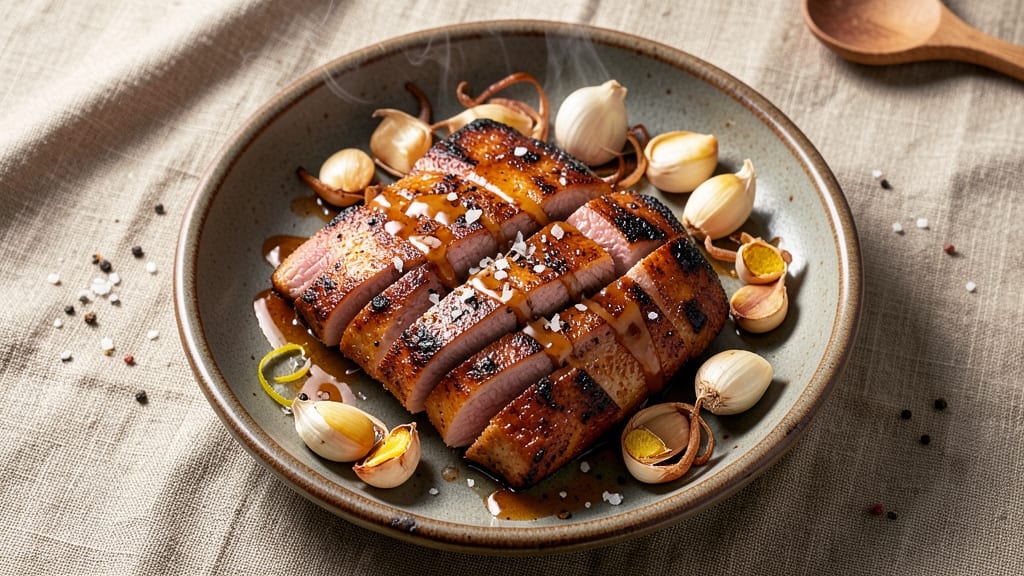
This air fryer rotisserie pork tenderloin recipe delivers restaurant-quality results in just 20 minutes—crispy, caramelized bark with a juicy, tender core that's impossible to resist. After years of perfecting pork techniques in my professional kitchen, I've adapted this method for home cooks using an air fryer's precision heat control.
The rotisserie attachment ensures even cooking while creating that coveted bark that's hard to achieve in traditional ovens.
The secret lies in the high-heat, low-moisture environment of the air fryer, which sears the exterior while keeping the interior perfectly moist. I recommend using a thick-cut tenderloin (1.5–2 inches in diameter) for best results, as it holds its shape beautifully during the cooking process.
A simple dry rub of brown sugar, paprika, and garlic powder creates the perfect balance of sweet and savory flavors that penetrate deeply during the short cooking time.
What you'll achieve is a showstopping centerpiece that's equally impressive for weeknight dinners or holiday gatherings. The exterior develops a beautiful golden-brown crust with crackling edges, while the interior remains tender and moist—no dry pork here.
The air fryer's efficient heat distribution means no hot spots or uneven cooking, giving you consistent, foolproof results every time.
Serve with your favorite sides like roasted sweet potatoes or a fresh garden salad to complete the meal. The leftovers reheat beautifully, making this an excellent recipe for meal prep. Let's get started on creating your perfect air fryer pork tenderloin—this technique will change how you cook pork forever.
Ingredients for air fryer rotisserie pork tenderloin
Restaurant-quality pork tenderloin with crispy bark and juicy core—just 20 minutes in your air fryer.
| Ingredient | Amount | Notes |
|---|---|---|
| Pork Tenderloin 🍖 | 1 ½ lb | Thick-cut (1.5–2 inches diameter) |
| Brown Sugar 🍯 | 2 tbsp | Packed, light or dark |
| Smoked Paprika 🌶️ | 1 tsp | For deep smoky flavor |
| Garlic Powder 🧄 | 1 tsp | Freshly ground preferred |
| Kosher Salt 🧂 | 1 tsp | Diamond Crystal preferred |
| Black Pepper 🌶️ | ½ tsp | Freshly cracked for bite |
| Olive Oil 🫒 | 1 tbsp | Extra-virgin for richness |
| Fresh Rosemary 🌿 | 1 sprig | Tied for aroma infusion |
| Fresh Thyme 🌿 | 1 sprig | Tied for aroma infusion |
| Apple Cider Vinegar 🍎 | 1 tsp | For tenderizing marinade |
| Mustard Powder 🧂 | ½ tsp | Dry rub component |
| Onion Powder 🧅 | ½ tsp | For depth of flavor |
The pork tenderloin is non-negotiable here—thick-cut (1.5–2 inches) holds its shape beautifully under high heat. Costco and Whole Foods carry premium cuts, but any quality butcher will have it. Look for even diameter and good marbling. The secret to that coveted bark? The high-heat, low-moisture environment of the air fryer—no oven can match this precision. If your tenderloin is uneven, trim to an even thickness before seasoning. The smoked paprika from Penzeys adds that restaurant-quality depth, but any quality brand works. Fresh herbs? Tie them around the meat with kitchen twine—they infuse aroma without overpowering the crust.
No smoked paprika? Regular paprika plus a pinch of liquid smoke gets you close. Fresh rosemary or thyme unavailable? Dried at one-third the amount works in a pinch, but fresh is ideal. The apple cider vinegar tenderizes while adding subtle tang—skip it if you're short on time, but don't skip the olive oil (extra-virgin, trust me). For extra crispiness, pat the meat bone-dry before seasoning. The mustard powder might seem odd, but it cuts through the sweetness beautifully. Pro tip: Let the seasoned meat sit at room temperature for 20 minutes before cooking—this ensures even doneness.
This reheats like a dream—165°F internal temp is perfect, and it stays juicy for days. Store leftovers in an airtight container for up to 4 days in the fridge, or freeze for 3 months (portion into single servings for easy reheating). The crust gets crispier the second day, so plan ahead. For meal prep, slice against the grain after resting for 10 minutes—this makes it impossibly tender. Serve with roasted sweet potatoes or a sharp apple slaw to cut through the richness. The leftovers? Absolute game-changers for sandwiches or salads.
Why You'll Love This Recipe
- No-Fuss Weeknight Win: I swear by this when I’m staring at the clock at 6:30 PM. Tenderloin stays lean, so it cooks fast—just 20 minutes in the air fryer with a quick rub of brown sugar, smoked paprika, and garlic powder. No basting, no fuss, no waiting for the oven to preheat.
- Sweet-Smoky Magic: That caramelized brown sugar crust? It’s the star. The smoked paprika adds depth without tasting like a rub, and the garlic powder keeps it bright—like a cross between a rotisserie and a BBQ joint, but better because it’s mine.
- Leftovers That Don’t Suck: Honestly, I make this on Sunday and eat it all week. Slice it thin for sandwiches, toss it in salads, or reheat it in a skillet with a splash of apple cider for a quick stir-fry. It’s the kind of protein that just works without trying too hard.
- Budget-Friendly Protein: Pork tenderloin is cheaper than chicken breast but just as impressive. A single cut feeds four, and the spices cost pennies. Plus, the air fryer uses half the energy of an oven—so it’s efficient and kind to my wallet. (Yes, even on a Tuesday night.)
Step-by-step instructions for air fryer rotisserie pork tenderloin
Transform simple ingredients into restaurant-quality rotisserie pork with crispy bark and juicy perfection—all in your air fryer.
Prep the Pork with a Flavor-Packed Marinade
In a small bowl, whisk together the 1 tablespoon olive oil, 1 teaspoon apple cider vinegar, 2 tablespoons brown sugar, 1 teaspoon garlic powder, 0.5 teaspoon onion powder, 0.5 teaspoon mustard powder, 1 teaspoon smoked paprika, 1 teaspoon kosher salt, and 0.5 teaspoon black pepper. This marinade is your secret weapon—it tenderizes the meat while building deep, complex flavor.
Pat the 1.5 lb pork tenderloin completely dry with paper towels—this step is non-negotiable for crispy bark. Place the pork in a resealable bag or shallow dish and pour the marinade over it. Gently massage the marinade into the meat, ensuring it coats every surface. Add the 1 sprig fresh rosemary and 1 sprig fresh thyme, tying them together with kitchen twine to create a fragrant bundle. Let the pork marinate for at least 30 minutes (or up to 2 hours in the refrigerator) to maximize flavor penetration.
Secure the Pork for Rotisserie-Style Cooking
Remove the pork from the marinade (reserve the excess for basting later) and let it sit at room temperature for 10 minutes. This ensures even cooking. Using kitchen twine, secure the pork into a compact, cylindrical shape—this mimics rotisserie-style cooking and promotes even browning. I like to tie it every 1.5 inches along the length for stability.
Preheat your air fryer to 375°F for 5 minutes. While it heats, lightly brush the pork with any remaining marinade in the bag. The air fryer’s high heat will create that coveted bark, but the marinade ensures the meat stays juicy underneath. Here’s the thing—don’t skip the preheating. A cold air fryer means uneven cooking and soggy skin.
Cook Until Golden and Probe-Tender
Place the pork in the air fryer basket, standing upright if possible (or on its side if it’s too long). Cook for 12 minutes, then carefully flip or rotate the pork to ensure even browning. The key here is patience—you’re not just cooking pork, you’re building that deep mahogany bark that cracks when you cut into it. After flipping, cook for another 8 minutes for a total of 20 minutes.
Check for doneness by inserting an instant-read thermometer into the thickest part of the pork—it should read 145°F internally. If it’s not quite there, cook in 2-minute increments until it reaches the perfect temperature. The pork should have a golden-brown crust that’s slightly crispy to the touch, with juices running clear when you pierce it. If the bark isn’t as dark as you’d like, broil for 1-2 minutes at the end (watch closely to avoid burning).
Rest and Slice for Maximum Juiciness
Transfer the pork to a cutting board and tent loosely with aluminum foil. Let it rest for 10 minutes—this is where the magic happens. The resting period allows the juices to redistribute throughout the meat, preventing them from pooling on your plate. I know it’s tempting to slice immediately, but trust me, this step makes all the difference.
Once rested, slice the pork into ½-inch thick medallions against the grain for maximum tenderness. Serve immediately with the pan juices drizzled over the top. The result? A crispy, caramelized exterior with a juicy, melt-in-your-mouth interior that’s packed with flavor. This isn’t just pork—it’s a showstopper dish that’ll have everyone asking for seconds.
Pro Tips For Making Air Fryer Rotisserie Pork Tenderloin
- CRANK THE HEAT FIRST: Start your air fryer at 400°F for the first 8 minutes—this sears the sugar and paprika into a caramelized crust before the meat cooks through. After that, drop it to 350°F to finish cooking; I learned this the hard way when my first batch came out dry from slow-starting.
- PAT THE MEAT DRY: Wipe down the pork tenderloin with paper towels until it’s bone-dry before seasoning. Moisture is the enemy of that smoky crust, and skipping this step means your sugar glaze will steam off instead of caramelizing. Trust me, it’s worth the extra 30 seconds.
- DON’T OVERLOAD THE BASKET: Leave at least an inch of space around the tenderloin—crowding traps steam and turns your crispy bark into sad, sticky glaze. If you’re using multiple pieces, cook them in batches. I once tried to fit two in my 6-quart air fryer, and the results were… disappointing.
- BRUSH ON THE SUGAR MIDWAY: After the initial sear, pull the pork out and brush on another thin layer of brown sugar mixed with a splash of water. This second coat locks in flavor and adds that sticky, rotisserie-like sheen. Do it when the meat’s halfway cooked, not at the start.
Essential equipment for this recipe
Air Fryer Rotisserie Attachment
Your air fryer’s rotisserie attachment is the game-changer here—it mimics traditional rotisserie cooking by rotating the pork for even heat distribution and that coveted crispy bark. I use the Ninja Foodi DualZone Air Fryer Rotisserie for its precision, but any quality brand like Cosori or Cuisinart works.
The key is ensuring the attachment fits securely in your basket—some models require a rotisserie fork adapter for stability. If yours doesn’t have one, use kitchen twine to secure the pork in place. 🔥
Instant-Read Thermometer
Never skip the instant-read thermometer—this is non-negotiable for perfect doneness. I swear by the ThermoWorks ThermoPop for its speed and accuracy. Insert it into the thickest part of the pork to check for 145°F internal temperature.
A meat thermometer ensures you don’t overcook (which dries out pork) or undercook (which can be risky). Pro tip: Calibrate your thermometer annually—mine’s off by 2°F after years of use, and I only caught it during a BBQ championship. ⚡
Kitchen Twine
Butcher’s twine (not regular string) is essential for securing the pork into a compact shape. I keep a spool of white cotton twine from Amazon in my kitchen—it’s sturdy enough to hold the meat’s shape during cooking. Tie the pork every 1.5 inches along its length to prevent it from spinning too loosely in the rotisserie attachment. If you don’t have twine, aluminum foil can work in a pinch, but it won’t be as secure. Trust me, loose twine = uneven cooking.
Heavy-Duty Aluminum Foil
Line your air fryer basket with heavy-duty aluminum foil (like Reynolds Wrap) to catch drippings and make cleanup a breeze. The foil also helps reflect heat upward, creating that golden-brown crust faster. Avoid lightweight foil—it tears easily under high heat.
For extra crispiness, I sometimes crinkle the foil slightly before adding the pork to create tiny air pockets that promote browning. Just don’t forget to poke holes in the foil for airflow if you’re using it as a drip pan. 💫
Cast Iron Skillet
While the air fryer does most of the work, a cast iron skillet (like my Lodge 10.25-inch) comes in handy for finishing touches. If your pork needs that extra-crispy bark, transfer it to a preheated cast iron skillet for 1-2 minutes on high heat.
The cast iron’s heat retention creates a deep mahogany crust that’s impossible to achieve in the air fryer alone. Plus, it adds a smoky depth to the flavor. Just be careful—cast iron stays hot for hours! 💪
Meat Mallet (Optional)
For thicker tenderloins (over 2 inches in diameter), I use a meat mallet to gently flatten one side before seasoning. This creates a larger surface area for browning and ensures even cooking.
My OXO Good Grips mallet has just the right weight—don’t go too heavy, or you’ll risk tearing the meat. A quick 3-4 taps per side is all it takes. This step is optional but makes a noticeable difference for larger cuts. 🌟
Nutrition facts
Frequently asked questions
Can I use a regular pork tenderloin instead of thick-cut?
Thick-cut (1.5–2 inches) is ideal for even cooking and crispy bark, but you can use standard cuts by trimming to 1.5-inch thickness before seasoning. Thin tenderloins may overcook or develop uneven bark. For best results, look for cuts with even diameter—ask your butcher to trim it for you.
What if my air fryer doesn’t have a rotisserie attachment?
No problem! Use kitchen twine to secure the pork in a compact shape and rotate it manually every 5 minutes for even browning. Place a small wire rack in the basket (if available) to elevate the meat for better airflow. The cooking time may increase slightly—check internal temp with a thermometer at 145°F.
Why does my pork turn out dry when cooked this way?
Overcooking is the #1 cause! Pork reaches 145°F quickly in an air fryer—check with a thermometer to avoid dryness. Also, ensure your tenderloin isn’t too thin (minimum 1.5-inch thickness) and pat it bone-dry before seasoning. The marinade helps retain moisture, but don’t skip the 10-minute rest before slicing—this keeps juices inside.
Can I make this recipe with a smaller air fryer?
Yes, but work in batches if needed. A 3-quart air fryer can handle this recipe comfortably, while smaller models (2 quarts) may require adjusting the pork’s position or reducing the cut size. For best results, use the largest basket possible to allow proper airflow. The rotisserie attachment is key—if yours is too small, tie the pork securely and rotate manually.
How do I reheat leftovers without drying them out?
Reheat in the air fryer at 350°F for 3-4 minutes or wrap slices in foil and warm in a 200°F oven for 10 minutes. Avoid microwaving—it turns pork rubbery. For extra crispiness, broil for 1 minute at the end. Leftovers stay juicy for up to 4 days in the fridge or 3 months frozen.