
Main Courses
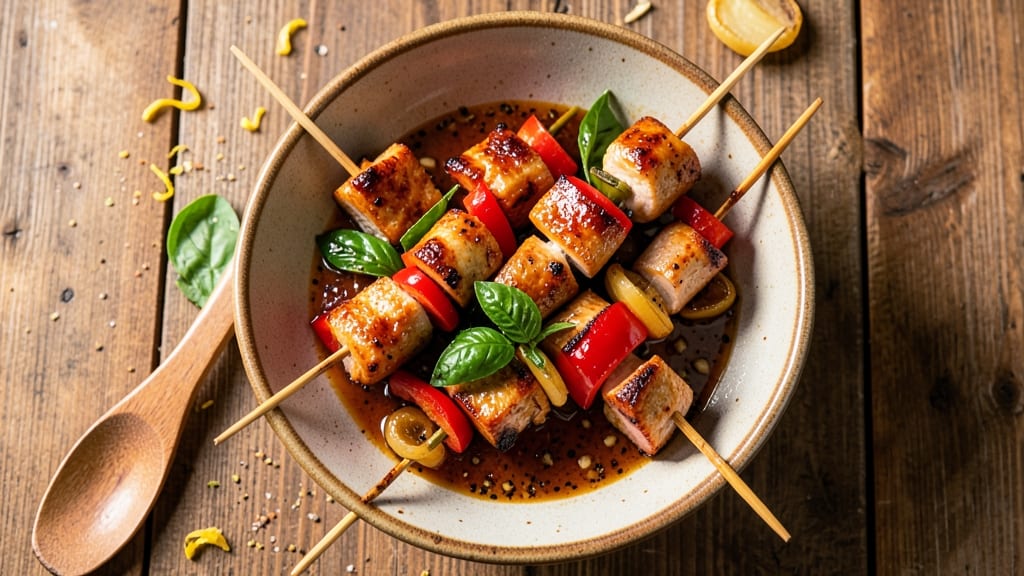
This Asian pork kabobs recipe transforms simple pork chunks into restaurant-worthy bites with a smoky five-spice glaze that caramelizes beautifully on the grill.
After years of perfecting skewers for my restaurant, I've simplified the process without sacrificing flavor—just tender, charred pork with layers of aromatic spices and a sticky-sweet glaze that makes every bite irresistible.
The secret lies in the marinade: a blend of five-spice powder, soy sauce, and honey that tenderizes the meat while building deep, complex flavors. I use bone-in pork shoulder for maximum juiciness, cut into chunks that stay on skewers without falling apart.
The glaze, made with just five ingredients, develops a perfect balance of smoky, sweet, and umami notes when charred.
What you'll end up with is perfectly charred pork kabobs with crisp edges and juicy centers, all coated in that glossy, caramelized glaze. The aroma alone will have your guests gathering around the grill, and the first bite delivers that perfect harmony of smoky, sweet, and savory flavors.
This recipe is designed to impress whether you're hosting a summer BBQ or treating yourself to a weeknight dinner.
Pair with steamed jasmine rice and quick-pickled vegetables for a complete meal that's as balanced as it is delicious. The kabobs reheat beautifully too, making them perfect for meal prep. Let's get started on creating these unforgettable skewers!
Ingredients for asian pork kabobs
These aromatic ingredients create restaurant-quality pork kabobs with a smoky-sweet glaze that caramelizes perfectly on the grill.
| Ingredient | Amount | Notes |
|---|---|---|
| Bone-In Pork Shoulder 🥩 | 1 ½ lb | Cut into 1.5-inch chunks |
| Five-Spice Powder 🌶️ | 1 tbsp | High-quality, aromatic blend |
| Soy Sauce 🥄 | ½ cup | Kosher salt-free preferred |
| Honey 🍯 | ¼ cup | Wildflower for depth of flavor |
| Brown Sugar 🍚 | ¼ cup | Light or dark variety |
| Garlic Cloves 🧄 | 6 cloves | Minced finely for marinade |
| Fresh Ginger 🌿 | ½ cup | Finely grated, aromatic |
| Sesame Oil 🫒 | 1 tbsp | Toasted for nutty aroma |
| Wooden Skewers 🪵 | 12 whole | Soaked in water 30 minutes |
| Green Onions 🧅 | ¼ cup | Sliced, for garnish |
| Sesame Seeds 🌰 | 2 tbsp | Toasted lightly for crunch |
| Vegetable Oil 🫒 | 2 tbsp | For grill or pan searing |
| Kosher Salt 🧂 | 1 tsp | Diamond Crystal preferred |
| Black Pepper 🌶️ | ½ tsp | Freshly cracked |
The bone-in pork shoulder is non-negotiable—it stays juicy and delivers that unmatched flavor. Grab it from the butcher counter if possible, or look for pre-cut chunks in the meat department. Costco or Whole Foods often carry high-quality cuts, but any well-marbled pork shoulder works. Cut into 1.5-inch chunks for even cooking and easy skewering. Five-spice powder is the soul of this dish—Penzeys or bulk bins at specialty stores have the best blends. Fresh ginger and garlic? Asian markets usually have the freshest, but grocery stores work too—just look for firm, vibrant roots and cloves with no sprouting.
No five-spice powder? Mix 2 tsp cinnamon, 1 tsp fennel seeds, 1 tsp cloves, 1 tsp star anise, and 1 tsp black pepper for a DIY version. Substitute honey with maple syrup if needed, but you’ll lose some depth. The glaze needs all three components—soy for umami, honey for sweetness, and brown sugar for caramelization. Trader Joe’s has amazing sesame oil that’s way better than the basic grocery store kind. For the skewers, soak them 30 minutes in water to prevent burning. If you’re prepping ahead, marinate the pork for up to 24 hours—the flavors get even better overnight.
Marinated pork keeps 3 days in the fridge, covered tightly. The glaze can be made ahead and reheated—just add a splash of water to thin it out. Skewered kabobs reheat beautifully on the grill or in a 400°F oven for 10-12 minutes. For meal prep, portion into airtight containers with a drizzle of glaze to keep them moist. The sesame seeds and green onions can be toasted fresh before serving—worth the extra minute for that restaurant-style crunch. Leftovers? Store in the fridge for 4 days or freeze for 3 months—they’re even better the next day as the flavors meld.
Why You'll Love This Recipe
- One-Pan Magic: I swear by this recipe when I’m too tired to scrub pots—just skewer, grill, and walk away. The bone-in pork shoulder stays juicy while the marinade (soy, honey, brown sugar) caramelizes right on the skewer.
- Sweet-Savory Crunch: That five-spice powder? It’s the secret weapon here. Warm cinnamon, star anise, and clove cut through the richness of the pork, while the honey and brown sugar give it this irresistible sticky glaze—like a cross between teriyaki and a spice cake.
- Weeknight to BBQ Star: Honestly, I make these for everything: a lazy Tuesday dinner, potlucks, or even as the centerpiece when friends drop by. The kabobs hold up on the grill or in the fridge, so they’re my go-to for feeding a crowd without stress.
- Budget-Friendly Feast: Bone-in pork shoulder is cheaper than tenderloin, and the marinade costs pennies. Plus, leftovers reheat beautifully—toss them in a stir-fry or over rice the next day. It’s how I stretch my grocery budget without sacrificing flavor.
Step-by-step instructions for Asian pork kabobs with five-spice glaze
Here's how to create restaurant-quality kabobs with irresistible char and complex five-spice flavor.
Marinate the Pork Shoulder for Maximum Flavor
In a large bowl, combine the 1.5 lb bone-in pork shoulder cut into 1.5-inch chunks, 0.5 cup soy sauce, 0.25 cup honey, 0.25 cup brown sugar, 6 cloves minced garlic, 0.5 cup finely grated fresh ginger, 1 tbsp five-spice powder, 1 tsp kosher salt, and 0.5 tsp black pepper. Mix thoroughly using your hands to ensure every piece is coated.
Transfer the mixture to a resealable plastic bag and massage the marinade into the meat for 2 minutes. Seal the bag tightly and refrigerate for at least 4 hours (overnight is ideal). This extended marinating time allows the five-spice blend to deeply penetrate the meat, creating that signature aromatic profile we're after. The pork will develop a beautiful mahogany color and tender texture from the acidity of the soy sauce and the sweetness of the honey.
Prepare the Skewers and Glaze
Soak the 12 wooden skewers in water for 30 minutes to prevent burning during grilling. While they soak, prepare the five-spice glaze by combining 0.25 cup honey, 0.25 cup brown sugar, 1 tbsp sesame oil, 1 tbsp five-spice powder, and 2 tbsp vegetable oil in a small saucepan. Place over medium heat and bring to a gentle simmer, stirring constantly for 5-7 minutes until the mixture thickens slightly and becomes glossy.
Here's the thing—this glaze needs to coat the back of a spoon when you lift it from the pan. If it's too runny, simmer for another minute. If it's too thick, add 1 teaspoon water at a time until you reach the perfect consistency. Remove from heat and set aside, keeping it warm for later use. The combination of honey and brown sugar creates a beautiful caramelized crust when exposed to heat, while the sesame oil adds that nutty depth we love in Asian cuisine.
Assemble and Grill the Kabobs
Preheat your grill or grill pan to high heat (around 450°F). Thread the marinated pork chunks onto the soaked skewers, spacing them evenly. Brush each kabob generously with the warm five-spice glaze, making sure to coat all sides. Place the skewers on the grill and cook for 8-10 minutes, turning occasionally, until the pork develops deep grill marks and reaches an internal temperature of 145°F.
This is where the magic happens—the high heat creates those beautiful char marks while the glaze caramelizes into a sticky, flavorful crust. Don't be tempted to move them too often; let them develop that crust. If you're using a grill pan, you might need to work in batches to avoid overcrowding. The pork should be juicy inside with a slightly crisp exterior—this is what makes these kabobs so irresistible.
Finish with Garnishes and Serve Immediately
Once the pork reaches 145°F internally, remove the kabobs from the grill and transfer them to a serving platter. Immediately drizzle with any remaining glaze from the pan, letting it pool beautifully on the plate. Sprinkle with 2 tbsp toasted sesame seeds and 0.25 cup sliced green onions for that fresh, bright contrast that cuts through the richness.
Let the kabobs rest for 2-3 minutes before serving—this allows the juices to redistribute throughout the meat. Serve hot with steamed jasmine rice or a simple cucumber salad to balance the rich, smoky-sweet flavors. The combination of the five-spice marinade, caramelized glaze, and fresh garnishes creates a dish that's both comforting and exciting—perfect for any gathering or weeknight dinner.
Pro Tips For Making Asian Pork Kabobs
- Marinate Overnight: I used to rush the marinade, thinking a few hours would do—wrong. Five-spice powder needs time to penetrate the pork, and the honey-brown sugar mix caramelizes better when given 12+ hours. Toss the pork in a zip-top bag, coat it thoroughly, and let it sit in the fridge. The flavor clings better, and the meat stays juicier when you grill.
- Cut Pork Evenly: Uneven chunks mean some pieces dry out while others stay undercooked. Use a sharp knife to trim excess fat, then slice the shoulder into 1.5-inch cubes—consistent size matters more than you’d think. If you’re lazy, eyeball it: a standard soda can is about 1.5 inches wide. Trust me, your kabobs will cook more evenly.
- Preheat Skewers First: Cold skewers steal heat from your grill, making the pork cook unevenly. Toss metal or soaked wooden skewers in the oven at 400°F for 10 minutes before threading the pork. This ensures the meat hits the grill sizzling, not lukewarm. (Yes, even if you’re impatient like me.)
- Baste with Leftover Glaze: After the first 5 minutes on the grill, pull the kabobs and brush them with the leftover marinade—honey, soy, and brown sugar turned sticky. This locks in moisture and adds a glossy finish. No need to make extra glaze; just scrape the bottom of your marinade container. Your pork will taste richer, and the skewers won’t stick as much.
Common mistakes when making this recipe
Uneven Cooking
I've seen too many kabobs where the pork cooks unevenly—some pieces charred to perfection while others stay undercooked. This happens when you don't cut the meat into consistent 1.5-inch chunks or when skewers are overcrowded. Trust me, spread the pork evenly with about ½ inch between pieces on each skewer.
I use 12 skewers for 1.5 lbs of pork—this gives you 4 kabobs per person, which is perfect for sharing. Also, don't skip soaking the wooden skewers for 30 minutes—dry skewers burn before the meat cooks through. 🔥
Dry Skewers
Nothing ruins a great dish faster than dry, tough pork. The most common mistake is grilling at too high heat for too long. These kabobs need high heat (450°F) for those beautiful char marks, but you only need 8-10 minutes total.
Use a meat thermometer—pull them off the grill when they hit 145°F internal temperature. If you're using a grill pan, work in batches to avoid overcrowding, which lowers the heat and steams the meat instead of searing it. I promise, patience here makes all the difference.
Glaze Overload
Here's where I see beginners go wrong—they drown the kabobs in glaze, turning them into sticky, soggy messes. The glaze should coat the pork lightly, not pool on the grill. Brush on just enough to create that caramelized crust, then let the residual heat finish cooking it.
If your glaze is too thick, add 1 teaspoon water at a time until it reaches a pourable consistency—it should coat the back of a spoon but not drip like syrup.
And for heaven's sake, don't glaze until after the pork hits the grill—the heat will cause it to burn immediately. 🌶️
Skipping the Rest
I can't tell you how many times I've seen someone slice into kabobs right off the grill, only to watch all the juices escape. Resting is non-negotiable—those 2-3 minutes let the juices redistribute, keeping your pork juicy and flavorful.
If you're serving a crowd, transfer the kabobs to a warm platter and tent loosely with foil while you finish any remaining glaze. Pro tip: I like to drizzle the extra glaze over the rested kabobs right before serving—it adds that restaurant-quality shine without making the meat soggy. ✨
Metal Skewer Burn
If you're using metal skewers (which I don't recommend—they conduct heat too well), you'll end up with burnt pork before it's cooked through.
Wooden skewers are the way to go, but if you must use metal, soak them in water for at least 1 hour and avoid direct flame by positioning them away from the hottest part of the grill.
Even better, use bamboo or hickory skewers—they handle high heat beautifully and add a subtle smoky flavor. And whatever you do, don't reuse metal skewers—they rust and impart a metallic taste. 🪵
Over-Marinating
While it's tempting to marinate these kabobs overnight, more than 24 hours can make the pork mushy—the acid in the soy sauce and ginger starts breaking down the meat fibers too much. I find 12-18 hours is perfect for maximum flavor without sacrificing texture.
And here's a pro tip: don't marinate in the fridge longer than 24 hours, even if it's still in the bag. If you're prepping ahead, marinate for 4 hours, then refrigerate uncovered for 30 minutes to dry the surface slightly—this helps create a better sear. 💡
Nutrition facts
Frequently asked questions
Can I use chicken or beef instead of pork for these kabobs?
This recipe works beautifully with chicken thighs (bone-in for juiciness) or beef sirloin. For chicken, reduce marinating time to 2-4 hours (it doesn't need as long as pork), and cook to 165°F internal. For beef, increase marinating to 24 hours and grill to 145°F for medium-rare. The five-spice glaze adapts perfectly to both proteins!
What's the best way to make these kabobs indoors?
Use a grill pan over high heat (450°F) for that authentic sear. Cook in batches to avoid crowding, and brush with glaze only after the meat hits the pan. For extra smokiness, add 1 tbsp smoked paprika to the marinade. A broiler works too—place skewers on a rack 4 inches from heat for 6-8 minutes, turning once.
How do I prevent the pork from falling off the skewers?
First, cut pork into consistent 1.5-inch chunks—this prevents gaps. Thread through the flat side of each piece (not the round edge) for better grip. For extra security, secure with kitchen twine around the meat before skewering. And always use soaked wooden skewers—they're less likely to split than dry ones.
Can I make the glaze ahead of time?
Yes! Prepare the glaze 1 day ahead and store it in an airtight container. Reheat gently in a saucepan over low heat, stirring occasionally, until it reaches a pourable consistency. If it thickens too much, add 1 tsp water at a time. The flavors actually improve overnight as the spices meld. Just reheat before using on the kabobs.
What are the best sides to serve with these kabobs?
Jasmine rice absorbs the glaze beautifully, while quick-pickled cucumbers or steamed bok choy add freshness. For a heartier meal, serve with miso soup or sticky rice noodles. My favorite combo? Sesame slaw (shredded cabbage, carrot, sesame dressing) for that crunchy contrast. All pair perfectly with the smoky-sweet kabobs!