
Main Courses
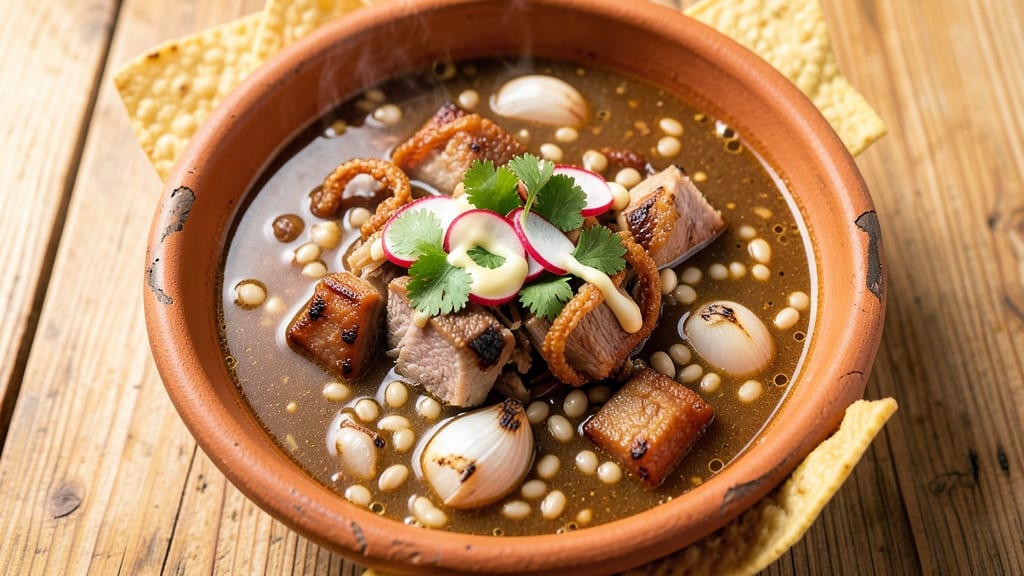
This authentic Mexican pork pozole recipe brings the soul of Mexican home cooking to your table, where every spoonful tells a story of tradition and hearty comfort.
I first tasted pozole in a tiny Oaxacan kitchen, where the aroma of simmering pork and hominy filled the air—now I'm sharing that same recipe, perfected over years of cooking for crowds.
The secret lies in the slow-cooked pork broth, tender meat that practically melts, and the perfect balance of smoky spices that make this dish unforgettable.
What sets this recipe apart is its authenticity—no shortcuts, just the traditional method of simmering pork bones and meat for hours to create a rich, flavorful broth. We use hominy (nixtamalized corn) for that signature texture, and crispy chicharrones (pork rinds) add a satisfying crunch that elevates every bite.
The process is straightforward but requires patience, as the flavors deepen with time—just like the best family recipes.
By the time you serve this pozole, your kitchen will smell like a Mexican fiesta, and your guests will be transported straight to the heart of Mexico.
The broth is rich and aromatic, the pork tender yet flavorful, and the garnishes—like radishes, cilantro, and lime—add freshness that cuts through the richness. This is the kind of dish that disappears quickly, leaving everyone asking for seconds.
Perfect for celebrations or a cozy family dinner, this pozole recipe serves a crowd and tastes even better the next day. Let's get cooking—your taste buds are in for a treat.
Ingredients for authentic mexican pork pozole
Authentic Mexican flavors start with pork, hominy, and smoky chilies simmered to perfection.
| Ingredient | Amount | Notes |
|---|---|---|
| Pork Shoulder 🍖 | 4 lb | Bone-in for richer broth |
| Pork Bones 🦴 | 2 lb | Knuckle or neck bones preferred |
| Dried Hominy 🌽 | 2 cans | 15 oz each, nixtamalized corn |
| Chicharrones (Pork Rinds) 🍟 | 1 ½ cups | Crispy, for topping |
| White Onions 🧅 | 3 whole | Quartered, charred for depth |
| Garlic Cloves 🧄 | 8 cloves | Peeled, lightly toasted |
| Dried Guajillo Chilies 🌶️ | 4 whole | Stems/seeds removed |
| Dried Ancho Chilies 🌶️ | 2 whole | Stems/seeds removed |
| Ground Cumin 🌿 | 2 tbsp | Toasted for deeper flavor |
| Bay Leaves 🍃 | 4 whole | Fresh preferred |
| Salt 🧂 | 2 tbsp | Kosher or sea salt |
| Black Peppercorns 🌶️ | 1 tsp | Freshly cracked |
| Fresh Cilantro 🌿 | 1 cup | Chopped, for garnish |
| Radishes 🥕 | 1 lb | Thinly sliced, for crunch |
| Limes 🍋 | 4 whole | Juiced, for brightness |
The pork shoulder and bones are non-negotiable for that deep, savory broth. Costco or local butchers usually have the best cuts—look for well-marbled pork shoulder with visible fat. If you can't find knuckle bones, neck bones work too. For the hominy, La Costeña or Goya brands are the gold standard, but any canned hominy will do. The chicharrones? Mexican specialty stores carry the best—crispy, golden, and packed with flavor. Skip the store-bought pork rinds, trust me. Toast your cumin seeds in a dry pan for 30 seconds before grinding—this brings out their earthy aroma. And those dried chilies? Penzeys or Mexican markets have the freshest, but grocery store dried sections work in a pinch.
No guajillo or ancho chilies? Substitute with 1 tbsp chipotle powder and 1 tbsp smoked paprika—it won't be identical, but you'll still get that smoky depth. Running short on time? Use 2 tbsp pozole seasoning packet (like Goya's), but add an extra 1/2 tsp cumin and 1/2 tsp oregano to boost the flavor. Fresh cilantro is ideal, but dried cilantro at 1/4 the amount works if you're in a bind. The radishes add that perfect crunch—if you can't find them, jicama or extra chicharrones are great stand-ins. And for the lime juice, Mexican limes are best, but regular limes work too—just use a bit more.
This pozole tastes even better the next day as the flavors meld. Store in the fridge for up to 5 days, or freeze portions for 3 months. I always make a double batch—one for dinner, one for lunches. The broth freezes beautifully, and you can reheat just the broth or the whole thing. For serving, keep the toppings separate: chicharrones, cilantro, radishes, and lime wedges. That way, everyone can customize their bowl. And if you have leftovers, turn them into pozole soup the next day by adding more broth and warming through.
Why You'll Love This Recipe
- One-Pot Magic: I swear by this recipe for lazy Sundays—just toss everything into a big pot (bones, shoulder, hominy, onions) and let it simmer. No chopping, no fuss, just hands-off flavor-building while you do whatever.
- Crispy-Meets-Soupy Bliss: That chicharrón crunch against the tender pork and hominy? It’s the best kind of contrast—crispy, salty, and perfectly balanced with the creamy broth. Honestly, I’ll eat this cold from the fridge just for the texture.
- Party in a Pot: This feeds a crowd without the stress—double the batch for game day or holidays, and everyone will beg for leftovers. My in-laws always ask for the recipe now, and that’s saying something.
- Budget-Friendly Feast: Pork shoulder and bones stretch this recipe into a whole meal for pennies. I’ll be real: it’s the kind of dish that makes grocery day feel like a win, especially when you’re serving six for under $20.
Step-by-step instructions for authentic Mexican pork pozole
This homestyle method delivers rich, smoky pozole with tender pork and perfectly seasoned broth.
Char the Vegetables and Prepare the Chili Paste
Start by quartering the 3 whole white onions and peeling the 8 cloves garlic. Heat a dry skillet over medium-high heat and char the onions and garlic until deeply caramelized with blackened edges—this adds incredible depth to the broth. Transfer to a bowl and set aside.
In a food processor, combine the charred onions and garlic with the 4 whole dried guajillo chilies and 2 whole dried ancho chilies (stems and seeds removed). Pulse until finely ground but not into a paste. Add 2 tablespoons toasted ground cumin and pulse again. This blend forms the aromatic base that defines pozole's signature flavor.
Brown the Meat and Build the Broth
In a large Dutch oven, sear the 4 lb pork shoulder and 2 lb pork bones over medium-high heat until deeply browned on all sides—this creates the Maillard reaction that builds rich flavor. Remove the meat and set aside.
In the same pot, add the chili paste and toast for 1 minute until fragrant. Pour in 12 cups water (enough to cover the meat) and bring to a boil. Skim off any foam that rises to the surface. Return the meat to the pot, add the 4 whole bay leaves, 2 tablespoons salt, and 1 teaspoon freshly cracked black peppercorns. Reduce heat to low and simmer uncovered for 3 hours, stirring occasionally.
Cook the Hominy and Finish the Broth
After 3 hours, remove the pork shoulder and shred it using two forks. Return the shredded pork to the pot. Drain and rinse the 2 cans dried hominy, then add them to the broth. Simmer for another 30 minutes until the hominy is tender and the broth has thickened slightly. The broth should coat the back of a spoon with a velvety texture.
Taste the broth and adjust seasoning—you may need to add more salt or lime juice for brightness. The hominy should be tender but still hold its shape when pierced with a fork. If the broth is too thin, simmer uncovered for an additional 10-15 minutes to reduce it to your desired consistency.
Prepare the Toppings and Serve
While the pozole simmers, thinly slice the 1 lb radishes and chop the 1 cup fresh cilantro. Juice the 4 whole limes. For the chicharrones topping, heat 1.5 cups chicharrones in a dry skillet over medium heat until crispy again—this restores their crunch.
To serve, ladle the pozole into bowls and top generously with the crispy chicharrones, radishes, cilantro, and a squeeze of lime juice. The contrast of textures—creamy hominy, tender pork, crispy chicharrones, and fresh radishes—makes each bite unforgettable. Serve with warm corn tortillas for dipping.
Pro Tips For Making Authentic Mexican Pork Pozole
- CRACK THE BONES FIRST: I learned this the hard way—skipping the bone-cracking step leaves you with a broth that’s more watery than flavorful. Use a meat mallet or rolling pin to smash pork bones before adding them to the pot; this releases marrow and collagen faster, giving your pozole that deep, rich base in half the time.
- SOAK HOMINY LONG ENOUGH: Dried hominy needs at least 4 hours in water—overnight is better—to soften properly. I used to rush this, and my hominy would turn mushy or stay rock-hard. Drain and rinse them twice after soaking to remove excess starch, which keeps your broth clear and your hominy tender, not gluey.
- BROWN THE PORK SHOULDER: Don’t just toss chunks of pork shoulder into the pot. Sear them in batches over medium-high heat until they develop a deep crust—this isn’t just for looks. The Maillard reaction here builds flavor that cuts through the earthiness of the hominy and chicharrones. Use 2 tablespoons of oil per batch, and don’t crowd the pan.
- ADD CHICHARRONES LATE: Chicharrones are crispy for a reason—tossing them in early turns them soggy, ruining the texture. Save them for the last 10 minutes of simmering, or serve them on the side for crunch. If you’re worried about them floating, gently press them down with a slotted spoon for 30 seconds, then let them rise back up.
Pro cooking tips for great authentic mexican pork pozole
Broth Perfection
Start with pork bones and shoulder—the fat and marrow create a rich, gelatinous broth that's the soul of pozole. I always use bone-in cuts from my local butcher, like pork knuckle or neck bones, because they add depth you can't get from boneless meat.
Brown the meat deeply on all sides before adding liquid—this Maillard reaction builds flavor that lasts through hours of simmering. 🌡️
After browning, add the chili paste (guajillo and ancho) and toast it for just 1 minute—this awakens the chilies' smoky aroma without burning. The key is low-and-slow simmering: 3 hours uncovered lets the flavors meld while reducing the broth to a velvety consistency.
I use a heavy Dutch oven (like my Lodge 6.5-quart) because it distributes heat evenly and prevents scorching.
Hominy Texture
The hominy is where many recipes go wrong—overcooking turns it mushy, while undercooking leaves it chalky. Rinse the canned hominy thoroughly before adding it to the broth to remove excess sodium.
Add it only after 3 hours of pork cooking, then simmer for 30 minutes—this ensures it absorbs flavor without falling apart. Test doneness by piercing with a fork: it should be tender but still hold its shape. 🌽
If your hominy is too firm, add a splash of broth and simmer 5 more minutes. For extra creaminess, mash 1-2 pieces with a potato masher while simmering—they'll thicken the broth beautifully. Trust me, this is where pozole goes from good to restaurant-quality.
Chicharrones Crunch
Store-bought pork rinds won't cut it here—you need authentic chicharrones, preferably from a Mexican specialty store. Heat them in a dry skillet over medium heat until they're crispy again (they'll soften during cooking).
The goal is that satisfying snap with every bite. I like to add them to the pot during the final 10 minutes of simmering so they stay crispy when serving. 🍟
Pro tip: If you can't find chicharrones, crispy pork belly slices work in a pinch. Just render the fat in a cold skillet over low heat until golden and crispy. The key is low and slow—rushing will make them greasy instead of crunchy.
Spice Balance
Pozole should be smoky, not spicy—the heat comes from the chilies in the broth, not the toppings. Taste the broth before serving and adjust with salt, lime juice, or a pinch of sugar if needed.
I often add 1/2 teaspoon ground cinnamon during the final 30 minutes for warmth, but skip it if you prefer pure smokiness. The radishes and lime should brighten the dish, not overpower it. 🌶️
For extra depth, toast 1/2 teaspoon coriander seeds with the cumin at the start. The nutty aroma complements the smoky chilies perfectly. And if you're feeling adventurous, add 1/2 cup masa harina (corn flour) to the broth during the final 10 minutes—it thickens beautifully and adds a subtle corn sweetness.
Nutrition facts
Frequently asked questions
Why does authentic pozole require both pork shoulder and bones?
The pork shoulder provides tender, flavorful meat, while the bones (especially knuckle or neck bones) create a rich, gelatinous broth that's the soul of pozole. The marrow and collagen release during long simmering, giving that signature velvety texture. Using both ensures maximum flavor and depth in every spoonful.
Can I make pozole in a slow cooker or Instant Pot?
Yes, but with adjustments! For a slow cooker, brown the meat first, then cook on low for 8 hours or high for 5 hours. For an Instant Pot, use the high pressure setting for 45 minutes after browning, then natural release. The key is longer cooking time—pozole needs that slow infusion of flavors.
What's the best way to store and reheat pozole?
Store in an airtight container in the fridge for up to 5 days or freeze for 3 months. Reheat gently on the stove over low heat until warm, stirring occasionally. Never microwave—it makes the hominy mushy. The broth actually tastes better the next day as flavors meld!
How do I adjust the spice level for kids or sensitive eaters?
Simmer the broth without adding the chili paste, then strain and serve it plain. For mild pozole, use only 1 guajillo chili (instead of 4) and skip the ancho. The natural smokiness remains, but the heat disappears. Always serve toppings separately so everyone can customize their bowl.
What's the difference between red, green, and white pozole?
Red pozole (like this recipe) uses ancho and guajillo chilies for smoky depth. Green pozole uses tomatillos and serrano peppers for tangy heat, while white pozole skips chilies entirely, relying on cilantro and lime for freshness. The base ingredients (pork, hominy) stay the same—only the seasonings change!