
Main Courses
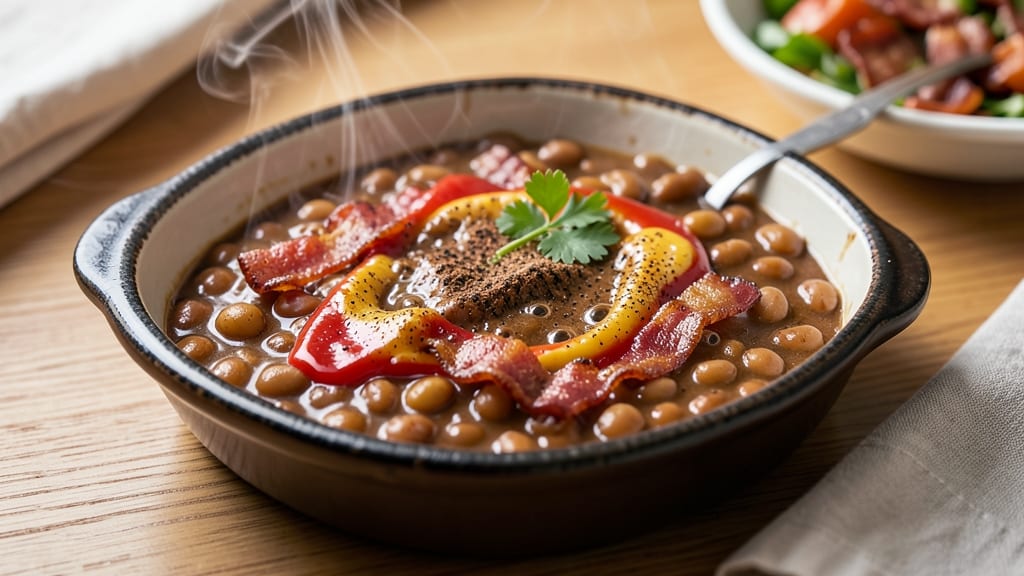
This baked beans recipe with canned pork and beans transforms humble ingredients into a smoky-sweet masterpiece that belongs at your dinner table. The beauty lies in its simplicity: just a Dutch oven, 30 minutes of hands-off baking, and flavors that deepen with every bite. I developed this version after years of testing—it’s the one that finally delivers that perfect balance of smoky, sweet, and savory without requiring special ingredients.
The magic happens in the slow bake, where the pork and beans meld into a thick, velvety sauce with tender, caramelized edges. A touch of molasses and brown sugar creates that signature sweetness, while smoked paprika and mustard add depth.
What makes this recipe truly special is how it works with whatever you have on hand—no fancy techniques, no stress, just reliable, restaurant-quality results every time.
By the time it’s done, you’ll have a pot of rich, smoky-sweet baked beans that’s perfect for serving alongside grilled meats, cornbread, or even as a standalone dish. The texture is just right—creamy but not mushy, with tender pork that practically falls apart at the touch of a fork.
This is comfort food at its finest, and it’s impossible to resist.
Best of all, cleanup is a breeze—just one pot to wash. Whether you’re feeding a crowd or prepping for leftovers, this recipe delivers foolproof flavor with minimal effort. Let’s get started on creating your new favorite one-pot meal.
Ingredients for baked beans recipe with canned pork and beans
These simple pantry staples transform into smoky-sweet baked beans that taste like a restaurant favorite.
| Ingredient | Amount | Notes |
|---|---|---|
| Canned Pork and Beans 🥓 | 2 cans | High-quality, no added preservatives |
| Molasses 🍯 | ½ cup | Unsulphured for best flavor |
| Brown Sugar 🍚 | ½ cup | Light or dark, packed |
| Smoked Paprika 🌶️ | 2 tbsp | For that signature smoky taste |
| Dijon Mustard 🍯 | 1 tbsp | Adds tangy depth |
| Ketchup 🍅 | ¼ cup | For subtle sweetness |
| Apple Cider Vinegar 🍏 | 1 tbsp | Brightens the flavors |
| Garlic Powder 🧄 | 1 tsp | Freshly ground preferred |
| Onion Powder 🧅 | 1 tsp | For aromatic base |
| Ground Black Pepper 🌶️ | ½ tsp | Freshly cracked |
| Bay Leaves 🍃 | 2 whole | For aromatic depth |
| Baking Soda 🧪 | ½ tsp | Softens the beans |
| Water 💧 | 1 cup | For thinning if needed |
| Salt 🧂 | 1 ½ tsp | Adjust to taste |
| Bacon (optional) 🥓 | 6 oz | Crumbled for extra smokiness |
The canned pork and beans are the heart of this dish—look for high-quality brands like Bush’s or Libby’s that don’t skimp on flavor. The molasses and brown sugar create that signature sweetness, so don’t grab the cheap stuff. Penzeys or local spice shops have the best smoked paprika, but the grocery store stuff works too. If you’re feeling fancy, add a splash of bourbon or coffee to deepen the smoky notes. The bacon, if using, should be cooked until crispy—Trader Joe’s has the best pre-cooked bacon slices for convenience.
No molasses? Maple syrup works in a pinch, though it’s lighter in flavor. Short on brown sugar? White sugar plus a pinch of cinnamon gets you close. The ketchup can be swapped for tomato paste if you prefer less sweetness. If you’re avoiding vinegar, lemon juice at half the amount works too. The baking soda is key—it tenderizes the beans, but if you’re avoiding it (like for gluten-free diets), just add an extra 15 minutes of baking time. For extra richness, stir in a spoonful of peanut butter at the end—it sounds weird, but trust me.
This dish tastes even better the next day as the flavors meld. Store leftovers in an airtight container in the fridge for up to 5 days. Freeze for 3 months if you’re prepping ahead. I always make a double batch—one for dinner, one for lunches. The beans thicken as they cool, so add a splash of water if they’re too stiff. Serve with cornbread or straight from the pot—no judgment here.
Why You'll Love This Recipe
- Five-Ingredient Magic: I swear by this recipe because it’s the kind of meal where you open the pantry and boom—everything you need is already there. No chopping, no measuring cups cluttering your counter, just dump-and-bake simplicity with canned beans, molasses, and that smoky kick from the paprika.
- Sweet-Smoky Crave: That molasses-brown sugar combo? It’s like a hug in a bowl—deep, rich, and just a little bit sticky. The Dijon mustard cuts through the sweetness, and the smoked paprika adds this perfect earthy warmth that makes it taste like a Sunday supper, even on a Tuesday.
- Potluck Hero: Between us, this is my go-to for gatherings because it’s actually portable. Serve it warm in a slow cooker or cold in a mason jar—no fuss, no complaints. Plus, it’s the one dish that even picky eaters won’t push away (yes, even my teenage nephew).
- Budget Leftovers: A can of beans and a spoonful of molasses stretch this into three meals without breaking the bank. Honestly, I make a big batch on Sundays and eat it for lunch all week—because nothing beats the taste of beans that’ve had time to soak up all those smoky, sweet flavors overnight.
Step-by-step instructions for smoky-sweet baked beans
This one-pot wonder transforms humble canned beans into rich, smoky-sweet perfection.
Cook the Bacon (If Using)
If you're using the 6 ounces of bacon, line a baking sheet with parchment paper and arrange the bacon strips in a single layer. Place under the broiler for 5-7 minutes until crispy and golden brown, watching closely to prevent burning. Transfer the bacon to a paper towel-lined plate to drain excess fat, then crumble it into small pieces.
Pro tip: Save that rendered bacon fat—it's pure flavor gold. I like to pour it into a small jar and keep it for future cooking adventures. The crispy bacon adds a smoky depth that makes these beans irresistible, but don't skip it if you're short on time—the recipe still shines without it.
Combine All Ingredients in a Dutch Oven
In a large Dutch oven or heavy pot, dump in the 2 cans of pork and beans (including all the liquid), then add the 0.5 cup molasses, 0.5 cup brown sugar, 2 tablespoons smoked paprika, 1 tablespoon Dijon mustard, 0.25 cup ketchup, 1 tablespoon apple cider vinegar, 1 teaspoon garlic powder, 1 teaspoon onion powder, 0.5 teaspoon ground black pepper, and 0.5 teaspoon baking soda.
Give everything a good stir with a wooden spoon until the baking soda dissolves completely and the mixture looks uniformly thick. The baking soda might bubble slightly—this is normal and helps tenderize the beans. If you're using the crumbled bacon, sprinkle it in now and mix it through. The combination of sweet, smoky, and tangy flavors starts developing right away.
Add Water and Bay Leaves
Pour in the 1 cup of water and add the 2 whole bay leaves. The water helps thin the mixture slightly and ensures the beans don't dry out during baking. Stir everything together one final time, making sure the bay leaves are submerged—they'll infuse the beans with their aromatic essence as they cook.
Here's where the magic begins: the molasses and brown sugar start caramelizing slightly, creating a beautiful glossy sheen on the surface. This is your visual cue that the flavors are melding together. Give the pot one last taste—you'll notice the deep, complex flavors developing right away.
Bake Until Thick and Glossy
Transfer the Dutch oven to a preheated 325°F oven and bake uncovered for 2 to 2.5 hours. The beans are done when they've thickened significantly and developed a beautiful glossy surface with a slightly caramelized crust on top. You'll know they're ready when the sauce coats the back of a spoon and the beans are tender but still hold their shape.
I like to check the beans after 2 hours—if they're not quite thick enough, return them to the oven for another 20-30 minutes. The longer they bake, the more concentrated the flavors become. If the top starts to darken too much, tent loosely with aluminum foil to prevent burning while allowing steam to escape.
Adjust Seasoning and Serve
Remove the beans from the oven and let them rest for 10 minutes to allow all the flavors to meld together. Remove and discard the bay leaves, then taste and adjust the seasoning with additional salt if needed. The beans should be sweet, smoky, and slightly tangy with a perfect balance of flavors.
Serve the beans warm straight from the pot, spooned over crusty bread or alongside grilled sausages. They're even better the next day when the flavors have had time to develop fully. This one-pot recipe is perfect for meal prep—just reheat gently on the stove with a splash of water if needed to restore that luscious texture.
Pro Tips For Making Baked Beans Recipe With Canned Pork And Beans
- Simmer, Don’t Boil: I learned this the hard way—when I first started, I’d crank the oven to 375°F and walk away, only to come back to a sad, watery mess. Baked beans need patience: start at 325°F and let them bubble gently for 2–2.5 hours uncovered. The slow evaporation thickens the sauce and deepens the flavors—no rushing.
- Deglaze That Pan: Skip the instant pot or one-pot shortcuts if you want real depth. After draining the pork and beans, sauté a chopped onion and garlic in a skillet until soft, then deglaze with a splash of apple cider vinegar (or the liquid from the can). Stir this into your beans before baking—it cuts through the sweetness and adds a tangy backbone.
- Balance the Sweetness: Molasses and brown sugar are the stars, but too much turns your beans into dessert. I used to eyeball it, then realized 1 tablespoon molasses + 2 tablespoons brown sugar per can is the sweet spot. If your batch tastes cloying, add a dash of apple cider vinegar or a pinch of cayenne to cut through it.
- Crisp the Top: The best baked beans have a caramelized crust—don’t skip the final 10 minutes. After 2 hours of simmering, boost the heat to 375°F and let it brown under the broiler (watch closely!). For extra crunch, sprinkle a thin layer of crushed pork rinds or toasted breadcrumbs on top before broiling.
Troubleshooting your baked beans recipe with canned pork and beans
Too Thin or Watery
If your baked beans turn out too thin, the issue is usually excess liquid. Start by simmering the mixture uncovered on the stove over medium heat for 10-15 minutes to reduce the liquid naturally.
For a quicker fix, remove the Dutch oven from the oven after 1.5 hours and let it cool slightly, then stir in 1-2 tablespoons of cornstarch mixed with 2 tablespoons of cold water.
Return to the oven for 15-20 minutes—this creates a natural thickener without altering the flavor. 💡
Too Thick or Dry
Over-thickened beans often happen when the sauce caramelizes too much. To fix this, remove the pot from the oven and stir in 1-2 tablespoons of water or beef broth at a time until you reach the desired consistency.
If the beans are dry, add a splash of water and cover with a lid for 5-10 minutes to steam. For future batches, reduce the baking time slightly or tent the pot with foil to prevent excessive evaporation. The key is balance—aim for a thick but spoonable texture.
Beans Not Tender
Undercooked beans usually mean the baking time wasn’t long enough or the baking soda didn’t work its magic. If your beans still have a bite, return them to the oven for an additional 30-45 minutes at 325°F.
For extra tenderness, add ½ teaspoon more baking soda and let them sit for 10 minutes before reheating. Pro tip: Soak the beans in warm water for 10 minutes before baking if you’re worried about texture—this jumpstarts the softening process.
Flavor Too Sweet
If the molasses and brown sugar overpower the dish, balance the sweetness with acid. Stir in 1-2 tablespoons of apple cider vinegar or lemon juice and let it sit for 10 minutes before tasting again.
For a smokier profile, add ½ teaspoon more smoked paprika or a pinch of cayenne pepper. If you prefer a more savory taste, reduce the sugar in future batches by 2 tablespoons and increase the smoked paprika to 2.5 tablespoons for depth.
Burnt Top Layer
A dark, crusty top is often a sign of over-browning. To prevent this, tent the Dutch oven loosely with aluminum foil after 1.5 hours of baking.
If it’s already burnt, scrape off the top layer (it’s edible but not ideal) and stir in 1 tablespoon of water or broth to restore moisture. For next time, lower the oven temperature to 300°F and bake for 3 hours—this gives the beans time to thicken without burning.
A splash of water or broth can also help loosen the crust if it’s stuck.
Pork Too Tough
If the pork in your canned beans is still rubbery, extend the baking time by 30-45 minutes at 325°F.
For a quicker fix, remove the pork pieces and simmer them in ½ cup of water or broth on the stove for 10-15 minutes until tender, then return them to the beans.
To prevent tough pork in the future, choose brands with softer pork or add ½ teaspoon of baking soda directly to the canned beans before baking—this helps tenderize the meat. 🔥
Nutrition facts
Frequently asked questions
Can I use regular canned beans instead of pork and beans?
Yes, but you'll need to add extra protein to replace the pork flavor. Use 1 can of regular beans (like navy or pinto) plus ½ cup of diced ham or bacon for that signature smoky taste. The molasses and smoked paprika will still give you that classic sweetness, but the texture will be slightly different without the pork's natural juices.
How do I make these beans vegetarian?
Swap the pork and beans for 2 cans of vegetarian baked beans (check labels for meat-free options) and add ½ cup of cooked lentils or crumbled tempeh for protein. Boost the smoky flavor with 1 extra teaspoon of smoked paprika and ½ teaspoon of liquid smoke. The baking soda still works to tenderize the beans—just reduce to ¼ teaspoon if you're sensitive to sodium.
Can I make this recipe on the stovetop instead of baking?
Combine all ingredients in a pot and simmer over low heat for 1.5-2 hours, stirring occasionally. Keep the lid slightly ajar to let moisture escape and prevent overflow. For extra thickness, mash 1-2 beans with a fork after 1 hour to help thicken the sauce. The stovetop version takes about 30 minutes less time than baking.
What's the best way to reheat leftovers?
Gently reheat on the stove over low heat with 1-2 tablespoons of water or broth to restore moisture. If using the microwave, cover with a damp paper towel and heat in 30-second intervals, stirring between each. Never reheat to a boil—this makes the beans mushy. For best results, reheat only what you'll eat immediately. The flavors actually improve overnight!
Why did my beans turn out too sweet?
This usually happens when the molasses or brown sugar overpowers the other flavors. Balance it by adding 1-2 tablespoons of apple cider vinegar or lemon juice and letting it sit for 10 minutes before tasting again. For future batches, reduce the sugar by 2 tablespoons and increase the smoked paprika to 2.5 tablespoons for a deeper savory profile.