
Main Courses
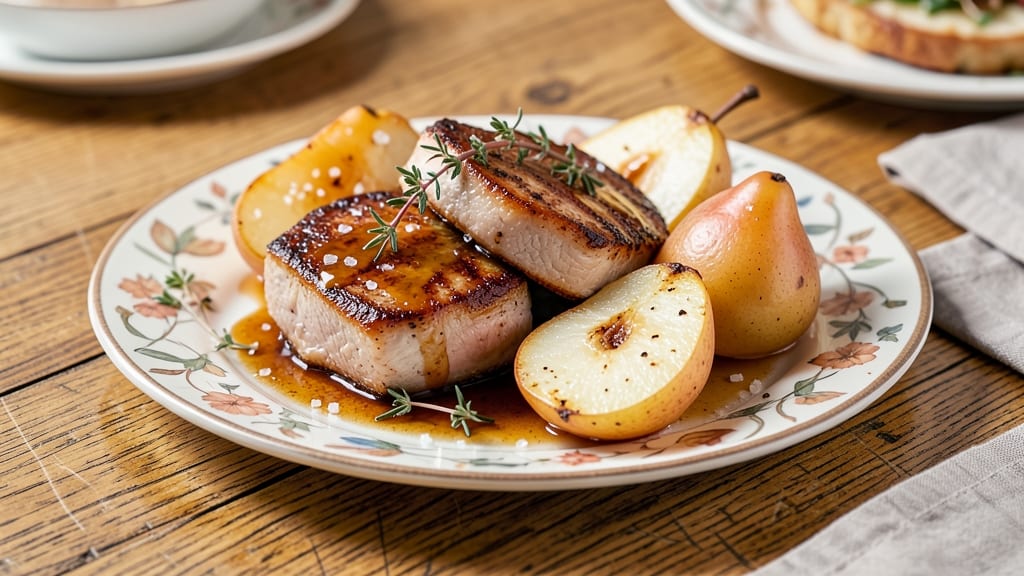
This baked pork chops with pears recipe transforms a simple weeknight meal into an elegant, one-pan masterpiece—where tender pork meets caramelized fruit in perfect harmony. 🔥 I developed this technique after years of perfecting pork cuts at my restaurant, where the sweet-tart balance of pears and pork became a signature dish.
The secret lies in the slow baking process that renders the pork juicy while the pears develop a natural glaze, creating a dish that feels both rustic and refined.
The beauty of this recipe is its simplicity: just a few quality ingredients and a single pan. You'll start with bone-in pork chops for maximum flavor, seasoned with just salt, pepper, and a touch of mustard to help the crust form.
Meanwhile, the pears—ripe but firm—caramelize beautifully alongside the pork, their juices mingling to create a rich, aromatic sauce. This method ensures you get perfectly cooked pork with crispy edges and pears that stay tender yet develop a subtle caramelized sweetness.
What makes this dish truly special is how the flavors come together—juicy pork infused with the natural sweetness of the pears, balanced by a hint of tang from the mustard and a touch of thyme for depth.
The result is a meal that's elegant enough for dinner guests but easy enough for a weeknight, with minimal cleanup and maximum flavor. The pears not only add sweetness but also create a stunning presentation, with their glossy caramelized skins contrasting against the golden-brown pork.
Serve this dish with a simple arugula salad dressed in lemon vinaigrette to cut through the richness, or pair it with roasted potatoes for a heartier meal. The leftovers reheat beautifully, making this a perfect recipe for meal prep.
Whether you're cooking for family or impressing guests, this baked pork chops and pears recipe delivers restaurant-quality results with minimal effort.
Ingredients for baked pork chops and pears
Bone-in pork chops and ripe pears create a restaurant-worthy dish with just 12 quality ingredients.
| Ingredient | Amount | Notes |
|---|---|---|
| Bone-In Pork Chops 🥩 | 4 whole | 1-inch thick, center-cut preferred |
| Bosc Pears 🍐 | 2 whole | Ripe but firm, halved lengthwise |
| Dijon Mustard 🍯 | 1 tbsp | For crust formation and tang |
| Fresh Thyme 🌿 | ¼ cup | Leaves only, finely chopped |
| Kosher Salt 🧂 | 1 ½ tsp | Diamond Crystal preferred |
| Freshly Ground Black Pepper 🌶️ | ½ tsp | Cracked peppercorns preferred |
| Unsalted Butter 🧈 | 2 tbsp | Cold, cubed for browning |
| Extra-Virgin Olive Oil 🫒 | 1 tbsp | For pan coating |
| Granulated Sugar 🍚 | 1 tsp | For pear caramelization |
| Fresh Rosemary 🌿 | ⅛ cup | Needles only, finely chopped |
| Garlic Cloves 🧄 | 2 cloves | Minced for depth |
| Apple Cider Vinegar 🍎 | ½ tsp | For brightness (optional) |
The pork chops are the foundation—center-cut, 1-inch thick for even cooking. Whole Foods or your local butcher will have the best quality cuts. Look for good marbling and even thickness. For pears, Bosc or Anjou work best—they hold up to baking without turning mushy. Trader Joe's often carries pre-peeled pears, but whole is better for presentation. The thyme and rosemary should be fresh, not dried, for that restaurant-quality aroma. If you can't find fresh, dried thyme at one-third the amount works in a pinch, but fresh is ideal.
No Dijon mustard? Yellow mustard in a pinch—just add a touch of honey to balance the sharpness. The sugar on the pears is crucial for caramelization—brown sugar works too, but granulated dissolves more evenly. Substituting pears? Apples or Asian pears hold up similarly, though flavor will differ. For extra richness, add 1 tbsp of heavy cream to the pan at the end. And if you're feeling fancy, a splash of apple brandy while baking adds depth. The garlic and rosemary can be swapped for 1 tsp garlic powder and 0.25 tsp dried rosemary if needed, though fresh is preferred.
Pork chops and pears keep best in the fridge for 3-4 days once baked—reheat gently in the oven with a splash of water to maintain moisture. The pears caramelize beautifully, but if you're prepping ahead, store them separately until baking to prevent browning. For presentation, arrange the pears around the chops and drizzle with the pan juices. This dish reheats well, making it perfect for meal prep—just cover tightly and reheat at 350°F for 10 minutes. The flavors actually deepen overnight, so leftovers are a bonus.
Why You'll Love This Recipe
- Here’s what sold me: the pears caramelize into this jammy, buttery perfection while the pork stays juicy and crispy at the edges. The Dijon mustard ties it all together—tangy, bright, and just enough to cut through the richness. It’s the kind of dish where every bite feels like a little flavor explosion.
- One-Pan Magic: I swear by this recipe because it’s literally three ingredients plus seasoning—no fancy prep, no mess. Just toss the bone-in chops and pears on a sheet pan, brush with mustard and thyme, and let the oven do the work. That’s it. No chopping boards, no extra pots, just hands-off cooking while you sip wine or fold laundry.
- Sweet-Savory Balance: Here’s what sold me: the pears caramelize into this jammy, buttery perfection while the pork stays juicy and crispy at the edges. The Dijon mustard ties it all together—tangy, bright, and just enough to cut through the richness. It’s the kind of dish where every bite feels like a little flavor explosion.
- Weeknight to Dinner Party: Between us, this recipe is my go-to for any occasion. Serve it with crusty bread and a simple salad for a lazy Tuesday, or dress it up with roasted potatoes and a glass of Riesling for guests. The bone-in chops feel fancy enough for company, but the prep is so low-effort, I don’t even stress.
Step-by-step instructions for baked pork chops with pears
This elegant one-pan dish delivers perfect balance between savory pork and sweet pears.
👨🍳 Step 1: Prepare the Pork Chops and Pears
Pat the 4 whole bone-in pork chops completely dry with paper towels—this ensures maximum browning later. Season both sides generously with 1.5 teaspoons kosher salt and 0.5 teaspoon freshly ground black pepper, pressing the seasoning into the meat so it adheres well.
Halve the 2 whole Bosc pears lengthwise, removing the cores and seeds. In a small bowl, whisk together 1 tablespoon Dijon mustard, 1 teaspoon granulated sugar, 0.125 cup finely chopped fresh rosemary, 2 minced garlic cloves, and 0.5 teaspoon apple cider vinegar. Brush this mixture evenly over both sides of the pork chops and the cut sides of the pears.
🍳 Step 2: Build the Herb Butter Mixture
In a separate bowl, combine the 2 tablespoons cold cubed unsalted butter with 0.25 cup finely chopped fresh thyme and an additional 0.5 teaspoon kosher salt. Rub this mixture all over the pork chops and pears, pressing gently to create a fragrant crust. The butter will melt during baking, creating a golden, aromatic finish.
This herb butter step is crucial—it adds depth of flavor while helping the pears caramelize beautifully. Don't skip the salt in this mixture; it enhances the overall seasoning of the dish.
🔥 Step 3: Sear and Arrange in the Pan
Preheat your oven to 400°F. Heat a large oven-safe skillet over medium-high heat and add 1 tablespoon extra-virgin olive oil. Once the oil shimmers, carefully add the pork chops and sear for 2-3 minutes per side until they develop a deep golden-brown crust. Remove the pork chops and set them aside.
In the same skillet, add the pear halves cut-side down and sear for 1-2 minutes until they begin to caramelize slightly. Arrange the seared pork chops and pears in a single layer in the skillet, being careful not to overcrowd. The pears should nestle between the pork chops for even cooking.
🥘 Step 4: Bake to Perfect Doneness
Transfer the skillet to the preheated oven and bake for 20-25 minutes, or until the pork chops reach an internal temperature of 145°F when measured at the thickest part. The pears should be tender and caramelized with a slight jammy texture.
Here's the thing—don't overcook the pork. The carryover heat will continue cooking it slightly after removal from the oven. You want the pork to be juicy and tender, not dry. The pears should release easily from the skillet when ready.
⏰ Step 5: Rest and Serve with Pan Sauce
Remove the skillet from the oven and let the pork chops and pears rest for 5 minutes before serving. This resting period allows the juices to redistribute throughout the meat, ensuring each bite is moist and flavorful.
For serving, spoon any pan juices over the top and garnish with additional fresh thyme if desired. The sauce should be rich with caramelized pear flavors and herbed butter notes. Serve immediately with crusty bread or roasted potatoes to soak up the delicious juices.
Pro Tips For Making Baked Pork Chops And Pears
- SEAR THE CHOPS FIRST: Skip the temptation to bake straight from cold—hit those bone-in chops with a quick sear in a hot pan (3-4 minutes per side) before transferring to the oven. The crust locks in flavor and prevents them from drying out, especially since bone-in cuts need extra time to render fat. I used to skip this, and the pears would end up stealing all the show.
- PEEL THOSE PEARS: Bosc pears have tough skins that won’t soften properly in the oven. Take 2 minutes to peel them first—just use a paring knife and work with the grain. The texture difference is night and day, and you’ll avoid that weird rubbery bite that ruins the dish. (Yes, even if you’re impatient like me.)
- DON’T OVERCROWD THE PAN: Bone-in chops and pears need space to breathe, or you’ll end up with steamed meat and sad, waterlogged fruit. Arrange them in a single layer with at least ½ inch between each piece—no stacking, no overlapping. I learned this the hard way when my first batch turned out like a soggy casserole.
- USE WARM PEARS: Take the pears out of the fridge 30 minutes before baking so they’re at room temperature. Cold pears release moisture unevenly, which can make the mustard glaze run instead of caramelize. Warm pears also slice more evenly if you’re adding them later—no one wants a messy presentation. (Your future self will thank you.)
Regional styles of baked pork chops and pears
Southern Comfort Style
In the heart of Georgia, where I grew up, pork chops and pears are often paired with a touch of apple cider vinegar and brown sugar for a caramelized glaze.
The secret here is to add 1 tablespoon of apple cider vinegar to the pan juices after baking—it brightens the sweetness and cuts through the richness of the pork.
I remember my grandmother always served this with cornbread instead of crusty bread, letting the sweetness of the pears shine alongside the buttery cornbread. 🍎
Charleston Lowcountry Twist
Down in Charleston, we love adding hot honey and crispy prosciutto to elevate this dish. After baking, drizzle the pears with 1 tablespoon of hot honey (mix equal parts honey and water, then heat until steaming) and top with 2 slices of crispy prosciutto, letting them warm through.
The prosciutto adds a salty crunch that balances the sweetness of the pears, while the hot honey caramelizes beautifully. I perfected this version during my apprenticeship under Chef Chen—it’s a crowd-pleaser at The Smoky Pig. 🍯
French-Inspired Bistro Version
For a more refined touch, I like to deglaze the pan with ½ cup of dry white wine after searing the pork chops. Reduce the wine by half before adding the pears and baking, creating a luxurious sauce.
Finish with a sprinkle of fresh thyme and a drizzle of crème fraîche before serving. This version feels elegant enough for a bistro dinner but still keeps the rustic charm of the original. 🍷
Smoky BBQ Fusion
If you're craving a smoky twist, try adding 1 teaspoon of smoked paprika to the mustard mixture and finishing with a sprinkle of crushed red pepper flakes before serving. Serve this alongside smoked gouda mac and cheese for a Southern-inspired fusion dish that’s perfect for a weekend BBQ.
The smoky notes complement the sweetness of the pears and add depth to the pork. 🔥
Winter Holiday Adaptation
During the holidays, I like to add candied pecans and a splash of bourbon to the pan juices. Toss ½ cup of candied pecans with 1 tablespoon of bourbon and sprinkle them over the pears just before serving.
The pecans add crunch, while the bourbon enhances the caramelization. This version is perfect for Thanksgiving or Christmas dinners—it feels festive and indulgent. 🎄
Nutrition facts
Frequently asked questions
Can I use boneless pork chops instead of bone-in?
Yes, you can substitute boneless pork chops—but they'll cook faster and be less flavorful. Use ½-inch thick cuts and reduce baking time to 15-18 minutes (until 145°F internal temp). For extra flavor, stuff the center with a small piece of herb butter before baking.
What's the best way to caramelize the pears without burning them?
Start with ripe but firm pears and cut-side down in the pan. Use medium heat when searing (just 1-2 minutes) to develop color without overcooking. The sugar in the mustard mixture helps create caramelization during baking—don't rush this step!
How do I know when the pork chops are perfectly cooked?
Use a meat thermometer to check the thickest part—145°F is ideal. The pork should feel tender when pressed with tongs, with just a slight pink center. If using bone-in chops, check the thickest part away from the bone for accuracy.
Can I make this recipe ahead of time?
Assemble the dish (including searing) up to 24 hours ahead, then refrigerate uncovered. Bake straight from the fridge at 400°F for 25-30 minutes, adding 5 minutes to account for cold start. The flavors actually deepen overnight!
What if I don't have Dijon mustard?
Use yellow mustard plus ½ teaspoon honey to mimic the tangy sweetness. For a sharper flavor, add ¼ teaspoon lemon juice. The key is balancing sweetness with acid—adjust to taste after brushing on the pork.