
Main Courses
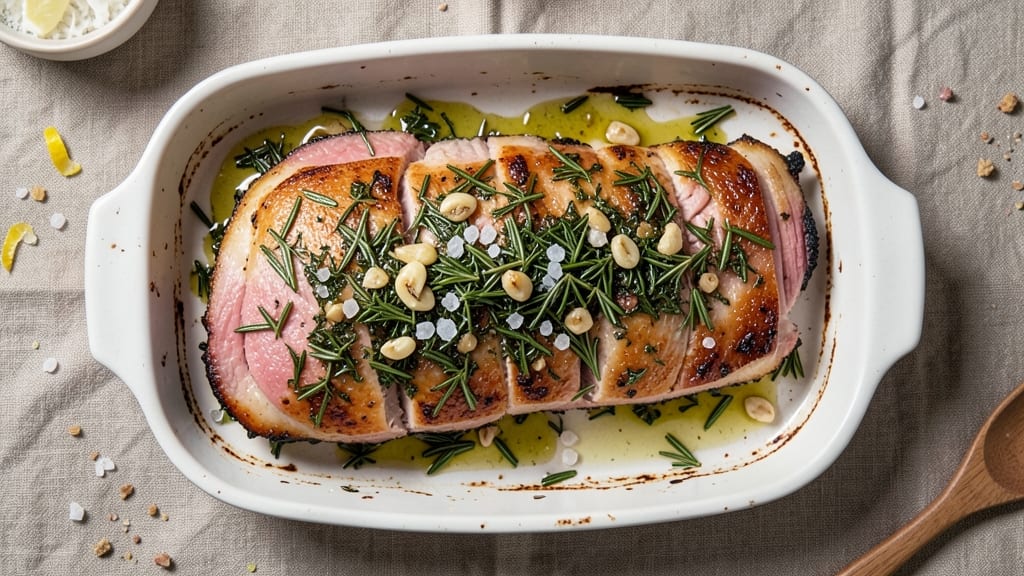
A perfectly baked boneless pork loin delivers that magical balance—crispy herb-crusted edges and juicy pink centers that practically melt in your mouth.
I developed this recipe after years of testing what makes pork loin truly exceptional, and the secret lies in the slow, even cooking that preserves moisture while building flavor through a simple herb crust.
There's nothing quite like the aroma of garlic, rosemary, and thyme filling your kitchen as that pork transforms from raw to restaurant-worthy.
The beauty of this recipe is its simplicity—just a few pantry staples and a single baking dish, yet it delivers results that impress even skeptical meat lovers.
I've perfected the timing so you don't have to babysit the oven, and the herb crust adds layers of flavor without overwhelming the natural taste of the pork. This is the kind of dish that works for weeknight dinners or special occasions, requiring minimal effort but delivering maximum impact.
What you'll end up with is a perfectly cooked pork loin that slices effortlessly, revealing tender meat with a golden crust that's impossible to resist. The herbs infuse the pork with aromatic notes while the crust provides satisfying texture in every bite.
This recipe has become a staple in my home—whether serving it to family or enjoying a quiet dinner with my husband Tom and daughter Lily, it never fails to disappear quickly.
Pair it with roasted potatoes, sautéed green beans, or a fresh garden salad to complete the meal. The versatility of this dish makes it perfect for meal planning, and the leftovers reheat beautifully for sandwiches the next day. Let's get started on creating your juiciest, most flavorful pork loin yet.
Ingredients for baked pork loin recipe boneless
Nine simple ingredients transform into restaurant-worthy pork loin with crispy edges and juicy centers.
| Ingredient | Amount | Notes |
|---|---|---|
| Boneless Pork Loin 🐖 | 2 lb | Center-cut for juiciness |
| Fresh Rosemary 🌿 | ¼ cup | Finely chopped, stems removed |
| Fresh Thyme 🌿 | ¼ cup | Leaves only, finely chopped |
| Garlic Cloves 🧄 | 6 cloves | Minced for herb crust |
| Extra-Virgin Olive Oil 🫒 | 2 tbsp | For herb crust |
| Diamond Crystal Kosher Salt 🧂 | 1 tbsp | Plus extra for seasoning |
| Freshly Ground Black Pepper 🌶️ | 1 tbsp | For crust and seasoning |
| All-Purpose Flour 🌾 | 2 tbsp | For dusting |
| Unsalted Butter 🧈 | ½ cup | Melted for basting |
| Fresh Lemon Juice 🍋 | 2 tbsp | Brightens the crust |
| Fresh Parsley 🌿 | 0.1 cup | Chopped for garnish |
The pork loin is everything here—center-cut gives you the most tender, juicy meat. Ask your butcher for the thickest cut available (1.5-2 inches thick), as even cooking matters most. I always grab mine from Whole Foods or my local Trader Joe's—their pork is consistently high quality. Look for vibrant color and good marbling. If you can't find center-cut, a standard boneless loin will work, but you'll need to adjust cooking time slightly. The herbs? Fresh is ideal, but if you're in a pinch, dried works at one-third the amount (just toast them first for deeper flavor).
No fresh rosemary? Dried rosemary at half the amount gets you close, but fresh has that piney aroma that's worth hunting down. The olive oil should be fruity and peppery—California Olive Ranch or Bertolli are my go-tos. Short on butter? Olive oil works in a pinch, though it won't brown as nicely. The lemon juice adds brightness to the crust, but if you're out, a splash of apple cider vinegar does the trick. The flour is just for dusting—don't skip it, though. It helps the crust adhere beautifully. And for the love of pork, measure that salt carefully—too much ruins the delicate balance.
This pork reheats like a dream—just warm it gently in the oven with a splash of broth. Keeps 3-4 days in the fridge, though I rarely have leftovers that long. For meal prep, slice it thin and store in portions—perfect for sandwiches or salads. The herb crust freezes well too, so make extra if you're hosting. Just thaw it overnight in the fridge before reheating. And if you're serving a crowd, double the recipe—it's that good.
Why You'll Love This Recipe
- Foolproof Timing: I swear by this—just season, sear, and bake. No basting, no fussing, no waiting around wondering if it’s done. That rosemary and thyme? They infuse the pork while you’re actually doing something else, like pretending to grade papers or scrolling through memes.
- Herb-Crusted Magic: Between us, the garlic and rosemary make this pork ridiculously good. The crust gets fragrant and slightly crispy, while the inside stays juicy—like a hug from a French chef, but with way less drama.
- Weeknight Workhorse: This is my go-to when I need something reliable. Slice it for sandwiches, dice it for salads, or serve it with roasted veggies. Even my picky-eating brother asks for seconds, and that’s saying something.
- Budget-Friendly Luxury: Pork loin stretches further than you’d think, and the leftovers? Chef’s kiss. Toss them in stir-fries, tacos, or even a quick pasta the next day. It’s the kind of meal that makes grocery night feel like a win.
Step-by-step instructions for herb-crusted pork loin
Here's how to achieve that perfect balance of crispy herb crust and juicy pink centers every time.
Prepare the Herb Crust Mixture
In a small bowl, combine the 0.25 cup fresh rosemary, 0.25 cup fresh thyme, 6 cloves minced garlic, 2 tbsp extra-virgin olive oil, 1 tbsp diamond crystal kosher salt, and 1 tbsp freshly ground black pepper. Use your fingers to gently crush the herbs and release their oils—this ensures maximum flavor infusion. The mixture should look like a thick, fragrant paste with visible herb flecks throughout.
Let this sit for 5 minutes while you prepare the pork. This resting time allows the flavors to meld together, creating a more cohesive crust. I like to press the mixture between my fingers occasionally to help distribute the oils evenly—this makes all the difference in the final texture.
Season and Coat the Pork Loin
Pat the 2 lb boneless pork loin completely dry with paper towels—this is crucial for that crispy crust. I press down firmly all over, especially in the dimples and crevices. Then, generously rub the herb mixture all over the pork, pressing it into the surface so it adheres well.
Sprinkle the 2 tbsp all-purpose flour evenly over the coated pork. Gently shake the pork to help the flour stick, then flip it over and repeat. The flour acts as a binder for the herb crust and helps create that beautiful golden-brown crust when baked. Don't worry if it doesn't look perfectly even—that's normal.
Preheat and Prepare for Baking
Preheat your oven to 425°F with a rack positioned in the middle position. Place the pork loin on a wire rack set inside a rimmed baking sheet—this allows air to circulate underneath for even cooking. I always use a rack because it prevents the pork from sitting in its own juices, which can make the bottom soggy.
Let the pork sit at room temperature for 30 minutes before baking. This ensures even cooking throughout. While it's coming to temperature, melt the 0.5 cup unsalted butter in a small saucepan over low heat. Once melted, stir in the 2 tbsp fresh lemon juice—this brightens the crust and adds a lovely citrus note that complements the herbs.
Bake to Perfect Doneness
Carefully transfer the pork to the preheated oven and bake for 30 minutes. After this initial baking time, brush the melted butter-lemon mixture generously over the top of the pork. This basting step creates that beautiful golden crust and adds moisture to keep the meat juicy.
Return the pork to the oven and continue baking for another 25-30 minutes, or until the internal temperature reaches 145°F when measured with a meat thermometer. The crust should be deep golden brown with some charring in spots, and the pork should pull away slightly from the edges when you gently press it with a spatula.
Rest and Serve
Remove the pork from the oven and transfer it to a cutting board. Tent loosely with aluminum foil and let it rest for 15 minutes before slicing. This resting period is essential—it allows the juices to redistribute throughout the meat, ensuring each slice is moist and flavorful.
While the pork rests, use a sharp knife to slice it into ½-inch thick medallions. Garnish each serving with the 0.1 cup chopped fresh parsley for a pop of color and freshness. The crust should be crispy and aromatic, while the interior remains tender and pink—exactly what we're aiming for.
Pro Tips For Making Baked Pork Loin Recipe Boneless
- USE A MEAT THERMOMETER: I learned this the hard way—pork loin can sit at 140°F for ages looking "done" but still dry as a bone. Pull it at 145°F (150°F for extra safety), then let it rest. No guessing, no overcooking.
- SMASH THE GARLIC: After burning three batches, I finally figured out: whole garlic cloves hide in the meat, barely contributing flavor. Crush them into a paste first—mix with olive oil and spread it all over the loin, not just the top. The crust gets deeper flavor this way.
- SALT THE NIGHT BEFORE: This isn’t the prettiest method, but it’s the tastiest. Salt the pork loin generously (1 tsp per pound) and let it sit uncovered in the fridge for 12–24 hours. The seasoning penetrates deeper, and the surface gets that perfect caramelized crust without burning.
- ROAST LOW AND SLOW: Start hot, finish low—I know, I know, but trust the process. Sear the loin in a screaming-hot oven (475°F) for 10 minutes to lock in juices, then drop to 325°F. The crust stays crisp, the inside stays tender, and you won’t end up with a sad, gray slab.
Pro cooking tips for great baked pork loin recipe boneless
Temperature Precision
Pork loin is forgiving, but 425°F is your magic number for that perfect crust-to-juice ratio. I use my Thermoworks Smoke thermometer to confirm the oven hits this temp before adding the pork—fluctuations can mean dry meat or uneven cooking.
If your oven runs hot, reduce to 400°F and add 5-10 minutes to the baking time. 🌡️
Herb Crust Science
The flour in the herb crust isn't just for texture—it creates a Maillard reaction that deepens flavor. I press the herbs into the pork with my fingers (yes, really!) to ensure even distribution.
For extra crispiness, sprinkle 1 tsp cornstarch over the crust before baking—it adds a satisfying crunch without altering taste.
Basting Technique
Don't just drizzle that butter-lemon mixture—generously brush it in three directions (lengthwise, crosswise, then diagonally) to ensure full coverage. I baste twice during cooking: once at 30 minutes and again at 55 minutes.
This keeps the crust golden and the meat impossibly tender. Pro tip: Use a pastry brush for even distribution.
Resting Matters
Skipping the 15-minute rest is the fastest way to dry pork. I cover it loosely with foil to trap heat while allowing steam to escape. During this time, preheat your serving plates in the oven (200°F for 10 minutes)—they'll keep the pork warm while you slice.
This is where juices redistribute, making every bite perfect. 💫
Doneness Test
Use a meat thermometer in the thickest part of the loin—145°F is ideal for medium-rare, but pork is safe at 145°F thanks to its natural low bacteria count.
If you don't have a thermometer, press the pork gently: it should feel firm but still springy, not rubbery. Overcooking by even 5°F turns tender pork tough.
Leftovers Hack
Slice the pork thin and store portions in airtight containers with a splash of the pan juices. Reheat gently in the oven (300°F for 15 minutes) or microwave with a damp paper towel.
For sandwiches, add a smear of Dijon mustard and apple slices—it's my go-to lunch the next day. 🍽️
Nutrition facts
Frequently asked questions
Why does my pork loin turn out dry even when I follow the recipe?
Overcooking is the #1 cause of dry pork loin. Always use a meat thermometer—pull it at 145°F internal temperature (not 160°F like some guides say). The 15-minute rest is also critical—juices redistribute during this time. For extra moisture, try brining the pork for 30 minutes in 1/4 cup kosher salt dissolved in 4 cups water before baking.
Can I substitute dried herbs for fresh in the crust?
Yes, but use one-third the amount of dried herbs (so 1/8 cup dried rosemary/thyme instead of 1/4 cup fresh). Toast the dried herbs in a dry pan over low heat for 1 minute first to deepen their flavor. For best results, combine 1/8 cup dried rosemary with 1/4 cup fresh parsley to mimic the fresh herb blend's complexity.
What's the best way to reheat sliced pork loin?
Slice the pork thin and reheat in the oven at 300°F for 15 minutes with a splash of broth or apple cider. For microwave reheating, place slices on a plate with a damp paper towel and cover with another towel, heating in 30-second bursts until warm. Never reheat in the microwave uncovered—it dries out the meat instantly.
How do I adjust cooking time for a thicker or thinner pork loin?
For every 1/2 inch difference in thickness, adjust time by ±10 minutes. A 1.5-inch loin cooks 15-20 minutes longer than a 1-inch cut. Always check with a thermometer—the 145°F target is your guide. Thinner cuts may need a baking sheet under the rack to prevent burning before they're done.
What sides pair best with herb-crusted pork loin?
Roasted garlic mashed potatoes or crispy roasted potatoes complement the crust beautifully. For lighter options, try sautéed green beans with lemon zest or a spring vegetable medley. For a complete meal, add a red wine reduction drizzle over the sliced pork—it enhances the herb flavors while cutting through the richness.