
Main Courses
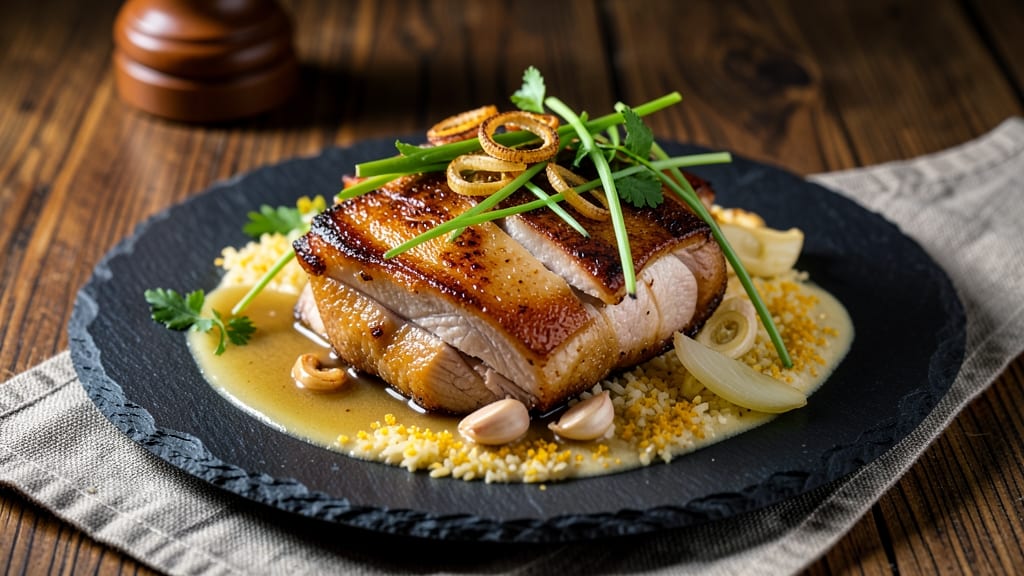
Balinese pork belly transforms into a tender, caramelized masterpiece when slow-cooked in coconut milk and aromatic spices. ✨ I first discovered this technique during a trip to Ubud, where the rich, fragrant curry became my obsession—now I recreate it at home with the same depth of flavor.
The key lies in marinating the pork belly overnight in a blend of turmeric, lemongrass, and galangal, which infuses every bite with Balinese warmth.
This recipe delivers restaurant-quality results without requiring special equipment—just a Dutch oven and patience. The pork belly becomes irresistibly rich as it simmers for hours, developing a glossy, caramelized crust while staying incredibly tender inside.
The coconut milk base creates a velvety sauce that clings to every strand of meat, making each bite unforgettable.
By the time you serve this dish, you’ll have a golden-brown, aromatic centerpiece that pairs perfectly with steamed jasmine rice or fresh lime wedges. The slow-cooking process allows flavors to meld beautifully, resulting in a dish that’s both comforting and sophisticated.
This is the kind of meal that transports you to Bali with every forkful.
Perfect for special occasions or weekend feasts, this recipe scales beautifully for crowds. The leftovers reheat wonderfully, making it ideal for meal prep. Let’s bring the flavors of Bali to your table—here’s how to make it happen.
Ingredients for balinese pork belly
Pork belly, coconut milk, and aromatic spices transform into Bali’s richest curry masterpiece.
| Ingredient | Amount | Notes |
|---|---|---|
| Pork Belly 🐖 | 2 lb | Thick-cut, skin-on preferred |
| Coconut Milk 🥥 | 1 ½ cans | Full-fat, 13.5 oz each |
| Turmeric Powder 🌿 | 1 tbsp | Fresh root preferred for color |
| Fresh Lemongrass 🌿 | 1 whole | Stalks cut into 2-inch pieces |
| Galangal 🌿 | 1 piece | Substitute ginger if unavailable |
| Garlic Cloves 🧄 | 6 cloves | Minced for marinade |
| Shallots 🧅 | 4 whole | Minced, or sub with onions |
| Kaffir Lime Leaves 🍋 | 4 leaves | Or sub with lime zest |
| Coconut Aminos 🥄 | 2 tbsp | Or soy sauce for umami |
| Brown Sugar 🍬 | 2 tbsp | Lightly packed |
| Fresh Chili 🌶️ | 1 whole | Bird's eye or Thai chili |
| Jasmine Rice 🍚 | 2 cups | Uncooked, for serving |
| Olive Oil 🫒 | 2 tbsp | For searing pork belly |
| Salt 🧂 | 1 ½ tsp | Kosher or sea salt |
| Black Pepper 🌶️ | ½ tsp | Freshly ground |
The pork belly is non-negotiable—thick-cut, skin-on for that signature crackling crust. Costco or specialty butchers carry the best cuts, but any grocery store’s pork belly will work if it’s at least 1-inch thick. Look for marbled fat—this ensures tenderness. I always buy extra and freeze half; it keeps for months in the freezer. For the galangal, Asian markets are your best bet, but if you can’t find it, ginger works in a pinch—just halve the amount. Fresh lemongrass and kaffir lime leaves elevate this dish, but dried lemongrass powder (found in bulk bins) or lime zest will save you a trip to the specialty store.
No coconut aminos? Soy sauce or tamari works, though you’ll lose some depth. The brown sugar caramelizes beautifully during cooking, but white sugar is fine if that’s what you’ve got. For heat, adjust the chili—Thai bird’s eye packs the most punch, but jalapeño gives a milder kick. The coconut milk should be full-fat (none of that watered-down stuff)—Thai Kitchen or Goya brands are reliable. If you’re feeling adventurous, toast the coconut milk in the Dutch oven first to deepen its flavor—trust me on this. The shallots and garlic can be prepped ahead and stored in the fridge for 3 days, saving you time on cooking day.
This dish tastes even better the next day—plan ahead. The pork belly reheats beautifully; just warm it gently in the sauce until heated through. Store leftovers in an airtight container with the sauce for up to 4 days. Freeze portions for 3 months if you’re prepping for a crowd. The rice? Cook it fresh—jasmine rice is ideal, but any long-grain works. Serve with lime wedges for brightness and a sprinkle of fresh cilantro if you’re feeling fancy. Leftovers make incredible sandwiches the next lunch—worth the extra effort.
Why You'll Love This Recipe
- One-Pot Magic: I swear by this—just toss everything into a single pot, walk away, and let the galangal and lemongrass work their flavor magic. No chopping boards, no extra dishes, and zero stress.
- Golden, Creamy Bliss: That turmeric-infused coconut milk? It turns the pork belly into something ridiculously tender with a golden hue that looks as good as it tastes. The crispy edges? Chef’s kiss.
- Leftover Love: Between us, this dish begs to be made in bulk—it reheats like a dream and only gets better the next day. Pack it for lunches or freeze portions for lazy nights. (Yes, even on a Tuesday night.)
- Budget-Friendly Luxury: Pork belly feels fancy, but the spices and coconut milk stretch it into a whole meal without breaking the bank. Honestly, it’s the kind of dish that makes you feel like you’re eating at a warung, not just feeding your family.
Step-by-step instructions for Balinese pork belly
Here's how to transform simple ingredients into a fragrant, melt-in-your-mouth pork belly dish.
🔥 Step 1: Sear the Pork Belly for Deep Flavor
Heat a large Dutch oven over medium-high heat until hot. Add the 2 tablespoons olive oil and swirl to coat the bottom evenly. Place the 2 lb pork belly skin-side down and press gently with a spatula to create contact with the pan.
Sear for 8-10 minutes until the skin turns a rich golden brown and the fat begins to render. You'll see the fat bubbles and sizzle—this is what creates that irresistible crust. Flip the pork belly and sear the other side for another 6-8 minutes until browned. Remove from the pot and set aside on a plate.
Here's the thing—don't rush this step. The deep caramelization from the searing builds layers of flavor that will infuse your entire dish. If the skin starts to smoke too much, reduce the heat slightly but keep it moving.
👨🍳 Step 2: Build the Aromatic Curry Base
In the same Dutch oven, reduce heat to medium and add the 4 whole shallots and 6 cloves garlic cloves that you've minced. Cook for 3-4 minutes until the shallots soften and turn translucent, stirring occasionally to prevent burning.
Add the 1 piece galangal (peeled and sliced) and 1 whole fresh lemongrass (cut into 2-inch pieces). Cook for another 2 minutes until fragrant—you should smell that citrusy, slightly peppery aroma that's so characteristic of Balinese cooking.
Stir in the 1 tbsp turmeric powder and cook for 30 seconds until the spices bloom and fill your kitchen with that warm, earthy scent. This is where the magic happens—the spices release their essential oils and create the foundation for your curry.
🥘 Step 3: Simmer the Pork Belly in Coconut Milk
Pour in the 1.5 cans coconut milk, scraping up any browned bits from the bottom of the pot. Return the pork belly to the Dutch oven, skin-side up, and bring the mixture to a gentle simmer over low heat. The liquid should bubble softly—this ensures even cooking without curdling the coconut milk.
Add the 4 leaves kaffir lime leaves (torn in half), 1 whole fresh chili (sliced into rings), 2 tbsp coconut aminos, 2 tbsp brown sugar, 1.5 tsp salt, and 0.5 tsp black pepper. Stir gently to combine, being careful not to break up the pork belly too much.
Cover the pot and simmer for 1 hour to 1 hour 15 minutes until the pork belly is fork-tender. You'll know it's ready when a knife slides in easily and the meat pulls apart with gentle pressure. The sauce should be thick and glossy, with the pork belly swimming in its rich, golden bath.
⏰ Step 4: Rest and Serve with Jasmine Rice
Remove the pork belly from the pot and transfer it to a cutting board. Tent loosely with aluminum foil and let it rest for 10 minutes. This resting period allows the juices to redistribute throughout the meat, ensuring each bite is impossibly tender.
While the pork belly rests, skim any excess fat from the surface of the sauce (if desired) and adjust the seasoning if needed. The pork belly should be served with 2 cups jasmine rice cooked according to package instructions. Spoon the aromatic curry sauce over the rice and top with slices of pork belly.
Here's a pro tip: For extra presentation, arrange the kaffir lime leaves and chili slices on top of the dish. The vibrant colors and fresh aromas will make your Balinese pork belly look as good as it tastes. Each bite should deliver a perfect balance of tender pork, creamy coconut, and complex spice flavors.
Pro Tips For Making Balinese Pork Belly
- CHAR THE BELLY FIRST: Slap that pork belly in a screaming-hot pan for 3-4 minutes per side before braising—no, you’re not burning it, you’re building flavor. I used to skip this and ended up with bland, soggy pork; the crust locks in juices and deepens the caramelized aroma when it hits the coconut milk later.
- GRATE THE GALANGAL: Fresh galangal’s tough fibers won’t break down if you just chop them—grate that sucker like ginger. Use a box grater or microplane for even exposure, or the dish will taste like you threw in a few limp sticks and called it a day. (Yes, even if you’re impatient like me.)
- SIMMER LOW AND SLOW: After adding coconut milk, drop the heat to a bare simmer—think tiny bubbles, not rolling boils. I learned this the hard way when my first batch curdled the coconut milk into a greasy mess. Low heat = tender pork, not scrambled pork and sauce.
- RESERVE THAT COCONUT CREAM: Strain the coconut milk through a fine-mesh sieve before adding it to the pot—you’ll catch stray galangal fibers and lemongrass bits that turn your sauce gritty. Save the thick cream from the bottom for drizzling later; it’s the stuff that makes people ask, “What’s in this?”
Essential equipment for perfect results
Dutch Oven
Your Dutch oven is the unsung hero of this recipe—it’s the only pot that can handle the searing, simmering, and even baking all in one. I swear by my Lodge 5.5-quart cast iron Dutch oven with lid, which distributes heat evenly and retains it beautifully.
For a lighter option, All-Clad Stainless Steel works well, though cast iron gives that extra depth of flavor over time. If you don’t have one, a heavy-bottomed stainless steel pot with tight-fitting lid will do in a pinch. 🔥
Tongs and Tongs
You’ll need two sets of tongs—one for handling the raw pork belly and another for stirring the sauce. I use OXO Good Grips for their sturdy build and comfortable handles.
The first pair should be long-handled (about 12 inches) to avoid burns when searing, while the second can be shorter for sauce adjustments. Trust me, trying to maneuver with just one pair is a recipe for disaster—especially when you’re flipping that slippery pork belly. 💪
Meat Thermometer
A meat thermometer is non-negotiable for perfect doneness. I recommend the Thermoworks Smoke—it’s precise, durable, and has a probe that stays put even in thick cuts like pork belly. Insert it into the thickest part of the meat (avoiding fat) to monitor the internal temperature.
The pork belly should reach 195-203°F for that melt-in-your-mouth tenderness. Without one, you’re guessing, and that’s how you end up with dry, overcooked pork. ⏰
Knife and Cutting Board
For prepping ingredients like shallots, garlic, and lemongrass, a sharp 8-inch chef’s knife is essential. My go-to is the Wüsthof Classic—it’s heavy enough to handle tough cuts but precise enough for delicate prep work. Pair it with a large cutting board (I use Maple for its gentle surface).
A microplane also comes in handy for grating galangal or fresh ginger if you’re substituting. Never use a dull knife—it’s dangerous and makes prep a nightmare. ✨
Slotted Spoon
A slotted spoon (preferably with a long handle) is your best friend for skimming excess fat from the sauce without breaking up the pork belly. I keep a stainless steel one in my kitchen at all times—it’s lightweight, easy to clean, and does the job perfectly.
Use it gently to lift the pork belly in and out of the pot during simmering, too. A regular spoon will just mash everything together. 🍲
Mixing Bowls
You’ll need two mixing bowls: one for marinating (if you’re prepping ahead) and another for assembling the sauce ingredients. I prefer stainless steel bowls for their durability, but glass works too.
A medium-sized bowl (about 3-quart capacity) is ideal for combining the shallots, garlic, and spices before adding them to the Dutch oven. Label them if you’re multitasking—trust me, you’ll thank yourself later. 💡
Nutrition facts
Frequently asked questions
Can I substitute regular pork shoulder for pork belly?
While you can use pork shoulder, it won't deliver the same luxurious texture. Pork belly's fat content creates that signature crackling crust and melt-in-your-mouth tenderness. If you must substitute, use thick-cut pork shoulder (at least 1.5 inches thick) and increase cooking time by 30-45 minutes to achieve similar tenderness. The flavor will be excellent, but the texture won't be identical.
How do I make this dish less spicy?
Simply remove the fresh chili entirely or reduce it to just half a chili (or 1/4 chili for very mild heat). You can also add a pinch of sugar (about 1/4 tsp) to balance any remaining spiciness. The coconut milk already provides natural creaminess that helps mellow the heat, so don't worry about overpowering the dish.
What's the best way to reheat leftovers?
Reheat gently in a skillet with a splash of water or coconut milk over low heat for 5-7 minutes to prevent drying. Never microwave directly from the fridge—this causes the pork to become rubbery. For extra richness, add a spoonful of fresh coconut milk when reheating. Leftovers keep well for 4 days in the fridge or 3 months in the freezer.
Can I make this dish in an Instant Pot?
Yes, but with adjustments. Sear the pork belly first in a skillet, then transfer to the Instant Pot with all ingredients except coconut aminos (add those after cooking). Cook on high pressure for 40 minutes, then natural release for 15 minutes. The texture will be slightly different—more tender than crispy—but still delicious. For extra flavor, finish with a quick pan-sear after pressure cooking to crisp the skin.
What's the secret to getting crispy skin?
Three keys: hot pan, gentle pressure, and patience. Heat your Dutch oven until smoking hot, press the pork belly skin down firmly with a spatula, and resist the urge to move it while searing. The fat needs 8-10 minutes to render and crisp. After simmering, broil for 3-5 minutes under the oven's broiler to restore crispness if needed.