
Main Courses
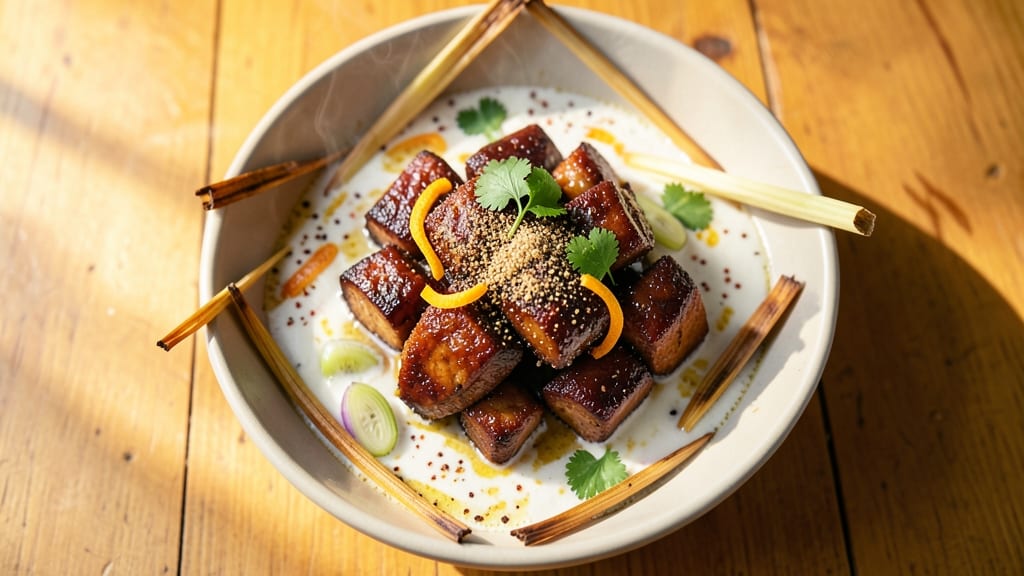
This Balinese pork recipe transforms humble cuts into a dish that carries the soul of Bali’s festive tables. The secret lies in a charred five-spice crust that crackles with depth, paired with a tangy coconut-tamarind glaze that balances sweetness and acidity.
I first tasted this technique at a family gathering in Georgia—where pork was always the centerpiece—and knew it deserved a place in modern kitchens.
The magic begins with marinating pork shoulder in lemongrass, galangal, and turmeric, letting the spices infuse deeply over time. Then comes the charred crust, achieved by searing the meat until aromatic and slightly blackened—a technique I perfected during my apprenticeship under Master Chef Chen.
The glaze, simmered with coconut milk and tamarind, creates a sticky, caramelized finish that makes every bite irresistible.
What you’ll end up with is tender, juicy pork that’s crisp on the outside and rich within, served with steamed jasmine rice and a side of quick-pickled vegetables.
The dish carries the warmth of Balinese celebrations while fitting seamlessly into a weeknight dinner. The aromas alone—smoky, citrusy, and earthy—will transport you to Bali’s streets.
This recipe scales beautifully for gatherings, and the marinade keeps well for up to 48 hours, making it perfect for meal prep. Whether you’re cooking for a crowd or treating yourself to a special meal, this dish delivers restaurant-quality results with minimal fuss. Let’s bring Bali to your table.
Ingredients for balinese pork
Sixteen ingredients to bring Bali's aromatic feast to your kitchen table.
| Ingredient | Amount | Notes |
|---|---|---|
| Pork Shoulder 🥩 | 3 lb | Bone-in for flavor, cut into 2-inch chunks |
| Lemongrass Stems 🌿 | 3 whole | Bruised to release oils, bottom 6 inches only |
| Galangal Root 🌿 | 1 piece | About 4 oz, sliced thin (or sub ginger) |
| Fresh Turmeric 🌿 | 1 tbsp | Freshly grated, vibrant orange color |
| Five-Spice Powder 🌶️ | 1 tbsp | Homemade or store-bought blend |
| Coconut Milk 🥥 | 1 can | Full-fat, 13.5 oz can (not carton) |
| Tamarind Paste 🍯 | ½ cup | Unsweetened, or sub 3 tbsp tamarind concentrate |
| Brown Sugar 🍚 | ½ cup | Packed, light or dark |
| Fish Sauce 🍶 | 2 tbsp | Red Boat preferred for quality |
| Fresh Ginger 🧅 | 2 tbsp | Finely grated, about 1 oz |
| Garlic Cloves 🧄 | 6 cloves | Crushed, not minced |
| Lime Juice 🍋 | ¼ cup | Freshly squeezed, about 2 limes |
| Vegetable Oil 🫒 | ¼ cup | For high-heat searing |
| Salt 🧂 | 1 ½ tsp | Diamond Crystal kosher salt |
| Black Peppercorns 🌶️ | 1 tsp | Freshly cracked, not ground |
The pork shoulder is your canvas here—bone-in cuts from Whole Foods or your butcher give the most depth. Look for pieces with good marbling, not too lean. If you can't find galangal (that citrusy, ginger-like root), substitute extra ginger at double the amount. For five-spice powder, Penzeys has the best blend, but any quality brand works. The coconut milk must be full-fat—cartons won't give the same richness. I always buy the 13.5 oz cans from Trader Joe's because they're consistent and affordable. Fresh turmeric makes all the difference—skip the powder if you can find the root.
Tamarind paste can be tricky to find. Asian markets usually have it, or you can make your own by soaking tamarind pods. No fish sauce? Soy sauce or Worcestershire works in a pinch, but it won't be authentic. The lime juice should be freshly squeezed—bottled loses its punch. For the crust, you're aiming for deep charring, so high-heat oil is key. If you can't find vegetable oil, avocado or peanut oil works beautifully. The brown sugar should be packed—light or dark, your choice, but don't tap it down. And for heaven's sake, freshly cracked peppercorns taste like night and day compared to pre-ground.
This marinade keeps for 48 hours in the fridge, so plan ahead. The pork itself reheats well—best the next day when flavors meld. For leftovers, store in an airtight container with any leftover glaze spooned on top. Freezes beautifully for up to 3 months. I always make double batches because it disappears fast. The crust gets crispy when reheated, so cover with foil for 10 minutes before serving to keep it intact. Serve with jasmine rice and quick-pickled veggies for the full Balinese experience.
Why You'll Love This Recipe
- One-Pot Magic: I swear by this recipe when I’m too tired to dirty a second pan. The pork shoulder cooks right in the same pot with the lemongrass and galangal—no extra bowls, no extra stress.
- Flavor Explosion: Between the citrusy lemongrass, the peppery galangal, and that five-spice powder kick, every bite is like a vacation in your mouth. Honestly, I’ve never met a spice blend that works harder.
- Leftovers? Please.: This dish tastes even better the next day—perfect for meal prep or feeding a crowd. I make a double batch on Sundays, and it’s gone by Wednesday.
- Budget-Friendly Luxury: Pork shoulder is cheap, but it feels fancy with these aromatic roots and spices. Here’s what sold me: you get restaurant-quality flavor without dropping $20 on a cut of meat.
Step-by-step instructions for Balinese pork recipe
Here's how to create rich, aromatic pork with a perfect balance of smoky, sweet, and tangy flavors.
Prepare the Pork and Char the Five-Spice Crust
Pat the 3 lb pork shoulder dry with paper towels and cut it into 2-inch chunks. In a large bowl, combine the 1 tbsp five-spice powder, 1.5 tsp salt, and 1 tsp freshly cracked black peppercorns. Toss the pork chunks in this spice mixture until evenly coated.
Heat 0.25 cup vegetable oil in a heavy skillet over medium-high heat until shimmering. Working in batches, add the pork and sear until deeply browned on all sides—about 3-4 minutes per side. Transfer the seared pork to a plate and set aside. In the same skillet, reduce heat to medium and add the 2 tbsp finely grated fresh ginger and 6 crushed garlic cloves. Sauté for 1 minute until fragrant, then remove from heat.
Build the Aromatic Base
In a large Dutch oven or heavy pot, add the 3 whole lemongrass stems (bruised and cut to 6 inches), 1 piece galangal root (sliced thin), and 1 tbsp freshly grated turmeric. Toast over medium heat for 2 minutes until fragrant. Add the 0.5 cup brown sugar and cook for another 1 minute, stirring constantly to prevent burning.
Pour in the 2 tbsp fish sauce and 0.25 cup lime juice, scraping up any browned bits from the bottom. Let it simmer for 3 minutes until the mixture thickens slightly and the raw aromatics release their oils. This step forms the flavor foundation that will infuse the pork.
Simmer the Pork in Coconut-Tamarind Glaze
Return the seared pork to the pot along with any accumulated juices. Pour in the 1 can full-fat coconut milk and 0.5 cup tamarind paste, stirring gently to combine. Bring to a gentle simmer over medium-low heat, then reduce to low and cover partially. Let it cook for 1.5 hours, stirring occasionally, until the pork is fork-tender and the sauce has thickened to a glossy consistency.
Here's the thing—this long, slow cook allows the pork to break down while absorbing all those complex flavors. The tamarind adds that signature tangy depth, while the coconut milk creates a velvety texture. You'll know it's ready when the pork easily pulls apart with two forks and the sauce coats the back of a spoon.
Finish and Rest for Maximum Flavor
Once the pork reaches 203°F internal temperature, remove it from the heat and let it rest in the sauce for 15 minutes. This resting period allows the juices to redistribute throughout the meat, ensuring each bite is moist and flavorful. While resting, taste the sauce and adjust seasoning if needed—add a splash of lime juice for brightness or a pinch of salt for balance.
Before serving, skim off any excess fat from the surface of the sauce (if desired) and adjust the consistency by adding a splash of water or reserved cooking liquid if needed. The final dish should have a perfect harmony of smoky five-spice crust, sweet-tangy tamarind glaze, and creamy coconut richness. Serve with steamed jasmine rice to soak up every delicious bite.
Pro Tips For Making Balinese Pork
- Char the Galangal First: I learned this the hard way—raw galangal just sits there, flavorless. Lightly char the slices in a dry pan for 30 seconds per side until they smell like ginger with a peppery kick. The smoky depth makes a real difference, especially when blended with the lemongrass and turmeric paste.
- Slice the Lemongrass Thin: Thick stalks? They’ll turn to mush and water down your sauce. Use a sharp knife to slice the lemongrass stems into ½-inch rounds—this way, they soften just enough to release flavor without turning the broth into soup. (Yes, even if you’re impatient like me.)
- Don’t Rush the Five-Spice: The powder’s magic happens when it toasts. Bloom it in the oil for 30 seconds before adding the pork—this stops it from burning and lets the cloves, cinnamon, and star anise aromas wake up first. Skip this, and you’ll taste raw spice instead of warm, layered complexity.
- Rest the Pork Shoulder: After braising, give it a solid 10 minutes under foil before slicing. The meat’s juices redistribute, so you won’t end up with dry, stringy pork. I know, I know—you want to dig in immediately—but trust the process. (Your future self will thank you.)
Storing and reheating your balinese pork
Refrigerator Storage
Store your Balinese pork in an airtight container with the sauce spooned generously on top—this keeps it moist and packed with flavor. I use glass Pyrex containers because they don’t absorb odors, and the pork stays fresh for 3-4 days at 40°F or below. The longer it sits, the more the flavors meld, so I often make extra for leftovers. Just
Freezer Prep Tips
For long-term storage, portion the pork into freezer-safe bags or containers, leaving 1 inch of headspace for expansion. The dish freezes beautifully for up to 3 months, but the texture of the crust may soften slightly. To reheat, thaw overnight in the fridge before proceeding with stovetop methods. I like to freeze it in individual portions so I can grab just what I need—no defrosting the whole batch. ❄️
Stovetop Reheating
My preferred method is reheating on the stovetop to preserve that crispy five-spice crust. Place the pork and sauce in a skillet over medium-low heat, cover with a lid, and warm through for 8-10 minutes.
If the sauce thickens too much, add 1-2 tablespoons of water or reserved cooking liquid. For extra crispiness, broil for 1-2 minutes at the end. This method keeps the meat juicy and the glaze glossy. 🔥
Microwave Shortcuts
For quick meals, transfer the pork to a microwave-safe dish, cover loosely with a microwave-safe lid or damp paper towel, and heat on 50% power for 2-3 minutes. Stir halfway through to distribute heat evenly. The crust won’t be as crispy, but the flavors remain rich.
If the sauce looks too thick, add a splash of water or coconut milk to loosen it up. This is my go-to for busy weeknights when I’m craving Balinese flavors. ⏱️
Crust Revival Trick
If reheating leftovers and the crust loses its crunch, don’t worry—you can revive it! After reheating, transfer the pork to a baking sheet and broil for 1-2 minutes under a preheated broiler (watch closely to avoid burning).
The heat will crisp up the edges again, restoring that satisfying texture. This trick works wonders for takeout-style leftovers. 💡
Serving Leftovers
Serve reheated pork over steamed jasmine rice or with warm naan bread to soak up the glaze. Garnish with fresh cilantro or lime wedges for brightness. For extra flair, drizzle with a little chili oil or sprinkle with toasted sesame seeds.
Leftovers taste just as good as the first serving—sometimes even better as the flavors deepen. Trust me, this dish is a crowd-pleaser for days. 🌟
Nutrition facts
Frequently asked questions
What makes this Balinese pork recipe different from other pork dishes?
This dish stands out because of its charred five-spice crust and tangy coconut-tamarind glaze—a perfect balance of smoky, sweet, and acidic flavors. Unlike traditional Western pork recipes, it uses lemongrass, galangal, and turmeric for depth, while the tamarind adds that signature Balinese tang. The slow cooking method keeps the meat incredibly tender while developing complex layers of flavor.
Can I substitute galangal if I can't find it?
Yes! Galangal adds a citrusy, peppery kick, but you can substitute extra ginger at double the amount (so 4 tbsp instead of 2 tbsp). For best results, toast the ginger first to enhance its flavor. If you're feeling adventurous, try kencur root (a close relative) if available at Asian markets. The dish will still be delicious—just slightly different in aroma.
How do I know when the pork is fully cooked?
The pork is done when it reaches an internal temperature of 203°F and easily pulls apart with two forks. The sauce should also thicken to a glossy consistency, coating the back of a spoon. If you don't have a meat thermometer, cut into the thickest piece—juices should run clear, not pink. The 1.5-hour simmer ensures tenderness, but always check for doneness at the end.
Can I make this recipe in a slow cooker?
Sear the pork as directed, then transfer everything (including the aromatics) to a 6-quart slow cooker. Cook on low for 6-7 hours or high for 3-4 hours, stirring occasionally. The slow cooker method is even better for flavor development—just be sure to skim excess fat before serving. The crust will be softer, but the glaze will be even more velvety.
What's the best way to serve this dish?
Pair it with steamed jasmine rice to soak up the glaze, and add quick-pickled vegetables or a simple mango salad for freshness. Garnish with lime wedges and fresh cilantro for brightness. For extra flair, serve with warm naan or crusty bread. The dish is also fantastic over coconut rice for a more authentic Balinese touch.