
Main Courses
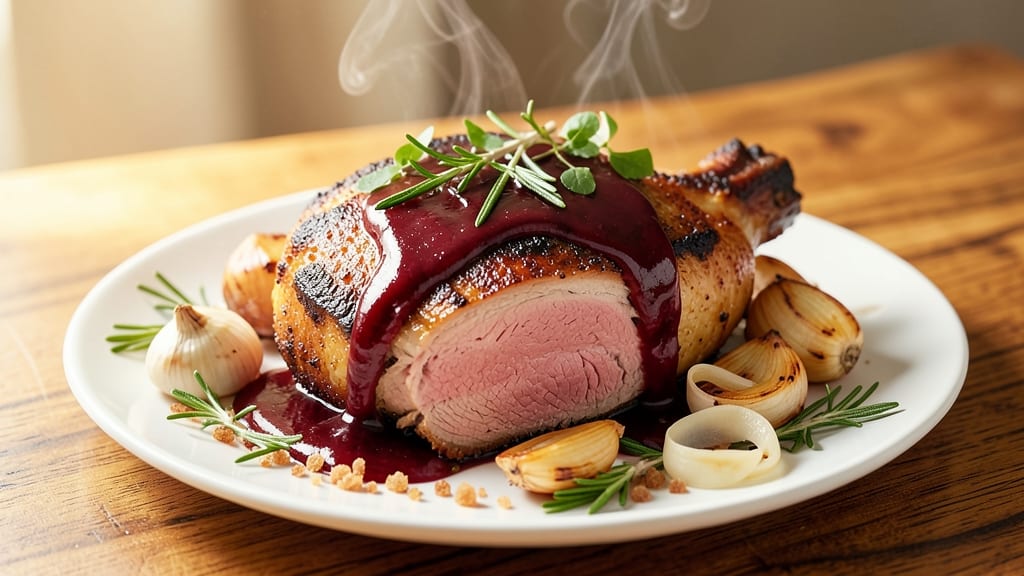
This balsamic pork roast recipe transforms tough cuts into melt-in-your-mouth perfection with just a few simple techniques. Growing up in Georgia, I learned that slow-braising pork with balsamic creates that signature tangy-sweet balance that makes every bite unforgettable.
The key? A long, low cook that tenderizes the meat while letting the balsamic deepen into a rich, glossy glaze.
The process is straightforward but requires patience—no rushing here. You'll start with a simple brine to ensure juicy meat, then roast the pork low and slow until it practically falls apart.
The balsamic reduction at the end isn't just for flavor; it's what turns good pork into extraordinary pork, with that signature glossy sheen and complex sweet-tart notes. This isn't just a recipe; it's a technique that elevates simple pork into something restaurant-worthy.
What you end up with is a juicy, tender roast that's impossible to resist—golden brown on the outside, so tender it shreds with a fork, and coated in that irresistible balsamic glaze.
The aroma alone will have everyone gathering at the table, and the first bite delivers that perfect harmony of savory pork and tangy-sweet balsamic. This is the kind of dish that makes you feel like you've cooked all day, even though the active time is minimal.
Serve it with roasted root vegetables or creamy mashed potatoes to soak up every last bit of that glorious sauce. The leftovers? Even better the next day—if there are any left.
This is the pork roast recipe I turn to when I want to impress without stressing, and it always delivers.
Ingredients for balsamic pork roast
Six ingredients transform tough pork into melt-in-your-mouth perfection—just patience and balsamic magic.
| Ingredient | Amount | Notes |
|---|---|---|
| Pork Shoulder (Bone-In) 🐖 | 4 lb | Center-cut for even cooking |
| White Balsamic Vinegar 🍷 | ½ cup | High-quality for depth of flavor |
| Brown Sugar 🍚 | ¼ cup | Light or dark, packed |
| Dijon Mustard 🥫 | 1 tbsp | For tangy depth |
| Garlic Cloves 🧄 | 6 cloves | Smashed for maximum flavor |
| Fresh Rosemary 🌿 | ¼ cup | Chopped, stems removed |
| Fresh Thyme 🌿 | ¼ cup | Leaves only, chopped |
| Olive Oil 🫒 | ¼ cup | Extra-virgin for richness |
| Kosher Salt 🧂 | 1 ½ tbsp | Diamond Crystal preferred |
| Black Peppercorns 🌶️ | 1 tsp | Freshly cracked |
| Beef Broth 🍲 | 1 cup | Low-sodium preferred |
| Honey 🍯 | 2 tbsp | For glaze sweetness |
| Fresh Parsley 🌿 | ¼ cup | Chopped, for garnish |
The pork shoulder is non-negotiable here—bone-in stays juicier than boneless, and center-cut cooks more evenly. Grab one from the butcher counter if your store has it; they'll cut it to your preference. Costco or local farms often have great deals on pork shoulders, and you can ask for it pre-trimmed. Look for good marbling—those white fat streaks are what keep the meat tender. If you're buying a whole shoulder, trim off any excess fat later, but leave about 1/4-inch for flavor. The balsamic vinegar? White balsamic is sweeter and less harsh than regular—Colavita or Balzarini are my go-tos, but any good-quality white balsamic works.
No white balsamic? Red balsamic vinegar plus 1 tbsp honey gets you close, though the color won't be as glossy. Short on rosemary? Fresh thyme plus a bay leaf works, but rosemary's piney note is key here. The Dijon mustard adds depth—Maille is the gold standard, but any good-quality Dijon does the trick. For the glaze at the end, I use honey plus extra balsamic, but maple syrup or agave would work too. The beef broth? Low-sodium so you don't over-salt the pork. If you're in a pinch, water plus a bouillon cube works, but the flavor won't be as rich.
This roast tastes even better the next day—3-4 days in the fridge, honestly. The sauce thickens as it sits, so it's perfect for leftovers. For make-ahead prep, brine the pork overnight (that's the secret to juiciness), then roast it the next day. The glaze can be made a day ahead too—just reheat gently before serving. Store any leftovers in an airtight container with a splash of the pan juices to keep it moist. Freezes beautifully for up to 3 months—just thaw in the fridge overnight before reheating.
Why You'll Love This Recipe
- One-Pan Magic: I swear by this—just toss the pork shoulder on a sheet pan, slather it with that sweet-tart balsamic glaze, and let the oven do the work. No chopping, no fussing, no extra pots to scrub.
- Sweet-Savory Balance: The brown sugar caramelizes into a sticky, glossy crust while the white balsamic cuts through the richness—like a fancy charcuterie board in bite form. Honestly, the first time I tasted it, I nearly licked the pan.
- Leftovers That Beg: This roast gets better the next day, and I’m not exaggerating. The meat falls apart tender, so I repurpose it into sandwiches, tacos, or even a quick stir-fry. My freezer’s always stocked with portions.
- Budget-Friendly Feast: A bone-in pork shoulder stretches across multiple meals without breaking the bank, and the ingredients? Most are pantry staples. Between us, this is how I feed my family well without stressing over grocery bills.
Step-by-step instructions for balsamic pork roast
Here's how to transform a simple pork shoulder into melt-in-your-mouth perfection with bold balsamic flavors.
Prepare the Pork Shoulder with Herbs and Rub
Start by trimming any excess fat from the pork shoulder, leaving about ¼ inch to protect the meat during cooking. Pat the surface completely dry with paper towels—this helps the seasoning adhere better and promotes crispier edges later.
In a small bowl, combine the 1.5 tablespoons kosher salt, 1 teaspoon freshly cracked black peppercorns, 0.25 cup chopped fresh rosemary, and 0.25 cup chopped fresh thyme. Rub this mixture all over the pork shoulder, pressing it into the meat so it penetrates the surface. For extra flavor, stuff the cavity with 3 smashed garlic cloves and the remaining 3 cloves around the edges.
Sear the Pork for Depth of Flavor
Heat a Dutch oven over medium-high heat and add the 0.25 cup olive oil. Once the oil shimmers, carefully place the pork shoulder fat-side down in the pot. Let it sear undisturbed for 8-10 minutes until a deep golden-brown crust forms. Flip the pork and sear the other side for another 6-8 minutes.
Here's the thing—don't rush this step. You want that crust to develop fully, as it'll lock in juices during the long braise. If the oil starts smoking too much, reduce the heat slightly and let it cook more slowly. Once browned, remove the pork and set it aside on a plate.
Build the Balsamic Glaze and Braising Liquid
In the same Dutch oven, reduce the heat to medium and add the 1 tablespoon Dijon mustard, scraping up any browned bits from the bottom of the pot. Pour in the 0.5 cup white balsamic vinegar and let it simmer for 2-3 minutes until slightly reduced.
Next, stir in the 0.25 cup brown sugar and 2 tablespoons honey until dissolved. Add the 1 cup beef broth and bring the mixture to a gentle simmer. Return the pork shoulder to the pot, fat-side up, and cover tightly with a lid. This creates a steamy environment that keeps the meat incredibly tender.
Slow-Braise Until Fork-Tender
Transfer the Dutch oven to a preheated 300°F oven and braise for 3-3.5 hours until the pork is fork-tender. I know it seems like a long time, but patience is key here. The internal temperature should reach 200-205°F—this is when the collagen breaks down and transforms into gelatin, making the meat melt-in-your-mouth tender.
About 30 minutes before the pork is done, remove the lid and increase the oven temperature to 400°F to let the sauce reduce and develop a glossy sheen. This final step creates that perfect balance of sweet, tangy, and savory flavors we're after.
Rest and Serve with Fresh Herbs
Remove the pork from the oven and transfer it to a cutting board. Tent loosely with foil and let it rest for 20-30 minutes. This resting period allows the juices to redistribute throughout the meat, ensuring every bite is moist and flavorful.
While the pork rests, skim any excess fat from the braising liquid and spoon the reduced sauce over the slices. Garnish with the 0.25 cup chopped fresh parsley just before serving. The pork should slice easily with a sharp knife, revealing juicy, pink meat with a beautiful caramelized crust. Serve with roasted vegetables or crusty bread to soak up that delicious balsamic sauce.
Pro Tips For Making Balsamic Pork Roast
- Trim the Fat First: Slice off that thick fat cap before roasting—it’s not just for flavor, it’s for even cooking. I learned this the hard way when my first attempt rendered into a greasy mess instead of crispy edges. Leave a thin layer (about ¼-inch) for moisture, but shave the rest away so the crust forms properly.
- Reduce the Balsamic: Don’t just pour that white balsamic over the pork raw—simmer it first. Reduce ½ cup of vinegar with 1 tablespoon brown sugar until it’s syrupy (about 5 minutes), then brush it on. The depth of flavor skyrockets, and you won’t drown the meat in acid.
- Skip the Mustard Rush: Mix the Dijon with the reduced balsamic after the pork has seared, not before. I used to slather it on raw, and it’d just steam off in the oven. Wait until the meat’s golden-brown—then brush that mustard glaze on for a caramelized crust that sticks.
- Probe Like a Pro: Use a meat thermometer, not guesswork—aim for 195°F internal temp for pull-apart tenderness. I used to pull it at 160°F (like chicken), and the pork was tough. Let it rest 10 minutes under foil first, then shred with two forks. No knife needed.
Best sauces and condiments for this balsamic pork roast
Classic Balsamic Reduction
This isn't just any sauce—it's the star of your pork roast. After braising, pour the cooking liquid into a saucepan and reduce it over medium-high heat for 10-15 minutes until it thickens to a glossy consistency.
I like to add 1 tablespoon butter at the end for richness. For extra depth, stir in 1 teaspoon apple cider vinegar to brighten the flavors. 🍷
Honey-Mustard Glaze
For a sweeter, stickier glaze, mix 2 tablespoons Dijon mustard, 2 tablespoons honey, and 1 tablespoon balsamic vinegar in a small saucepan. Simmer for 5 minutes until slightly thickened, then brush it over the pork during the last 30 minutes of cooking.
This creates a caramelized crust that's irresistible. 🍯
Whiskey-Balsamic Sauce
Add a smoky twist by deglazing the Dutch oven with 2 tablespoons bourbon after searing the pork. Let it burn off for 1 minute, then add the balsamic and other braising ingredients.
The whiskey adds a subtle depth that pairs perfectly with the pork's richness. My go-to bourbon is Buffalo Trace—it's smooth and doesn't overpower. 🥃
Herb-Infused Oil Drizzle
For a lighter option, make an herb-infused oil by combining ½ cup olive oil, 2 tablespoons chopped fresh rosemary, and 1 tablespoon chopped fresh thyme.
Heat gently for 5 minutes, then strain and drizzle over the sliced pork just before serving. This adds a fresh, aromatic touch without heaviness. 🌿
Caramelized Onion Topping
Sauté 1 cup thinly sliced onions in 2 tablespoons butter over low heat for 20-25 minutes until deep golden brown. Spoon these onto the pork before serving for a sweet, crunchy contrast. I often add a pinch of smoked paprika to the onions for an extra layer of flavor. 🧅
Fresh Herb Garnishes
Never underestimate the power of fresh herbs. A sprinkle of chopped parsley or thyme right before serving brightens the dish. For a pop of color, add thinly sliced red onions or microgreens. These finishing touches make your pork roast look as impressive as it tastes. 🌱
Nutrition facts
Frequently asked questions
Can I use a different cut of pork instead of shoulder?
While pork shoulder is ideal for this recipe, you can use pork butt (they're practically the same cut) or pork loin for a leaner option. For loin, reduce cooking time to 2-2.5 hours at 300°F since it's more tender. Avoid pork tenderloin—it's too delicate for this slow braising method.
What's the best way to reheat leftovers?
Slice the pork and reheat in an oven-safe dish with a splash of beef broth at 325°F for 15-20 minutes until warmed through. For microwave reheating, cover with a damp paper towel and heat in 30-second intervals, stirring between each. Always reheat to 165°F for food safety. The sauce thickens when reheated, so add a splash of water if needed.
Why did my pork turn out dry?
Dry pork usually means it cooked too long or wasn't rested properly. Always check internal temp with a meat thermometer—200-205°F is perfect for tender results. If you overcooked it, try slicing thinly and serving with extra sauce or gravy. For next time, reduce oven temp to 275°F and increase cooking time slightly.
Can I make this in a slow cooker?
Brown the pork first in a skillet, then transfer to your slow cooker with all braising ingredients. Cook on low for 8 hours or high for 5 hours. The sauce will be thinner, so reduce it on the stovetop after cooking. For extra richness, add 1 tablespoon cornstarch mixed with water to thicken it.
What's the best way to store the balsamic glaze?
Store the reduced glaze in an airtight container in the fridge for up to 1 week or freeze for 3 months. To reheat, warm gently in a saucepan over low heat and stir occasionally. For a smoother texture, whisk in 1 teaspoon water if it thickens too much. The glaze tastes even better the next day as flavors meld!