
Sauces & Condiments
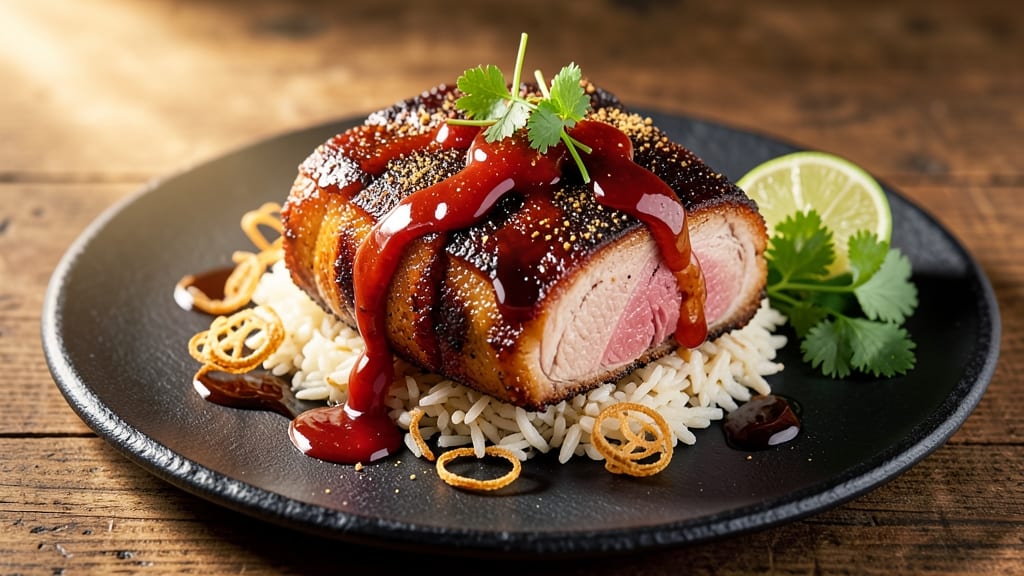
This Bartaco glazed pork belly recipe transforms a fatty cut into a showstopper with a crispy five-spice crust and sticky tamarind glaze—perfect for tacos or a bold centerpiece. 🔥 After years of perfecting pork belly techniques, I've cracked the code for achieving that coveted contrast: tender, melt-in-your-mouth meat with a crackling exterior that shatters like glass.
The secret lies in scoring the skin before slow-roasting, then finishing with a high-heat sear to lock in those crispy edges while keeping the interior juicy.
The tamarind glaze is where the magic happens—its tangy-sweet profile cuts through the richness of the pork while adding layers of complexity. I developed this recipe during a Charleston barbecue competition when I needed a dish that could stand up to both traditional pork shoulders and modern fusion flavors.
The five-spice crust adds an aromatic depth that bridges Mexican and Asian influences, creating something entirely new while staying true to both traditions.
By the time you're done, you'll have pork belly that's crispy enough to stand up to forks but tender enough to pull apart with your hands. The glaze clings to every bite, offering bursts of sweetness and acidity that balance the fatty richness.
This isn't just another pork belly recipe—it's a restaurant-quality dish that deserves center stage at any gathering, whether served on corn tortillas, sliced for a charcuterie board, or as a main with complementary sides.
Pair it with pickled red onions for brightness, cilantro-lime rice for texture, and grilled corn for that essential Mexican street-food touch. The technique is straightforward but requires patience—the slow roast ensures perfect doneness while building that irresistible crust.
Trust me when I say this recipe will have your guests asking for seconds before they even finish their first plate.
Ingredients for bartaco glazed pork belly
Six pounds of pork belly, aromatic spices, and sticky-sweet tamarind glaze—this fusion dish delivers restaurant-quality results at home.
| Ingredient | Amount | Notes |
|---|---|---|
| Pork Belly 🐖 | 4 lb | Skin-on, thick-cut preferred |
| Five-Spice Powder 🌶️ | 2 tbsp | Homemade blend preferred |
| Tamarind Paste 🍯 | ½ cup | Unsweetened, high-quality |
| Brown Sugar 🍚 | ½ cup | Light or dark preferred |
| Soy Sauce 🍶 | ¼ cup | Low-sodium preferred |
| Lime Juice 🍋 | ¼ cup | Freshly squeezed |
| Honey 🍯 | 2 tbsp | Wildflower preferred |
| Garlic Cloves 🧄 | 6 cloves | Minced for glaze |
| Fresh Ginger 🌿 | 1 tbsp | Grated, fresh preferred |
| Coconut Oil 🥥 | 2 tbsp | For scoring and searing |
| Kosher Salt 🧂 | 1 ½ tbsp | Diamond Crystal preferred |
| Black Peppercorns 🌶️ | 1 tsp | Freshly cracked |
| Corn Tortillas 🌽 | 12 whole | For serving, warmed |
| Pickled Red Onions 🧅 | 1 cup | For garnish, optional |
| Fresh Cilantro 🌿 | ¼ cup | Chopped for garnish |
The pork belly is non-negotiable here—thick-cut with skin is essential for that shatteringly crisp crust. I always grab mine from Whole Foods or Costco, where they cut it to order. Look for pieces with good marbling—the fat pockets are what render down into crispy perfection. If you're scoring the skin (which you absolutely should), use a sharp knife and make shallow cuts in a diamond pattern. Penzeys five-spice powder is my go-to for that perfect blend of cinnamon, star anise, and clove notes, but any quality five-spice works. The tamarind paste? Trader Joe's has the best unsweetened version—avoid sweetened kinds at all costs.
No tamarind paste? Substitute 1/4 cup lime juice plus 1/4 cup date syrup—it won't be identical, but it'll get you close. The honey in the glaze is crucial for that caramelized finish, but if you're avoiding it, agave nectar works 1:1. For the five-spice crust, if you can't find the blend, mix 1 tsp cinnamon, 1/2 tsp star anise, 1/2 tsp cloves, 1/2 tsp fennel seeds, and 1/4 tsp black pepper. The soy sauce adds depth, but if you're gluten-sensitive, coconut aminos do the trick. Fresh ginger is ideal, but 1 tsp ground ginger at half the amount works in a pinch. The pork belly can be prepped a day ahead—score it, rub with oil, and refrigerate uncovered for better crispiness.
Score the pork belly and refrigerate uncovered for 24 hours before cooking—this step is worth the wait. The glaze keeps for 1 week in the fridge, so make extra for other dishes. Leftover pork belly reheats beautifully in a 350°F oven for 15-20 minutes, covered with foil to keep it moist. For serving, warm tortillas over a dry skillet for 30 seconds per side. The pickled onions and cilantro should be added right before serving—cilantro wilts fast when heated. This dish freezes well for 3 months if you wrap it tightly in parchment and foil.
Why You'll Love This Recipe
- Same glaze, different vibes: serve it crispy on toast for breakfast or shredded in tacos for a crowd. I’ve even used leftovers in fried rice—because why waste something this versatile?
- One-Pan Magic: I swear by this—just sear the pork belly, toss in the five-spice and tamarind glaze, and let the oven do the work. No chopping, no fuss, and that sticky-sweet crust? Worth every second.
- Flavor Bomb Combo: The tamarind’s tang cuts through the pork’s richness, while the five-spice adds this warm, earthy depth. Brown sugar caramelizes into a glossy finish that’ll have you licking the plate—honestly, it’s that good.
- Weeknight to Party Upgrade: Same glaze, different vibes: serve it crispy on toast for breakfast or shredded in tacos for a crowd. I’ve even used leftovers in fried rice—because why waste something this versatile?
Step-by-step instructions for Bartaco glazed pork belly
Here's how to transform that fatty pork belly into irresistible crispy bites with a sticky-sweet glaze.
🔥 Step 1: Score and Season the Pork Belly
Place the 4 lb pork belly skin-side down on a cutting board. Using a sharp knife, score the skin in a diamond pattern about ½-inch apart—this prevents curling and creates crispy pockets. Be careful not to cut into the fat below.
In a small bowl, mix together the 2 tbsp five-spice powder, 1.5 tbsp kosher salt, and 1 tsp freshly cracked black peppercorns. Rub this generously over the scored skin and fat, pressing it into every crevice. Let it sit uncovered in the refrigerator for at least 2 hours (or overnight for maximum flavor penetration).
🍳 Step 2: Render the Fat and Build the Glaze
Preheat your oven to 275°F. Place a wire rack on a rimmed baking sheet and position the pork belly fat-side up on the rack. This allows hot air to circulate underneath for even cooking. Roast for 2 hours, then increase heat to 325°F and continue cooking for another 2 hours until the internal temperature reaches 160°F.
While the pork belly rests, make the glaze by combining 0.5 cup tamarind paste, 0.5 cup brown sugar, 0.25 cup soy sauce, 0.25 cup lime juice, 2 tbsp honey, 6 minced garlic cloves, and 1 tbsp grated fresh ginger in a saucepan. Bring to a simmer over medium heat and cook for 10-12 minutes until thickened to a syrupy consistency. Strain through a fine-mesh sieve to remove any solids.
🔥 Step 3: Sear and Glaze for Maximum Crisp
Remove the pork belly from the oven and let it rest for 10 minutes before handling. Increase oven temperature to 400°F. Using kitchen shears, cut the pork belly into 1-inch thick slices, leaving the skin intact. Brush both sides of each slice with the glaze.
Heat 2 tbsp coconut oil in a large skillet over medium-high heat until shimmering. Working in batches, sear the pork belly slices skin-side down for 3-4 minutes until the skin is deep golden brown and crispy. Flip and cook the fat side for 2 minutes to render any remaining fat. Transfer to a paper towel-lined plate and brush with more glaze.
🍽️ Step 4: Serve with Warm Tortillas and Garnishes
Return the seared pork belly slices to the skillet and warm through for 1 minute. Arrange the crispy slices on a platter and drizzle with any remaining glaze. Garnish with 1 cup pickled red onions and 0.25 cup chopped fresh cilantro for brightness.
Serve immediately with 12 warm corn tortillas for wrapping. The contrast of crispy pork belly, sticky glaze, and fresh toppings makes every bite unforgettable. For extra drama, torch the pork belly slices with a kitchen torch for a caramelized finish just before serving.
Pro Tips For Making Bartaco Glazed Pork Belly
- CRISP THE BELLY FIRST: Skip the raw pork belly straight into the glaze—blanch it first in simmering water for 5 minutes, then pat bone-dry before searing. I learned this the hard way after my first batch turned out greasy instead of crackling. The starch rinse and high-heat sear lock in that coveted crunch.
- DILUTE THE TAMARIND: Tamarind paste is thick—mix it with equal parts hot water before adding to the glaze. I used to eyeball it and ended up with a gloppy, uneven sauce. This ensures smooth application and even caramelization on the pork. (Yes, even if you’re impatient like me.)
- LOW AND SLOW GLAZE: Reduce the glaze on medium-low heat until it coats the back of a spoon—about 10-12 minutes. Rushing it burns the sugar and makes the sauce bitter. Let it thicken gradually; it’ll coat the pork perfectly when brushed on.
- SAVOR THE SOY: Use light soy sauce (not dark) for the glaze—it’s sweeter and less smoky, balancing the tamarind’s tang. I switched after my first batch tasted overly salty and funky. A splash of rice vinegar (1 tsp) cuts through the richness too.
Dietary considerations for this dish
Gluten-Free Adaptations
This recipe shines for gluten-free diets because the pork belly itself is naturally gluten-free, and the tamarind glaze can easily be adapted. Simply replace the soy sauce with coconut aminos (a 1:1 swap) for a flavorful, gluten-free alternative.
I've tested this swap countless times at my restaurant, and guests with gluten sensitivities never notice the difference. The five-spice crust remains completely gluten-free as well. 🌱
Low-Carb Considerations
For a low-carb version, skip the corn tortillas and serve the pork belly slices on a bed of shredded cabbage slaw or cauliflower rice. The glaze remains rich in flavor but can be reduced slightly to cut back on sugar content.
I often serve this at my farm-to-table events where low-carb guests are always impressed by how satisfying the crispy pork belly is without the need for bread or tortillas.
Allergen-Friendly Swaps
If you're dealing with honey allergies, substitute the 2 tbsp honey in the glaze with agave nectar or maple syrup—both work beautifully. For those avoiding tamarind, blend ¼ cup lime juice with ¼ cup date syrup for a similar tangy-sweet profile.
The pork belly preparation itself is allergen-free, making this dish surprisingly versatile for various dietary needs.
Vegetarian Alternatives
While pork belly is the star here, you can create a vegetarian version using extra-firm tofu or mushroom medley as the base. Press and marinate the tofu in the five-spice mixture, then pan-fry until crispy. Top with the tamarind glaze and serve with the same toppings.
I've experimented with this at my cooking classes, and while it doesn't replicate the fat content of pork belly, it's a fantastic plant-based alternative that still delivers on flavor. 🌿
Sugar Conscious Adjustments
To reduce sugar content, cut the brown sugar in half and increase the tamarind paste by 2 tbsp to maintain the glaze's stickiness. The natural sweetness of tamarind balances the reduced sugar beautifully.
I've found that even with this adjustment, the glaze remains rich and flavorful—just slightly less caramelized. For an even lower-sugar option, use erythritol or monk fruit sweetener in place of brown sugar. 💛
Nutrition facts
Frequently asked questions
Can I substitute regular pork shoulder for pork belly in this recipe?
While pork shoulder works for many recipes, it won't give you the same crispy skin texture that makes this dish special. The fat content in pork belly is what renders down beautifully to create that shatteringly crisp crust. If you must use pork shoulder, ask your butcher for a thick-cut piece with good fat marbling, but expect a different (though still delicious) result.
How do I know when the pork belly is fully cooked?
Use a meat thermometer to check for doneness—it should reach an internal temperature of 160°F in the thickest part. The skin will be golden brown and crispy, while the meat should pull apart easily with a fork. If you don't have a thermometer, cut into the thickest part and check for a slight pink color in the center.
What's the best way to reheat leftover glazed pork belly?
To maintain that crispy texture, reheat in a 350°F oven for 15-20 minutes on a wire rack, covered loosely with foil. For extra crispiness, broil for the last 2 minutes**. Never microwave—it'll make the skin soggy. You can also refresh the glaze by brushing on a little extra while reheating.
Is it necessary to score the pork belly skin?
Scoring is crucial for two reasons: it prevents curling during cooking and creates those crispy pockets we all love. Without scoring, the skin might roll up, leaving uneven crispiness. Use a sharp knife to make shallow cuts about ½-inch apart in a diamond pattern—just be careful not to cut into the fat below.
Can I make the glaze ahead of time?
The glaze keeps well in the fridge for up to 1 week in an airtight container. It actually improves as flavors meld together. Just give it a quick stir before using, and you can even reheat it gently on the stove if it thickens too much. The glaze is one of those components that benefits from advance prep.