
Main Courses
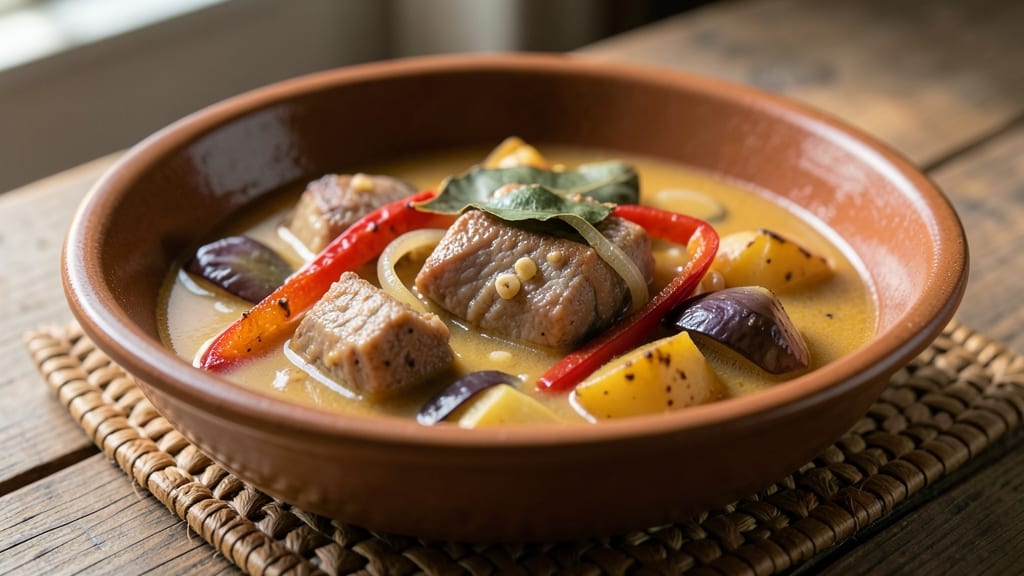
This Batangas pork caldereta recipe brings the rich, tangy-sweet flavors of the Philippines straight to your kitchen. 🌟 As someone who's spent years perfecting braised pork dishes, I can tell you this version stays true to Batangas' signature style—less sweet than other caldereta, with that perfect balance of vinegar, coconut milk, and tamarind.
The secret lies in slow-braising the pork until it's fall-apart tender while building layers of complex flavor in the sauce.
The recipe starts with pork shoulder cut into generous chunks, then simmered until fork-tender in a rich sauce made with coconut milk, vinegar, and tamarind paste. Eggplant, potatoes, and bell peppers join later, absorbing all that creamy, slightly tangy goodness.
What makes this version special is the careful balance—just enough sweetness from the tamarind to complement the vinegar's sharpness without overpowering the dish.
By the time you're done, you'll have a pot of restaurant-quality caldereta with melt-in-your-mouth pork and vegetables swimming in a velvety sauce. The aroma alone will have everyone gathering at your table. Serve it over steamed rice with atchara (pickled papaya) on the side for that authentic Filipino experience.
This recipe delivers the creamy texture you crave while staying true to Batangas' regional traditions. The slow cooking process transforms tough pork into tender morsels, and the sauce develops deep, complex flavors that improve with each bite. Let's get cooking—your taste buds will thank you.
Ingredients for batangas pork caldereta
Six ingredients transform into a restaurant-worthy Filipino classic—creamy, tangy, and full of depth.
| Ingredient | Amount | Notes |
|---|---|---|
| Pork Shoulder 🥩 | 3 lb | Bone-in for best flavor, cut into 2-inch chunks |
| Full-Fat Coconut Milk 🥥 | 2 cans | 13.5 oz each, no substitutes |
| White Vinegar 💧 | ½ cup | White or cane vinegar preferred |
| Tamarind Paste 🍈 | ¼ cup | Filipino brands like Calamba for authentic taste |
| Onions 🧅 | 2 whole | Yellow or red, sliced into half-moons |
| Garlic Cloves 🧄 | 8 cloves | Minced finely for aromatic base |
| Tomatoes 🍅 | 4 whole | Medium-sized, quartered |
| Eggplant 🍆 | 1 lb | Japanese or Asian variety preferred |
| Russet Potatoes 🥔 | 2 lb | Cut into 2-inch chunks, peeled |
| Red Bell Pepper 🌶️ | 1 whole | Cut into thick strips |
| Bay Leaves 🌿 | 2 whole | Dried, for subtle earthy flavor |
| Ground Black Pepper 🌶️ | 1 tsp | Freshly cracked for best flavor |
| Salt 🧂 | 1 ½ tsp | Kosher salt, adjust to taste |
| Olive Oil 🫒 | 2 tbsp | For initial searing |
| Sugar 🍚 | 1 tbsp | Balances acidity, optional |
The pork shoulder is non-negotiable—bone-in gives the richest flavor, and Filipino markets or Asian grocery stores often carry pre-cut versions for convenience. Look for cuts with good marbling. Costco or Trader Joe's usually stock high-quality pork shoulder if you're not near a specialty store. For the tamarind paste, Calamba brand is the gold standard—it's available at Filipino markets or online, and nothing else comes close in authenticity. The coconut milk should be full-fat; Thai Kitchen or Aroy-D brands work perfectly, but avoid the light versions—they'll make your sauce watery.
No tamarind paste? Substitute 1 tbsp of lime juice plus 1 tbsp brown sugar, but you'll lose that signature depth. Running short on vinegar? Apple cider vinegar at half the amount works in a pinch. The eggplant can be swapped for zucchini if you prefer milder flavor, and the potatoes can be baby potatoes for faster cooking. For the tomatoes, San Marzano if you want to splurge, but regular beefsteak tomatoes work fine. The sugar is truly optional—this recipe balances perfectly without it, but add it if your vinegar is particularly sharp.
This dish tastes even better the next day as flavors meld. Store leftovers in an airtight container in the fridge for up to 5 days, or freeze portions for 3 months. I always make a double batch—one for dinner, one for lunches. The sauce thickens as it cools, so you can thin it with a splash of coconut milk or water when reheating. Serve with steamed jasmine rice and atchara (pickled papaya) if you want the full Filipino experience.
Why You'll Love This Recipe
- One-Pot Magic: I swear by this—just brown the pork, toss in the onions, and let the tamarind and vinegar work their tangy alchemy. No chopping, no fuss, no extra pots. The coconut milk does the heavy lifting while I sip my coffee.
- Tangy Creamy Bliss: That balance of sour tamarind, sharp vinegar, and rich coconut milk? It’s like a hug in a bowl. The pork gets fall-apart tender, and the sauce clings to every bite—sweet, salty, and just a little funky in the best way.
- Leftover Hero: This dish begs to be made extra. The flavors deepen overnight, and reheated? Even better. I freeze portions too—perfect for lazy Sundays or when guests drop by unannounced.
- Budget Stretch: Pork shoulder is affordable, and coconut milk makes it feel special. A single batch feeds four, and the leftovers turn into rice bowls, sandwiches, or even breakfast hash. My wallet and my family thank me.
Step-by-step instructions for creamy coconut and tamarind braised pork
Here's how to create rich, velvety Batangas-style pork caldereta with perfect balance.
🔥 Step 1: Sear the Pork Shoulder for Deep Flavor
Heat the 2 tablespoons olive oil in a heavy Dutch oven over medium-high heat until shimmering. Working in batches if needed, add the 3 lb pork shoulder cut into 2-inch chunks, arranging them in a single layer. Let them sear undisturbed for 4-5 minutes until developing a deep golden crust.
Here's the thing—don't crowd the pan. You want that beautiful Maillard reaction happening on all sides. Once browned, transfer the pork to a plate and set aside. We'll be building layers of flavor in that same pot, so don't wipe out those precious browned bits.
🍳 Step 2: Build the Aromatic Base with Onions and Garlic
In the same Dutch oven, add the sliced 2 whole onions and cook for 5-6 minutes until softened and golden at the edges. Add the 8 cloves minced garlic cloves and cook for another 30 seconds until fragrant—you'll smell that sweet garlic aroma filling your kitchen.
This is where the magic happens. The onions should caramelize slightly but not burn. If they start to brown too quickly, reduce the heat to medium. We're creating the flavor foundation that will carry through the entire dish, so take your time here.
🥘 Step 3: Develop the Tamarind-Vinegar Sauce
Add the 0.5 cup white vinegar and 0.25 cup tamarind paste to the pot, stirring vigorously to scrape up all those browned bits from the bottom. Let it simmer for 3-4 minutes until the liquid reduces by half and the tamarind fully dissolves into the sauce.
You'll notice the sauce will look slightly thick and glossy—this is perfect. The tamarind adds that signature tangy sweetness that balances the richness of the coconut milk we'll add next. If you're using Filipino tamarind paste, you'll get that authentic Batangas flavor profile that sets this apart from other caldereta recipes.
🍳 Step 4: Add Vegetables and Simmer in Coconut Milk
Return the pork to the pot along with the 2 whole bay leaves, 1.5 teaspoons salt, and 1 teaspoon ground black pepper. Pour in the 2 cans full-fat coconut milk and the 1 tablespoon sugar, stirring gently to combine. Add the 4 quartered tomatoes, 2 lb russet potatoes, 1 lb eggplant, and 1 red bell pepper.
Bring the mixture to a gentle simmer, then reduce heat to low. Partially cover the pot and let it cook for 1 hour to 1 hour 15 minutes, until the pork is fork-tender and the vegetables are soft but still holding their shape. The sauce should be thick and creamy, coating everything beautifully.
⏰ Step 5: Rest and Serve with Perfect Texture
Once everything is cooked through, remove the pot from heat and let it rest for 10 minutes uncovered. This resting period allows the flavors to meld completely and the sauce to thicken slightly. Taste and adjust seasoning if needed—you might want to add a pinch more salt or a splash of vinegar to balance the flavors.
Serve the caldereta hot, ladling generous portions over steamed rice. The pork should be falling-off-the-bone tender, the vegetables perfectly cooked but still vibrant, and the sauce rich and creamy with just the right balance of sweet, tangy, and savory flavors. The eggplant should have absorbed the coconut milk beautifully, and the potatoes should be tender yet hold their shape.
Pro Tips For Making Batangas Pork Caldereta
- Brown the Pork First: Don’t skip searing the pork shoulder—get it deep golden on all sides before adding liquids. I used to rush this, and the sauce never had that rich, caramelized depth. High heat for 5-6 minutes per side makes the difference.
- Use Tamarind Paste Wisely: Tamarind paste is potent—start with 1 tablespoon and adjust. Too much turns your sauce bitter; too little leaves it bland. Mix it into the vinegar first, then strain to remove grit. (Yes, even if you’re impatient like me.)
- Simmer, Don’t Boil: Keep the heat low enough that tiny bubbles just break the surface—no rolling boil. I learned this the hard way after my coconut milk split into curds. Batangas caldereta needs gentle heat to meld flavors, not a raging pot.
- Save the Vinegar for Last: Add white vinegar in the final 10 minutes, not at the start. It brightens the sauce but cooks off quickly—too early, and you’ll lose the tang. A splash at the end cuts through the richness perfectly. (Your future self will thank you.)
Common mistakes when making your batangas pork caldereta
Skipping the Sear
I've seen beginners skip searing the pork completely, thinking they can just toss it into the sauce. Big mistake! That initial sear creates the Maillard reaction—the chemical process that gives meat its deep, complex flavor.
Without it, your caldereta will taste flat and one-dimensional. Take the extra 5 minutes to properly brown those pork chunks in batches. 🔥
Using Light Coconut Milk
This is a cardinal sin in Filipino cooking. Light coconut milk will make your sauce thin and watery, destroying that creamy texture we're all craving. Always use full-fat coconut milk—brands like Thai Kitchen or Aroy-D are perfect.
If you're concerned about calories, remember this dish is meant to be indulgent and comforting. The extra richness is what makes it special.
Adding All Vegetables at Once
Vegetables cook at different rates, and adding them all together means some will turn to mush while others stay crunchy. Instead, add the potatoes and bell pepper first—they take longer to cook—then the eggplant in the last 20 minutes so it absorbs all that creamy goodness without falling apart.
Trust me, your eggplant will thank you.
Overcooking the Tamarind
Tamarind paste needs just enough time to dissolve and meld into the sauce—about 3-4 minutes of simmering. If you let it cook too long, it becomes bitter and overpowering.
Keep a close eye on it and stir frequently to prevent burning. The goal is that perfect balance of tangy sweetness that makes Batangas caldereta so special.
Ignoring the Resting Time
Skipping the 10-minute rest after cooking is a common mistake that leads to runny sauce and uneven textures. This resting period allows the pork juices to redistribute, the sauce to thicken slightly, and all the flavors to meld completely.
I promise you, those extra minutes make a world of difference in the final result. 💪
Not Adjusting Seasoning
Taste your sauce before serving! The flavors develop differently during cooking, and you might need to add a pinch more salt, a splash of vinegar, or even a tiny bit of sugar to balance the acidity.
Don't be afraid to adjust—this is where you personalize the dish to your taste. I always keep a small bowl of vinegar and salt nearby for final adjustments.
Nutrition facts
Frequently asked questions about Batangas-style pork caldereta
What makes Batangas caldereta different from other Filipino pork stews?
Batangas-style caldereta stands out for its tangy yet balanced flavor profile—less sweet than other versions, with a perfect harmony of vinegar, tamarind, and coconut milk. The less sugar (or none at all) and the vinegar-forward sauce create that signature sharpness that defines this regional variation. Unlike other caldereta recipes, it also uses bone-in pork shoulder for maximum richness.
Can I substitute tamarind paste if I can't find it?
Yes! For 1/4 cup tamarind paste, use 1 tbsp lime juice + 1 tbsp brown sugar—though you'll lose some depth. Another option is 1 tbsp lemon juice + 1/2 tsp sugar, but the texture won't be identical. If you're feeling adventurous, 1 tsp tamarind concentrate (found in Asian markets) diluted with 2 tbsp water works too. The key is balancing the acidity with just enough sweetness.
How do I know when the pork is tender enough?
The pork should be fork-tender—meaning it should easily pull apart with minimal resistance. Insert a fork into the thickest piece: if it slides in smoothly and the meat separates cleanly, it's done. For bone-in pork shoulder, this typically takes 1 hour to 1 hour 15 minutes of simmering. If you're unsure, cut into a small piece—the juices should run clear, not pink.
Can I make this dish in a slow cooker?
Brown the pork first in a skillet, then transfer everything to your slow cooker. Cook on low for 6-7 hours or high for 3-4 hours, adding the eggplant in the last 30 minutes to prevent mushiness. The slow cooker will give you even more tender pork, but you may need to reduce the sauce slightly at the end to thicken it. The flavors will meld beautifully!
What's the best way to reheat leftovers?
Reheat gently in a pot over low heat with a splash of water or coconut milk to loosen the sauce. Avoid microwaving—it can make the sauce watery. If the sauce thickens too much while reheating, stir in 1-2 tbsp coconut milk to restore creaminess. Leftovers taste even better the next day as flavors deepen! Store in an airtight container for up to 5 days.