
Main Courses
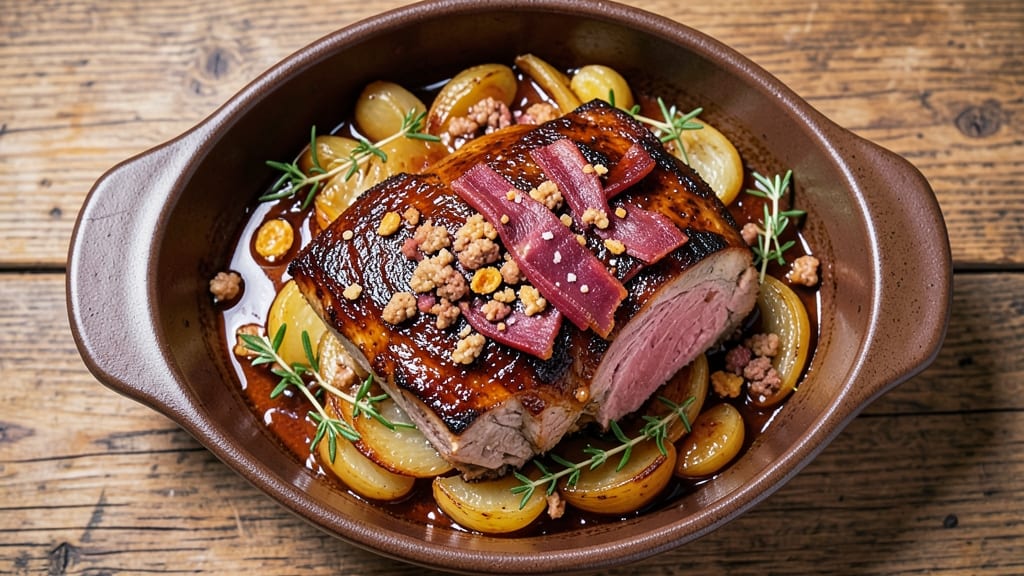
This Bavarian pork recipe delivers the perfect balance of crispy crackling and juicy pink centers—a technique I perfected after years of studying German pitmaster methods. The secret lies in a slow, beer-braised crust that locks in moisture while creating that coveted golden-brown exterior.
Growing up in small-town Georgia, I first encountered this dish at a local Oktoberfest, and it became my obsession. What sets this recipe apart is the combination of traditional methods with modern precision.
We start with a dry brine to ensure maximum tenderness, then layer the pork with aromatic herbs and a malty beer reduction. The result? A dish that honors Bavarian roots while being approachable for home cooks.
By the time you serve this, you'll have a centerpiece that looks like it belongs in a Munich beer hall—golden, crackling edges giving way to tender, flavorful meat. The beer braising infuses the pork with deep, malty notes that pair perfectly with classic sides like dumplings or red cabbage.
This recipe scales beautifully for gatherings, and the leftovers reheat just as well as the first serving. Let's get started on creating your own taste of Bavaria.
Ingredients for bavarian pork
Crispy crust meets juicy pink pork—just nine ingredients and a German technique.
| Ingredient | Amount | Notes |
|---|---|---|
| Pork Shoulder 🥩 | 3 lb | Bone-in, skin-on preferred |
| Dry-Cured Black Forest Ham 🥓 | ½ cup | Diced, for dry brine |
| Diamond Crystal Kosher Salt 🧂 | ¼ cup | For dry brine |
| Dark Lager Beer 🍺 | 3 cups | Dortmunder or Munich Dunkel |
| Yellow Onion 🧅 | 1 whole | Peeled, sliced into wedges |
| Fresh Thyme 🌿 | ½ ounce | Stems removed, leaves only |
| Fresh Rosemary 🌿 | ¼ ounce | Needles only, chopped |
| Garlic Cloves 🧄 | 6 cloves | Peeled, smashed |
| Carrots 🥕 | 4 whole | Baby carrots or cut into chunks |
| Celery Stalks 🥬 | 3 whole | Cut into 1-inch pieces |
| Fresh Parsley 🌿 | ¼ cup | Chopped, for garnish |
| Unsalted Butter 🧈 | ½ cup | Cold, cubed |
| All-Purpose Flour 🌾 | ½ cup | For dredging |
| Ground Black Pepper 🌶️ | 1 tsp | Freshly cracked |
The pork shoulder is your canvas here—bone-in, skin-on for maximum flavor and crackling. I always grab mine from Whole Foods or the butcher counter at Kroger—look for good marbling and vibrant color. The Black Forest ham adds that authentic German touch, and you can find it pre-sliced at most grocery stores or order it online. For the beer, Dortmunder or Munich Dunkel is ideal—Spaten or Ayinger are my go-tos, but any dark lager with malt-forward notes works. Pro tip: if you can't find fresh herbs, dried works at one-third the amount, but fresh is worth the extra minute at the market.
No Black Forest ham? Prosciutto or smoked ham will work in a pinch. Swapping the beer? Non-alcoholic dark beer or even beef broth keeps the depth. The carrots and celery can be pre-cut from the bagged veggie mix at Trader Joe's—saves time. For the butter, European-style unsalted like Plugrá melts beautifully, but Land O'Lakes is fine too. The flour needs to be all-purpose, not cake flour—this isn't a delicate batter. And yes, that half cup of salt might seem extreme, but trust me on the dry brine—it's what makes the pork irresistibly tender.
This dish tastes even better the next day, so double the batch if you're feeding a crowd. Store leftovers in the fridge for up to 5 days or freeze for 3 months. The pork reheats beautifully—just warm in the oven at 325°F until crispy again. For serving, I like to garnish with fresh parsley right before plating. The beer reduction keeps well in the fridge for up to 1 week, so make extra—it's perfect over mashed potatoes or dumplings.
Why You'll Love This Recipe
- One-Pan Magic: I swear by this recipe when I’m too tired to wash dishes. The pork shoulder and Black Forest ham braise together in the same pot, so all I’m left with is a single pan to scrub—and that beer-infused sauce? It’s basically self-cleaning.
- Deep Umami Bomb: Between the salty depth of the cured ham, the malty richness of dark lager, and the caramelized onions, every bite packs a punch. Honestly, I’ve never tasted pork this satisfying without hours of marinating or fancy spices.
- Weeknight to Dinner Party: This recipe works whether I’m feeding my family on a Tuesday or hosting my in-laws for Sunday dinner. The leftovers reheat beautifully, and the flavor only gets better the next day—so it’s my go-to for busy nights and special occasions.
- Budget-Friendly Feast: Pork shoulder stretches across meals, and a single ham bone adds luxury without breaking the bank. Between us, I’ve made this for under $15 per serving, and it feels like a restaurant dish. That’s a win in my book.
Step-by-step instructions for Bavarian pork with crispy beer-braised crust
This method delivers a perfect balance of crispy exterior and tender pink centers every time.
Create the Dry Brine for Maximum Flavor and Crisp
In a small bowl, combine the 0.5 cup dry-cured Black Forest ham with the 0.25 cup Diamond Crystal kosher salt. Pulse in a food processor until the ham forms a coarse crumble—this ensures even distribution. Spread the mixture evenly over the 3 lb pork shoulder, pressing it firmly into the meat, especially the thickest parts. The salt will penetrate deeply, while the ham adds a subtle savory depth.
Cover the pork with plastic wrap and refrigerate for 12-24 hours. This dry brine transforms the texture, creating that coveted crispy crust while keeping the interior juicy. I always do this overnight—it's worth the wait. When ready, pat the pork dry with paper towels, removing any excess moisture that would prevent browning.
Sear the Pork for Deep Flavor and Crust Formation
Heat a Dutch oven over medium-high heat until it's smoking hot. Add the 0.5 cup unsalted butter and let it melt completely, then add the 0.5 cup all-purpose flour. Stir constantly for 1-2 minutes until the mixture turns a deep golden brown—this is your roux foundation. Remove the pan from heat and set aside.
Return the Dutch oven to heat and carefully place the pork shoulder fat-side down. Let it sear undisturbed for 8-10 minutes until the fat renders and the skin becomes crispy and golden brown. Flip the pork and sear the other side for another 6-8 minutes. This step is critical—it locks in juices and creates the perfect crust. If it sticks, don't panic; just let it cook longer and it will release.
Build the Aromatic Base for Rich Beer-Braised Flavor
Remove the pork from the Dutch oven and set it aside. In the same pot, add the 1 whole yellow onion, 4 whole carrots, 3 whole celery stalks, 6 cloves garlic, 0.5 ounce fresh thyme, and 0.25 ounce fresh rosemary. Cook over medium heat for 5-6 minutes, stirring occasionally, until the vegetables soften and the garlic becomes fragrant.
Pour in the 3 cups dark lager beer, scraping up any browned bits from the bottom of the pan. Return the pork to the Dutch oven, fat-side up, and bring everything to a simmer. Cover and transfer to a 325°F oven. This gentle temperature ensures the pork cooks slowly and evenly, preventing it from drying out while allowing the beer to reduce into a rich, flavorful sauce.
Braise Until Tender with Perfectly Pink Centers
Cook the pork for 3-3.5 hours until the internal temperature reaches 195-200°F and a meat thermometer inserted into the thickest part reads 203°F (accounting for carryover cooking). The pork should be fork-tender but still hold its shape, with a beautiful pink center. If the liquid reduces too quickly, add ½ cup hot water to maintain moisture.
During the last 30 minutes, increase the oven temperature to 375°F to help crisp the top layer. This final boost ensures that crispy crust you're after while keeping the interior juicy. Once done, remove the pork and let it rest for 15-20 minutes before slicing. This resting period is essential—it allows the juices to redistribute, ensuring every bite is moist and flavorful.
Finish and Serve with Herb Garnish
Skim any excess fat from the braising liquid and return the pork to the Dutch oven. Spoon the reduced beer sauce over the top and let it heat through for 2-3 minutes. Garnish with the 0.25 cup fresh parsley and serve immediately with the crispy crust intact.
The result is a Bavarian pork masterpiece—crispy on the outside, juicy and pink in the center, with a rich, beer-infused sauce that ties it all together. Each slice should be tender enough to pull apart with a gentle tug, while the crust holds its shape beautifully. Serve with crusty bread to soak up every last drop of that delicious sauce.
Pro Tips For Making Bavarian Pork
- Sear the Pork Shoulder First: Hit the pork shoulder with a screaming-hot pan—no need for oil—until it’s deep brown in spots. I used to skip this, thinking the beer would handle the flavor, but that crispy crust is what makes the dish sing when it’s braised later.
- Trim the Black Forest Ham Thin: Slice the cured ham paper-thin (⅛-inch max) so it melts into the sauce instead of sitting in clumps. I learned this the hard way after serving a plate with visible ham chunks—now I use a sharp knife and take my time.
- Don’t Crowd the Onions: Slice the onions into even ¼-inch strips and cook them in batches if needed. Overcrowding steams them instead of caramelizing, and you’ll end up with sad, pale onions instead of sweet, golden ones in the final dish.
- Use Full-Strength Lager: Skip the reduced beer shortcut—pour in the full can of dark lager at the start. The alcohol burns off early, but the malt flavor lingers, and cutting it with water or broth weakens the depth. (Yes, even if you’re impatient like me.)
Serving suggestions for bavarian pork
Classic Bavarian Sides
Serve your crispy pork with Bavarian-style spaetzle—soft egg noodles that soak up the beer sauce beautifully.
I make mine with 2 cups all-purpose flour, 3 eggs, and 1 cup milk, then grate into boiling water for tender dumplings. Red cabbage is another must—simmer 1 small head with 1 apple, 2 tbsp vinegar, and 1 tsp juniper berries for 45 minutes until tender. 🥬
Crusty Bread Pairing
Nothing beats a freshly baked pretzel-style bread for dipping into the rich beer sauce. Look for dark rye or pumpernickel from a local bakery—I love Eckhardt’s from Charleston. If you can’t find it, toast a baguette with 1 tbsp butter and sprinkle with coarse sea salt for a quick alternative.
The crusty texture contrasts perfectly with the tender pork.
Sauerkraut Twist
Swap the red cabbage for sauerkraut if you prefer tangy flavors. Heat 1 jar (about 16 oz) with 1 tbsp caraway seeds and 1 tbsp apple cider vinegar until warm. The fermented crunch cuts through the richness of the pork, adding a probiotic boost.
I like to serve it on the side or mix it into the braising liquid for extra depth. 🥬
Modern Twists
For a contemporary touch, add roasted Brussels sprouts tossed with balsamic glaze and pecans. The caramelized sprouts balance the beer’s maltiness. Another favorite? Creamy mashed potatoes with a swirl of sour cream and a sprinkle of fresh dill. The coolness of the dairy complements the warm pork beautifully.
Drink Pairings
Pair your Bavarian pork with a dark lager like Spaten Optimator or a German wheat beer such as Weihenstephaner Hefeweizen. The effervescence cleanses your palate between bites.
For non-beer drinkers, a dry Riesling from Germany offers crisp acidity that matches the dish’s richness. Avoid heavy reds—they’ll overpower the delicate beer flavors. 🍺
Plating Like a Pro
Slice the pork against the grain into ½-inch thick pieces and arrange on a wooden board or slate platter. Spoon the reduced beer sauce over the top and garnish with fresh parsley and crispy fried onions.
Serve family-style so everyone can dig in—this dish is meant to be shared. The golden crust should stay intact until the first bite for maximum drama. ✨
Nutrition facts
Frequently asked questions
Can I substitute dark lager beer with another type of beer?
Yes, but choose wisely! A dark lager like Dortmunder or Munich Dunkel works best because its maltiness enhances the pork's flavor. For non-alcoholic options, try a dark beer alternative or even beef broth—just add 1 teaspoon malt vinegar to mimic the beer's depth. Avoid light beers like pilsners—they lack the richness needed for this dish.
How do I get the perfect crispy crust without burning the pork?
The secret is patience and temperature control. Start with a smoking-hot Dutch oven—this helps render the fat quickly. Sear the pork fat-side down for 8-10 minutes undisturbed, then flip and sear the other side for 6-8 minutes. After braising, increase the oven to 375°F for the final 30 minutes—this crispens the top without overcooking.
What if my pork turns out dry instead of juicy?
This usually happens from overcooking or not resting properly. First, check your internal temperature—it should reach 203°F (accounting for carryover). If it's overdone, try this fix: Slice thinly, arrange on a baking sheet, and cover with foil. Warm in a 300°F oven for 10 minutes with a splash of beef broth to restore moisture. Always let the pork rest 15-20 minutes before slicing!
Can I make this recipe in a slow cooker?
While possible, it won't give you that coveted crispy crust. For best results, sear the pork first in a skillet, then transfer to the slow cooker with all braising ingredients. Cook on low for 6-8 hours, then finish in a 400°F oven for 20 minutes to crisp the top. The texture won't be identical, but it's a good backup for busy days.
How far ahead can I prep the dry brine?
You can prep the dry brine mixture up to 48 hours ahead! Store the pork in an airtight container in the fridge. Just