
Main Courses
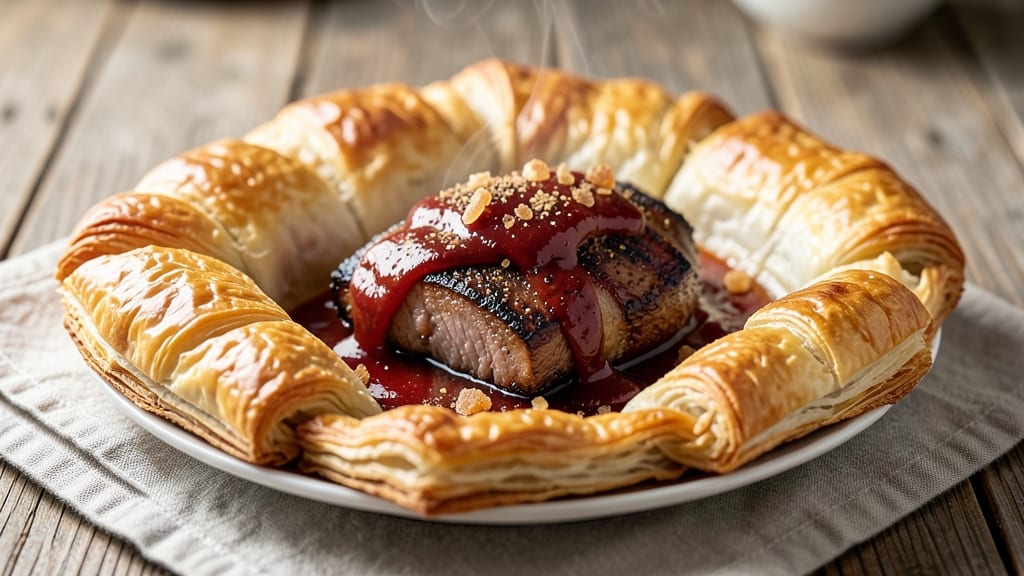
This BBQ pork puff pastry recipe transforms smoky, tender pulled pork into a golden, flaky masterpiece that’ll have everyone asking for seconds. 🔥 The secret lies in balancing rich, caramelized BBQ flavors with the delicate crispness of puff pastry—a combination that’s both impressive and surprisingly simple to execute.
I’ve perfected this dish after years of testing, ensuring the pork stays juicy while the pastry achieves that perfect buttery crunch.
The process begins with slow-cooked pork shoulder, seasoned with a bold rub and simmered until it practically melts in your mouth. Once shredded, it’s folded into rich BBQ sauce and nestled into sheets of puff pastry, creating a handheld delight that’s as satisfying to eat as it is to make.
The key is sealing the edges properly and baking until the pastry turns a beautiful golden brown—no soggy bottoms here.
What you’ll end up with is a dish that’s equal parts comfort food and restaurant-worthy presentation—juicy, smoky pork encased in a crisp, buttery shell that’s impossible to resist. The aroma alone will draw everyone to the table, and the first bite delivers that perfect harmony of textures and flavors.
This recipe is ideal for game day, family gatherings, or whenever you want to impress without spending hours in the kitchen.
Serve with a side of coleslaw or pickles to cut through the richness, and garnish with fresh herbs for a pop of color. The best part? Leftovers reheat beautifully, making this a perfect make-ahead option for busy weekends. Let’s get cooking!
Ingredients for bbq pork puff pastry
Juicy pork shoulder, smoky spices, and buttery puff pastry—this combo is pure magic in every bite.
| Ingredient | Amount | Notes |
|---|---|---|
| Pork Shoulder (Boston Butt) 🐖 | 3 lb | Bone-in for juicier results |
| Puff Pastry Sheets 🥧 | 2 sheets | Store-bought or homemade |
| BBQ Sauce 🍅 | 1 ½ cups | Store-bought or homemade |
| Brown Sugar 🍯 | ½ cup | Light or dark variety |
| Smoked Paprika 🌶️ | 2 tbsp | For deep smoky flavor |
| Garlic Powder 🧄 | 1 tbsp | Freshly ground preferred |
| Onion Powder 🧅 | 1 tbsp | For savory depth |
| Salt 🧂 | 1 ½ tsp | Kosher or sea salt |
| Black Pepper 🌶️ | 1 tsp | Freshly cracked preferred |
| Apple Cider Vinegar 🍏 | 2 tbsp | For tangy balance |
| Unsalted Butter 🧈 | 2 tbsp | For sealing edges |
| Fresh Parsley 🌿 | ¼ cup | Chopped for garnish |
| Egg Wash 🥚 | 1 whole | 1 egg beaten with 1 tbsp water |
| Granulated Sugar 🍚 | 1 tbsp | For egg wash glaze |
The pork shoulder is your secret weapon here—bone-in stays juicier than boneless, and Costco or local butchers often sell it at unbeatable prices. Look for good marbling; that’s where the flavor hides. If you’re using store-bought BBQ sauce, Stubb’s or Sweet Baby Ray’s are solid choices, but I always tweak it with extra smoked paprika and a splash of apple cider vinegar for that restaurant-quality tang. Puff pastry? Pillsbury or store-brand works perfectly—just make sure it’s fully thawed before handling. And trust me on the butter: full-fat, unsalted for sealing those edges like a dream.
No smoked paprika? Regular paprika plus a pinch of liquid smoke gets you close. Running low on apple cider vinegar? Balsamic vinegar works too. The egg wash is non-negotiable for that golden crust—don’t skip it! If you’re feeling fancy, add a teaspoon of Dijon mustard to the wash for extra shine. The parsley is just for looks, but I always grab extra because half gets torn over the top while the other half goes into the BBQ sauce for brightness. Want to make this ahead? Assemble the pastries, refrigerate overnight, and bake straight from the fridge for even better flavor development.
Pork shoulder keeps 3-4 days in the fridge before cooking—use it up! Once assembled, these pastries can chill for 24 hours before baking, which actually improves the texture. Bake straight from the fridge if you’re short on time, but let them sit at room temp for 20 minutes before baking for the crispiest crust. Leftovers? Reheat in a 350°F oven for 10 minutes—they’re even better the next day when the flavors meld. Store baked pastries in an airtight container for up to 3 days, but honestly, they won’t last that long.
Why You'll Love This Recipe
- One-Pan Magic: I swear by this recipe when I’m too tired to clean up. Just sear the pork, brush on the sauce, wrap it in puff pastry—no extra dishes, no stress. The brown sugar caramelizes right on the sheet pan, so you’re left with sticky, smoky goodness and a tray that wipes clean in seconds.
- Smoky-Sweet Crunch: That crispy puff pastry edge? It’s the star. The pork stays tender inside while the pastry turns golden and flaky, and the smoky paprika plus brown sugar make every bite taste like a cross between a BBQ joint and a bakery. Honestly, I’ve had people ask if I deep-fried it—nope, just this genius combo.
- Game for Any Gathering: I make this for tailgates, potlucks, or lazy Sundays because it’s always a hit. Serve it sliced for finger food or as a whole platter for a crowd—even my picky teenage nephew loves it. (Yes, even on a Tuesday night.)
- Budget-Friendly Feast: Pork shoulder is cheap, and one sheet of puff pastry stretches to feed four. The leftovers? Even better—tastes just as good reheated the next day, and I’ve turned cold slices into sandwiches or salads without a second thought. My wallet and my freezer both thank me.
Step-by-step instructions for BBQ pork puff pastry
Here's how to transform smoky pork into a showstopper with flaky, golden puff pastry—juicy meat meets crispy perfection.
🔥 Step 1: Season and Sear the Pork Shoulder
In a small bowl, mix the 2 tbsp smoked paprika, 1 tbsp garlic powder, 1 tbsp onion powder, 1.5 tsp salt, and 1 tsp black pepper. Rub this blend all over the 3 lb pork shoulder, pressing it into the meat so it sticks. Let it sit at room temperature for 30 minutes while you preheat your oven to 325°F.
Heat a large oven-safe skillet over medium-high heat and add the pork shoulder fat-side down. Let it sear for 8-10 minutes until the fat renders and the skin turns deep golden brown. Flip and sear the other side for another 5 minutes. This step locks in flavor and creates a crispy exterior—don't rush it!
🍳 Step 2: Build the Smoky-Sweet Glaze
In a separate bowl, whisk together the 1.5 cups BBQ sauce, 0.5 cup brown sugar, 2 tbsp apple cider vinegar, and 2 tbsp unsalted butter. This glaze will caramelize beautifully while the pork cooks. Pour half of this mixture over the seared pork shoulder in the skillet, coating it evenly. Transfer the skillet to the preheated oven.
Bake uncovered for 2 hours, basting the pork with the remaining glaze every 30 minutes. The pork is done when it reaches an internal temperature of 195-203°F and the meat is fork-tender. If the glaze starts to dry out, add a splash of water to keep it glossy and sticky.
🥘 Step 3: Assemble the Puff Pastry Wrap
While the pork rests (tent loosely with foil for 15 minutes), roll out the 2 sheets puff pastry on a lightly floured surface into two 12x10-inch rectangles. Brush each sheet lightly with the 1 whole egg wash mixed with 1 tbsp granulated sugar for a golden finish. Spread ½ cup BBQ sauce evenly over each sheet, leaving a 1-inch border around the edges.
Carefully place the pork shoulder on one pastry sheet, then fold the other sheet over the top. Press the edges firmly to seal, then trim any excess pastry. Brush the entire top with more egg wash for a glossy, caramelized crust. Chill the wrapped pork in the fridge for 15 minutes to firm up the pastry before baking.
🔥 Step 4: Bake to Golden Perfection
Preheat your oven to 400°F. Place the wrapped pork seam-side down on a parchment-lined baking sheet. Bake for 20-25 minutes until the puff pastry is deep golden brown and puffed in places. The internal temperature should rise to 205°F—this ensures melt-in-your-mouth tenderness.
Let the pork rest for 10 minutes before slicing. Garnish with 0.25 cup chopped fresh parsley and serve with extra BBQ sauce for dipping. The contrast of crispy, flaky pastry with juicy, smoky pork is pure magic—every bite delivers that perfect balance of sweet, tangy, and savory flavors.
Pro Tips For Making Bbq Pork Puff Pastry
- BRINE THE PORK OVERNIGHT: I learned this the hard way—skipping the brine makes the pork shoulder dry out fast when wrapped in puff pastry. Toss the meat in a mix of 1 cup kosher salt, 1/4 cup brown sugar, and 1/4 cup smoked paprika per gallon of water, then let it soak 12+ hours. The flavor stays juicy even after baking, and the crust gets that perfect caramelized bite.
- USE COLD PUFF PASTRY: Puff pastry puffs when hot, but it also gets gummy if you bake it straight from the fridge. Take the sheets out 20 minutes before wrapping—just long enough to soften slightly, not melt. This keeps the layers crispy and prevents a soggy bottom when the pork’s juices hit it.
- SEAL THE EDGES WITH EGGS: After wrapping the pork in puff pastry, don’t just crimp the edges—brush them with a beaten egg wash. The egg acts as a glue and a shield, locking in moisture and giving the pastry a golden, restaurant-worthy finish. (Yes, it’s extra work, but your future self will notice.)
- BAKE LOW AND SLOW: Skip the high-heat rush—this isn’t a race. Bake at 375°F (not 400°F) for 40-45 minutes, or until the pastry is golden and the internal pork temp hits 195°F. High heat makes the pastry burn before the pork cooks through, and you’ll end up with a crispy shell hiding dry meat. Patience here makes all the difference.
Essential equipment for this dish
Puff Pastry Essentials
You’ll need 2 sheets of high-quality puff pastry—I swear by Pillsbury for convenience, but if you’re feeling ambitious, homemade is worth the effort. Store-bought sheets save time, but always check the expiration date; older pastry loses its lift.
Keep the dough chilled until ready to roll—this prevents it from becoming too soft and sticky. 🥧
For rolling, use a light dusting of all-purpose flour on your surface and rolling pin. Avoid over-flouring, or your pastry will dry out. A 12x10-inch rectangle is ideal for this recipe, but if your sheets are smaller, just overlap them slightly when assembling.
Pro tip: Use a bench scraper to trim excess edges cleanly—it’s faster than a knife and gives a professional finish.
Baking Tools
A parchment-lined baking sheet is non-negotiable—it prevents sticking and makes cleanup a breeze. I use half-sheet pans for even heat distribution, but a full sheet pan works too. Preheat your oven to 400°F and place the rack in the middle position for even baking.
A digital meat thermometer is essential for checking the pork’s internal temp—205°F ensures it’s tender and juicy.
For sealing the edges, 2 tablespoons of unsalted butter brushed along the seams creates a golden, crisp barrier. A pastry brush helps distribute the butter evenly without tearing the pastry.
If you’re short on time, a fork pressed gently along the edges can help seal them too—just don’t overdo it, or the pastry will puff unevenly. 🧈
Optional Upgrades
For extra crispiness, I sometimes sprinkle 1 tablespoon of granulated sugar on the egg wash before baking—it caramelizes beautifully for a glossy finish. A fine-mesh sieve helps dust the sugar evenly without clumping.
If you’re feeling fancy, add a pinch of smoked paprika to the egg wash for a subtle smoky kick that ties into the filling.
For serving, a sharp chef’s knife is best for slicing through the pastry cleanly. A serving platter with a wooden board underneath catches any drips, keeping your table clean. Garnish with chopped fresh parsley for color and freshness—it’s the perfect pop against the golden crust. 🌿
Nutrition facts
Frequently asked questions
Can I use boneless pork shoulder instead of bone-in?
You can, but expect slightly drier results. Bone-in pork stays juicier because the bone acts as a moisture reservoir. If using boneless, trim excess fat and consider adding 1/4 cup extra BBQ sauce to compensate for moisture loss. For best texture, avoid overcooking—aim for 195°F internal temp.
How do I prevent the puff pastry from getting soggy?
Three key steps: 1) Chill the assembled pastries for 15 minutes before baking to firm up the dough. 2) Brush edges with melted butter and press firmly to create a seal. 3) Bake at 400°F until golden brown—don't peek! The steam needs time to escape for maximum crispiness.
What's the best way to reheat leftovers?
Oven reheating preserves texture best: Wrap leftovers in foil and bake at 350°F for 10-12 minutes. For quick fixes, microwave on 50% power for 30 seconds, then finish under a broiler for 1-2 minutes to crisp the pastry. Never reheat straight from fridge—bring to room temp first to prevent moisture buildup.
Can I make this ahead of time?
Assemble the pastries, wrap tightly in plastic, and refrigerate for up to 24 hours. For longer storage, freeze assembled (unbaked) pastries for 1 month. Thaw overnight in the fridge before baking. Pro tip: The flavors develop more overnight, making the second day even better!
What's the secret to extra crispy pastry?
Three pro tricks: 1) Use 1 tbsp granulated sugar in your egg wash for caramelization. 2) Bake on the middle rack for even heat. 3) Let baked pastries rest 10 minutes before slicing—this lets moisture redistribute, keeping the inside juicy while the outside stays crisp.