
Main Courses
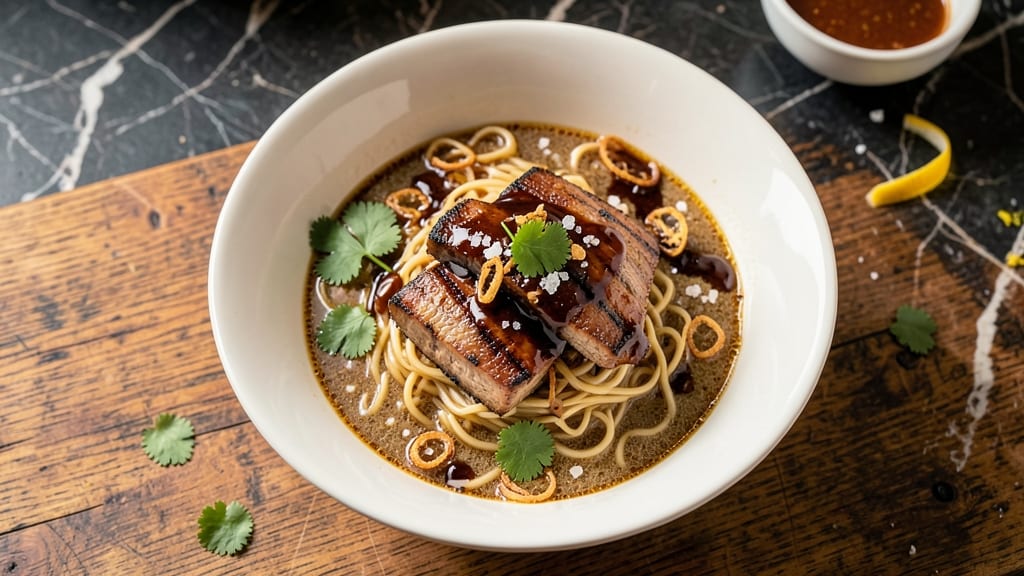
This BBQ pork ramen recipe transforms smoky, tender pork shoulder into a rich, sticky glaze that clings to every noodle—just like your favorite restaurant. 🔥 The secret lies in slow-cooking the pork until it practically falls apart, then reducing its juices into a deep, caramelized sauce that balances sweet, spicy, and umami flavors.
I developed this dish after years of perfecting my pitmaster techniques, blending my love for slow-smoked ribs with the comforting depth of ramen broth.
The magic happens in two phases: first, rendering fat from the pork to create a flavorful broth, then building layers of BBQ sauce that caramelize into a glossy glaze.
We'll use a mix of traditional ramen elements—like miso and soy—alongside bold BBQ spices to create a dish that's both familiar and exciting. The result? A bowl where each bite delivers crispy pork bits, silky noodles, and a sauce that's impossible to resist.
What makes this recipe special is how it balances textures and flavors—crispy pork edges, tender noodles, and a sauce that's sweet enough to satisfy but never overpowering. The broth absorbs the smoky essence of the pork while keeping the dish light enough for a weeknight dinner.
With just 5 key components and 3 hours of hands-off cooking time, this ramen becomes your new go-to comfort meal.
Perfect for feeding a crowd or meal prepping for the week, this recipe scales effortlessly. The leftovers taste even better the next day as the flavors meld. Whether you're a ramen novice or a seasoned cook, this method delivers restaurant-quality results with minimal fuss. Let's get started!
Ingredients for bbq pork ramen
Five core ingredients and bold flavors transform simple ramen into restaurant-style BBQ pork perfection.
| Ingredient | Amount | Notes |
|---|---|---|
| Pork Shoulder 🥓 | 2 ½ lb | Bone-in, cut into 2-inch chunks |
| Ramen Noodles 🍜 | 2 packages | 8 oz each, fresh or dried |
| BBQ Sauce 🍯 | 1 cup | Store-bought or homemade |
| Miso Paste 🧈 | 2 tbsp | White or red, unsweetened |
| Soy Sauce 🥢 | ½ cup | Low-sodium preferred |
| Brown Sugar 🍚 | ¼ cup | Packed, light or dark |
| Garlic Cloves 🧄 | 6 cloves | Peeled, smashed slightly |
| Fresh Ginger 🌿 | 2 tbsp | Grated, or 1-inch piece |
| Green Onions 🧅 | ¼ cup | Sliced, for garnish |
| Sesame Oil 🫒 | 1 tbsp | Toasted, for aroma |
| Vegetable Oil 🫒 | 2 tbsp | For searing pork |
| Chicken Broth 💧 | 4 cups | Low-sodium, homemade or store-bought |
| Red Pepper Flakes 🌶️ | 1 tsp | Adjust for heat preference |
| Salt 🧂 | 1 ½ tsp | Kosher or sea salt |
| Black Pepper 🌶️ | ½ tsp | Freshly ground |
The pork shoulder is where the magic starts—bone-in cuts render more fat for flavor, but boneless works too if you're short on time. Costco or Walmart usually have it pre-cut for convenience, but if you're buying a whole shoulder, ask the butcher to trim it into 2-inch chunks. Look for good marbling—fat equals flavor. For the ramen noodles, fresh ramen from the Asian market has better texture, but dried works fine too. Just cook them al dente and finish in the broth. The BBQ sauce? Sweet Baby Ray's or Stubb's are my go-tos for that perfect balance of smoky and sweet.
No BBQ sauce? Mix 1/2 cup ketchup, 1/4 cup molasses, 2 tbsp apple cider vinegar, 1 tbsp smoked paprika, and 1 tbsp brown sugar—it's a game-changer. Miso paste can be tricky—white miso is milder, while red adds depth. No miso? Substitute 1 tbsp soy sauce plus 1 tsp sugar. The brown sugar caramelizes beautifully, but if you're watching sugar, monk fruit sweetener or erythritol works in a 1:1 ratio. For the garlic and ginger, fresh is non-negotiable—dried just won't cut it here. Toast the sesame oil in a dry pan for 30 seconds before adding it to the broth—that aroma alone makes it worth it.
This dish tastes even better the next day as the flavors meld—double the batch if you can. Store leftovers in the fridge for 4-5 days or freeze for 3 months. I portion mine into containers with the broth and noodles separate so I can customize each bowl. The pork stays juicy if reheated gently—just add a splash of water or broth. For serving, keep the green onions and sesame oil on hand to finish each bowl fresh. The noodles soften as they sit, so eat within 2 hours of reheating.
Why You'll Love This Recipe
- One-Pot Magic: I swear by this—just toss everything in one pot, simmer, and boom. The pork shoulder melts into tender shreds while the noodles soak up that smoky-sweet BBQ-miso sauce without a single extra dish.
- Smoky-Sweet Obsession: That balance of sticky BBQ sauce and umami-rich miso? It’s like a hug in a bowl. The pork gets this perfect crispy edge when seared, then falls apart in the broth—salty, sweet, and addictive all at once.
- Meal Prep MVP: Between us, this is my go-to for busy nights. Double the batch, store the broth and pork separately, then reheat with fresh noodles. (Yes, even on a Tuesday night.) It’s the ultimate lazy-but-impressive dinner.
- Budget Stretch: Pork shoulder’s cheap, ramen’s a pantry staple, and a little BBQ sauce goes a long way. I’ve fed four people for under $15 with this—plus, leftovers taste just as good cold the next day.
Step-by-step instructions for BBQ pork ramen
Here's how to create a rich, smoky-sweet glaze that clings perfectly to every strand of ramen.
🔥 Step 1: Sear the Pork Shoulder for Deep Flavor
Heat a large Dutch oven over medium-high heat and add the 2 tablespoons vegetable oil. Working in batches, add the 2.5 lb pork shoulder cut into 2-inch chunks, leaving space between pieces. Let them sear undisturbed for 3-4 minutes until deep golden brown on all sides.
I press down gently on the pork with a spatula during the first minute—this prevents it from curling and ensures even contact with the pan. Once browned, transfer the pork to a plate and set aside. You're building layers of flavor in that crust, so don't rush this step.
🍳 Step 2: Build the Umami-Packed Glaze Base
In the same Dutch oven, reduce heat to medium and add the 6 smashed garlic cloves and 2 tablespoons grated fresh ginger. Sauté for 30 seconds until fragrant—you'll smell that aromatic punch of garlic and ginger. Be careful not to burn them; they cook fast.
Pour in the 1 cup BBQ sauce, 2 tablespoons miso paste, ½ cup soy sauce, and ¼ cup packed brown sugar. Stir well to combine, then add the 4 cups chicken broth and 1 teaspoon red pepper flakes. Bring to a gentle simmer, scraping up any browned bits from the bottom of the pot—those bits are packed with flavor.
🥘 Step 3: Braise the Pork Until Fork-Tender
Return the pork to the pot, spooning some of the sauce over the top. Add 1.5 teaspoons salt and ½ teaspoon black pepper, then bring everything to a boil. Once boiling, reduce heat to low, cover, and let it simmer for 1 hour 30 minutes.
Here's the thing—you want the pork to be fork-tender, not falling apart. Check it at the 1-hour mark by piercing a chunk with a fork. If it's still slightly resistant, give it another 30 minutes. The sauce should reduce and thicken slightly, coating the pork beautifully. If it gets too thick, add a splash of water or broth.
🍳 Step 4: Finish the Glaze and Cook the Noodles
Remove the pork from the pot and set it aside. Strain the braising liquid through a fine-mesh sieve into a clean saucepan, pressing on the solids to extract all the flavor. Return the liquid to the stove and simmer over medium heat until it reduces by about half, to about 2 cups. This concentrated glaze is what makes this ramen special.
While the sauce reduces, cook the 2 packages ramen noodles according to package instructions until al dente. Drain and set aside, reserving ½ cup of the pasta water. Add the 1 tablespoon sesame oil to the reduced sauce and stir well—this adds a nutty aroma that complements the smoky-sweet flavors.
🥘 Step 5: Assemble and Garnish for Maximum Impact
Divide the cooked noodles among four bowls. Place a generous portion of the pork chunks over each serving, then ladle the reduced glaze evenly over the top. The glaze should coat the noodles and pork completely, creating a beautiful sheen.
Garnish each bowl with ¼ cup sliced green onions and serve immediately. The contrast of the warm, smoky pork glaze with the slightly cool noodles is what makes this dish so satisfying. Don't forget to taste and adjust the seasoning—add a splash of soy sauce or a pinch of red pepper flakes if needed.
Pro Tips For Making Bbq Pork Ramen
- CRUSH THE PORK SHOULDER: Braise it at 275°F (135°C) for 3 hours—not 2—until it’s fork-tender but still holding shape. I learned this the hard way: rushing it makes the meat turn to mush in the broth, and nobody wants that in ramen.
- SALT THE MISO FIRST: Mix the miso paste with cold water (or broth) before adding it to the hot pot—this prevents it from turning bitter. Also, use white miso for balance; red miso can overpower the BBQ flavors if you’re not careful.
- DON’T BOIL THE NOODLES DRY: Cook ramen noodles for 1 minute less than the package says, then finish them in the hot broth. Overcooking turns them to mush, and you’ll end up with a sad, gluey mess instead of chewy strands.
- GLAZE THE PORK IN STAGES: Brush half the BBQ sauce on raw pork before braising, then finish with a quick sear and the rest of the sauce at the end. This locks in flavor without burning it—trust me, your broth will taste richer.
Troubleshooting your bbq pork ramen
Pork Too Tough?
If your pork isn't tender enough after 1 hour 30 minutes, don't panic—just extend the cook time in 30-minute increments until it reaches 205°F internal temperature. I've had pork shoulder take up to 3 hours in some Dutch ovens.
The key is keeping the liquid at a gentle simmer—never a rolling boil, or the pork will toughen. 💪
Glaze Too Thin?
If your sauce isn't coating the noodles properly, reduce it longer over medium-low heat until it reaches a syrupy consistency. For extra thickness, mix 1 tablespoon cornstarch with 2 tablespoons cold water, stir into the sauce, and simmer for 2-3 minutes.
I've used this trick when the sauce gets too watery from pork juices.
Noodles Mushy?
Overcooking noodles is the #1 mistake—always cook them 1 minute less than package instructions and finish in the hot broth. For extra texture, reserve some noodle water and toss cooked noodles with 1 teaspoon sesame oil before assembling.
This prevents them from turning to mush while waiting for the pork to finish.
Broth Too Bland?
If your broth lacks depth, boost umami by adding 1 tablespoon fish sauce or ½ teaspoon MSG (trust me, it's a flavor multiplier). For a smokier profile, add ½ teaspoon smoked salt or a pinch of liquid smoke—just don't overdo it.
I also like adding 1 star anise pod while braising for subtle complexity.
Sauce Too Sweet?
Balance excess sweetness by adding 1 teaspoon rice vinegar or ½ teaspoon citric acid (found in canning sections). For heat, stir in ½ teaspoon gochujang or an extra ½ teaspoon red pepper flakes.
The acidity cuts through the sugar while adding brightness—this is my go-to fix when the glaze tastes one-note.
Pork Too Dry?
If your pork loses moisture during braising, add ½ cup hot water or broth during the final 30 minutes of cooking. Cover tightly and let it steam gently.
The pork will absorb the liquid without becoming waterlogged. For extra moisture, brush the pork with 1 tablespoon BBQ sauce during the last 15 minutes of cooking.
Nutrition facts
Frequently asked questions
Can I substitute chicken or beef for the pork shoulder?
While pork shoulder is ideal for its rich fat content and tender texture, you can use chicken thighs (bone-in works best) or beef chuck roast in a pinch. For chicken, reduce cooking time to 45-60 minutes since it cooks faster. Beef will need 2.5-3 hours to become tender. The fat rendering process creates depth in the broth, so leaner meats may result in a lighter flavor—consider adding 1 extra tablespoon of miso paste or ½ teaspoon smoked paprika to compensate.
How can I make this gluten-free?
Swap the regular ramen noodles for gluten-free ramen noodles (check labels for certification) and use tamari or coconut aminos instead of soy sauce. For the BBQ sauce, choose a gluten-free brand or make your own with ketchup, vinegar, molasses, and spices. The miso paste is the trickiest—opt for gluten-free miso (often made with rice or buckwheat) or omit it entirely, adding an extra ½ teaspoon of garlic powder for depth.
Can I prepare this ahead of time?
This dish tastes even better the next day as flavors meld. Cook the pork and reduce the glaze completely, then store everything separately in the fridge for up to 5 days. Reheat the pork and sauce gently in a pot, then cook fresh noodles separately. For freezing, portion the pork and sauce together (without noodles) for up to 3 months. Thaw overnight in the fridge and reheat slowly—never microwave directly from frozen.
What's the secret to the perfect glaze consistency?
The glaze should coat the back of a spoon like honey—thick enough to cling but still pourable. If it's too thin, reduce it longer over medium-low heat or make a slurry with 1 tablespoon cornstarch + 2 tablespoons water. If it's too thick, thin with 1 tablespoon hot water or broth. The key is balancing the pork's natural juices with the sauce's reduction. I aim for a 2:1 ratio of reduced sauce to pork—about 2 cups glaze for 1 lb pork.
How do I adjust the heat level?
Start with the 1 teaspoon red pepper flakes in the recipe for mild heat. For medium spice, add ½ teaspoon gochujang (Korean chili paste) or 1 extra teaspoon red pepper flakes. For heat lovers, stir in 1 tablespoon sriracha or ½ teaspoon cayenne pepper during the final reduction.