
Soups & Stews
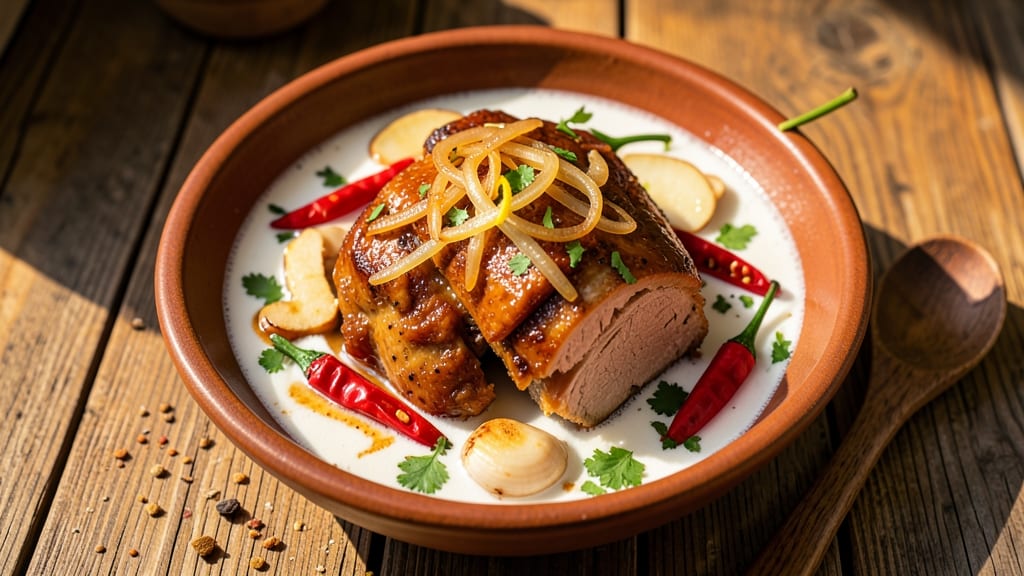
This Belizean stew pork recipe brings the Caribbean's rich flavors to your kitchen with tender pork, coconut milk, and bright citrus notes simmered to perfection. 🌟 After perfecting this dish during my time in Charleston, I've refined it to deliver restaurant-quality results at home—where every bite balances sweet, tangy, and savory elements harmoniously.
The recipe starts with a simple yet flavorful base: pork shoulder slow-cooked until fork-tender, then infused with garlic, ginger, and Scotch bonnet peppers for that signature Belizean heat. Coconut milk adds creaminess while citrus—like lime and orange—brightens the dish, creating a sauce that's velvety yet vibrant.
The key is letting it simmer low and slow, allowing flavors to meld without overpowering the natural taste of the meat.
What you'll achieve is a hearty stew with melt-in-your-mouth pork, tender vegetables, and a sauce that's rich yet balanced—perfect for serving over rice or with warm fried plantains. This dish is a celebration of Belizean comfort food, where every spoonful tells a story of coastal traditions and bold flavors.
The aroma alone will have your kitchen feeling like a tropical paradise.
Whether you're cooking for a family gathering or a cozy weeknight dinner, this recipe scales beautifully while keeping the essence of Belizean cuisine intact. The slow simmer ensures the pork is tender, and the citrus-coconut sauce elevates it to something truly special.
Ready to bring a taste of the Caribbean to your table?
Ingredients for belizean stew pork
Tender pork meets tropical flavors in this Belizean-inspired slow-cooked masterpiece.
| Ingredient | Amount | Notes |
|---|---|---|
| Pork Shoulder 🥩 | 2 lb | Boneless, cut into 1.5-inch cubes |
| Coconut Milk 🥥 | 1 can | Full-fat, 13.5 oz can |
| Scotch Bonnet Peppers 🌶️ | 2 whole | Seeds removed for less heat |
| Garlic Cloves 🧄 | 6 cloves | Minced for aromatic base |
| Fresh Ginger 🌿 | 2 tbsp | Grated, finely chopped |
| Onion 🧅 | 1 whole | Yellow, chopped |
| Tomato Paste 🍅 | 2 tbsp | Smooth, no added salt |
| Orange Juice 🍊 | ½ cup | Freshly squeezed |
| Lime Juice 🍋 | ¼ cup | Freshly squeezed |
| Carrots 🥕 | 2 medium | Peeled, sliced into rounds |
| Potatoes 🥔 | 2 medium | Russet, cut into chunks |
| Thyme Leaves 🌿 | 1 tbsp | Fresh, chopped |
| Bay Leaves 🍃 | 2 whole | Dried, for depth |
| Salt 🧂 | 1 ½ tsp | Kosher or sea salt |
| Black Peppercorns 🌶️ | ½ tsp | Freshly ground |
The pork shoulder is non-negotiable here—look for well-marbled cuts at Whole Foods or your local butcher. If you can't find Scotch bonnet peppers, substitute habanero (use half the amount) or even a mix of jalapeño and cayenne. Fresh ginger and thyme make all the difference—skip the dried stuff unless it's labeled 'culinary grade.' For coconut milk, full-fat is a must—it keeps the sauce rich and velvety. Grab a 13.5 oz can from the international aisle at Trader Joe's or Costco—they're usually cheaper in bulk.
No fresh lime? Key lime juice works best, but regular lime in a pinch. The tomato paste can be swapped for 1 cup crushed tomatoes if you prefer a chunkier texture. Potatoes and carrots should be similar size so they cook evenly—no need to peel the carrots if you're short on time. For extra depth, toast the bay leaves in a dry pan for 30 seconds before adding them to the pot. Pre-chop everything before starting—this is a set-it-and-forget-it kind of dish, but prep saves time later.
This stew gets better the next day—plan ahead and make extra. Store in an airtight container in the fridge for up to 4 days or freeze for 3 months. The sauce thickens as it cools, so add a splash of water or coconut milk when reheating. Serve over jasmine rice or with warm fried plantains for the full Belizean experience. Double the batch if you're feeding a crowd—it reheats beautifully.
Why You'll Love This Recipe
- One-Pot Magic: I swear by this recipe when I’m too tired to wash pots. Toss everything—pork, coconut milk, those fiery Scotch bonnets—into one deep pot, and let it simmer. By the time the pork falls apart tender, my kitchen’s already clean.
- Heat That Stays: The Scotch bonnet doesn’t just add spice—it lingers. That slow simmer in coconut milk mellows the burn into something deep and satisfying, like a hug for your taste buds. (Pro tip: Use gloves when chopping those peppers.)
- Weeknight to Party: This stew’s my lazy Sunday standby, but it’s also the star of my potlucks. Serve it over rice for a casual meal or ladle it into buns for tacos when friends drop by. Same dish, endless possibilities.
- Budget-Friendly Feast: Pork shoulder’s cheap, and a can of coconut milk stretches this into four hearty meals. Between us, I’ve made this for $10 and fed six people—no takeout in sight. The leftovers? Even better the next day.
Step-by-step instructions for Belizean stew pork
This rich, tropical stew delivers bold flavors through slow simmering—let's build it layer by layer.
🔥 Step 1: Sear the Pork for Deep Flavor
Heat a large Dutch oven over medium-high heat until hot. Add the 2 lb pork shoulder cubes in a single layer, working in batches if needed. Let them sear undisturbed for 3-4 minutes per side until deep golden brown forms—this creates that caramelized foundation we want.
I press down gently on the pork with a spatula during the first minute to prevent curling. Once browned, transfer the pork to a plate and set aside. You'll notice the pork releases easily when ready—don't rush this step. The browned bits we leave behind will form the stew's base flavor.
🍳 Step 2: Build the Aromatic Base
In the same Dutch oven, reduce heat to medium and add 2 tablespoons olive oil if needed. Add the chopped onion and cook for 5 minutes until softened. Stir in the minced garlic cloves and grated fresh ginger, cooking for 1 minute until fragrant—this should take just 30 seconds or you'll burn them.
Here's where it gets good: Add the 2 tablespoons tomato paste and stir vigorously for 2 minutes to cook it down. This step deepens the sauce's complexity. The tomato paste will darken slightly—this is normal and adds richness. Don't skip this; it's the secret to that authentic Belizean depth.
🥘 Step 3: Simmer the Vegetables
Add the peeled sliced carrots and potato chunks to the pot. Pour in the 1 can coconut milk, scraping up any browned bits from the bottom. Stir in the 0.5 cup orange juice, 0.25 cup lime juice, and 1.5 teaspoons salt. Bring to a gentle simmer over medium-low heat.
Add the 2 whole bay leaves and 1 tablespoon chopped thyme leaves. Let the stew bubble gently for 15 minutes until the vegetables begin to soften. You'll see the coconut milk start to thicken slightly—this is perfect. The citrus will infuse the coconut with bright, tropical notes that balance the richness.
⏰ Step 4: Finish with Heat and Pork
Return the seared pork to the pot, along with any accumulated juices. Add the 2 seeded Scotch bonnet peppers (wear gloves if sensitive to heat) and 0.5 teaspoon freshly ground black peppercorns. Cover and simmer gently for 1 hour to 1 hour 15 minutes until the pork is fork-tender and falls apart easily.
Real talk: The pork should pull apart with just a gentle tug of your fork—no resistance. If it's not tender enough, continue simmering uncovered for another 15 minutes. The coconut milk will thicken as it reduces, creating that luscious stew consistency we're after. Taste and adjust seasoning if needed.
🍽️ Step 5: Rest and Serve
Remove the bay leaves and transfer the stew to serving bowls. Let it rest for 5 minutes before serving—this allows the flavors to meld completely. Garnish with additional chopped thyme if desired, and serve with warm rice or crusty bread to soak up every last bit of that rich coconut sauce.
The stew should be vibrant with colors—deep orange from the carrots, creamy coconut, and bright citrus notes. Each bite delivers tender pork, sweet potatoes, and that perfect balance of heat from the Scotch bonnet peppers. This is comfort food at its finest, with layers of flavor that develop even more overnight in the fridge.
Pro Tips For Making Belizean Stew Pork
- BLISTER THE PEPPERS: Toss whole Scotch bonnets in a dry, screaming-hot skillet for 30 seconds per side before chopping—this caramelizes their sugars and cuts the raw heat without muting their smoky depth. (Yes, even if the kitchen fills with smoke; open a window and move fast.)
- SWEAT GINGER AND GARLIC: Cook the ginger and garlic in oil until the ginger’s edges just turn golden—about 3 minutes—before adding anything else. This step prevents the coconut milk from curdling later, and the aroma locks in like a flavor vault. (I used to skip it and always wondered why the dish tasted "off" but couldn’t pinpoint why.)
- BROWN THE PORK FIRST: Don’t rush the pork shoulder—sear it in batches over medium-high heat until deep brown crusts form, even if it takes 10 minutes. That crust is what carries the Scotch bonnet’s heat and the ginger’s punch through the whole stew. (Lazy searing = bland stew. No excuses.)
- STIR IN COCONUT MILK LAST: Add the coconut milk after the pork has browned and the aromatics are fragrant, then immediately reduce the heat to low. Dumping it in too early turns the stew into a watery, lukewarm mess—high heat breaks down the milk’s fats, and you’ll regret the texture. (Trust me, I’ve made this mistake at least four times.)
Regional styles of this dish
Belizean Coastline
This stew originated along Belize's Caribbean coastline, where fishing communities adapted Spanish and African techniques to local ingredients. The use of coconut milk reflects the island's proximity to tropical trade routes, while Scotch bonnet peppers—Belize's signature chili—bring the signature heat.
I remember tasting this dish in Belize City's markets, where vendors simmered pork with citrus and spices over open flames for hours. 🌴
Garifuna Influence
The Garifuna people, descendants of African and Indigenous Caribbean groups, brought their own variations to this stew. Their technique of slow-cooking meat with citrus and coconut creates the dish's signature balance. In Punta Gorda, you'll find versions with plantains instead of potatoes, and sometimes even cassava for texture.
I adapted this version to use more accessible ingredients while keeping the Garifuna soul intact.
Ambergris Caye Style
On the island of Ambergris Caye, fishermen's wives traditionally cooked this stew in clay pots over driftwood fires. Their version often includes tomato for acidity and okra for thickening. I've simplified this to use tomato paste and let the coconut milk naturally thicken during simmering.
The key difference is the longer cook time—often overnight—to develop deeper flavors from the driftwood smoke.
Modern Belize City Adaptation
Today's Belize City restaurants serve this stew with a faster approach: high-pressure cookers reduce the cooking time to 45 minutes while maintaining tenderness. For home cooks, I recommend using a Dutch oven on the stovetop—it mimics the clay pot's even heat distribution.
The modern version often includes bell peppers for color and cilantro as a garnish, which I've included as optional in my recipe.
Rural Village Variations
In inland villages like San Ignacio, the stew becomes heartier with sweet potatoes and cornbread on the side. The heat level varies dramatically—some families use whole Scotch bonnets for maximum fire, while others remove seeds entirely.
I've found the seeded but deseeded version works best for home cooks who want authentic heat without overwhelming spice. The rural version also often includes pumpkin leaves for a unique earthy note.
Seafood Fusion
Along the coast, many versions incorporate red snapper or conch alongside the pork. The technique remains identical—slow simmering with coconut and citrus—but the seafood cooks in just 15 minutes after adding. For a fusion version, I recommend adding 1 lb firm white fish during the final 20 minutes of cooking.
The fish absorbs the stew's flavors beautifully while adding a delicate contrast to the rich pork. 🍤
Nutrition facts
Frequently asked questions
Can I substitute Scotch bonnet peppers with something milder?
For a milder heat, use 1 habanero pepper (seeds removed) or 2 jalapeños with seeds intact. If you want to eliminate heat entirely, omit the peppers and add 1 teaspoon smoked paprika instead. The key is balancing the flavors—citrus and coconut already provide brightness, so adjust the spice to your preference.
How do I make this stew less creamy if I don't like coconut?
Replace the 1 can coconut milk with a mix of 1 cup chicken broth and ½ cup heavy cream for a lighter texture. For a completely non-dairy option, use 1 cup tomato juice plus ½ cup orange juice—this keeps the citrus brightness while reducing richness. The stew will still be flavorful but with a more broth-like consistency.
Can I use pork shoulder or pork butt for this recipe?
Both work wonderfully! Pork shoulder (also called Boston butt) is ideal because it's well-marbled and stays tender during long cooking. If using pork butt (the shoulder cut), trim excess fat and cut into 1.5-inch cubes—the fat renders beautifully, adding flavor to the stew. For extra tenderness, consider adding 1 cup water or broth if the sauce gets too thick.
Why does my stew taste too salty after simmering?
This happens when the liquid reduces and concentrates flavors. To fix it, stir in 1-2 tablespoons water or coconut milk and taste again. If the saltiness persists, add 1 tablespoon sweetened condensed milk (it balances salt) or a splash of fresh lime juice—the acidity cuts through the salt. Always taste as you go! The key is adjusting gradually during cooking, not just at the end.
How can I make this stew ahead of time?
This dish actually tastes better the next day! Let it cool completely, then store in an airtight container in the fridge for up to 4 days. The flavors meld beautifully overnight. To reheat, warm over low heat and add 1-2 tablespoons water or broth if the sauce thickens too much. For freezing, portion into containers and freeze for up to 3 months—thaw in the fridge before reheating.