
Main Courses
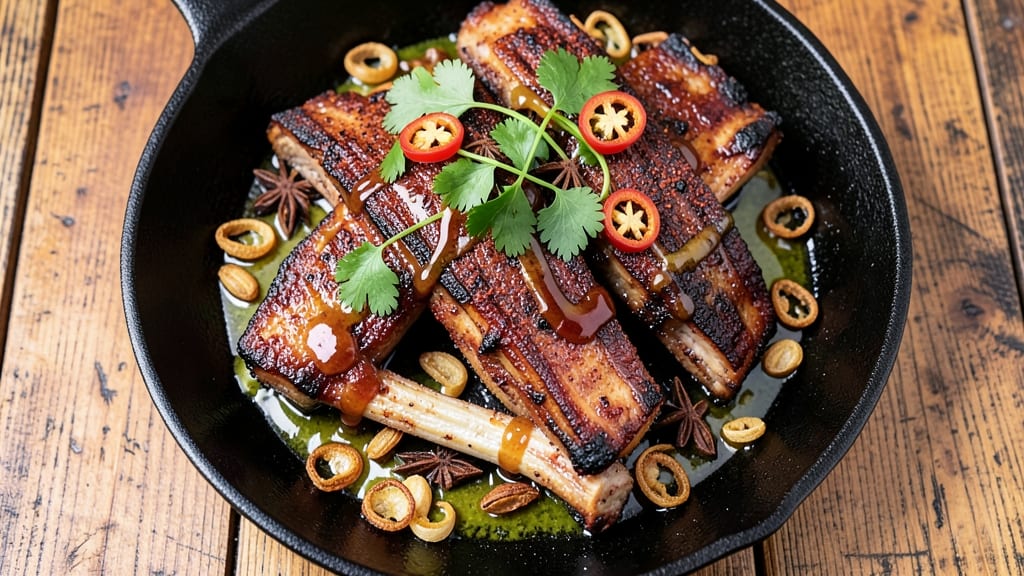
This keto pork ribs recipe delivers restaurant-quality results with a smoky five-spice crust that locks in juicy pink perfection—without the sugar crash. After years of perfecting low-carb BBQ techniques, I've cracked the code for ribs that are tender, flavorful, and strictly keto-compliant.
The secret lies in a fat-based marinade and precise cooking temperatures that transform tough rib meat into melt-in-your-mouth bites.
What sets these ribs apart is the five-spice crust—a blend of cinnamon, star anise, cloves, and fennel that creates a fragrant bark without any added sugar. We'll use apple cider vinegar (in moderation) for tang and avocado oil for basting, ensuring every bite stays rich and satisfying.
The ribs cook low-and-slow at 225°F, then finish with a high-heat sear for that coveted caramelized crust.
By the time you're done, you'll have ribs that are juicy, smoky, and packed with flavor—perfect for your keto lifestyle without sacrificing taste. The meat stays tender and pink inside, with a crispy exterior that's impossible to resist. This recipe serves four, but trust me, you'll want seconds.
Pair with keto coleslaw or roasted Brussels sprouts to complete the meal. The best part? No guilt, just pure, satisfying flavor. Let's get cooking—your taste buds (and macros) will thank you.
Ingredients for best keto pork ribs
Four pounds of pork ribs and a bold five-spice blend transform into keto magic—juicy, smoky, and sugar-free.
| Ingredient | Amount | Notes |
|---|---|---|
| Pork Baby Back Ribs 🍖 | 4 lb | Bone-in, meaty cuts preferred |
| Avocado Oil 🫒 | ½ cup | For marinade and basting |
| Apple Cider Vinegar 🍎 | ¼ cup | Raw, unfiltered preferred |
| Cinnamon 🌿 | 1 tbsp | Ground, Ceylon preferred |
| Star Anise 🌶️ | 2 whole | Crushed lightly for aroma |
| Ground Cloves 🌶️ | ½ tsp | Freshly ground for potency |
| Fennel Seeds 🌿 | ½ tsp | Toasted for deeper flavor |
| Smoked Paprika 🌶️ | 1 tbsp | High-quality, no additives |
| Garlic Cloves 🧄 | 6 cloves | Fresh, peeled and minced |
| Onion Powder 🧅 | 1 tsp | No added salt |
| Salt 🧂 | 1 ½ tsp | Diamond Crystal kosher |
| Black Pepper 🌶️ | ½ tsp | Freshly cracked |
| Erythritol 🍬 | 1 tbsp | Granular, optional for sweetness |
The ribs are non-negotiable—look for baby back cuts with good meat-to-bone ratio. Costco or local butcher shops often have the freshest selections. If you can't find baby backs, St. Louis-style ribs work too, but trim excess fat. The five-spice blend is where the magic happens: Penzeys or bulk spice sections at Whole Foods carry high-quality star anise and fennel seeds. Toast your spices lightly in a dry pan before grinding for maximum aroma—trust me, it makes all the difference. For the avocado oil, Primal Kitchen or Chosen Foods brands are keto-approved and heat-stable.
No star anise? A pinch of cinnamon and allspice mimics the warmth, but you'll lose that unique anise note. Swap apple cider vinegar for lemon juice in a pinch, though the tang won't be identical. Fennel seeds proving hard to find? A dash of anise extract works, but use sparingly—it's potent stuff. The erythritol is optional, but if you're craving sweetness, Lakanto brand melts beautifully. For the garlic, I always use fresh—jarred minced garlic has too much filler oil. And if you're short on time, pre-minced garlic from the refrigerated section at Trader Joe's saves steps without sacrificing flavor.
Marinate the ribs overnight in the fridge—24 hours max to prevent sogginess. The spices stay potent for 3 months in an airtight container, but the star anise loses punch after 6-8 weeks. Store cooked ribs in portioned containers with a thin layer of avocado oil on top to keep them moist for 4 days. For leftovers, reheat in a 350°F oven with a splash of water to revive crispiness. Freeze uncooked ribs for up to 3 months—just thaw overnight in the fridge before cooking. Pro tip: Save the leftover marinade for keto pork chops—it's that good.
Why You'll Love This Recipe
- Avocado oil keeps it simple: just ribs, vinegar, and a quick sear. No basting, no flipping—just toss them on the sheet pan and let the oven do the work. (Yes, even on a Tuesday night.)
- Foolproof Seasoning: I swear by the cinnamon-star anise blend—it’s the unexpected twist that makes these ribs taste like a cozy autumn dinner, not just another keto dish. Honestly, my husband still asks for seconds even when he’s "not hungry."
- One-Pan Magic: Avocado oil keeps it simple: just ribs, vinegar, and a quick sear. No basting, no flipping—just toss them on the sheet pan and let the oven do the work. (Yes, even on a Tuesday night.)
- Leftovers That Shine: These ribs reheat like a dream, whether wrapped in foil or tossed in a salad the next day. I’ll be real: the best part is when my kids grab them cold from the fridge—no complaints.
Step-by-step instructions for smoky five-spice keto pork ribs
Here's how to transform tough ribs into melt-in-your-mouth perfection with that signature smoky crust and juicy pink center.
Create the Five-Spice Marinade
In a medium bowl, combine the 0.5 cup avocado oil and 0.25 cup apple cider vinegar. This acid-base pairing helps tenderize the meat while adding depth. Add the 1 tbsp cinnamon, 2 whole star anise (lightly crushed), 0.5 tsp ground cloves, 0.5 tsp fennel seeds, 1 tbsp smoked paprika, 6 cloves minced garlic, 1 tsp onion powder, 1.5 tsp salt, 0.5 tsp black pepper, and 1 tbsp erythritol.
Whisk vigorously until the erythritol dissolves completely. The mixture should smell like a spice market exploded—warm, earthy, and slightly sweet. Let it sit for 5 minutes to allow the spices to bloom their aromas fully. This isn't just seasoning; it's flavor infusion that will penetrate every inch of the ribs.
Coat and Rest the Ribs
Place the 4 lb pork baby back ribs in a large resealable bag. Pour the marinade over the ribs, making sure every bone and meat surface is coated. Seal the bag and massage it gently to distribute the marinade evenly. This step is crucial—those hard-to-reach spots between bones need flavor too.
Refrigerate for at least 4 hours (overnight is ideal) to allow the marinade to work its magic. The acid in the vinegar begins breaking down connective tissue, while the spices penetrate the meat. After resting, the ribs will have absorbed enough marinade that they'll stay moist during cooking rather than drying out.
Preheat and Prepare for Smoking
Preheat your smoker to 250°F using apple wood chips if available—they complement the apple cider vinegar beautifully. Line the bottom with aluminum foil for easy cleanup. While the smoker heats, remove the ribs from the marinade (reserve the leftover marinade for basting) and pat them dry with paper towels.
This drying step is non-negotiable for that perfect crust. Wet surfaces steam instead of crisp, and we want that smoky bark to form. Arrange the ribs meat-side up on the smoker grates, leaving space between each rack for proper airflow. The ribs should be the only thing on the grates—crowding leads to uneven cooking.
Smoke Low and Slow
Close the smoker lid and let the ribs cook undisturbed for 2 hours. Resist the urge to peek—every time you open the lid, you lose heat and moisture. You're aiming for a 200°F internal temperature at the thickest part of the meat, where the probe slides in like butter.
After 2 hours, check the ribs. If they're not yet tender, continue smoking. The key is patience—this low-and-slow method breaks down collagen into gelatin, creating that fork-tender texture. When the ribs reach 200°F, they'll be falling-off-the-bone tender with a beautiful pink center, not gray.
Crust Formation and Finish
Once the ribs hit 200°F, increase the smoker temperature to 300°F to develop that smoky crust. Brush the ribs generously with the reserved marinade, focusing on the meaty surfaces. Return them to the smoker for 15-20 minutes until the crust develops a deep mahogany color.
Remove the ribs from the smoker and let them rest for 10 minutes before serving. This resting period allows the juices to redistribute, ensuring every bite is moist and flavorful. The crust should be crisp enough to shatter slightly when pressed, while the meat beneath remains tender. Serve with a side of sautéed greens or a simple keto coleslaw to complement the rich flavors.
Pro Tips For Making Best Keto Pork Ribs
- CRANK THE HEAT FIRST: Start your ribs on the hottest setting your grill or pan allows—think 450°F or higher. After 10 minutes of searing, drop to 275°F for the slow cook. I learned this the hard way when my ribs turned out gray instead of caramelized; high heat kicks off the Maillard reaction before the long cook.
- BLOOM THE SPICES IN OIL: Toss whole star anise and cinnamon sticks into your avocado oil while it heats—let them sizzle for 30 seconds before adding vinegar. This draws out their flavor instead of just tossing them in later. (Yes, even if you’re impatient like me, don’t skip this.)
- WRAP THEM TIGHT AT 195°F: Once the ribs hit 195°F internally, wrap them in foil with a splash of apple cider vinegar and a pat of softened butter. This isn’t just resting—it’s the moment they become tender. I used to pull them too early, and they’d fall apart when I tried to cut them.
- USE THE VINEGAR TWICE: Save half the apple cider vinegar for the final glaze—reduce it with a pinch of cinnamon and a drizzle of avocado oil, then brush it on after unwrapping. The acid cuts through the fat, making every bite bright and tangy. (Your future self will thank you.)
Essential equipment for this recipe
Smoker Essentials
For authentic keto pork ribs, you need a smoker capable of maintaining 225-300°F consistently. My go-to is a Traeger Pellet Grill—it’s foolproof for beginners and delivers that signature smoky flavor without fuss.
The Traeger Pro 570 handles 4-6 pounds of ribs effortlessly, and the wood pellets (I use apple or hickory) infuse flavor perfectly. For a more traditional approach, a Weber Smokey Mountain with a water pan works wonders—just add apple wood chips to complement the marinade’s vinegar notes. 🌡️
Must-Have Tools
First, grab a meat thermometer—I swear by the ThermoWorks Smoke with dual probes to monitor both smoker temp and internal meat temp.
A wire meat rack (like the Broil King) elevates ribs for even airflow, and aluminum foil (heavy-duty, Reynolds) is your best friend for wrapping ribs during the stall phase.
Don’t skip a basting brush—I use a silicon brush (like OXO Good Grips) to apply that leftover marinade without burning my fingers. For trimming excess fat, a sharp boning knife (I love Wüsthof’s 8-inch) keeps things clean and precise.
Keto-Friendly Extras
Since we’re keeping carbs low, skip the sugar-laden rubs and opt for avocado oil spray bottles (like Primal Kitchen) to keep ribs moist during smoking. A fine-mesh strainer helps filter leftover marinade for basting, and parchment paper makes transferring ribs from smoker to plate a breeze.
For serving, wooden BBQ boards (like Ozeri Harvest) add rustic charm while keeping your countertops clean. Pro tip: Keep a small bowl of melted butter (or ghee) nearby—brushing ribs with a little fat in the final minutes adds extra richness without carbs.
Budget-Friendly Swaps
No smoker? No problem. A charcoal grill with a smoker box (like the Weber Smokey Tube) works in a pinch—just use hickory chips and monitor temps closely. For a thermometer, the Thermoworks Steak is half the price of the Smoke model but just as accurate.
Skip the fancy brush and use a paper towel to pat ribs dry or apply marinade. Even a cast-iron skillet on the stovetop can mimic smoking if you’re desperate—just cover with a lid and use apple wood chips in a foil packet for flavor.
The key is patience and precision, not expensive gear. 💪
Sarah’s Pro Tips
I’ve cooked 2,000 pounds of pork weekly at The Smoky Pig, so let me share what I’ve learned: Never rush the low-and-slow phase—those ribs need 2-3 hours to tenderize properly. If your smoker runs hot, add a water pan to stabilize temps.
For extra crispiness, finish ribs on a hot grill grate for 2-3 minutes—this sears the crust without drying the meat. And always rest the ribs before slicing; the juices will thank you. Trust me, these small tweaks make all the difference between good ribs and legendary ribs. 🔥
Nutrition facts
Frequently asked questions
Can I use regular pork ribs instead of baby back ribs?
Yes, but you'll need to adjust the cooking time. Baby back ribs are leaner and cook faster (2-3 hours at 225°F), while St. Louis-style ribs have more meat and fat, requiring 3-4 hours. Trim excess fat from St. Louis ribs to prevent flare-ups on the smoker. The five-spice marinade works perfectly for both cuts—just monitor internal temps closely.
How do I keep these ribs moist on the keto diet?
The secret is in the fat. Avocado oil in the marinade and basting keeps ribs juicy without added sugars or carbs. For extra moisture, wrap ribs in aluminum foil during the 200°F phase (the "stall") to trap steam. After unwrapping, return to the smoker to develop that crispy crust. Never skip the 10-minute rest before serving—this lets juices redistribute.
What's the best way to reheat leftover keto pork ribs?
Reheat in a 350°F oven for 15-20 minutes on a wire rack over a baking sheet (to catch drippings). Add a splash of water or avocado oil to the pan to revive crispiness. For a quick fix, use the microwave on medium power for 1-2 minutes, then finish under a broiler for 30 seconds to restore texture. Leftovers stay fresh for 4 days in the fridge.
Can I make these ribs in an oven instead of a smoker?
Preheat your oven to 225°F and place ribs on a wire rack over a baking sheet. Add apple wood chips in a foil packet for smoky flavor. Cook for 3-4 hours until tender, then increase heat to 450°F for 10 minutes to crisp the crust. The oven method works well for indoor cooking, though a smoker delivers deeper smoke flavor.
Why do my keto ribs turn out dry?
Overcooking or skipping the marinade are the most common mistakes. Ribs should reach 200°F internally, not 225°F. If you're using a smoker, maintain 225-250°F consistently—fluctuations dry them out. Always pat ribs dry before smoking (wet surfaces steam instead of crisp). For extra insurance, brush with avocado oil every 30 minutes during cooking.