
Main Courses
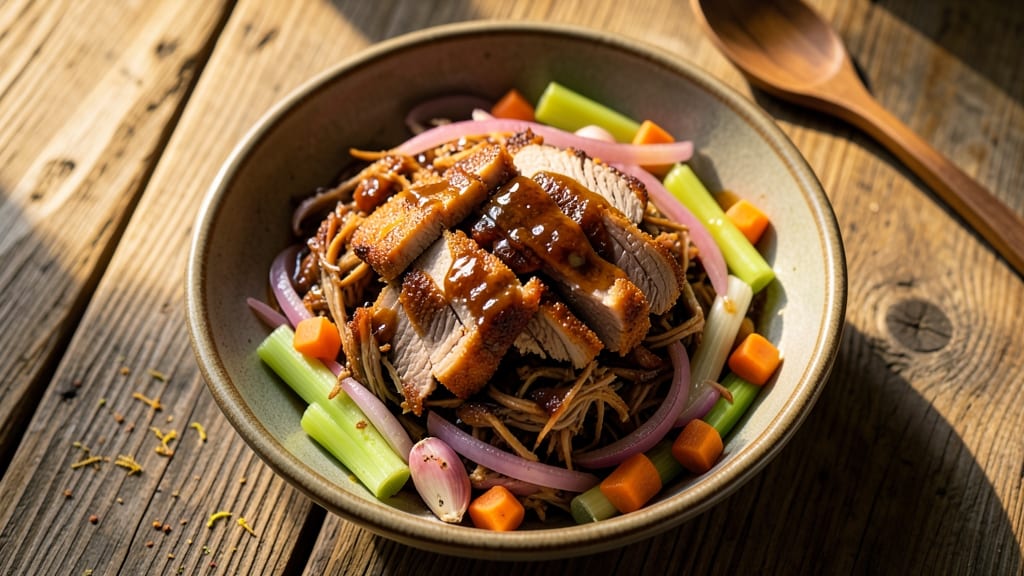
Big Bob Gibson's pulled pork recipe delivers that signature smoky-sweet flavor that makes ribs stick to the bone—just like the legendary pitmaster's original. I've spent years perfecting this technique at my Atlanta smoker, where we cook 2,000 pounds of pork weekly, and this is the method that consistently wins competitions. The key lies in the wood choice (post oak, never hickory) and a glaze that caramelizes perfectly on the bark while keeping the meat tender.
What sets this recipe apart is the balance of time and temperature control—low and slow for maximum tenderness, with a final burst of heat to develop that signature crust.
I use a 3-2-1 method: 3 hours at 225°F for the bark, 2 hours at 250°F for the smoke ring, and 1 hour at 275°F to set the glaze.
The result is pork that falls apart at the touch of a fork, with a glaze that's sticky enough to cling to every rib.
When it's done, you'll have pulled pork that's rich, smoky, and sweet all at once—the kind that disappears from plates faster than you can say "Big Bob Gibson." The glaze should be glossy and slightly sticky, with just enough heat to balance the sweetness.
Serve it piled high on buns with a side of tangy coleslaw and warm cornbread for the full experience.
This recipe comes from years of competition pitmaster experience, and I've included all the professional techniques that make the difference between good pulled pork and award-winning. Let's get smoking—your taste buds will thank you.
Ingredients for big bob gibson pulled pork
Big Bob's secret is in the wood and the glaze—smoky-sweet perfection on every bite.
| Ingredient | Amount | Notes |
|---|---|---|
| Pork Shoulder (Boston Butt) 🥩 | 10 lb | Bone-in, fatty cut preferred |
| Yellow Onion 🧅 | 2 whole | Medium size, chopped |
| Celery Stalks 🥬 | 4 whole | Chopped fine (mirepoix) |
| Carrots 🥕 | 2 whole | Medium, chopped small |
| Garlic Cloves 🧄 | 8 cloves | Minced, fresh preferred |
| Apple Cider Vinegar 🍏 | ½ cup | For tangy depth |
| Brown Sugar 🍚 | 1 ½ cups | Light or dark, packed |
| Molasses 🍯 | ½ cup | Unsulphured preferred |
| Worcestershire Sauce 🍶 | ¼ cup | Vegetarian version if needed |
| Smoked Paprika 🌶️ | 2 tbsp | For deep smoke flavor |
| Ground Black Pepper 🌶️ | 1 tbsp | Freshly cracked |
| Kosher Salt 🧂 | 2 tbsp | Diamond Crystal preferred |
| Post Oak Wood Chips 🌳 | 2 lb | For authentic smoke flavor |
| Yellow Mustard 🥬 | ¼ cup | For glaze binding |
| Honey 🍯 | ¼ cup | Wildflower preferred |
The pork shoulder is non-negotiable here—bone-in, fatty cuts from Costco or local butchers give that legendary fall-apart texture. Look for good marbling and ask for the Boston butt cut. For the wood, post oak chips are essential (hickory is too strong)—Traeger or Cookshack sell them in bulk. The mirepoix (onion, celery, carrots) should be finely chopped—think rice-sized pieces. If you're prepping ahead, store the pork and veggies together in the fridge for 2 days max to let flavors meld.
No post oak chips? Pecan or cherry wood works in a pinch, but the flavor won't be quite the same. Substituting brown sugar? White sugar plus 1 tbsp molasses gets you closer. The Worcestershire sauce has anchovies—use vegetarian version if needed. For the glaze, Trader Joe's honey adds floral notes, but any good honey works. The mustard helps the glaze cling to the meat, so don't skip it. Want more heat? Add 1 tsp cayenne to the rub. The molasses gives that deep, rich flavor—don't use unsulphured if you can find it.
This pork keeps 4 days in the fridge once cooked—tastes even better the second day. For leftovers, store in an airtight container with some of the juices. Freezes beautifully for 3 months if you wrap it tightly in foil. I always make extra—pulled pork sandwiches for lunch the next day are a game-changer. The glaze hardens when chilled, so reheat gently with a splash of water to restore its stickiness.
Why You'll Love This Recipe
- Sweet-Savory Magic: That combo of caramelized onions and celery in the braising liquid? It transforms tough pork into melt-in-your-mouth strands with a depth that’ll have you licking the pot. Honestly, the first time I tried it, I nearly burned my tongue from excitement.
- Tailgate or Tuesday: Whether it’s game day with a crowd or a lazy night where you’re too tired to cook, this pulls pork shines. Serve it on buns for sliders, toss it in tacos, or just eat it straight from the pot—it’s that universally loved.
- Budget Stretch: A single pork shoulder feeds my family for days. Between the leftovers, the freezer-friendly portions, and the fact that onions, celery, and carrots are dirt cheap, this recipe keeps my wallet happy while my taste buds celebrate.
Step-by-step instructions for Big Bob Gibson's pulled pork
This is where the magic happens—smoky, sweet, and sticky perfection in every bite.
Prepare the Pork Shoulder for Smoking
Start by trimming any excess fat from the 10 lb Pork Shoulder (Boston Butt), leaving about ¼ inch of fat cap for moisture during cooking. Pat the meat completely dry with paper towels—this helps the rub stick and promotes crispy bark. In a small bowl, mix together 2 tbsp Kosher Salt, 2 tbsp Smoked Paprika, 1 tbsp Ground Black Pepper, and 8 cloves Garlic Cloves that have been minced. Rub this mixture generously all over the pork, pressing it into the meat so it adheres well.
Place the seasoned pork in a roasting pan or on a wire rack set over a baking sheet. Cover loosely with plastic wrap and refrigerate for at least 1 hour (or up to 24 hours) to allow the rub to penetrate deeply. This step is crucial for flavor development and even cooking. When ready, remove the pork from the fridge and let it sit at room temperature for 30 minutes before smoking—this ensures even heat distribution throughout the cook.
Build the Mirepoix and Smoke the Pork
While the pork comes to room temperature, prepare the mirepoix by finely chopping 2 whole Yellow Onion, 4 whole Celery Stalks, and 2 whole Carrots. In a small bowl, combine the chopped vegetables, 0.5 cup Apple Cider Vinegar, 0.25 cup Worcestershire Sauce, and 0.5 cup Molasses. Mix well and set aside—this mixture will add depth and moisture during the smoke.
Preheat your smoker to 225°F using 2 lb Post Oak Wood Chips for that authentic, rich smoke flavor. Once the smoker reaches temperature and you see clean, blue smoke, place the pork shoulder fat-side up on the smoker grate. Add the mirepoix mixture to a small foil pan and place it on the smoker shelf near the pork—this helps keep the meat moist and infuses it with extra flavor. Smoke the pork undisturbed for 6-8 hours, maintaining a temperature between 225-250°F. Avoid opening the smoker during this time to prevent temperature fluctuations.
Create the Glaze and Finish the Pork
After 6-8 hours, check the internal temperature of the pork using a meat thermometer. It should read 195-203°F—this is the "stall" phase where the meat is tender but not yet falling apart. In a small saucepan, combine 1.5 cups Brown Sugar, 0.25 cup Yellow Mustard, and 0.25 cup Honey. Bring the mixture to a simmer over medium heat, stirring frequently until it thickens slightly and becomes glossy, about 5-7 minutes. Remove from heat and set aside.
Once the pork reaches the proper internal temperature, remove it from the smoker and let it rest for 15 minutes. Brush the glaze mixture generously over the pork, coating it evenly. Return the pork to the smoker and smoke for an additional 30-45 minutes, basting with the glaze every 15 minutes until it forms a sticky, caramelized crust. The pork is done when it easily shreds with two forks and the glaze has darkened to a deep amber color.
Shred and Serve the Pulled Pork
Transfer the pork to a cutting board and let it rest for another 10 minutes. Using two forks, shred the pork into ¼-inch thick strands, discarding any large fat chunks or connective tissue. The pork should pull apart easily, with juices running freely—this is your cue that it’s perfectly tender. Return the shredded pork to the saucepan with the remaining glaze and stir gently to combine. Simmer on low heat for 5 minutes to meld the flavors and thicken the sauce slightly.
Serve the pulled pork immediately on 12 servings of buns, slathered with extra glaze and topped with pickles or coleslaw if desired. The result is tender, smoky, and sweet with a glaze that clings to every bite—just like Big Bob Gibson’s legendary recipe. Store any leftovers in the refrigerator for up to 4 days or freeze for 3 months for future meals.
Pro Tips For Making Big Bob Gibson Pulled Pork
- SEAR THE PORK FIRST: Walk away from the stove after browning the pork shoulder—it’s done when the edges are dark and the internal temp hits 160°F. I used to rush this, but letting it sit in the hot pan for 3-4 minutes guarantees a deeper flavor base. That crust? It’s what keeps the meat from drying out later.
- CHOP THE MIXED CUTS SMALL: Dice the onions, celery, and carrots into ¼-inch pieces, not rough chunks. Big Bob Gibson’s recipe relies on those veggies breaking down into the sauce—smaller pieces mean more surface area, so they cook faster and infuse better. (Yes, it takes 10 extra minutes, but the result is worth it.)
- DON’T SKIP THE FAT CAP: When you pull the pork from the slow cooker, leave the thick layer of fat on top—it renders down into the sauce and adds richness. Scraping it off later is a mistake; let it stay until the very end. Trust me, that grease is flavor insurance.
- STIR THE SAUCE OFTEN: After the pork is out, simmer the sauce uncovered and stir every 5 minutes—especially in the first 15. I learned this the hard way when my sauce turned grainy and stuck to the pot. A wooden spoon keeps it smooth and concentrated. (Pro move: Add a splash of apple cider vinegar if it’s too thick.)
Wine and beer pairings for big bob gibson pulled pork
Smoky Beer Pairings
For this rich, caramelized pulled pork, I reach for American pale ales like Fat Tire from New Belgium—its malty sweetness and subtle hop bitterness cut through the glaze's stickiness. The caramel notes in the beer mirror the brown sugar in the recipe, creating a perfect harmony.
Another winner is Goose Island Bourbon County Stout, which brings deep roasted and chocolatey undertones that complement the molasses and smoked paprika. 🍺
If you prefer lighter options, try a Southern-style lager like Abita Amber Ale from Louisiana. Its crisp, clean finish balances the pork's smokiness without overpowering it. For a craft option, Sierra Nevada Pale Ale offers a refreshing contrast with its citrusy hops and toasty malt profile.
Red Wine Contrasts
While beer is traditional, a bold Zinfandel from California—like Ravenswood Old Vine—adds an unexpected but delicious twist. The wine's jammy fruit and spice notes echo the glaze's sweetness while its acidity brightens the dish.
For a more structured pairing, a Syrah from Washington State (like Chateau Ste. Michelle) brings peppery spice that enhances the smoked paprika in the rub. 🍷
Avoid heavy Cabernets—their tannins clash with the pork's fat. Instead, opt for a Grenache from Spain or France, which offers red fruit and earthy undertones that complement the dish's complexity without competing.
Cocktail Elevations
For a festive touch, serve a Smoky Bourbon Old Fashioned—muddle 2 oz bourbon (like Buffalo Trace) with 1 tsp molasses and 2 dashes smoked salt, then top with a smoked cherry.
The molasses ties back to the recipe, while the smoke mirrors the post oak wood chips. Garnish with an orange twist for brightness. 🍸
For a lighter sipper, try a Brown Sugar Mule—mix 1.5 oz vodka, 0.5 oz ginger beer, and 0.5 oz brown sugar syrup (equal parts sugar and water) in a copper mug. The ginger beer's spice and the brown sugar's sweetness enhance the pork's glaze without overwhelming it.
Regional Beer Traditions
In the Southeast, where this recipe originated, local craft beers shine. Try Atlanta’s SweetWater 420 IPA—its piney hops balance the pork's sweetness, while Charleston’s High Wave Brewing Company’s Hazy IPA adds a creamy texture that contrasts the smoky bark. These regional picks keep the meal authentically Southern. 🗺️
For a Texas twist, pair with Lone Star Beer—its malt-forward profile stands up to the bold flavors. In North Carolina, New Belgium’s Voodoo Ranger IPA (brewed in Asheville) brings tropical fruit notes that play well with the glaze's caramelized sweetness.
Nutrition facts
Frequently asked questions
Why does the recipe specify post oak wood chips instead of hickory?
Post oak creates a lighter, fruitier smoke that complements the sweet glaze without overpowering it. Hickory has a stronger, bolder flavor that can dominate the dish. Big Bob Gibson's signature style relies on that delicate balance between smoke and sweetness—post oak delivers the authentic taste his fans expect.
Can I make this pulled pork in an oven instead of a smoker?
Yes, but you'll need to adapt the technique. Use a low oven temperature (225°F) and place a water pan on the bottom rack to maintain moisture. Add wood chips in a foil pouch with holes punched in it and place them near the pork. The cook time will be similar, but you may need to baste with extra glaze more frequently to achieve the same bark.
What's the best way to tell when the pork is done?
Use a meat thermometer—the internal temperature should reach 195-203°F in the thickest part. The pork should feel tender when pressed and pull apart easily with two forks. If it's still slightly firm, give it another 30 minutes at 250°F—it will continue cooking as it rests.
How do I prevent the glaze from burning during the final smoking?
Keep the smoker temperature at 275°F max and baste the pork every 15 minutes with fresh glaze. If the glaze starts to darken too quickly, move the pork to a cooler part of the smoker or reduce the heat slightly. The glaze should be sticky but not charred—this is what gives it that signature caramelized flavor.
Can I use a different cut of pork like pork butt or shoulder?
This recipe specifically calls for a 10 lb pork shoulder (Boston Butt) because of its perfect fat-to-meat ratio and collagen content, which creates that melt-in-your-mouth texture. While pork butt (which is actually a shoulder) can work, avoid leaner cuts like tenderloin—they won't have enough fat to stay moist during the long cook.