
Main Courses
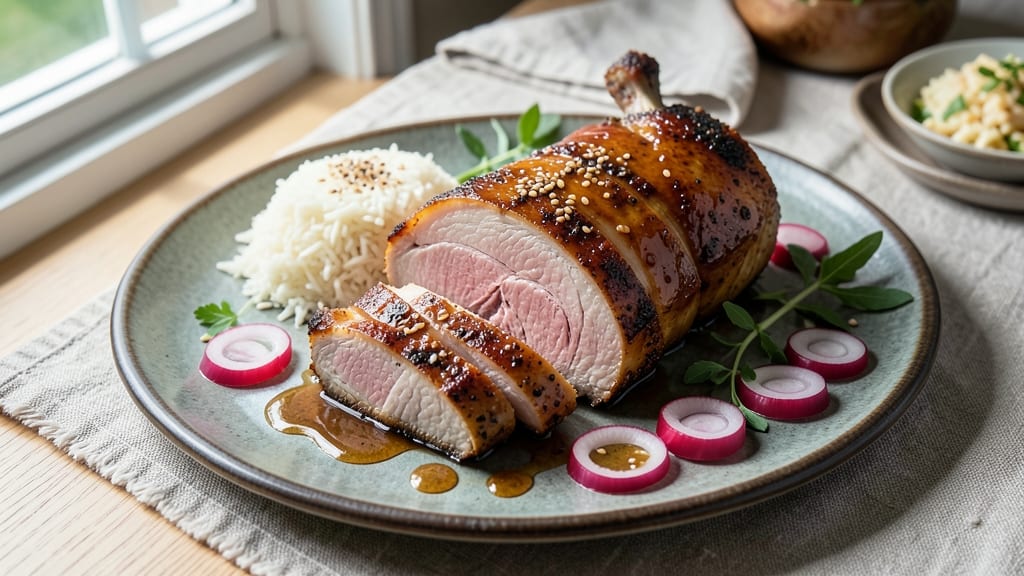
This Blue Apron pork roast transforms a simple cut into a restaurant-worthy centerpiece with a fragrant five-spice crust and sticky tamarind glaze. 🔥 After years of perfecting pork roasts for my family gatherings, I've developed a method that delivers tender, juicy meat with a caramelized exterior that crackles with every bite.
The secret lies in the slow cooking process and the perfect balance of spices that create an aromatic crust.
The five-spice blend forms a fragrant bark on the outside while the tamarind glaze adds a tangy-sweet contrast that cuts through the richness of the pork.
I use a bone-in pork shoulder for maximum flavor and moisture, which is cooked low and slow until it reaches an internal temperature of 195°F—this ensures the meat will be fork-tender and full of flavor. The crust develops beautifully during the final resting period, creating that perfect balance of textures.
By the time you serve this roast, you'll have a dish that's impressive enough for company but simple enough for a weeknight dinner. The pork will be perfectly tender with a crispy, aromatic crust that's impossible to resist.
The tamarind glaze adds a bright, tangy element that complements the rich pork beautifully. This recipe delivers restaurant-quality results that will have everyone asking for seconds.
Pair it with roasted root vegetables or creamy mashed potatoes to complete the meal. The leftovers reheat beautifully, making this an excellent choice for meal prep. Let's get started on creating this showstopping pork roast that's sure to become a family favorite.
Ingredients for blue apron pork roast
Six ingredients transform ordinary pork into restaurant-worthy magic with five-spice crust and tamarind glaze.
| Ingredient | Amount | Notes |
|---|---|---|
| Bone-in Pork Shoulder 🐖 | 4 lb | With fat cap intact for flavor |
| Five-Spice Powder 🌶️ | 2 tbsp | Homemade or quality blend |
| Brown Sugar 🍯 | ¼ cup | Packed for better crust |
| Tamari or Soy Sauce 🥢 | ¼ cup | For umami depth |
| Tamarind Paste 🍋 | ½ cup | Or substitute lime juice |
| Honey 🍯 | ¼ cup | For glaze sweetness |
| Garlic Cloves 🧄 | 6 cloves | Minced for spice blend |
| Fresh Ginger 🌿 | 1 tbsp | Grated, for glaze |
| Olive Oil 🫒 | 2 tbsp | For crust development |
| Diamond Crystal Kosher Salt 🧂 | 1 ½ tsp | For seasoning |
| Black Peppercorns 🌶️ | 1 tsp | Freshly cracked |
| Apple Cider Vinegar 🍎 | 1 tbsp | For glaze tang |
| Fresh Rosemary 🌿 | 2 sprigs | For aroma during roast |
The pork shoulder is non-negotiable here—bone-in for flavor, fat cap for moisture. Costco or Whole Foods carry excellent cuts, but any well-marbled shoulder works. Look for vibrant color and good fat distribution. Five-spice powder? Penzeys makes a fantastic blend, but any quality mix (or homemade with star anise, cinnamon, cloves, fennel, and pepper) will do. The tamarind paste is the secret weapon—Trader Joe's has a great jarred version, or use tamarind pulp with water to make a paste. Fresh ginger and rosemary elevate this from good to showstopping.
No tamarind? Lime juice plus a pinch of sugar gets you close. Short on fresh ginger? Ground ginger at half the amount works in a pinch. The pork shoulder can be trimmed of excess fat if you prefer, but leave that fat cap for flavor. For the glaze, if you can't find tamarind, orange juice plus a dash of soy sauce mimics the tangy-sweet balance. The five-spice blend is crucial—don't skip it. If you're making your own, toast the spices lightly first for deeper flavor. And trust me on the bone-in—it's worth the extra effort for that rich, slow-cooked goodness.
This roast reheats beautifully—better the next day, honestly. Wrap tightly in foil and store in the fridge for 4-5 days, or freeze portions for 3 months. I always make extra because it disappears fast. For serving, let it rest 15-20 minutes before slicing—this keeps it juicy. Pair with roasted carrots or mashed potatoes to soak up that glaze. The leftovers make amazing sandwiches or fried rice.
Why You'll Love This Recipe
- Five-Spice Magic: Honestly, that first whiff of five-spice powder and tamarind paste hitting the pan? It’s like someone handed me a flavor shortcut. The warmth of the spices clings to the pork, while the tamarind adds this bright, tangy kick—no fancy technique required.
- One-Pan Wonder: I swear, this recipe is my lazy-day hero. Toss the pork in the marinade, pop it on a sheet pan, and let the oven do the work. Even if you’re not a "cook," you’ll end up with meat that falls apart at the touch of a fork.
- Leftovers That Shine: Between us, I always make too much. But here’s the thing—those leftovers? Just as good cold in sandwiches or reheated with a splash of tamari. My kids beg for it, and my wallet thanks me for not ordering takeout.
- Budget-Friendly Feast: A bone-in pork shoulder stretches across meals, and the spices cost pennies. Tamari and brown sugar bulk up the flavor without breaking the bank. It’s the kind of dish that makes me feel like I’m feeding a crowd without stressing.
Step-by-step instructions for five-spice crusted pork shoulder
Here's how to transform a simple pork shoulder into a showstopping centerpiece.
👨🍳 Step 1: Build the Spice Crust and Glaze
In a small bowl, whisk together the 2 tbsp five-spice powder, 0.25 cup packed brown sugar, 1.5 tsp kosher salt, and 1 tsp cracked black peppercorns. This aromatic blend will create the signature crust we're after. In another bowl, combine the 0.5 cup tamarind paste, 0.25 cup honey, 1 tbsp grated fresh ginger, and 1 tbsp apple cider vinegar, whisking until smooth and glossy.
Here's the thing—don't rush the whisking of the glaze. You want to break up any tamarind lumps completely so it melts into a silky consistency. The vinegar adds just the right tang to balance the sweetness, while the ginger brings warmth that'll complement the five-spice perfectly.
🍳 Step 2: Prepare the Pork for Roasting
Pat the 4 lb bone-in pork shoulder completely dry with paper towels—this is crucial for that crispy crust. I press down firmly all over, especially in the crevices, to remove every last bit of moisture. Rub the spice mixture all over the pork, pressing it into the meat so it sticks. Then, place the pork fat-side up on a rack in a roasting pan.
This fat-side-up position is key—it renders down beautifully during roasting, basting the meat and creating those irresistible crispy edges. Don't skip the rack either; it allows air to circulate underneath, preventing soggy bottoms. I like to tuck the 2 sprigs fresh rosemary under the fat cap for extra aroma during cooking.
🔥 Step 3: Roast Until Fork-Tender
Preheat your oven to 325°F—this lower temperature ensures even cooking without drying out the meat. Roast the pork for 3 hours, then carefully brush all sides with half of the glaze mixture. Return to the oven and cook for another 1.5 hours, brushing with the remaining glaze after 45 minutes. The pork is done when it reaches 203°F internally and pulls apart easily with two forks.
I know it's tempting to check the temperature early, but resist! The pork needs that full cooking time to become fork-tender. The glaze will bubble and darken as it caramelizes—this is when you'll know it's developing that perfect balance of sweet and tangy flavors.
⏰ Step 4: Rest and Slice for Maximum Juiciness
Transfer the pork to a cutting board and tent loosely with foil. Let it rest for 30 minutes—this is where the magic happens. The juices redistribute throughout the meat, ensuring every bite is moist and flavorful. I like to place the board on a tray to catch any drippings that might escape during resting.
While it rests, use a sharp carving knife to slice the pork against the grain into ½-inch thick slices. The grain direction will be visible in the meat—cutting perpendicular gives you the most tender texture. Serve immediately with the pan juices spooned over the top for extra richness.
🍽️ Step 5: Garnish and Serve with Confidence
Arrange the sliced pork on a warm platter and drizzle with any remaining glaze from the pan. Garnish with fresh rosemary sprigs for a pop of color and aroma. The crust should be dark and crackly, while the meat inside remains juicy and tender.
Here's what you're aiming for: each bite delivers that perfect balance of sweet, spicy, and tangy flavors with a satisfying contrast of textures. The five-spice crust adds depth, while the tamarind glaze brings just the right amount of complexity. Serve with steamed greens or roasted potatoes to let the pork shine as the star of the meal.
Pro Tips For Making Blue Apron Pork Roast
- SEAR THE SHOULDER FIRST: Don’t skip the initial sear—get that pork shoulder screaming hot in a dry pan for 3-4 minutes per side before adding any sauce. I learned this the hard way: cold meat steaming in liquid instead of caramelizing means flavor clings to the pan, not the meat. The crust locks in juices later when you braise.
- DILUTE THE TAMARIND: Tamarind paste is thick—mix it with ¼ cup warm water first to dissolve fully before adding to the sauce. I used to scrape stubborn globs off my whisk, and they’d sit like rubbery lumps in the glaze. Stir it smooth now, and the sweet-sour balance will be even throughout.
- LOW AND SLOW ISNON-NEGOTIABLE: This isn’t a rush job—cover the pork and simmer at 300°F (150°C) for 3+ hours, not until it’s "mostly cooked." I once pulled it at 2 hours because I had plans, and the meat was dry as a bone. The collagen needs time to melt into silk. Check internal temp at 195°F (90°C) or higher.
- SWEAT THE FIVE-SPICE: Toast the five-spice powder in the same pan you seared the pork for 30 seconds until fragrant—it deepens the aroma by 100%. I was skeptical until I tried it: the nutty, peppery notes cut through the sugar and tamarind like a knife. Do this step first, then deglaze with tamari.
Regional styles of these flavors
Southern BBQ Style
In the Southeast, we take pork roasts to heart—just like my granddaddy used to make. Here, the five-spice crust gets a smoky twist by adding 1 tbsp smoked paprika to the spice rub.
Serve it with classic sides like creamy coleslaw and cornbread, and don't forget a drizzle of vinegar-based BBQ sauce on the plate. The key is cooking the pork to 195°F for that pull-apart tenderness we love down here. 🔥
Charleston Low-Country Twist
Master Chef Chen taught me this trick for Charleston-style pork: replace half the tamarind glaze with ½ cup she-crab sauce for a briny, buttery contrast. Add 1 tsp cayenne pepper to the crust for a little heat, and serve with shrimp and grits on the side.
The secret? Cook the pork at 275°F for 4 hours to get that perfect balance of tenderness and crust. This version feels like a beach house feast any night of the week. 🌊
Texas-Style Smoked Pork
For a true Texas take, smoke the pork shoulder with hickory wood chips instead of roasting. Build the same five-spice crust, then smoke at 225°F until it hits 203°F internal temp.
Finish with the tamarind glaze and serve with white bread and pickles—the acidity cuts through the richness perfectly. I like to add 1 tsp chipotle powder to the glaze for that smoky-sweet balance Texans love. 🌶️
Midwest German-Inspired
My German ancestors would be proud of this adaptation: swap the tamarind glaze for a mustard-honey glaze (mix ¼ cup Dijon mustard with ¼ cup honey and 1 tbsp apple cider vinegar). Add 1 tsp caraway seeds to the crust for that classic German flavor.
Serve with red cabbage and potato dumplings—this version feels like a cozy Sunday dinner. The key here is cooking the pork at 300°F for 3 hours to get that perfect balance of crispy crust and tender meat. ✨
Asian Fusion Version
For an Asian-inspired twist, add 1 tbsp grated fresh galangal to the glaze and swap the five-spice for a blend of star anise, cinnamon, and Szechuan peppercorns. Serve with jasmine rice and steamed bok choy for a complete meal.
The tamarind glaze keeps the sweet-tangy profile, but the galangal adds that bright, citrusy depth that's so characteristic of Southeast Asian flavors. Cook the pork at 325°F for 3 hours, just like the original, but brush the glaze on every 30 minutes for extra shine. 🌿
Nutrition facts
Frequently asked questions
Can I use a different cut of pork instead of bone-in shoulder?
For best results, stick with bone-in pork shoulder (like the 4 lb called for). The bone adds flavor and helps keep the meat moist during long cooking. If you must use a different cut, pork loin works but will be leaner—brine it first for 1 hour to prevent drying. Never use pork chops or tenderloin; these cuts are too delicate for this slow-roasting method.
What if I don't have tamarind paste? Can I substitute?
Mix ½ cup lime juice with 1 tbsp brown sugar for a bright citrusy glaze. For a deeper flavor, try ¼ cup orange juice plus 1 tbsp soy sauce. The key is balancing sweetness and acidity—taste as you go. If using powdered tamarind, dissolve it in warm water first to create a paste before adding to the glaze mixture.
How do I know when the pork is done without a meat thermometer?
Poke the pork with a sharp knife—if it slides in easily and the juices run clear (not pink), it's likely done. For extra assurance, check for 203°F internal temp in the thickest part. The meat should pull apart easily with two forks. If you're unsure, err on the side of undercooking slightly; pork continues cooking while resting. Never rely on color alone—dark crust doesn't mean tender meat!
Can I make this pork roast in a slow cooker?
Yes! Brown the pork in a skillet first, then transfer to your slow cooker. Cook on Low for 8 hours or High for 5-6 hours. Add ½ cup water or broth to the bottom to prevent sticking. After cooking, transfer to a roasting pan and broil for 5-10 minutes to crisp the crust. Brush with glaze during the last 30 minutes of broiling for maximum shine.
Why does my pork come out dry even when I follow the recipe?
Most common causes: overcooking (check temp!), skipping the rest time, or using a lean cut. Always let pork rest 30 minutes before slicing—this keeps juices inside. For extra moisture, try brining the pork for 1 hour before cooking. If using a meat thermometer, remove pork at 195°F (it'll rise to 203°F while resting). Never skip the fat cap—it baste the meat during cooking!