
Main Courses
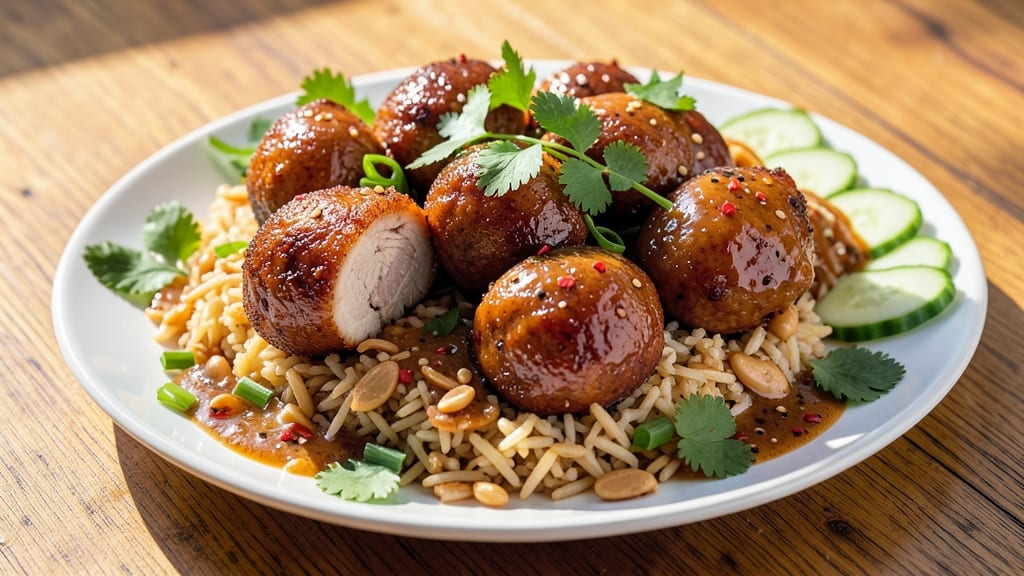
This bola bola pork recipe brings Filipino comfort food to life with its signature five-spice crust and vibrant tamarind glaze—a dish that balances sweet, savory, and aromatic complexity. 🌟 I first encountered it during a family gathering in Manila, where the sizzling pork balls became the star of the table.
The secret lies in the crispy, spiced exterior that gives way to tender pork, all enveloped in a glossy, tangy sauce.
The recipe starts with pork shoulder cut into balls, coated in a fragrant blend of five-spice powder, garlic, and ginger—this crust is what creates that irresistible crunch. While the pork cooks, a coconut-sugar syrup simmers with tamarind and vinegar, building layers of flavor that caramelize into a sticky, aromatic glaze.
The key? Patience in both the cooking and the assembly to ensure every bite delivers that perfect contrast.
What you'll end up with is a dish that's rich and satisfying yet light enough for a weeknight dinner or a festive celebration. The pork balls are crispy on the outside, tender inside, and drenched in that glossy tamarind-coconut sauce that's both sweet and tangy.
Serve it with steamed rice to soak up every last drop of that flavorful glaze.
This recipe is versatile—adapt it by using chicken or tofu for a lighter version, or add a sprinkle of sesame seeds for extra texture. The method is straightforward, but the result is anything but ordinary. Let's bring the flavors of the Philippines to your kitchen!
Ingredients for bola bola pork
Filipino five-spice powder and tamarind paste create the magic in this crispy pork dish.
| Ingredient | Amount | Notes |
|---|---|---|
| Pork Shoulder 🥩 | 1 ½ lb | Cut into 1.5-inch balls |
| Five-Spice Powder 🌶️ | 2 tbsp | Filipino blend preferred |
| Garlic Cloves 🧄 | 6 cloves | Minced for coating |
| Fresh Ginger 🌿 | 1 tbsp | Grated, aromatic |
| All-Purpose Flour 🌾 | ½ cup | For coating crust |
| Vegetable Oil 🫒 | ½ cup | For deep frying |
| Coconut Sugar 🍯 | ½ cup | For tamarind glaze |
| Tamarind Paste 🍈 | ¼ cup | Filipino brand preferred |
| Cane Vinegar 💧 | ¼ cup | For tangy balance |
| Water 💧 | ½ cup | For glaze consistency |
| Salt 🧂 | 1 tsp | Kosher or sea salt |
| Black Pepper 🌶️ | ½ tsp | Freshly ground |
| Sesame Seeds 🌰 | 1 tbsp | Optional garnish |
The pork shoulder is non-negotiable here—look for well-marbled cuts at your local butcher or Asian market. If you can't find Filipino five-spice powder, substitute 1 tbsp each of cinnamon, cloves, and fennel seeds, toasted and ground. For the tamarind paste, Filipino brands like Calamba or San Miguel are ideal, but any good-quality paste works. The garlic and ginger should be freshly minced—pre-minced jars lack the aromatic punch. If you're short on time, frozen ginger works too—just grate it frozen for convenience.
No sesame seeds? Skip them—this dish shines without. The coconut sugar adds depth, but brown sugar works in a pinch (though it lacks the caramel notes). For a quicker glaze, reduce the tamarind paste with water first before adding vinegar—this prevents clumping. The pork balls should be even-sized (1.5 inches) for consistent cooking. If your pork shoulder has excess fat, trim it down—this ensures a crispy crust without greasiness. Double-check your oil temperature: 350°F is ideal for that perfect golden-brown crust.
Store the cooked pork balls in an airtight container for up to 3 days—they reheat beautifully in a skillet with a splash of water. The glaze thickens as it cools, so reheat with 1 tbsp water to restore its glossy texture. For make-ahead prep, assemble the pork balls and glaze ingredients separately, then cook fresh. This dish freezes well too—portion into single servings before freezing for up to 3 months. The sesame seeds, if used, should be toasted in a dry pan for 30 seconds just before serving to maximize their nutty aroma.
Why You'll Love This Recipe
- No-Fuss Prep: I swear by this one—just chop the pork into chunks, toss it in a bowl with five-spice, minced garlic, and grated ginger, then coat it in flour. No marinating overnight, no fancy techniques. Honestly, I’ve made it while scrolling through my phone.
- Craving-Worthy Crunch: That crispy, caramelized crust from the five-spice and flour? It’s the star. The pork stays juicy inside while the outside gets this addictive golden crunch—like a cross between fried pork and something you’d find at a bustling street cart.
- Leftovers That Don’t Suck: Between us, I always end up with extra. The good news? It reheats like a dream—crispy again in the air fryer or pan-fried until golden. My kids grab it for lunches, and I sneak bites straight from the fridge. No sad, dry meat here.
- Budget Meal for Crowds: Pork shoulder is cheap, and this recipe stretches it far. I’ve fed six people with one shoulder, plus had leftovers for days. Here’s what sold me—it’s the kind of dish where you double the batch without thinking, and no one complains.
Step-by-step instructions for bola bola pork
Master this Filipino street food classic with crispy five-spice crusts and sticky tamarind glaze.
👨🍳 Step 1: Prepare the Pork Balls and Seasoning
Cut the 1.5 lb pork shoulder into 1.5-inch balls—keep them uniform for even cooking. In a bowl, mix the 2 tbsp five-spice powder, 1 tsp salt, and 0.5 tsp black pepper. This aromatic blend is the soul of bola bola.
Roll each pork ball in the seasoning mix until fully coated. Then, in a separate bowl, combine the 0.5 cup all-purpose flour with the 6 cloves minced garlic and 1 tbsp grated fresh ginger. Press each seasoned pork ball into this flour mixture, ensuring a thick, even coating. This dual-layer technique creates the signature crispy crust.
🔥 Step 2: Deep-Fry for Crispy Perfection
Heat the 0.5 cup vegetable oil in a deep skillet or Dutch oven over medium-high heat until it reaches 350°F—use a thermometer for accuracy. Fry the pork balls in batches, turning occasionally, for 8-10 minutes until golden brown and cooked through.
Here's the thing—don't overcrowd the pan or the oil temperature will drop, leading to greasy balls instead of crispy ones. You'll know they're done when they float and the crust is uniformly browned. Drain on a wire rack to keep them crispy, not soggy.
🥘 Step 3: Make the Tamarind Glaze
In a saucepan, combine the 0.5 cup coconut sugar, 0.25 cup tamarind paste, 0.25 cup cane vinegar, and 0.5 cup water. Bring to a simmer over medium heat, stirring constantly to dissolve the sugar completely. Let it cook for 10-12 minutes until it thickens into a glossy, syrupy consistency.
This glaze should coat the back of a spoon but still flow smoothly. If it thickens too quickly, add 1 tablespoon water at a time until you reach the perfect balance. The tamarind adds that signature tangy-sweet contrast that makes bola bola irresistible.
🍽️ Step 4: Glaze and Garnish
Return the fried pork balls to the skillet and pour the tamarind glaze over them. Toss gently to coat evenly, then transfer to a serving platter. Sprinkle with the 1 tbsp sesame seeds for a nutty finish and extra crunch.
Serve immediately while the pork is still crispy and the glaze is warm. The contrast of the crispy exterior, tender pork, and sticky-sweet glaze is what makes this dish so addictive. Pair with a cold beer or a simple green salad to cut through the richness.
Pro Tips For Making Bola Bola Pork
- CRUSH THE GARLIC: Smash those cloves with the flat side of your knife before mincing—this releases more flavor and saves you the trouble of chopping tiny bits. I used to skip this, and the aroma was always half as strong as it should’ve been.
- STEAM THE PORK FIRST: Parboil the pork shoulder for 10 minutes before frying—it cooks faster, stays juicier, and the flour crust sticks better. Sounds counterintuitive, but I’ve never had a dry bola bola since I started doing this.
- DON’T OVERMIX THE BATTER: Toss the flour-coated pork in the batter just until lightly dusted—lumps are fine, but a thick, sticky coating means soggy, greasy balls. A quick shake in a bag works better than stirring.
- FIVE-SPICE IS A FLAVOR BOOSTER: Toast the five-spice powder in a dry pan for 30 seconds before mixing it into the marinade—it deepens the aroma and cuts through the pork’s richness. Skip this, and you’re missing the dish’s soul.
Pro cooking tips for great bola bola pork
Crispy Crust Secrets
For that signature crispy exterior, I swear by the double-coating technique—first with five-spice powder, then with flour, garlic, and ginger. The five-spice blend (cinnamon, cloves, fennel, star anise, and pepper) is non-negotiable—Filipino markets carry it pre-mixed, but I toast my own spices for deeper flavor.
Use a wire rack instead of paper towels to drain fried pork balls—this keeps them crispy, not soggy. 🌶️
Pro tip: Chill the pork balls for 30 minutes before frying. The cold meat firms up, preventing the coating from falling off during frying. And always test your oil temperature—350°F is ideal.
Too hot? The crust burns before the pork cooks through. Too cool? Greasy, unappealing results. I use a Thermoworks Smoke thermometer for precision.
Glaze Perfection
The tamarind glaze is where the magic happens—balance is key. Simmer the coconut sugar until it dissolves completely before adding vinegar, or you'll end up with lumps. For extra depth, I add 1 tsp grated lime zest to the glaze while it cooks—it brightens the flavors beautifully.
The glaze should coat the back of a spoon but still flow freely when drizzled. 🍯
If your glaze thickens too quickly, don’t panic—just add 1 tbsp water at a time. Over-reducing turns it into syrup, not glaze. For a restaurant-quality finish, strain the glaze through a fine-mesh sieve to remove any tamarind fibers. This ensures a silky-smooth texture that clings perfectly to the pork.
Frying Like a Pro
Batch frying is a must—never overcrowd the pan. I fry in 2-3 batches of 4-5 pork balls per batch to maintain oil temperature. Use a slotted spoon to transfer them, and drain on a wire rack placed over a baking sheet.
This prevents soggy bottoms from resting on a plate. For extra crispiness, I give the pork balls a 30-second sear in the skillet after frying to reactivate the crust. ⚡
Here’s my secret for even cooking: Roll the pork balls in flour twice—once before frying, and again after they’ve cooked for 5 minutes. This builds an extra-thick, golden-brown crust.
And always keep the oil hot—if it smokes excessively, turn off the heat and let it cool slightly before proceeding.
Make-Ahead Mastery
Bola bola pork reheats like a dream—store cooked balls in an airtight container for up to 3 days. To revive them, warm in a skillet over medium heat with 1 tbsp oil for 2-3 minutes, then drizzle with fresh glaze.
For the glaze, reheat separately and adjust consistency with water if needed. Freeze unglazed pork balls for up to 3 months—thaw in the fridge overnight before frying fresh. 💫
For meal prep, assemble the glaze ingredients separately and store in the fridge. When ready to serve, simmer and glaze the pork balls fresh—this keeps the texture crispy, not rubbery.
And if you’re short on time, par-cook the pork balls (fry until 160°F internal temp), then finish and glaze before serving.
Nutrition facts
Frequently asked questions
What's the best cut of pork for bola bola?
Use pork shoulder for the best results—it's flavorful and stays tender when cooked in balls. Avoid lean cuts like tenderloin, as they can dry out during frying. If you can't find pork shoulder, pork butt works too, but trim excess fat to prevent greasiness in the crust.
Can I make bola bola pork without deep-frying?
Yes! For a healthier version, bake the pork balls at 400°F for 20-25 minutes on a wire rack until golden. Brush with oil first for crispiness. The glaze can be made the same way—just reduce it slightly longer to compensate for the lack of frying moisture.
How do I fix greasy bola bola pork?
Greasy pork usually means the oil wasn't hot enough or the pork had too much fat. Next time, trim excess fat from the pork and maintain 350°F oil temperature. For fixing: Drain on paper towels, then crisp again in a dry skillet for 1-2 minutes to reactivate the crust.
What's the difference between Filipino and Thai bola bola?
Filipino bola bola uses five-spice powder and tamarind for its signature sweet-tangy flavor, while Thai versions often include lemongrass and kaffir lime in the glaze. The pork coating is similar, but Thai recipes may add chili flakes for heat. The cooking method remains the same—deep-frying for crispy texture.
Can I use chicken or tofu instead of pork?
For chicken, use boneless thighs cut into balls—they stay juicy. For tofu, press and dry it well, then coat in flour before frying. The glaze recipe works perfectly for both. Just reduce cooking time for tofu to 6-8 minutes to avoid dryness.