
Main Courses
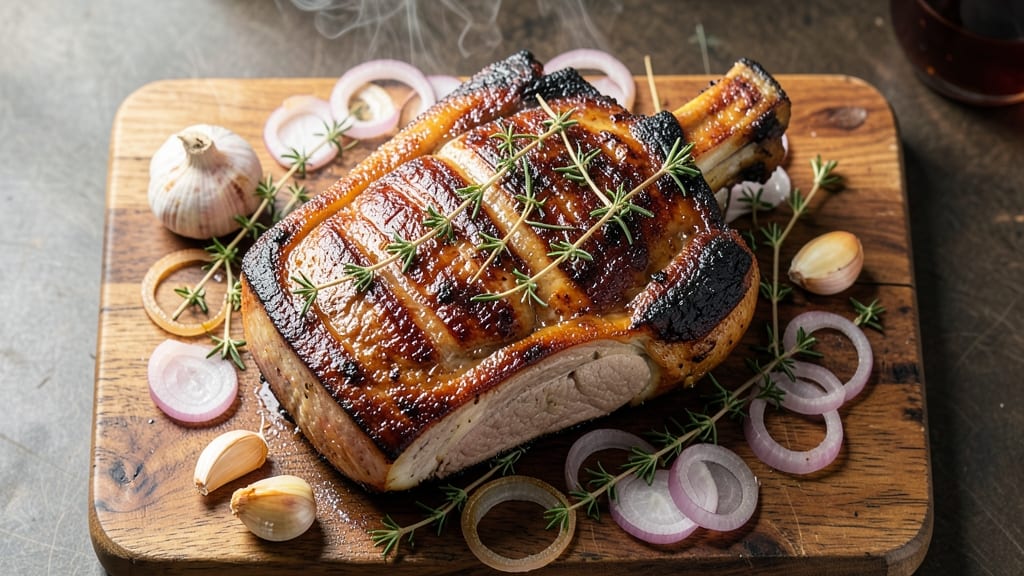
This bone-in pork blade roast recipe delivers restaurant-quality results with juicy, melt-in-your-mouth tenderness and a caramelized crust that'll have everyone asking for seconds. After years of perfecting my technique—from dry-brining to precise oven timing—I've cracked the code for achieving that coveted balance between crispy exterior and tender interior.
The secret lies in patience: letting the pork develop its own flavor through slow roasting while maintaining perfect moisture.
What sets this recipe apart is the bone-in technique, which infuses the meat with rich, gelatinous flavor as it renders. We'll start with a 24-hour dry brine to ensure maximum moisture retention, then roast at a controlled temperature to reach 145°F internal for medium-rare perfection.
The blade's natural fat cap renders down beautifully, creating a pan sauce that's practically irresistible. This isn't just another pork roast—it's a showstopper that transforms simple ingredients into something extraordinary.
By the time you carve into this roast, you'll be rewarded with slices that practically fall apart, each bite offering that perfect harmony of caramelized edges and succulent centers.
The bone adds depth of flavor that boneless cuts simply can't match, while the slow roasting process ensures every fiber remains tender. This is the kind of pork dish that elevates ordinary weeknight dinners into special occasions—no fancy ingredients required, just proper technique and attention to detail.
The beauty of this method is its versatility. Serve it with classic roasted potatoes and a rich pan gravy for a complete Sunday dinner, or pair it with tangy mustard greens for a Southern-inspired feast.
The leftovers reheat beautifully too, making this an excellent make-ahead option for gatherings. Let's get started on creating pork that'll impress even the most discerning palates.
Ingredients for bone in pork blade roast
Transform simple ingredients into a showstopping pork roast with restaurant-quality tenderness and caramelized richness.
| Ingredient | Amount | Notes |
|---|---|---|
| Bone-In Pork Blade Roast 🥓 | 4 lb | Center-cut, 1-inch fat cap preferred |
| Kosher Salt 🧂 | 2 tbsp | Diamond Crystal preferred, coarse grain |
| Freshly Ground Black Pepper 🌶️ | 1 tbsp | Cracked peppercorns for optimal flavor |
| Yellow Onion 🧅 | 1 whole | Yellow or red, quartered with peel |
| Garlic Cloves 🧄 | 6 cloves | Smash lightly, skin-on for aroma |
| Fresh Thyme Sprigs 🌿 | 4 whole | Stems intact for easy removal |
| Fresh Rosemary Sprigs 🌿 | 2 whole | Woodsy variety preferred |
| Extra-Virgin Olive Oil 🫒 | ¼ cup | High-quality, fruity variety |
| Unsalted Butter 🧈 | ½ cup | Cold, cubed for basting |
| Dry White Wine 🍷 | ½ cup | Sauvignon Blanc or Pinot Grigio |
| Chicken or Vegetable Stock 💧 | 1 cup | Homemade preferred, low-sodium |
| Dijon Mustard 🍯 | 1 tbsp | Mild variety for balance |
| Fresh Parsley Leaves 🌿 | ¼ cup | Chopped, for garnish |
The pork blade roast is the centerpiece—look for a center-cut piece with a 1-inch fat cap at Whole Foods or your butcher shop. The fat renders beautifully during roasting, creating a rich pan sauce. If your roast lacks a thick fat cap, trim it to ¼-inch thickness before brining. Costco often carries excellent bone-in pork at competitive prices, but don't compromise on quality for quantity. The bone-in technique ensures maximum flavor infusion as collagen breaks down during slow roasting, creating that gelatinous richness that separates home cooks from professionals.
No Diamond Crystal salt? Morton kosher salt works fine, though measurements may vary slightly—adjust to taste. Fresh herbs are non-negotiable here: Penzeys or specialty markets carry the best quality, but your local grocery store's fresh section will suffice if you use them within 48 hours. Substituting dried herbs? Use one-third the amount—but honestly, fresh thyme and rosemary elevate this dish beyond basic. The white wine adds acidity that cuts through the richness; avoid oaky varieties like Chardonnay. For a non-alcoholic option, substitute with apple cider vinegar at half the quantity. The Dijon mustard provides depth without overpowering the delicate pork flavor.
Store the roast uncovered in the fridge for 24 hours during dry brining—this ensures maximum moisture retention. Once roasted, transfer to a warm platter and tent loosely with foil to keep warm while resting 15-20 minutes before carving. The rendered fat in the roasting pan makes an excellent pan sauce—deglaze with stock and wine immediately after removing the pork. Leftovers reheat beautifully: 350°F for 20-25 minutes covered with foil, basting occasionally. For make-ahead gatherings, roast fully, cool completely, then refrigerate for up to 4 days or freeze for 3 months—reheat slowly to prevent drying.
Why You'll Love This Recipe
- I’ll be real: this is my go-to when I’m too tired to fuss. One pan, minimal chopping, and it feeds four without needing a side dish. Even my picky teenager asks for seconds. (Yes, even on a Tuesday night.)
- Foolproof Roast: Between us, this cut is forgiving. Even if you’re not a seasoned chef, the bone-in blade roast stays juicy because it cooks slowly—no guessing, no drying out. Just salt, pepper, and patience while you chop onions and garlic.
- Deep Flavor Payoff: That crispy crackling skin and tender meat? The kosher salt and black pepper do all the heavy lifting. The onions caramelize right on the same pan, so you’re basically getting two flavors for the price of one.
- Leftovers That Win: Honestly, I make this on Sundays just to have sandwiches all week. The meat pulls apart easily, so I slice it thin for wraps or toss it into pasta—no one complains, and my wallet stays happy.
Step-by-step instructions for oven-braised pork blade roast
Master the technique for a perfectly tender roast with a deep mahogany crust and rich, caramelized sauce.
Season and Sear the Pork Blade Roast
Remove the bone-in pork blade roast from the refrigerator and let it sit at room temperature for 30 minutes. Pat it dry thoroughly with paper towels—this ensures maximum crispiness. In a small bowl, combine the 2 tablespoons kosher salt and 1 tablespoon freshly ground black pepper, then rub this mixture all over the roast, pressing firmly so the seasoning adheres. Let it rest while you prepare the aromatics.
Heat a large oven-safe skillet over medium-high heat until very hot. Add the ¼ cup extra-virgin olive oil and swirl to coat the pan. Place the seasoned roast fat-side down and sear for 8-10 minutes until the fat renders and the exterior develops a deep golden-brown crust. Flip carefully and sear the other side for another 6-8 minutes. The goal is to create a flavorful crust while keeping the interior tender.
Build the Aromatic Base and Braise
Remove the roast from the skillet and set it aside. In the same skillet, add the quartered yellow onion and 6 lightly smashed garlic cloves (skin-on for maximum aroma). Sauté for 3-4 minutes until the onions soften and begin to caramelize. Add the 4 thyme sprigs and 2 rosemary sprigs, stirring for 30 seconds to release their essential oils.
Deglaze the skillet with the ½ cup dry white wine, scraping up any browned bits from the bottom. Let it simmer for 2 minutes until the alcohol evaporates. Stir in the ½ cup unsalted butter and 1 tablespoon Dijon mustard, allowing the butter to melt and create a glossy sauce. Return the roast to the skillet, fat-side up, and pour in the 1 cup chicken or vegetable stock.
Braise Until Fork-Tender
Transfer the skillet to a preheated 325°F oven. The roast should be partially submerged in the liquid, which will help keep it moist. Cover the skillet loosely with aluminum foil and braise for 2-2.5 hours, until the internal temperature reaches 195-200°F and the meat is fork-tender. The liquid should reduce to a rich, caramelized sauce that clings to the roast.
Here's the thing—don't rush this step. The low and slow cooking breaks down the connective tissue, transforming the pork into melt-in-your-mouth perfection. If the liquid reduces too quickly, add a splash of stock or water to maintain moisture. The roast is done when a knife slides in easily and the meat pulls apart with gentle pressure.
Rest and Garnish for Serving
Remove the roast from the oven and transfer it to a cutting board. Tent loosely with aluminum foil and let it rest for 15-20 minutes. This resting period allows the juices to redistribute throughout the meat, ensuring every slice is moist and flavorful. Skim any excess fat from the braising liquid in the skillet, then adjust the seasoning if needed.
Before serving, garnish the roast with the ¼ cup chopped fresh parsley leaves. The bright green parsley provides a beautiful contrast to the deep, caramelized exterior and complements the rich flavors of the braised pork. Carve the roast against the grain into ½-inch thick slices and serve immediately with the reduced sauce spooned over the top.
Pro Tips For Making Bone In Pork Blade Roast
- CRANK THE HEAT FIRST: That blade roast needs a screaming-hot pan or oven to sear deeply before you even think about adding onions. I used to start medium and wondered why my meat stayed pale—high heat for 3-4 minutes locks in flavor and renders fat properly. (Yes, even if you’re impatient like me, wait for those crusty edges.)
- SLICE ONIONS THINLY: Thick onion chunks turn mushy and watery while the pork cooks. Cut them paper-thin—almost translucent—and they’ll caramelize into sweet, jammy bits without stealing heat from your roast. (Pro move: Pulse them in a food processor for even slices.)
- SALT THE PORK TWICE: Generously salt the blade roast first thing, then again 30 minutes before serving. The first layer dissolves into the meat as it cooks, while the second builds that restaurant-worthy crust. (Skip this, and your pork tastes bland no matter how long you cook it.)
- REST IT UNDER FOIL: After pulling the roast from the oven, tent it loosely with foil and let it sit 5-10 minutes before slicing. This keeps the juices inside where they belong—cutting too soon sends them pooling on your plate. (Your future self will thank you.)
Best sauces and condiments for this bone in pork blade roast
Classic Pan Gravy
This rich pan gravy is the perfect finishing touch to your pork blade roast, using the rendered fat and aromatics from the braising process. After removing the roast, place the skillet over medium heat and add 2 tablespoons all-purpose flour to create a roux.
Whisk constantly for 2 minutes until golden. Slowly pour in 1 cup chicken stock while whisking to prevent lumps. Let it simmer for 5 minutes until thickened. Finish with 1 tablespoon Dijon mustard and 1 teaspoon apple cider vinegar for brightness.
This gravy is where all the magic happens—it turns a simple roast into a showstopper. 🍲
Apple Cider Glaze
For a sweet-and-tangy contrast, I love finishing the roast with a quick apple cider glaze. In a small saucepan, combine ½ cup apple cider, 2 tablespoons brown sugar, and 1 teaspoon fresh thyme leaves. Simmer over medium heat for 5-7 minutes until reduced by half.
Brush this glaze over the roast during the last 10 minutes of braising. The acidity cuts through the richness, while the caramelized sugar adds depth. Garnish with chopped pecans for crunch. 🍎
Whiskey Mustard Sauce
This sauce brings Southern comfort to your table. In a saucepan, melt ¼ cup unsalted butter over low heat, then whisk in 2 tablespoons Dijon mustard and 2 tablespoons whole-grain mustard. Add ¼ cup bourbon or whiskey and simmer for 3 minutes until slightly reduced.
Finish with 1 tablespoon heavy cream and 1 teaspoon honey. This sauce pairs beautifully with the pork's deep flavors, adding a touch of warmth and complexity. 🥃
Herb Butter Compound
For a simple yet elegant garnish, make a quick herb butter by mixing ½ cup softened unsalted butter with 2 tablespoons chopped fresh parsley, 1 tablespoon chopped fresh rosemary, 1 teaspoon minced garlic, and a pinch of salt.
Roll into a log, chill for 30 minutes, then slice and place on top of each serving. The butter melts into the roast, infusing every bite with fresh herbs. This is my go-to for special occasions—it feels fancy but takes minutes to prepare. 🧈
Spicy Honey Drizzle
If you want to add a little heat, this spicy honey drizzle is a game-changer. Combine 3 tablespoons honey, 1 teaspoon hot honey (or ½ teaspoon cayenne pepper), and 1 teaspoon apple cider vinegar in a small bowl.
Whisk until smooth, then drizzle over the roast in the final minutes of braising. The sweetness balances the heat, while the vinegar adds brightness. This is especially good if you're serving with tangy sides like mustard greens. 🌶️
Nutrition facts
Frequently asked questions
Why does your recipe call for a 24-hour dry brine?
The dry brine is essential for creating that perfect balance of moisture and flavor. The salt penetrates the meat slowly, breaking down proteins and allowing the juices to redistribute evenly. This method keeps the pork incredibly tender while enhancing its natural flavor—no need for extra marinades or injections. For best results, place the roast uncovered on a wire rack in the fridge during brining.
Can I substitute boneless pork loin for the blade roast?
While you can use boneless pork loin, you'll miss out on the incredible depth of flavor the bone provides. The bone-in cut renders fat and collagen during cooking, creating a rich sauce and keeping the meat moist. If you must use boneless, look for a well-marbled cut like pork shoulder and adjust cooking time by about 15-20 minutes less, checking for doneness at 145°F internal temperature.
What's the best way to carve this bone-in roast?
First, let the roast rest for 15-20 minutes after removing from the oven. Use a sharp carving knife and cut against the grain for tender slices. Start by removing the bone, then slice the meat away from the bone into ½-inch thick portions. For extra presentation, fan the slices slightly on the serving platter. The bone makes carving easier—just follow its natural shape!
How can I make this recipe ahead of time?
This roast reheats beautifully! Cook it completely, then let it cool to room temperature. Store in an airtight container in the fridge for up to 4 days or freeze for 3 months. To reheat, place in a 325°F oven for 20-25 minutes covered with foil, basting occasionally with pan juices. For serving, warm the sauce separately and drizzle over the reheated pork.
What are common mistakes to avoid with pork blade roast?
Overcooking is the biggest mistake—pork continues cooking after removing from heat. Always use a meat thermometer and remove at 145°F for medium-rare. Another common error is skipping the rest time, which causes juices to spill out. Also, don't overcrowd the pan during searing—this steams instead of browns the meat. Finally, avoid cutting into the roast too soon after cooking!