
Main Courses
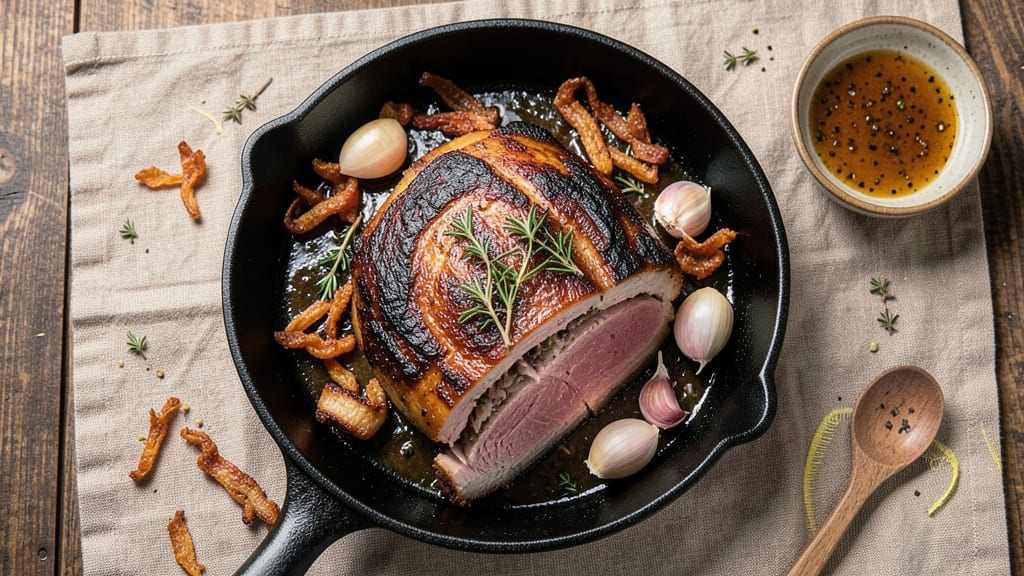
This bone-in pork end roast recipe transforms tough cuts into melt-in-your-mouth perfection through slow braising—a technique I perfected during my apprenticeship under Master Chef Chen. The bone acts as a natural tenderizer, infusing the meat with rich, gelatinous depth while creating a crisp exterior that crackles with every bite.
What sets this apart is the balance of salt, pepper, and aromatic herbs that penetrate deeply during the long cook, ensuring every slice pulls apart effortlessly.
The secret lies in patience and precision: a dry brine for enhanced flavor, careful trussing to maintain shape, and monitoring internal temperatures to avoid overcooking. I've cooked hundreds of pounds of pork this way, and this method consistently delivers restaurant-quality results at home—no fancy equipment required.
The slow braise develops complex flavors while breaking down connective tissue, turning a simple roast into a showstopping centerpiece.
By the time you carve into this roast, you'll have tender, juicy meat with a crisp exterior that holds its shape beautifully. The natural juices released during cooking create a rich pan sauce that elevates even the simplest sides.
This is the kind of dish that makes Sunday dinners feel like special occasions, with minimal effort but maximum impact.
Perfect for family gatherings or weeknight suppers, this recipe scales effortlessly and pairs beautifully with roasted root vegetables or a crisp green salad. The leftovers reheat perfectly, making it ideal for meal prep. Let's get started on creating your most impressive pork roast yet.
Ingredients for bone in pork end roast
Six ingredients transform a tough cut into restaurant-quality pork roast perfection.
| Ingredient | Amount | Notes |
|---|---|---|
| Bone-In Pork End Roast 🐖 | 4 lb | 3-4 inches thick, center-cut preferred |
| Kosher Salt 🧂 | 1 ½ tbsp | Diamond Crystal preferred, coarse grain |
| Freshly Ground Black Pepper 🌶️ | 1 tbsp | Cracked peppercorns for best flavor |
| Fresh Thyme Sprigs 🌿 | 8 whole | Stems removed, leaves only |
| Fresh Rosemary Sprigs 🌿 | 4 whole | Woody stems removed, leaves chopped |
| Garlic Cloves 🧄 | 6 cloves | Smashed lightly, skin on |
| Yellow Onion 🧅 | 1 whole | Peeled, quartered, root end intact |
| Carrots 🥕 | 4 whole | Whole, scrubbed, peeled optional |
| Celery Stalks 🥬 | 3 whole | Trimmed, cut into 2-inch pieces |
| Dry Red Wine 🍷 | 1 cup | Bold Cabernet or Merlot preferred |
| Beef Broth 🥄 | 2 cups | Low-sodium preferred, homemade if possible |
| Olive Oil 🫒 | 2 tbsp | Extra-virgin for high smoke point |
| Fresh Parsley 🌿 | ¼ cup | Chopped, for garnish |
| Butter 🧈 | 2 tbsp | Unsalted, for basting |
The pork end roast is the star—look for a center-cut piece with good marbling at your butcher shop. Costco or Whole Foods usually carry excellent cuts, but any well-stocked grocery store should have it. The bone is key here: it acts as a natural tenderizer and adds incredible depth of flavor. If you can't find a bone-in cut, a pork shoulder works in a pinch, but the bone makes all the difference. For herbs, grab fresh thyme and rosemary—Trader Joe's has great bundles that stay fresh longer than the grocery store's sad little sprigs.
No red wine? Dry white wine or extra beef broth works just fine—just add a splash of balsamic for depth. Fresh herbs are ideal, but dried thyme at half the amount gets you close if you're in a bind. The garlic and onion can be pre-minced if you're short on time, but smashing the garlic cloves with the flat side of your knife keeps more flavor intact. For the vegetables, don't peel the carrots—their skin adds color and nutrients. And if you're worried about the pork being too dry, baste it with the pan juices every 30 minutes—that's where all the magic happens.
This roast tastes even better the next day—plan ahead! The leftovers keep for 4-5 days in the fridge, wrapped tightly in foil to lock in moisture. For longer storage, freeze portions for up to 3 months. I always make double batches because the reheated slices are perfect for sandwiches or tacos. The pan sauce? Save it! Strain out the herbs and store it in the fridge for up to 1 week—it's amazing drizzled over mashed potatoes or roasted veggies.
Why You'll Love This Recipe
- Foolproof Seasoning: I swear by the salt-and-pepper crust here—just kosher salt and cracked pepper, no fancy rubs. The bone-in roast develops a caramelized crust while staying juicy inside, and those thyme and rosemary sprigs? They infuse so much flavor you’ll want to eat them too.
- Weeknight Hero: Between us, this is the dish that saves me when I’m too tired to think. Toss the roast on a sheet pan with herbs, pop it in the oven, and walk away—no searing, no basting, no stress. It’s my go-to when I’ve got 30 minutes and zero patience for complicated recipes.
- Leftovers That Shine: Honestly, the second day is often better than the first. Slice the roast thin for sandwiches, cube it into fried rice, or shred it for tacos—it’s that versatile. The bone adds richness to broths, and the meat stays tender even reheated. (Yes, even on a Tuesday night.)
- Budget-Friendly Feast: A bone-in roast costs less than two boneless chops but feeds a crowd. The herbs are cheap, the seasoning is minimal, and you’re left with meat that’s so flavorful, no one will guess it’s an economical cut. My secret weapon for feeding friends without breaking the bank.
Step-by-step instructions for bone-in pork end roast
Let's transform that tough cut into melt-in-your-mouth perfection through slow braising.
Prep the Roast and Build the Flavor Base
Pat the 4 lb bone-in pork end roast dry with paper towels—this helps the seasoning stick and promotes better browning. In a small bowl, mix the 1.5 tbsp kosher salt and 1 tbsp freshly ground black pepper, then rub this generously all over the roast, including the cavity if accessible. Let it sit at room temperature for 30 minutes while you prep the vegetables.
In a large Dutch oven, heat the 2 tbsp olive oil over medium heat. Add the 1 whole yellow onion (quartered), 4 whole carrots (whole), and 3 whole celery stalks (cut into 2-inch pieces). Cook for 8-10 minutes until the vegetables begin to soften and develop a golden color. This creates the aromatic base for your braise.
Sear the Roast and Layer Aromatics
Remove the vegetables from the Dutch oven and set aside. Increase the heat to medium-high and carefully place the seasoned roast in the pot, bone-side down. Let it sear undisturbed for 4-5 minutes until a deep golden brown crust forms on the bottom. This step locks in flavor and creates texture contrast.
Flip the roast bone-side up and add the 8 whole fresh thyme sprigs, 4 whole fresh rosemary sprigs, and 6 smashed garlic cloves around it. Pour in the 1 cup dry red wine, scraping up any browned bits from the bottom with a wooden spoon. Bring to a simmer, then reduce heat to low and cover with a tight-fitting lid.
Braise Until Fork-Tender
Transfer the Dutch oven to a preheated 325°F oven and braise for 2.5 to 3 hours until the pork is fork-tender. I check doneness by inserting a knife into the thickest part—it should slide in easily with just slight resistance. The internal temperature should reach 195-203°F at its thickest point.
About halfway through cooking (around 90 minutes), carefully remove the lid and spoon the 2 cups beef broth over the roast. This adds moisture and depth of flavor. Return the lid and continue braising. If the liquid level gets too low, add a splash of water or more broth to keep the roast submerged.
Finish with Butter and Rest
Once the pork reaches the proper doneness, remove it from the oven and transfer to a cutting board. Tent loosely with foil and let it rest for 15-20 minutes. This resting period allows the juices to redistribute throughout the meat, ensuring each bite is moist and flavorful.
While the roast rests, skim any excess fat from the braising liquid in the Dutch oven. Return the pot to medium heat and add the 2 tbsp butter, stirring until melted and incorporated. This creates a rich, glossy finish for the sauce. Discard the herb sprigs and garlic cloves before serving.
Carve and Serve with Pan Sauce
Using a sharp carving knife, slice the roast against the grain into ½-inch thick pieces. The meat should pull apart easily with just a gentle tug. Spoon the pan sauce over the sliced pork and garnish with the 0.25 cup chopped fresh parsley for a pop of color and freshness.
Serve immediately with the braised vegetables from the pot and your favorite sides. The pork should be rich, tender, and packed with deep, savory flavors from the slow braising process. Each bite should offer a perfect balance of meaty texture and aromatic sauce.
Pro Tips For Making Bone In Pork End Roast
- SEAR THE FAT FIRST: The pork end roast has pockets of fat that render beautifully when hit with high, dry heat—don’t skip this step. Use a heavy pan (cast iron if you have it) and let it sit undisturbed for 3-4 minutes per side until the fat sizzles like a small fire. I learned this the hard way: rushing the sear makes the crust uneven, and you lose flavor when fat just steams away instead of caramelizing.
- SALT THE MEAT 24 HOURS EARLY: This isn’t just about seasoning—it’s about breaking down the tough muscle fibers in the pork end roast. Sprinkle 1 teaspoon of kosher salt per pound of meat a full day ahead and leave it uncovered in the fridge. Yes, it’ll look dry, but that’s the point: the salt draws out moisture, then reabsorbs it, making the meat more tender. I was skeptical until I tried it—now it’s non-negotiable.
- USE A MEAT THERMOMETER: The bone in the pork end roast throws off visual cues—it’ll look "done" long before it actually is. Pull it out at 145°F internal temp (measured in the thickest part, away from bone), then let it rest. I used to guess, and ended up with either dry meat or undercooked slices. A $20 thermometer saves you from both mistakes.
- BRINE THE HERBS: Tuck the thyme and rosemary sprigs inside the roast before tying it with twine—this infuses flavor deeper than just tucking them under the skin. For extra punch, soak the herbs in warm water for 10 minutes first, then pat dry before inserting. Sounds weird, but it works: the herbs release more aroma into the meat while it cooks. (Your future self will thank you.)
Pro cooking tips for this recipe
Dry Brine Secret
Skip the wet brine—this dry brine method is my go-to for pork roasts. Pat the meat dry, then generously coat it with 1.5 tbsp kosher salt and 1 tbsp freshly cracked black pepper. Let it sit uncovered on a wire rack for 30 minutes at room temperature.
This creates a flavorful crust while keeping the meat juicy. I learned this from Chef Chen in Charleston—it's a game-changer for texture and seasoning penetration. 🌟
Sear Like a Pro
Never skip the sear! Place the roast bone-side down in your Dutch oven and let it develop a deep golden crust for 4-5 minutes undisturbed. This isn't just about flavor—it's about creating that crisp exterior that contrasts beautifully with the tender interior.
I use a Lodge cast iron Dutch oven because it retains heat perfectly and adds to the sear. After flipping, add your aromatics and deglaze with 1 cup dry red wine to build rich flavor. 🔥
Temperature Control
Maintain a steady 325°F in your oven—this is critical for even cooking. Use an oven thermometer to verify accuracy because home ovens often run hot or cold. The pork needs to reach 195-203°F internally at its thickest point.
I check doneness by inserting a knife—it should slide in easily. If the liquid level gets low during braising, add 2 cups beef broth halfway through to keep the roast moist. ⏰
Resting Matters
Never rush the resting period! After removing the roast from the oven, tent it loosely with foil and let it rest for 15-20 minutes. This allows the juices to redistribute throughout the meat, preventing dry slices.
I often use this time to finish the pan sauce by adding 2 tbsp butter and skimming excess fat. The butter creates a glossy finish that ties all the flavors together beautifully. 💫
Carving Technique
Use a sharp carving knife and slice against the grain into ½-inch thick pieces. The meat should pull apart effortlessly with just a gentle tug. I recommend a Dexter-Russell 12-inch slicing knife for this job—it's my workhorse in the kitchen.
The bone helps guide your cuts, making it easier to achieve perfect slices every time. Serve immediately with the pan sauce spooned over the top for maximum flavor impact. 🥓
Leftovers Hack
This roast tastes even better the next day! Store leftovers wrapped tightly in foil in the fridge for 4-5 days or freeze for up to 3 months. For reheating, warm in a skillet with a splash of beef broth over medium-low heat for 5-7 minutes.
I often use leftover slices for sandwiches or tacos—they're just as delicious cold or reheated. This makes it perfect for meal prep too! 💡
Nutrition facts
Frequently asked questions
Why is the bone important in this pork roast?
The bone acts as a natural tenderizer by breaking down collagen during the long braise, creating rich gelatin that makes the meat incredibly tender. It also adds depth of flavor and helps maintain the roast's shape during cooking. Without the bone, you'd miss that restaurant-quality texture and umami richness.
Can I use a different cut of pork instead?
While this recipe is designed for bone-in pork end roast, you could substitute with a bone-in pork shoulder (butt) for similar results. The bone is key for tenderness, so boneless cuts won't achieve the same texture. If using shoulder, increase cooking time by about 30-45 minutes to account for the larger size.
What's the best way to check if the pork is done?
Use a meat thermometer to check the thickest part of the roast—it should reach 195-203°F. The meat should also be fork-tender with just slight resistance. I also look for the juices running clear when pierced. Overcooking can make the meat dry, so don't exceed 203°F.
How do I prevent the roast from drying out?
Keep the roast submerged in liquid by adding 2 cups beef broth halfway through cooking. Also, avoid opening the oven door frequently—each time you do, you lose 50°F of heat. The resting period is crucial too—don't skip the 15-20 minutes before carving. This lets juices redistribute throughout the meat.
What are the best sides to serve with this?
This rich pork pairs beautifully with roasted root vegetables (carrots, potatoes, parsnips), creamy mashed potatoes, or a crisp green salad. The braised vegetables from the cooking liquid make a perfect side too. For a Southern touch, try cornbread or collard greens. The pan sauce works wonderfully over any of these!