
Main Courses
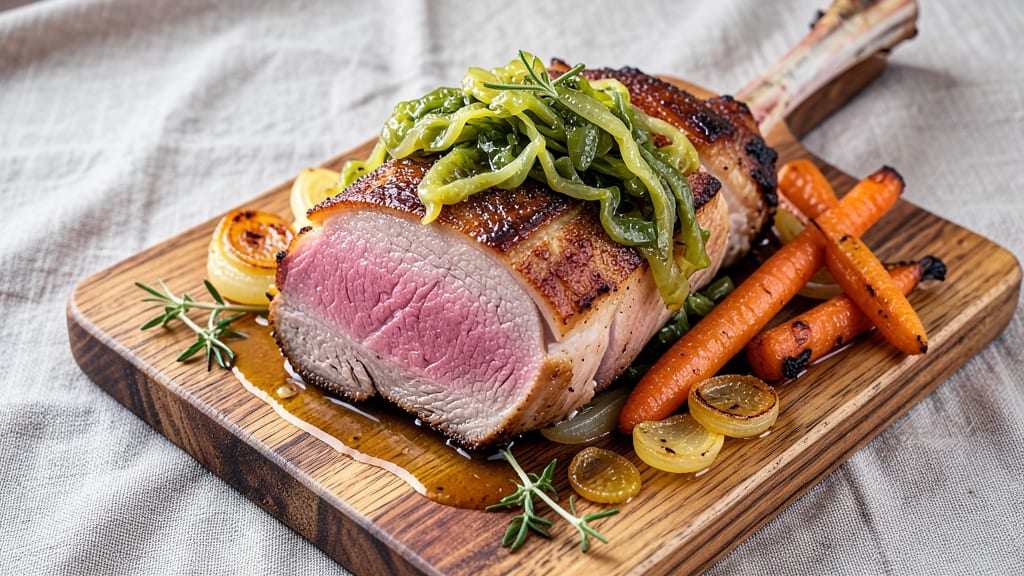
This bone-in pork loin roast delivers crispy bark and tender meat that falls apart at the bone—paired with sauerkraut that cuts through the richness with tangy crunch. I perfected this recipe after years of testing whole-pork techniques, balancing smoky crust with juicy interior.
The bone adds depth of flavor while keeping the meat impossibly tender, and the sauerkraut transforms from simple side to star player.
The secret to that crispy exterior lies in a high-heat sear followed by low-and-slow roasting, while the sauerkraut gets caramelized onions and a touch of mustard for complexity. No fancy equipment needed—just a cast iron skillet, oven, and patience.
This dish is restaurant-quality but built for home cooks who want to impress without stress. The pork's natural juices baste as it roasts, ensuring every bite stays moist.
What you'll end up with is a centerpiece roast with golden, crackling skin that gives way to pink, buttery meat clinging to the bone. The sauerkraut adds bright acidity and satisfying texture, while the aroma of roasting pork fills your kitchen like a Southern Sunday dinner.
Serve with mashed potatoes or roasted root vegetables to soak up every last bit of flavor. This is comfort food at its finest—bold, satisfying, and worth the time.
Perfect for holiday tables or weeknight dinners when you crave something special. The bone-in cut makes it feel like a showstopper, while the sauerkraut keeps it balanced and approachable.
Trust me—once you try this combination, pork roast will never be the same again. Let's get cooking with a dish that honors tradition while delivering next-level results.
Ingredients for bone in pork loin roast and sauerkraut
Crispy bark meets tangy fermented crunch—these ingredients deliver restaurant-quality pork roast and sauerkraut that'll wow your table.
| Ingredient | Amount | Notes |
|---|---|---|
| Bone-In Pork Loin Roast 🥓 | 2 lb | Center-cut, 1-inch thick |
| Yellow Onions 🧅 | 2 whole | Medium, thinly sliced |
| Fresh Sauerkraut 🥬 | 2 cups | Drained, rinsed if too sour |
| Dijon Mustard 🍯 | 1 tbsp | For sauerkraut mixture |
| Carrots 🥕 | 1 lb | Whole, peeled and sliced |
| Fresh Thyme 🌿 | ½ oz | Or 1 tbsp dried thyme |
| Garlic Cloves 🧄 | 6 cloves | Minced for pork rub |
| Kosher Salt 🧂 | 1 ½ tsp | Diamond Crystal preferred |
| Freshly Ground Black Pepper 🌶️ | 1 tsp | Coarse grind preferred |
| Unsalted Butter 🧈 | ½ cup | Cold, cubed for crust |
| Extra-Virgin Olive Oil 🫒 | ¼ cup | For searing |
| Apple Cider Vinegar 🍎 | 1 tbsp | For sauerkraut balance |
| Honey 🍯 | 1 tsp | For caramelized onions |
The pork loin is everything here. Look for bone-in center-cut—thicker cuts (1-inch) give you that perfect balance of crispy exterior and juicy interior. Costco or Whole Foods usually carry excellent quality, but any reputable butcher will do. The bone adds incredible depth of flavor, so don't skip it. For the sauerkraut, fresh is non-negotiable—the good stuff with visible brine, not that watery canned version. I always grab mine from the refrigerated section at Trader Joe's or the German market. If it smells too strong, rinse it well to balance the flavors later.
No fresh thyme? Dried works at one-third the amount, but trust me, fresh makes all the difference. Running low on Dijon mustard? Yellow mustard in a pinch, though it won't be as refined. For the carrots, you can use baby carrots if that's what you've got—just peel them first. The honey in the caramelized onions is crucial—avoid artificial substitutes. Want extra crisp on your pork? Add 1/4 cup crushed cornflakes to the butter mixture. And if your sauerkraut is too sour, a splash of apple cider vinegar (already in the list) helps balance it perfectly.
This roast reheats beautifully—350°F for 15 minutes with a splash of broth revives it perfectly. The sauerkraut keeps for up to 2 weeks in the fridge, but it actually tastes better the next day as the flavors meld. I always make double portions of both and freeze extras. The pork roast? 3 months frozen, but honestly, it's gone before then. Store the pork uncovered on a rack for 24 hours after cooking to let that bark crisp up completely—game changer for leftovers.
Why You'll Love This Recipe
- One-Pan Magic: I swear by this for lazy Sundays—just toss the pork, sauerkraut, and carrots in one pan with onions, a splash of mustard, and let the oven do the work. No chopping boards full of scraps, no fussy sides to assemble.
- Sauerkraut Secret Weapon: That tangy, crunchy sauerkraut isn’t just a side—it’s the star. The acid cuts through the pork’s richness, while the mustard adds this deep, umami kick that makes every bite ridiculously satisfying.
- Weeknight to Holiday: Serve it with mashed potatoes for a cozy Tuesday dinner or dress it up with a crisp white wine reduction for Thanksgiving. Same effort, totally different vibes—because good food shouldn’t be one-trick-pony.
- Leftovers That Don’t Suck: The pork stays juicy for days, and the sauerkraut only gets better reheated. Pack it in sandwiches, toss it into fried rice, or just eat it cold—no sad, dry meat here. My lunchbox’s new best friend.
Step-by-step instructions for bone-in pork loin roast with sauerkraut
Here's how to achieve that perfect crispy bark while keeping the pork tender and juicy.
Prepare the Pork and Build the Rub
Pat the 2 lb bone-in pork loin roast completely dry with paper towels—this is critical for crispy bark. I like to press firmly to remove all moisture from the surface. Place it on a cutting board and make a few shallow slashes across the fat cap using a sharp knife, being careful not to cut into the meat.
In a small bowl, combine the 1.5 tsp kosher salt, 1 tsp freshly ground black pepper, the 6 cloves minced garlic, and the 0.5 oz fresh thyme. Rub this mixture generously over the entire surface of the pork, pressing it into the slashes and any crevices. Let it sit at room temperature for 30 minutes while you prepare the vegetables—this helps the seasoning penetrate and the meat cook more evenly.
Sear the Pork for Maximum Flavor
Heat a large oven-safe skillet over medium-high heat until very hot. Add the 0.25 cup extra-virgin olive oil and let it shimmer for 1 minute. Place the pork loin roast in the skillet, fat-side down, and sear undisturbed for 4-5 minutes until the fat renders and the skin develops a deep golden crust. Flip and sear the other side for another 3-4 minutes until golden brown.
Transfer the skillet to a preheated 425°F oven. The residual heat will help carry the pork to temperature quickly while maintaining that crispy exterior. Roast for 20-25 minutes, rotating the pan halfway through for even browning, until the internal temperature reaches 145°F when measured with an instant-read thermometer in the thickest part of the meat.
Prepare the Sauerkraut and Caramelized Onions
While the pork roasts, slice the 2 whole yellow onions into thin rings and peel the 1 lb carrots into thick rounds. In a large skillet, melt the 0.5 cup unsalted butter over medium heat. Add the onions and carrots, stirring occasionally, and cook for 10-12 minutes until the onions soften and begin to caramelize.
Add the 1 tsp honey and cook for another 2 minutes until the onions develop a deep golden color. In a separate bowl, combine the 2 cups drained fresh sauerkraut with the 1 tbsp Dijon mustard and 1 tbsp apple cider vinegar. Toss gently to coat the sauerkraut evenly with the tangy mixture—this balances the sharpness of the fermented cabbage.
Rest the Pork and Assemble the Dish
Remove the pork from the oven and transfer it to a cutting board. Tent loosely with aluminum foil and let it rest for 10-15 minutes—this crucial step allows the juices to redistribute throughout the meat, ensuring every slice remains moist and flavorful. During this time, keep the caramelized onions and sauerkraut mixture warm over low heat.
Slice the pork loin into ½-inch thick medallions and arrange them on a serving platter. Spoon the caramelized onions and carrots over the pork, then top with the sauerkraut mixture. The tangy, fermented crunch of the sauerkraut perfectly complements the rich, crispy pork, creating a harmonious balance of flavors in every bite.
Pro Tips For Making Bone In Pork Loin Roast And Sauerkraut
- Sear the Bone First: That pork loin bone isn’t just for looks—it holds flavor. Sear the bone side down in a hot pan for 3-4 minutes before roasting to render fat and deepen the sauce later. I used to skip this, and the dish always tasted flat until I realized the bone needed to sing first.
- Rinse and Squeeze Kraut: Fresh sauerkraut is packed with brine—too much liquid ruins the texture. Drain it in a colander, then press out excess moisture with your hands or a clean kitchen towel. This keeps your roasting pan from turning into a soup, and the kraut stays crisp where it matters.
- Caramelize Onions Low: Skip the high heat—onions for this dish need patience. Cook them over medium-low for 20-25 minutes until deep golden, stirring occasionally. Rushed onions taste raw, and they won’t hold up against the mustard and kraut’s bold flavors. (Yes, even if you’re impatient like me.)
- Mustard Glaze Last 10 Minutes: Brush that Dijon mustard mixture onto the pork only after the last 10 minutes of roasting. The acid cuts through the fat, but too early and it’ll turn bitter. Wait until the pork’s internal temp hits 140°F (medium-rare), then glaze—this guarantees a sticky, balanced crust without overpowering the meat.
Pro cooking tips for this dish
Crispy Bark Secrets
That golden, crackling crust starts with dry meat—pat your pork loin completely dry before seasoning. I use paper towels and press firmly to remove every drop of moisture. The secret weapon? Shallow slashes across the fat cap (not into the meat) create more surface area for browning.
After searing, transfer the hot skillet to the oven—this residual heat jumpstarts the roast while maintaining that perfect crust. 🔥
Temperature Control
Never rush the sear—your skillet needs to be smoking hot before adding oil. I test by flicking a drop of water; if it sizzles violently, it's ready. For roasting, 425°F is ideal: high enough for quick cooking but gentle enough to prevent over-browning.
Use an instant-read thermometer—the pork is done at 145°F internal temperature, not by time. My ThermoWorks Smoke thermometer is my go-to for accuracy.
Sauerkraut Balance
Fresh sauerkraut can be too sour straight from the jar. Balance it with 1 tbsp apple cider vinegar and 1 tbsp Dijon mustard—this mellows the acidity while adding depth.
For extra richness, I sometimes stir in 1 tbsp caramelized onions (from the same pan used for the pork) right before serving. The key is gentle tossing—don't mash the cabbage, or you'll lose that satisfying crunch. 🥬
Resting is Non-Negotiable
Skipping the rest means dry meat. Tent your pork loosely with foil and let it rest for 10-15 minutes—this lets juices redistribute. Pro tip: Place the pork on a wire rack in a shallow pan to catch any drippings.
For leftovers, I reheat slices in a skillet with butter over medium heat for 2-3 minutes per side—this revives the crust beautifully. Never microwave; it turns the meat rubbery.
Equipment Shortcuts
No oven-safe skillet? Use a cast-iron pan—it retains heat perfectly. For searing, a griddle works too, but watch your heat zones. My Lodge 12-inch skillet is my workhorse, but any heavy pan will do.
No thermometer? Cut into the thickest part—juices should run pink, not red. For sauerkraut, a nonstick skillet prevents sticking, but a standard stainless steel pan works if you use enough butter. 💡
Make-Ahead Magic
Pork roast reheats beautifully—wrap slices in butter-soaked paper towels and warm in a 350°F oven for 10-15 minutes. Sauerkraut actually tastes better the next day as flavors meld. I make double batches and freeze extras in airtight containers for up to 3 months.
For a shortcut, prep the sauerkraut mixture ahead and store it separately—just reheat with the pork. The pork itself keeps for 3-4 days in the fridge, but I rarely have leftovers that long! 📅
Nutrition facts
Frequently asked questions
Why does this recipe use bone-in pork loin instead of boneless?
The bone adds incredible depth of flavor while keeping the meat impossibly tender. It also helps regulate cooking temperature, preventing the center from drying out. Plus, the bone becomes a natural handle for serving—no forks needed! The crispy bark forms more evenly with the bone's natural fat distribution.
Can I substitute the sauerkraut with something else if I can't find fresh?
For a similar tangy crunch, use 1 cup each of finely chopped red cabbage and green apple sautéed with 1 tbsp apple cider vinegar and 1 tsp caraway seeds. Or try pickled red onions mixed with chopped dill. The key is balancing the rich pork with acidity—just avoid sweet relishes that'll clash with the meat.
How do I know when the pork is fully cooked without a thermometer?
Cut into the thickest part—juices should run pink, not red. The internal temperature should reach 145°F, but visually, the meat will pull away slightly from the bone and feel firm to the touch. For extra confidence, press gently with your finger—it should yield slightly but not be mushy.
What's the best way to reheat leftovers without drying out the pork?
Wrap slices in butter-soaked paper towels and warm in a 350°F oven for 10-15 minutes. For sauerkraut, reheat in a skillet with 1 tbsp butter over medium heat for 3-4 minutes. Never microwave—it turns the meat rubbery and makes the sauerkraut soggy. The oven method revives that crispy bark perfectly.
Can I make this ahead of time for a holiday meal?
Prep the sauerkraut mixture 1 day ahead and store it separately. Cook the pork 2 days ahead, then refrigerate uncovered on a rack to crisp the bark. Reheat slices in a skillet with butter for 2-3 minutes per side. The flavors actually improve overnight as the sauerkraut mellows and the pork rests. Just slice and serve straight from the fridge—no reheating needed!