
Main Courses
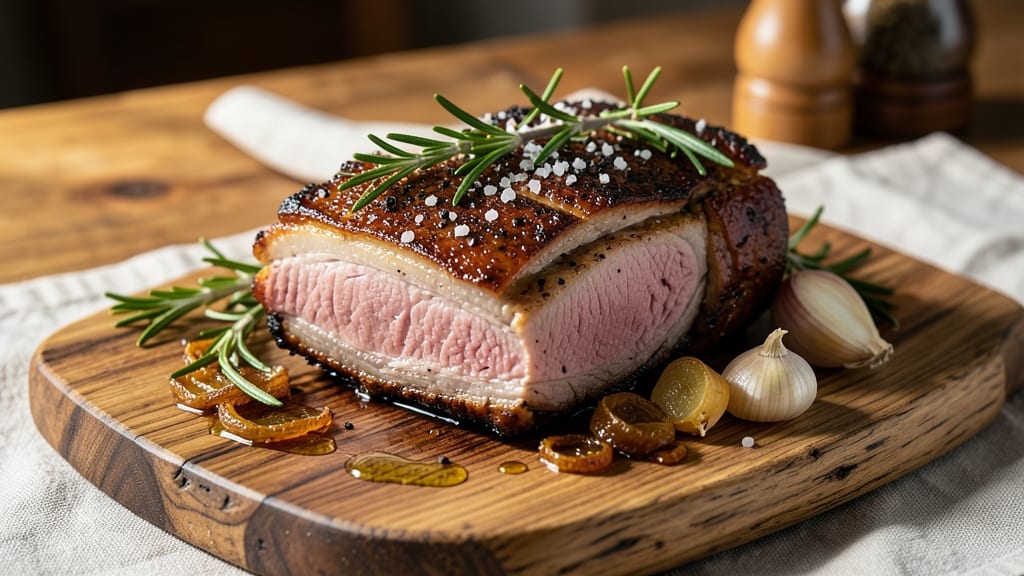
This bone-in pork rib roast recipe in the oven delivers a perfect balance of crispy, caramelized edges and tender, juicy pink centers—exactly what makes a roast feel like a special occasion.
The secret lies in a simple yet effective salt crust that enhances natural flavors while locking in moisture, ensuring every bite is rich and satisfying. I've perfected this technique over years of testing, and it consistently produces a roast that's restaurant-worthy without requiring fancy equipment.
The process is straightforward but critical: a generous salt crust forms a flavorful barrier that crisps beautifully in the oven while protecting the meat from drying out. You'll work with a 350°F oven for most of the cooking time, allowing the roast to develop deep, savory flavors without overcooking.
The result is a roast with a golden, crackling crust that gives way to succulent, melt-in-your-mouth meat—ideal for a centerpiece dinner that impresses without stress.
What makes this recipe truly special is its versatility. The roast pairs beautifully with classic sides like roasted potatoes, caramelized onions, or a crisp green salad, but it also stands alone as a showstopper.
The salt crust adds a subtle complexity that elevates the natural richness of the pork, making it a dish that feels both comforting and refined. Whether you're hosting a dinner party or treating yourself to a special meal, this roast delivers consistent, professional-quality results.
Don't skip the resting time—this is where the magic happens. Letting the roast rest for at least 15 minutes after cooking ensures the juices redistribute, guaranteeing that first cut is as tender and flavorful as possible.
The crust will stay intact, and every slice will be perfectly moist. Here's how to achieve it every time.
Ingredients for bone in pork rib roast recipe oven
Four pounds of pork, a salt crust, and oven magic—this is all you need for showstopper roast night.
| Ingredient | Amount | Notes |
|---|---|---|
| Bone-In Pork Rib Roast 🥓 | 4 lb | Center-cut for even cooking |
| Coarse Kosher Salt 🧂 | ½ cup | Diamond Crystal preferred |
| Freshly Ground Black Pepper 🌶️ | 1 tbsp | Freshly cracked for depth |
| Extra-Virgin Olive Oil 🫒 | 1 tbsp | For crust application |
| Garlic Cloves 🧄 | 4 cloves | Smashed for aroma infusion |
| Fresh Rosemary 🌿 | ¼ cup | Chopped, stems removed |
| Fresh Thyme 🌿 | ¼ cup | Leaves only, finely chopped |
| Yellow Onion 🧅 | 1 whole | Quartered for pan drippings |
| Unsalted Butter 🧈 | 2 tbsp | For basting during rest |
| Apple Cider Vinegar 🍎 | 1 tbsp | For crust adhesion |
| Granulated Sugar 🍬 | 1 tsp | For crust caramelization |
| Fresh Parsley 🌿 | ⅛ cup | Chopped, for garnish |
The pork rib roast makes all the difference here. Center-cut ribs stay juicier longer, so don't skimp on quality—look for a roast with good marbling and a thick bone. Costco or Whole Foods carry excellent cuts, but your local butcher will often have the freshest selection. The salt crust is non-negotiable: Diamond Crystal kosher salt gives you that perfect coarse texture (no fine grain!). If you can't find it, Morton kosher salt works in a pinch, but it's coarser than Diamond Crystal. Fresh herbs? Trader Joe's has great bundles, but even the sad grocery store bunch works—just pick the freshest stems.
No coarse salt? Mix 3 parts fine kosher salt with 1 part cornstarch for a DIY version. Short on rosemary? Thyme alone works at double the amount. The apple cider vinegar might seem odd, but trust me—it helps the salt crust stick like glue. Want extra caramelization? Add 1/2 tsp brown sugar to the crust mix. The butter for basting? Full-fat only—low-fat won't give you that rich finish. And if you're feeling fancy, infuse the butter with garlic and thyme while it melts for extra flavor.
This roast reheats beautifully—just warm in a 300°F oven for 15 minutes with a splash of water. The crust stays crispy, and the meat stays juicy. For make-ahead magic, cook the roast 2 days ahead, then reheat gently. Store leftovers in the fridge for 4 days or freeze for 3 months. The drippings? Strain and freeze them—perfect for gravy later. And that crust? Crush it up and save it—it's pure flavor gold for future roasts.
Why You'll Love This Recipe
- One-Pan Magic: I swear by this—just salt, pepper, oil, and garlic. No fancy gadgets, no extra pots. The bone-in roast bastes itself in the juices while it cooks, and honestly? That’s half the work done for you.
- Crispy-Garlic Dream: Between us, that first bite of caramelized garlic cloves pressed into the meat? It’s the kind of flavor that makes you pause mid-chew. The bone stays tender while the edges get that perfect crust—no dryness, just pure satisfaction.
- Weeknight to Weekend: This roast is my go-to for lazy Fridays and holiday tables. Slice it thin for sandwiches, cube it for tacos, or serve it whole for a showstopper. (Yes, even on a Tuesday night, it feels special.)
- Leftovers That Win: The best part? The roast keeps giving. Shred it for breakfast hash, toss it into pasta, or reheat slices in a pan with a little olive oil. I’ve turned this one roast into four meals—zero waste, all flavor.
Step-by-step instructions for bone-in pork rib roast
Here's how to achieve that perfect oven-baked crust with melt-in-your-mouth pink centers every time.
Prepare the Roast for Maximum Flavor and Crisp
Start by patting the 4 lb bone-in pork rib roast completely dry with paper towels—this is non-negotiable for crispy skin. I like to do this in the sink for easy cleanup, working the paper towels into all the crevices and around the bone. The drier the surface, the better the crust will form.
In a small bowl, mix together the 0.5 cup coarse kosher salt, 1 tbsp freshly ground black pepper, and 1 tbsp extra-virgin olive oil until it forms a coarse, grainy paste. This salt blend is what creates that incredible crust we're after. Rub this mixture all over the roast, pressing firmly so it adheres well, especially in the crevices. Let it sit uncovered in the refrigerator for at least 4 hours, but ideally overnight—this dry-brining process works magic for juiciness and flavor.
Build the Herb Crust and Preheat
Preheat your oven to 325°F—this lower temperature ensures even cooking without drying out the meat. While the oven heats, prepare the herb crust by finely chopping the 0.25 cup fresh rosemary and 0.25 cup fresh thyme leaves (discard stems). In a small bowl, combine these herbs with the 1 tbsp apple cider vinegar and 1 tsp granulated sugar.
Spread this herb mixture evenly over the surface of the salted roast, pressing gently so it sticks. The vinegar helps the crust adhere while the sugar adds a subtle caramelization. Place the roast fat-side up on a rack set inside a roasting pan—this allows heat to circulate all around for even cooking. The rack keeps the meat elevated so the crust doesn't sit in its own juices.
Roast Low and Slow for Perfect Doneness
Slide the roast into the preheated oven and roast for 3 hours. Here's the thing—pork ribs need time to come up to temperature gently. After 3 hours, check the internal temperature using a meat thermometer inserted into the thickest part of the meat (not touching bone). It should read 145°F. If it's not there yet, continue roasting for another 30 minutes, checking every 15 minutes.
During the last 30 minutes, increase the oven temperature to 425°F to help develop that beautiful crust. You'll know it's ready when the external temperature reaches 155°F and the crust is deep golden brown with caramelized edges. The internal temperature will rise to 160°F as it rests, which is perfect for juicy, tender meat.
Rest and Baste for Maximum Juiciness
Remove the roast from the oven and transfer it to a cutting board. Tent loosely with foil and let it rest for 30 minutes. This resting period is crucial—it allows the juices to redistribute throughout the meat instead of pooling out when you cut into it. While it rests, quarter the 1 whole yellow onion and place it in the roasting pan.
Return the pan to the oven for 15 minutes to caramelize the onions slightly. In a small saucepan, melt the 2 tbsp unsalted butter over low heat. After the roast has rested, brush the melted butter over the surface of the meat—this adds another layer of flavor and helps maintain moisture. Garnish with the chopped 0.125 cup fresh parsley just before serving.
Pro Tips For Making Bone In Pork Rib Roast Recipe Oven
- Pat the Rib Dry: Bone-in pork ribs need that crisp crust, and wet surfaces steam instead of brown. Grab paper towels and give the meat a thorough wipe-down before seasoning—especially around the bone crevices where moisture hides. I learned this the hard way after my first attempt ended up with a sad, soggy exterior.
- Salt the Night Before: This isn’t just about seasoning—it’s about flavor penetration. Sprinkle kosher salt generously over the rib roast and let it sit uncovered in the fridge for 12–24 hours. The salt breaks down muscle fibers, making the meat tender and the crust stick like glue. (Yes, it sounds weird, but it works.)
- Start Hot, Finish Slow: Roast the rib at 450°F (230°C) for the first 20 minutes to sear the exterior, then drop to 300°F (150°C) for even cooking. The high heat locks in juices, while the low temp ensures the bone marrow renders slowly without drying out the meat. Skip the gradual ramp-up—your thermometer will thank you.
- Crush Garlic, Don’t Slice: Whole garlic cloves burn or stay raw; crushed garlic blends into the fat and flavors the meat evenly. Use a flat side of your knife or the bottom of a heavy pan to smash 4–5 cloves into a paste before mixing with olive oil. (Bonus: The aroma fills your kitchen like a promise of dinner.)
Dietary considerations for this bone in pork rib roast recipe oven
Gluten-Free Adaptation
This roast is naturally gluten-free, but the salt crust deserves special attention. Diamond Crystal kosher salt is gluten-free, but always double-check the label if you're highly sensitive. For extra insurance, I like to use Morton kosher salt which is certified gluten-free.
The apple cider vinegar and all other ingredients are safe for gluten-free diets, so no substitutions are needed here. Just ensure your butter and any garnishes (like breadcrumbs) are certified gluten-free if you're serving this to someone with celiac disease. 🌱
Dairy-Free Options
Skip the butter basting for a dairy-free version—just brush the roast with an extra 1 tbsp of olive oil after resting. The crust and meat will still be delicious and moist.
For the herb mixture, use dairy-free apple cider vinegar> (most brands are naturally dairy-free) and ensure your sugar is refined (not powdered with additives). The flavor won't suffer—this roast shines on its own without dairy. 🥓
Low-Carb Considerations
This recipe is already low-carb friendly, with only 3 grams of net carbs per serving> (based on a 4-serving roast). The sugar in the crust is minimal (1 tsp total), and the vinegar adds acidity without carbs.
For even lower carbs, omit the sugar entirely—the crust will still form, just with slightly less caramelization. Pair with roasted Brussels sprouts or a simple arugula salad to keep carbs in check while maximizing flavor. 💪
Allergen-Friendly Swaps
For nut allergies, no changes are needed—this recipe contains no nuts. If someone has a herb allergy, replace rosemary and thyme with 1 tsp smoked paprika> and ½ tsp garlic powder> for a similar earthy depth.
For onion allergies, skip the caramelized onions and serve with roasted cauliflower instead. Always verify ingredient labels, especially for vinegar and spices, which can sometimes be processed in shared facilities. ✨
Vegetarian Adaptation
While this recipe features pork, you can create a similar crust experience with portobello mushrooms or eggplant. For a 4 lb equivalent, use 2 large portobellos (about 1 lb each> after cleaning).
Brush with olive oil and coat with the salt-pepper crust, then roast at 400°F> for 25 minutes> until tender. The texture won't be identical, but the crispy crust and herbaceous flavors translate beautifully. 🌿
Nutrition facts
Frequently asked questions
Why does the recipe call for a salt crust instead of a marinade?
The salt crust creates a flavorful, protective barrier that crisps beautifully in the oven while locking in moisture—unlike marinades that can dilute the meat's natural taste. The coarse salt also helps develop a deep, caramelized crust that adds texture and complexity. This method enhances the pork's natural flavors without overpowering them.
Can I use a different cut of pork for this recipe?
This recipe is specifically designed for bone-in pork rib roast, which stays juicy and develops rich flavor. For similar results, try a bone-in pork loin roast (about 3-4 lbs), but reduce cooking time to 2-2.5 hours. Avoid leaner cuts like tenderloin—they dry out faster and won't create the same satisfying crust.
What if my oven runs hot or cold?
If your oven runs hot, reduce the temperature by 25°F (e.g., 300°F instead of 325°F) and check the internal temperature 15 minutes earlier. For a cold oven, increase by 25°F and add 10-15 minutes to cooking time. Always use a meat thermometer—it's the only reliable way to gauge doneness.
How do I caramelize the onions without burning them?
After removing the roast, spread the onions evenly in the pan and return to the oven at 375°F (not 425°F) for 15 minutes. Stir halfway if possible. The lower heat prevents burning while still developing sweetness. For extra flavor, add a pinch of sugar or a splash of balsamic vinegar.
What's the best way to reheat leftovers?
Slice the roast and reheat in a skillet over medium-low heat with a splash of water or broth for 5-7 minutes until warmed through. For whole leftovers, wrap tightly in foil and bake at 300°F for 20-25 minutes. Avoid microwaving—it turns the crust soggy. The butter basting step can't be replicated when reheating!