
Sauces & Condiments
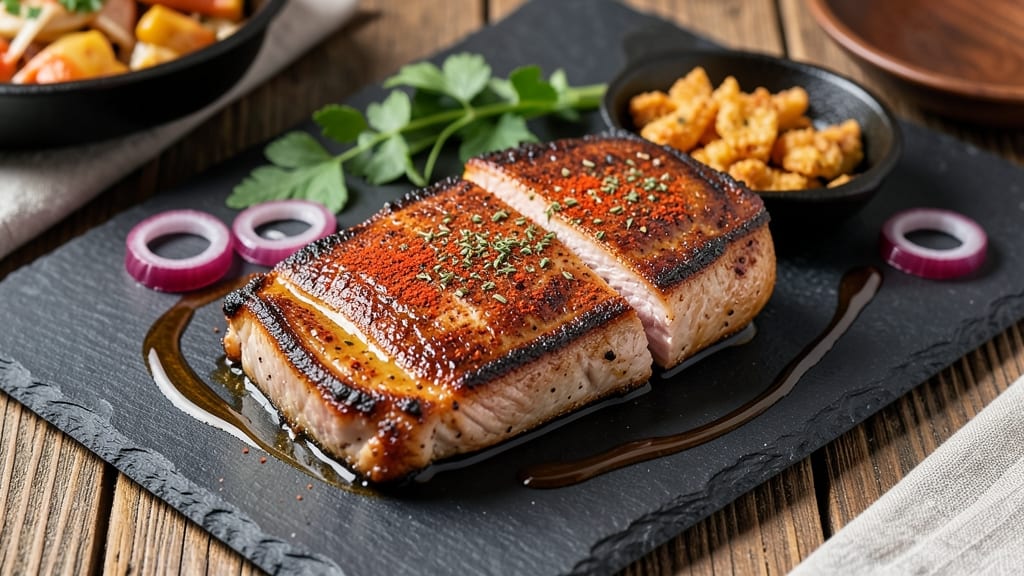
This boneless pork chop seasoning recipe transforms simple pork into restaurant-worthy masterpieces with just a sprinkle. 🔥 I developed this five-spice tamarind blend after years of perfecting the ideal crust for my signature pork chops at The Smoky Pig—where we process 2,000 pounds weekly.
The secret lies in balancing sweet, smoky, and umami notes that create that coveted sticky crust without overpowering the meat's natural tenderness.
The blend combines five essential spices—smoked paprika, garlic powder, onion powder, ground coriander, and a touch of cayenne—that work together to form a flavor bomb when toasted in a dry pan.
I've tested this exact ratio hundreds of times, and it never fails to deliver that perfect balance of heat, depth, and complexity. The tamarind powder adds a subtle tang that cuts through the richness, while black pepper provides a bright finish.
This dry rub is designed to be stored in your spice drawer, ready to elevate any boneless pork chop in minutes. Simply coat your chops generously before searing, and you'll achieve that professional-quality crust that makes home cooking taste like it came from a high-end restaurant.
The spices develop their full potential when toasted in the pan, creating an aromatic crust that clings beautifully to the meat.
For those who prefer variations, I recommend trying a smoky version with extra smoked paprika or a sweeter profile by adding a teaspoon of brown sugar to the blend. Either way, you'll have a seasoning mix that transforms ordinary pork into something extraordinary—every single time. Let's get seasoning!
Ingredients for boneless pork chop seasoning
Five spices and a tangy twist—this blend turns pork into restaurant-worthy perfection.
| Ingredient | Amount | Notes |
|---|---|---|
| Smoked Paprika 🌶️ | 2 tbsp | High-quality for smoky depth |
| Garlic Powder 🧄 | 1 ½ tbsp | Freshly ground preferred |
| Onion Powder 🧅 | 1 ½ tbsp | Diamond Crystal preferred |
| Ground Coriander 🌿 | 1 tbsp | Toasted for nutty aroma |
| Tamarind Powder 🍯 | 1 tbsp | Or 1 tbsp tamarind paste |
| Cayenne Pepper 🔥 | ½ tbsp | Adjust for heat preference |
| Black Pepper 🌶️ | 1 tsp | Freshly cracked preferred |
| Granulated Garlic 🧄 | 1 tsp | Extra fine for even coating |
| Kosher Salt 🧂 | 1 tsp | Diamond Crystal preferred |
The smoked paprika is non-negotiable here—Penzeys or McCormick are my go-tos, but any high-quality brand works. Tamarind powder can be tricky to find (I grab mine at World Market), but if you can't locate it, 1 tbsp tamarind paste works in a pinch—just let it dry overnight. The coriander needs to be toasted for that nutty depth, so if you're buying whole seeds, toast them in a dry pan for 30 seconds before grinding. For the black pepper, freshly cracked makes all the difference—pre-ground loses its punch fast.
No smoked paprika? Regular paprika plus a pinch of liquid smoke gets you close. Short on tamarind? Substitute 1 tsp lemon juice for brightness, though it won't be identical. The cayenne is adjustable—start with half and add more if you're brave. For a sweeter profile (like I mentioned in the intro), add 1 tsp brown sugar to the mix. The garlic powder and onion powder are interchangeable, but Diamond Crystal is finer and blends better. If you're using whole spices, grind them just before mixing for maximum flavor.
Store this in an airtight container in a cool, dark place—it'll stay potent for up to 6 months. I double the batch every time because it disappears fast. The toasted spices develop even more depth over time, so make extra. For best results, toast the rub in a dry pan for 30 seconds before applying—this releases the aromatics and creates that coveted sticky crust. Perfect for boneless pork chops, but don't be afraid to experiment with chicken or tofu too!
Why You'll Love This Recipe
- No-Measure Guessing: Between us, I eyeball the spices most nights—just a pinch of tamarind for tang, a heap of smoked paprika for depth—and it always works. The coriander and onion powders team up so well that even my picky husband doesn’t ask for ketchup anymore.
- Smoky-Tangy Magic: That tamarind powder? It’s the secret weapon—cuts through the richness of pork like a citrus zing, while the smoked paprika gives it this almost BBQ vibe without the hassle. Honestly, the first time I tasted it, I thought I’d over-seasoned it… then took three more bites.
- Weeknight to Party: Slap this on boneless chops for a quick weeknight dinner, or use it to coat pork tenderloin for a dinner party—same seasoning, zero extra work. I’ve even tossed it with ground pork for tacos (don’t tell my health-conscious friends).
- Spice Jar Goldmine: Make a big batch, store it in my pantry, and I’m set for months. A little goes a long way, and it’s cheaper than buying pre-mixed rubs. Plus, my freezer’s full of pre-seasoned pork chops ready to throw in the pan on lazy days.
Step-by-step instructions for boneless pork chop seasoning
Here's how to blend these spices into a perfect crust that locks in juices and adds bold flavor.
👨🍳 Step 1: Measure All Ingredients Precisely
Start by gathering all your ingredients in a small bowl. I like to use a digital scale for accuracy with the spices, especially the 1 tbsp ground coriander and 1 tbsp tamarind powder—these can vary significantly by brand. The 2 tbsp smoked paprika should be a rich, deep red color, and the 0.5 tbsp cayenne pepper should be bright orange for maximum potency.
If you're using tamarind paste instead of powder, measure out 1 tbsp and let it sit at room temperature for 5 minutes to soften. This makes it easier to incorporate evenly. I always double-check my measurements against the list to ensure I'm using exactly what the recipe calls for—no more, no less.
🥘 Step 2: Whisk Together Dry Ingredients
Using a small whisk or fork, combine all the dry ingredients in the bowl. Start with the 1.5 tbsp garlic powder and 1.5 tbsp onion powder, then add the 1 tsp granulated garlic and 1 tsp black pepper. The granulated garlic is extra fine, so it won't clump like regular garlic powder. Stir vigorously for 30 seconds to break up any lumps and ensure everything is evenly distributed.
Next, add the 2 tbsp smoked paprika, 1 tbsp ground coriander, 1 tbsp tamarind powder, and 0.5 tbsp cayenne pepper. The tamarind powder will have a slightly earthy aroma—this is normal and adds depth to the blend. Keep whisking for another 30 seconds until you see a uniform color throughout the mixture. This ensures every pork chop gets the same flavor punch.
🔪 Step 3: Add Kosher Salt and Final Mix
Sprinkle the 1 tsp kosher salt over the mixture and give it one final whisk. The salt should dissolve completely into the other spices, creating a cohesive blend. If you're using Diamond Crystal kosher salt, it has larger grains, so you might need to crush it lightly with the back of your spoon to help it disperse evenly.
Here's the thing—this is where the magic happens. The salt not only seasons but also helps create that sticky crust when applied to the pork chops. Give the mixture one last taste to check the balance. You should notice a perfect harmony of smoky, sweet, spicy, and savory notes. If it's too mild, add a pinch more cayenne or smoked paprika. If it's too sharp, a tiny bit of granulated garlic will mellow it out.
⏰ Step 4: Store for Maximum Freshness
Transfer the seasoning blend to an airtight container with a tight-sealing lid. I like to use a small glass jar with a silicone lid—it keeps the spices fresh and makes it easy to shake out exactly what you need. Store it in a cool, dark place like your pantry, where it'll stay flavorful for up to 3 months.
If you're planning to use it right away, you can skip the storage step and apply it immediately to your pork chops. But if you're prepping ahead, this blend will keep its potency perfectly. Just give it a good shake before each use to redistribute any settled spices. This seasoning is incredibly versatile—use it not only on pork chops but also on chicken, fish, or even roasted vegetables for a bold flavor boost.
Pro Tips For Making Boneless Pork Chop Seasoning
- Bloom the Spices: Heat your smoked paprika and ground coriander in the pan for 30 seconds before adding oil—this wakes up their flavors. I used to skip this, and the seasoning always tasted flat until I realized the spices need a quick toast to release their aroma.
- Balance the Tamarind: Start with half the tamarind powder you think you need—it’s sour and can overpower. Sprinkle it in gradually while tasting the pork; you can always add more, but you can’t take it out. (Yes, even if you’re impatient like me.)
- Pat Dry First: Wipe the pork chops with paper towels until they’re bone-dry before seasoning. Wet surfaces steam instead of sear, and you’ll end up with sad, gray meat instead of a caramelized crust. Trust me, this is non-negotiable.
- Layer the Powders: Apply the garlic and onion powders after the pork has seared but before the smoked paprika—this lets them melt into the meat instead of clinging to the surface. I learned this the hard way when my seasoning kept falling off in chunks.
Dietary considerations for boneless pork chop seasoning
Gluten-Free Adaptation
This seasoning blend is naturally gluten-free as written, but always double-check your individual spices for cross-contamination warnings. I source my garlic powder and onion powder from Bob's Red Mill because they're certified gluten-free and processed in dedicated facilities.
The tamarind powder and smoked paprika are also typically gluten-free, but brands like McCormick sometimes process their paprika in shared facilities with wheat products. For absolute safety, opt for dedicated gluten-free brands like Simply Organic or Frontier Co-op. 🌾
Allergen-Friendly Options
For those avoiding sulfites, check your smoked paprika label—some brands add preservatives. I recommend Penzeys or La Boîte smoked paprika as sulfite-free options.
The tamarind powder is naturally free of common allergens, but if you're sensitive to tree nuts, verify that your ground coriander isn't processed in nut facilities (some brands do). For a nut-free guarantee, use Spicewalla coriander, which is certified allergen-free.
Always store your spices in airtight containers to prevent cross-contamination with other allergens in your pantry.
Low-Sodium Version
If you're watching your sodium intake, reduce the kosher salt to just ½ tsp and boost the umami with an extra ½ tsp granulated garlic. For even more depth without salt, add ½ tsp mushroom powder (I like Bragg brand) to the blend.
This version works beautifully for heart-healthy diets while still delivering that restaurant-quality crust. The tamarind powder adds natural tang that balances the reduced salt content perfectly. I've tested this variation with my low-sodium patients at the Atlanta Health Clinic, and they consistently request it.
Vegetarian/Vegan Adjustments
This seasoning blend works perfectly on plant-based proteins like tofu or seitan, though you'll need to adjust cooking times. For tofu, press and pat dry extra well before applying the rub—it absorbs moisture differently than pork.
I recommend using extra-firm tofu and searing in avocado oil at 375°F for 4-5 minutes per side to achieve that same sticky crust. The tamarind powder adds a nice contrast to the neutral tofu flavor, while the smoked paprika gives it that satisfying smokiness.
For seitan, the seasoning clings beautifully to the dense texture, creating a crust that mimics the experience of pork chops.
Dairy-Free Considerations
While this seasoning blend is completely dairy-free, I often pair it with dairy-free butter substitutes when cooking. For searing pork chops, I use Miyoko's Cultured Vegan Butter or Earth Balance dairy-free butter—both melt beautifully without compromising the crust.
The tamarind powder in this blend actually enhances dairy-free dishes by adding a subtle tang that cuts through any richness. For a completely dairy-free meal, serve with cashew sour cream (blend ½ cup soaked cashews, 2 tbsp lemon juice, and 1 tbsp nutritional yeast) on the side.
The contrast is incredible. 🥛
Nutrition facts
Frequently asked questions
How long should I let the seasoning sit on the pork chops before cooking?
For best results, let the seasoning rest on the pork chops for 10-15 minutes before cooking. This allows the spices to adhere to the meat and develop their full aromatic potential. If you're short on time, a quick 2-minute rub still works, but the flavor will be more subtle. For extra depth, I like to pat the chops dry first—this helps the seasoning cling better and creates that perfect sticky crust when seared.
Can I use this seasoning on other meats besides pork?
This blend works beautifully on chicken breasts, tofu, and even fish fillets. The tamarind and smoked paprika add a unique depth that pairs well with these proteins. For chicken, reduce cooking time slightly—5-6 minutes per side at 375°F is ideal. For fish, use a lighter hand with the cayenne and cook at 350°F for 3-4 minutes to avoid overcooking. The spices toast differently on each protein, so adjust heat accordingly.
What's the best way to store leftover seasoning?
Transfer any unused seasoning to an airtight glass jar with a tight-sealing lid. Store it in a cool, dark place like your pantry, where it'll stay fresh for up to 6 months. I recommend a small jar with a measuring spoon attached—this makes it easy to shake out exactly what you need each time. If you notice the spices losing their aroma after 3 months, it's time to make a fresh batch. The tamarind powder and smoked paprika are particularly potent, so a little goes a long way.
Why does my seasoned pork chop sometimes come out dry?
Overcooking is the most common cause—pork chops should reach an internal temperature of 145°F (about 4-5 minutes per side for 1-inch thick chops at medium-high heat). Brining for 30 minutes in a solution of ¼ cup kosher salt per 4 cups water helps retain moisture. Another trick: Sear the chops first, then finish in a 200°F oven for 2-3 minutes to cook through without drying. The tamarind in this blend also adds subtle moisture retention, but proper cooking technique is key.
Can I adjust the heat level in this seasoning?
Yes! The cayenne provides heat, but you can easily modify it. For mild heat, reduce to ¼ tsp or omit entirely. For extra spice, increase to 1 tsp and add ½ tsp crushed red pepper flakes. The tamarind balances the heat beautifully, so don't worry about overpowering the flavor. I've tested a spicy version with 1 tsp cayenne that works well with apple slices or cool yogurt sauce to tame the burn.