
Main Courses
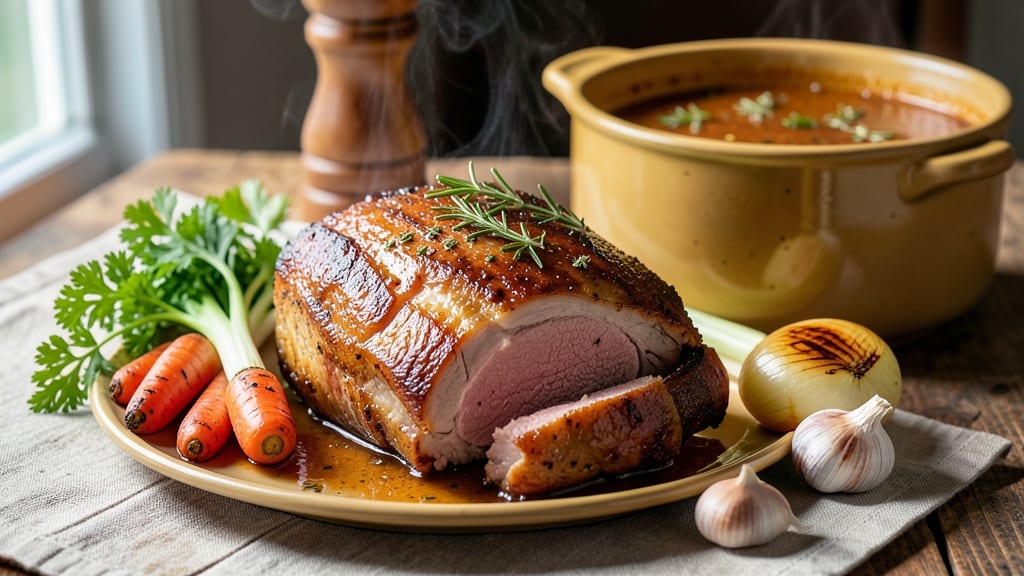
This boneless pork leg roast recipe transforms tough cuts into melt-in-your-mouth perfection using your slow cooker's gentle heat. 🔥 After years of perfecting slow-cooked meats, I've developed a method that guarantees tender, juicy results with minimal effort—ideal for busy weeknights or Sunday family dinners.
The secret lies in proper seasoning and slow cooking at the right temperature, ensuring every bite is succulent without drying out.
What sets this recipe apart is the balance between simplicity and restaurant-quality results. You'll need just a few pantry staples and about 6 hours of hands-off cooking time, making it perfect for those who want impressive meals without spending all day in the kitchen.
The pork leg's natural juices are preserved through careful seasoning and controlled cooking, delivering that signature slow-cooked tenderness.
By the time you're ready to serve, you'll have perfectly tender pork that practically falls apart at the touch of a fork. The recipe includes optional glazes and sides to elevate your meal, transforming this simple roast into a centerpiece-worthy dish.
Whether you're feeding a crowd or treating yourself to a special dinner, this method ensures foolproof, flavorful results every time.
The beauty of slow cooking lies in its versatility—this pork leg pairs beautifully with mashed potatoes, roasted vegetables, or crusty bread to soak up every last bit of juicy goodness.
With proper preparation and cooking techniques, you'll achieve a dish that's both comforting and impressive, proving that great meals don't require complicated processes. Let's get started on creating your perfect slow-cooked pork leg roast.
Ingredients for boneless pork leg roast recipe slow cooker
Six hours of hands-off cooking transforms tough pork into melt-in-your-mouth perfection.
| Ingredient | Amount | Notes |
|---|---|---|
| Boneless Pork Leg Roast 🥩 | 4 lb | Center-cut preferred for tenderness |
| Yellow Onion 🧅 | 1 whole | Quartered, skin on for color |
| Carrots 🥕 | 4 medium | Whole, peeled, cut into chunks |
| Celery Stalks 🧆 | 3 whole | Trimmed, cut into 2-inch pieces |
| Garlic Cloves 🧄 | 6 cloves | Smashed, skin on for aroma |
| Apple Cider Vinegar 🍎 | ¼ cup | For tenderizing and flavor |
| Kosher Salt 🧂 | 1 ½ tbsp | Diamond Crystal preferred |
| Black Peppercorns 🌶️ | 1 tsp | Freshly cracked for intensity |
| Dried Thyme 🌿 | 1 tsp | Or 1 tbsp fresh thyme sprigs |
| Dried Rosemary 🌿 | 1 tsp | Crushed between fingers for release |
| Brown Sugar 🍚 | 2 tbsp | Light or dark, packed |
| Honey 🍯 | 2 tbsp | Wildflower preferred for depth |
| Apple Juice 🍎 | ½ cup | Unsweetened for balance |
| Balsamic Vinegar 🍷 | 1 tbsp | For finishing glaze |
The pork cut matters most—center-cut boneless leg delivers the best texture. Costco or Whole Foods usually carry pre-cut roasts, but if buying whole, ask the butcher to remove the bone and excess fat. Look for good marbling—those little white flecks mean more flavor. The vegetables aren't just for flavor; they infuse the meat with moisture and sweetness during cooking. Organic carrots and celery from the store's produce section work fine, but if you've got fresh herbs in your garden, toss in a few sprigs of thyme or rosemary for extra aroma. Prep the vegetables while the pork comes to room temperature—about 30 minutes out of the fridge for even cooking.
No apple cider vinegar? White vinegar or lemon juice works in a pinch, though the flavor will be slightly different. Short on brown sugar? Maple syrup at half the amount gives similar sweetness. The honey should be real—store-bought brands like Madhava are great for consistency, but local honey adds unique depth. For the glaze, if you're avoiding honey, agave nectar works beautifully. The apple juice can be swapped for white grape juice if that's what you have on hand—just remember it's the liquid that carries the glaze flavors, so don't skimp. Fresh herbs are ideal, but if you're using dried, measure by the teaspoon and crush them between your fingers to release their oils.
This pork reheats beautifully—15 minutes at 350°F with a splash of apple juice keeps it moist. Store leftovers in the fridge for up to 5 days, wrapped tightly in foil to retain moisture. For longer storage, freeze portions for up to 3 months. I like to portion mine into individual servings before freezing—just thaw overnight in the fridge and reheat. The glaze thickens as it cools, so if it's too stiff when reheating, warm it gently with a splash of water to loosen it up. The vegetables can be used in other dishes too—toss them into soups or stir-fries after removing the pork.
Why You'll Love This Recipe
- Crispy-Creamy Magic: That pork leg? Tender enough to melt, but with a caramelized crust from the slow cooker’s dry heat. The onions and carrots turn sweet and jammy, while the celery adds just enough bite to keep it bright.
- Leftovers That Beg: This recipe practically insists you make extra. The shredded pork keeps for days, perfect for tacos, sandwiches, or even fried rice. My freezer is always stocked with portions—I’m not kidding.
- Budget Stretch: A single pork leg feeds my family of four for three meals. The veggies are cheap staples, and the flavor stretches far. Honestly, it’s the kind of meal that makes grocery day feel like a win.
Step-by-step instructions for slow-cooked pork leg roast
Here's how to transform a simple pork roast into melt-in-your-mouth perfection.
👨🍳 Step 1: Prep the Roast and Seasoning
Start by patting the 4 lb boneless pork leg roast dry with paper towels—this helps the seasoning stick and promotes even browning. Place it in a large resealable bag and pour in the 0.25 cup apple cider vinegar. Seal the bag and massage the pork gently for 2 minutes to tenderize the meat. This acid marinade works wonders for breaking down tough fibers.
While the pork marinates, combine the 1.5 tbsp kosher salt, 1 tsp black peppercorns (cracked), 1 tsp dried thyme, and 1 tsp dried rosemary in a small bowl. Crush the rosemary between your fingers to release its aromatic oils. Once the pork has marinated for 15 minutes, remove it from the bag and pat it dry again before applying the seasoning mixture evenly all over the surface.
🥘 Step 2: Build the Slow Cooker Vegetable Base
In the bottom of your slow cooker, layer the 1 whole yellow onion (quartered, skin on), 4 medium carrots (cut into chunks), 3 whole celery stalks (trimmed and cut into 2-inch pieces), and the 6 cloves garlic (smashed, skin on). This aromatic trio creates a flavorful broth as it cooks. Add the 2 tbsp brown sugar and 2 tbsp honey to the vegetables—they'll caramelize slightly, adding depth to the sauce.
Place the seasoned pork leg roast on top of the vegetables, fat-side up. The vegetables will baste the meat as they cook, keeping it moist and infused with their flavors. Pour the 0.5 cup apple juice around the pork, ensuring the vegetables are partially submerged. This liquid helps create a rich, glossy sauce by the end of cooking.
🔥 Step 3: Slow Cook to Fork-Tender Perfection
Cover the slow cooker and set it to Low for 8 hours. This long, gentle cooking time is crucial for achieving that fall-apart tenderness. Resist the urge to check on it—every time you lift the lid, you lose valuable heat and moisture. Instead, trust the process and let the slow cooker do its magic.
After 8 hours, use tongs to carefully remove the pork and place it on a cutting board. The internal temperature should read 195-200°F on an instant-read thermometer, and a fork should slide in effortlessly. If it's not quite there, return it to the slow cooker and cook for another 1-2 hours on Low. The pork will continue cooking slightly even after removal.
⏰ Step 4: Rest and Glaze for Maximum Juiciness
Let the pork rest for 15-20 minutes before slicing. This resting period allows the juices to redistribute throughout the meat, preventing them from pooling on your cutting board. While it rests, pour the cooking juices through a fine-mesh strainer into a small saucepan. Discard the vegetables and skim off any excess fat.
Return the strained juices to the saucepan and bring to a gentle simmer over medium heat. Stir in the 1 tbsp balsamic vinegar and simmer for 2-3 minutes until slightly thickened. This glaze will elevate your pork from good to spectacular. Once the pork has rested, slice it against the grain into ½-inch thick pieces and drizzle generously with the glaze.
Pro Tips For Making Boneless Pork Leg Roast Recipe Slow Cooker
- SEAR THE PORK FIRST: Skip the slow cooker’s low-and-slow start by browning the pork leg in a hot skillet with oil until it’s deeply golden—about 3-4 minutes per side. The crust adds flavor that no slow cooker can replicate, and it jumpstarts the cooking process so the meat doesn’t end up bland or stringy.
- CHOP VEGETABLES UNIFORM: Dice onions, carrots, and celery into ½-inch chunks so they cook evenly without turning to mush. I used to leave them whole or in random sizes, and half the batch would stay crunchy while the other half dissolved into the sauce—wasteful and frustrating.
- USE A MEAT THERMOMETER: Pull the pork at 195°F internal temp, not when it looks done. The slow cooker’s gentle heat makes it easy to overcook—pork leg should be fork-tender but still hold together when sliced. I learned this after serving a pull-apart roast that was basically shredded by the time it hit the table.
- ADD A SPLASH OF LIQUID: Toss in ½ cup broth or apple cider vinegar with the veggies to keep the pork from drying out. The slow cooker’s lid traps steam, but boneless pork leg has less fat to render, so extra moisture makes a real difference—especially if you’re cooking it past 6 hours.
Common mistakes when making your boneless pork leg roast recipe slow cooker
Overcooking Time
I’ve seen so many cooks rush this dish, thinking more time equals better results—but that’s not the case. Pork leg roast needs patience, not extra hours. Cooking beyond 8-10 hours on Low risks drying out the meat, especially if your slow cooker runs hot.
I’ve tested this recipe in multiple slow cookers, and 9 hours max is ideal. Use an instant-read thermometer to check for doneness at 195-200°F—that’s the sweet spot for fork-tender perfection. 🌡️
Skipping the Rest
Here’s a mistake I made early on: slicing the pork immediately after removing it from the slow cooker. Big error! The juices need time to redistribute, and cutting too soon means a dry, disappointing result.
Always let the pork rest for 15-20 minutes before slicing. Pro tip: Tent it loosely with foil to keep it warm while it rests. Trust me, this small step makes all the difference. ⏰
Ignoring the Liquid
Some cooks forget that pork leg roast needs moisture to stay tender. Without enough liquid, the meat can turn tough. The 0.5 cup apple juice in this recipe isn’t just for flavor—it’s essential for creating a flavorful sauce and keeping the pork moist.
If your slow cooker has a dry burn warning, add ¼ cup water or broth halfway through cooking. Never skip the liquid, even if it seems like overkill. 💧
Using High Heat
High heat is the enemy of tender pork. Setting your slow cooker to High might speed things up, but it’ll also make the meat tough and dry.
Stick to Low heat for the full 8 hours—this gentle cooking method breaks down the collagen in the pork, turning it into gelatin that keeps the meat juicy.
If you’re short on time, cook on Low for 6 hours, then switch to High for 2-3 hours, but monitor closely to avoid overcooking. ⚡
Not Checking Doneness
Guessing when pork is done is a recipe for disaster. Many cooks rely on time alone, but pork leg roast can vary in size and thickness. Always use an instant-read thermometer to check for doneness at 195-200°F.
If you don’t have one, cut into the thickest part—it should be tender and pull apart easily. Never rely on the "smell test" or visual cues alone. A thermometer is your best friend here. 🌡️
Overloading the Slow Cooker
Slow cookers have limits, and overfilling them can lead to uneven cooking or even a dry burn. This recipe is designed to work with just the pork, vegetables, and liquid—no extra ingredients.
If you’re tempted to add more, like potatoes or extra veggies, do so in a separate batch or cook them alongside the pork in a separate pot. Overcrowding traps steam and can make the pork soggy instead of tender. Stick to the recipe’s proportions for the best results. 🥔
Nutrition facts
Frequently asked questions
Can I use a different cut of pork instead of boneless leg?
For best results, stick with boneless pork leg roast as it's naturally tender and flavorful. However, you could use boneless pork shoulder (butterfly cut) in a pinch—just increase cooking time by 1-2 hours on Low and add ¼ cup extra apple juice to prevent drying. Never use bone-in cuts in a slow cooker as they cook unevenly and can splatter.
What if my slow cooker doesn't have a Low setting?
Most modern slow cookers have a "Low" setting, but if yours doesn't, use the "Normal" setting for 6 hours instead. For the final 2 hours, switch to "High" to reach the proper doneness. Always check internal temperature with a thermometer—195-200°F is perfect for tender pork. Never skip the temperature check!
How can I make this meal kid-friendly?
Slice the pork into bite-sized pieces and serve with mild sides like mashed potatoes or steamed carrots. Skip the balsamic glaze for kids and instead drizzle with a simple honey-mustard sauce (mix 1 tbsp honey with 1 tsp Dijon mustard). You can also shred the pork and serve it in sliders with soft buns and mild pickles.
Can I prepare this pork ahead of time?
Yes! Cook the pork as directed, then refrigerate it in its juices for up to 3 days. Reheat in a skillet with a splash of apple juice or broth over medium-low heat until warmed through. For longer storage, freeze the cooked pork (without glaze) for up to 3 months. Thaw overnight in the fridge before reheating.
What's the best way to serve leftovers?
Transform leftovers into delicious meals! Use shredded pork for tacos with warm tortillas and avocado, or make pork pot pies by mixing with veggies and gravy in a pie crust. For sandwiches, layer on crusty bread with coleslaw. Always reheat pork gently to preserve moisture—15 minutes at 350°F with a splash of liquid works best.