
Main Courses
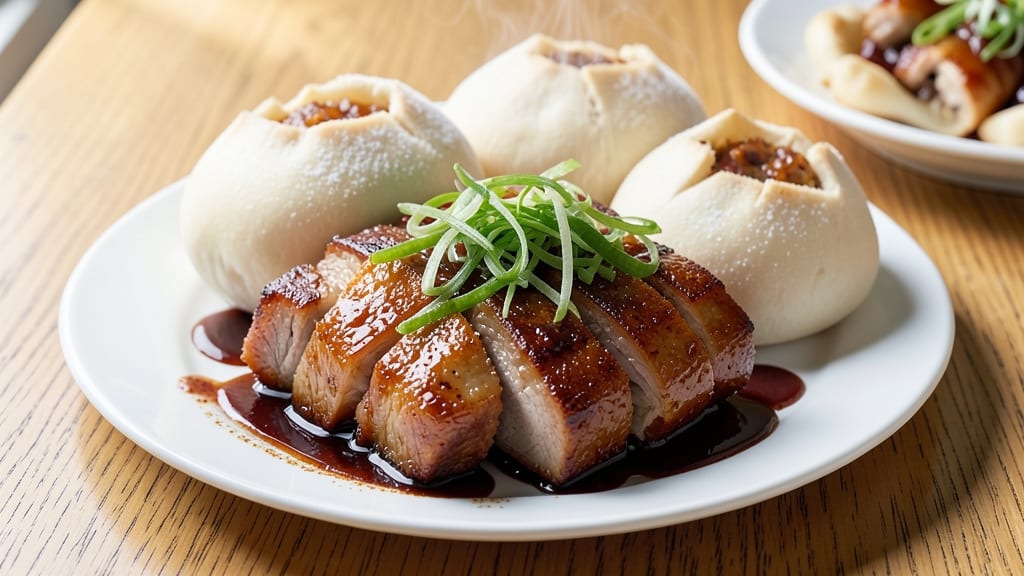
This braised pork belly bao recipe transforms rich, fall-off-the-bone meat into crispy, aromatic bites wrapped in pillowy steamed buns. 🌟 The five-spice crust adds a perfect balance of warmth and crunch, while the braising process creates silky, tender pork that melts in your mouth.
After years of perfecting pork techniques—from my CIA training to running a pitmaster's kitchen—I've simplified this dish without sacrificing restaurant-quality results.
The secret lies in the slow braising process, where pork belly cooks gently in a fragrant broth until it reaches that ideal texture—tender yet firm enough to hold its shape.
Meanwhile, the bao dough gets its signature chew from a quick steam, creating buns that are soft on the inside with just enough structure to hold the filling. This is the kind of dish that feels indulgent yet comes together with methodical precision.
What you'll end up with is a plate that combines textures and flavors perfectly: crispy edges from the five-spice crust, tender pork that practically dissolves, and buns that steam to just the right softness.
The aroma alone will have everyone gathering around the table, and the first bite delivers that satisfying contrast of crispy, tender, and pillowy all at once.
Serve with quick-pickled vegetables or a drizzle of chili oil for the full experience. This recipe delivers a restaurant-quality meal that's impressive enough for guests but simple enough for weeknights—once you master the braising technique, you'll never go back to store-bought bao again.
Ingredients for braised pork belly bao
Rich pork belly, aromatic five-spice crust, and pillowy bao dough—just 15 ingredients for restaurant-quality bao.
| Ingredient | Amount | Notes |
|---|---|---|
| Pork Belly 🥓 | 1 ½ lb | Skin-on, cut into 1-inch cubes |
| Five-Spice Powder 🌶️ | 1 tbsp | Store-bought or homemade blend |
| All-Purpose Flour 🌾 | 1 ½ cups | For five-spice crust coating |
| Cornstarch 🌾 | ½ cup | For crispy crust texture |
| Light Brown Sugar 🍯 | ¼ cup | Packed, for caramelization |
| Soy Sauce 🥢 | ½ cup | Kosher or low-sodium preferred |
| Shaoxing Wine 🍷 | ¼ cup | Substitute with dry sherry |
| Fresh Ginger 🌿 | 2 tbsp | Finely grated, aromatic |
| Garlic Cloves 🧄 | 6 cloves | Smashed, for deep flavor |
| Bao Dough 🍞 | 1 lb | Store-bought or homemade |
| Vegetable Oil 🫒 | ¼ cup | For deep-frying crust |
| Sesame Oil 🌿 | 1 tbsp | For finishing aroma |
| Black Peppercorns 🌶️ | ½ tsp | Freshly cracked for heat |
| Baking Soda 🧪 | ½ tsp | For dough activation |
| Water 💧 | ½ cup | For dough hydration |
The pork belly is non-negotiable here—look for thick-cut pieces with good marbling from the butcher section. Costco or Whole Foods usually have the best quality, but any grocery store's pork belly works. If you can't find it pre-cut, ask the butcher to cube it for you—1-inch pieces ensure even cooking. For the five-spice powder, Penzeys or Trader Joe's carry reliable blends, but you can mix your own with star anise, cinnamon, fennel, cloves, and Szechuan peppercorns if you're feeling adventurous.
No Shaoxing wine? Dry sherry or even a good white wine works in a pinch—just add a splash of rice vinegar to mimic the depth. The ginger and garlic are crucial for that authentic aroma, but if you're short on time, 1 tbsp of ginger-garlic paste (from the Asian aisle) saves chopping. For the bao dough, Trader Joe's frozen bao dough is a lifesaver when you're short on time, but homemade dough gives that perfect chewy texture. The crust mix—flour, cornstarch, and brown sugar—needs to be lightly toasted in a dry pan before coating the pork for maximum crispiness.
Pork belly keeps 3-4 days in the fridge before braising, but it's best used fresh. The five-spice crust mix stays potent for 2 weeks in an airtight container. For the bao dough, if you're making it ahead, wrap tightly in plastic and refrigerate for up to 2 days—let it come to room temp before steaming. The cooked bao buns stay fresh for 1 day if stored in a sealed container, but the pork filling reheats beautifully—steam for 5 minutes to revive the crispy crust.
Why You'll Love This Recipe
- One-Pan Magic: The pork belly braises right in the sauce—no extra pots, no extra cleanup. Just sear, simmer, and let the five-spice powder work its magic while you stir the bao dough once. (Yes, even on a Tuesday night.)
- Crispy-Tender Bite: That first crack of the pork belly—caramelized edges, melt-in-your-mouth center—with a hint of smoky brown sugar and star anise. The bao dough soaks up the braising liquid like a dream, turning every bite into a little flavor bomb.
- Leftovers That Shine: The braised pork keeps for days, and the bao dough freezes beautifully. Toss a few in the toaster or air fryer for a 2-minute breakfast or lunch—no reheating sad takeout, just warm, pillowy perfection.
- Budget Luxury: Pork belly feels fancy, but it stretches further than you’d think. A single slab makes enough filling for a dozen bao, and the five-spice powder adds depth without costing a fortune. Honestly, it’s the kind of dish that makes you feel like you’re eating at a dim sum spot—without the price tag.
Step-by-step instructions for braised pork belly bao
Here's how to create that perfect contrast of crispy five-spice crust and tender pork belly.
🔥 Step 1: Braise the Pork Belly Until Fork-Tender
In a large Dutch oven, combine the 1.5 lb pork belly (skin-side down), 0.5 cup soy sauce, 0.25 cup shaoxing wine, 2 tbsp fresh ginger, and 6 smashed garlic cloves. The pork should be mostly submerged in liquid. Bring to a simmer over medium-high heat until boiling, then reduce to low heat.
Cover and braise for 2.5-3 hours until the pork is fork-tender and the fat layers separate easily. I check doneness by piercing the thickest part—it should offer minimal resistance. If the liquid reduces too much before the pork is tender, add 0.25 cup water to maintain moisture. The pork should be fall-apart tender with a rich, caramelized sauce.
👨🍳 Step 2: Create the Five-Spice Crust Coating
While the pork braises, mix the 1.5 cups all-purpose flour, 0.5 cup cornstarch, 1 tbsp five-spice powder, 0.25 cup packed light brown sugar, and 0.5 tsp cracked black peppercorns in a large bowl. This coating will give your bao that signature crispy texture. Add the 0.25 cup vegetable oil and toss until the mixture resembles wet sand—it should clump together when pressed but not be too sticky.
Transfer the pork to a plate and let it cool slightly. Once cool enough to handle, pat it dry with paper towels—this helps the coating adhere better. Working in batches, roll each piece of pork in the flour mixture, pressing gently to ensure full coverage. Let the coated pork rest for 10 minutes to set before frying.
🍳 Step 3: Fry the Pork Belly for Maximum Crispiness
Heat 0.25 cup vegetable oil in a large skillet over medium-high heat until shimmering but not smoking. Fry the pork in batches for 2-3 minutes per side until the crust turns a deep golden brown. You're aiming for that perfect crispy texture that contrasts beautifully with the tender meat inside. Don't overcrowd the pan—work in batches to maintain even heat.
Transfer the fried pork to a paper towel-lined plate to drain excess oil. The crust should be shatteringly crisp—if it's not, return it to the pan for another 30 seconds until golden. Here's where the magic happens: the five-spice coating should crackle when you touch it, signaling it's ready for assembly.
🥘 Step 4: Assemble and Steam the Bao
Divide the 1 lb bao dough into 8 equal pieces (about 2 ounces each). Roll each piece into a ball, then press your thumb into the center to create a pocket. Place a piece of braised pork belly into each bao, then seal the top by pinching the edges together. Arrange the bao on a steamer rack over boiling water, leaving 1 inch between each.
Steam for 8-10 minutes until the bao puff up and turn a light golden color. The pork should be hot and fragrant when you open them. For extra aroma, add 1 tbsp sesame oil to the steamer pan before adding the bao. Serve immediately while the crust is still crisp and the bao is warm and pillowy.
Pro Tips For Making Braised Pork Belly Bao
- CRISP THE SKIN FIRST: Before braising, sear the pork belly skin-side down in a cold pan. The fat will render slowly, giving you that coveted crackling texture—no need to flip it until the skin is deep golden and crisp. I used to rush this, and the skin always ended up greasy instead of crispy. Take your time here.
- USE CORNSTARCH LIKE GLUE: Mix cornstarch with cold water (about 1 tbsp per ½ cup) and brush it on the pork belly after searing but before adding the braising liquid. This creates a light, glossy coating that helps the five-spice powder stick and thickens the sauce as it cooks. Skip this, and your sauce will turn gluey instead of silky.
- LOW AND SLOW IS NON-NEGOTIABLE: Once the pork belly is submerged in the braising liquid, drop the heat to the lowest setting possible—even if it simmers lazily. I learned this the hard way: boiling it turns the meat tough and the sauce cloudy. A gentle simmer (barely any bubbles) keeps everything tender and the flavors deep.
- SWEAT THE FIVE-SPICE: Before adding the pork belly, toast the five-spice powder in the same pan you seared the meat (about 30 seconds until fragrant), then whisk it into a splash of water to make a paste. This blooms the spices fully and prevents them from floating as gritty bits in your sauce. Sounds weird, but it works—trust me.
Serving suggestions for this braised pork belly bao
Classic Pickled Sides
Quick-pickled vegetables add a bright, tangy contrast to the rich pork belly. I love using 1 cup thinly sliced cucumbers and 1 carrot julienned tossed with ¼ cup rice vinegar, 1 tbsp sugar, and ½ tsp salt.
Let it sit for 30 minutes before serving—just enough time for the flavors to meld without getting mushy. For extra depth, add ½ tsp red pepper flakes or a few drops of tobanjan sauce (a Southeast Asian chili condiment). 🥒
Fresh Herbs & Garnishes
Bright herbs cut through the richness beautifully. I always finish with thinly sliced scallions and cilantro leaves torn by hand. For a smoky touch, sprinkle with toasted sesame seeds (toast 1 tbsp in a dry pan for 1 minute until fragrant).
A drizzle of chili oil adds heat and visual appeal—just 1 tsp per bao is plenty. If you're feeling fancy, add a few edible gold leaf flakes for a restaurant-worthy presentation. 🌿
Complementary Small Plates
Serve with steamed jasmine rice or congee to soak up any extra braising liquid. For a heartier spread, add pan-fried shiitake mushrooms with garlic and soy sauce—their umami depth pairs perfectly.
I also love including crispy fried shallots scattered over the plate for extra crunch. These sides keep the meal balanced while letting the bao shine as the star. ✨
Dipping Sauces
No bao is complete without a dipping sauce. My go-to is a mix of 2 tbsp hoisin sauce, 1 tbsp rice vinegar, 1 tsp sesame oil, and ½ tsp grated ginger.
For heat lovers, add ½ tsp sriracha or a dash of doubanjiang (fermented chili bean paste). Serve in small bowls so guests can dip as they eat—it elevates every bite. 🍜
Drink Pairings
Balance the richness with a crisp juniper-forward gin cocktail like a gin and tonic with cucumber and lime. For beer lovers, a light lager like Asahi or Sapporo cleanses the palate beautifully.
If you prefer wine, a dry Riesling with its bright acidity cuts through the pork's richness. For a non-alcoholic option, sparkling yuzu soda adds a refreshing citrus note. 🍺
Make-Ahead Serving Tips
Bao reheat best in a steamer basket over boiling water for 3-4 minutes to restore their steam-puffed texture. Store leftovers in an airtight container with parchment paper between layers to prevent sticking.
The pork belly keeps well for 2 days in the fridge, but the bao dough loses its chewiness if reheated—make fresh buns when serving. 💫
Nutrition facts
Frequently asked questions
Can I substitute regular pork shoulder for pork belly?
While pork shoulder works, it won't give the same luxurious texture or fat content. Pork belly's fat layers render beautifully during braising, creating a rich sauce and tender meat. If you must substitute, use bone-in pork shoulder and increase braising time to 3-4 hours for similar tenderness. The crust coating will still work, but the flavor profile will differ slightly.
How do I fix soggy bao after steaming?
Soggy bao happens when steam condenses too much. To prevent this, ensure proper airflow by spacing bao 1 inch apart on the steamer rack. If they're already soggy, reheat them in a dry skillet over medium heat for 1-2 minutes per side to restore crispiness. For extra insurance, brush the outside with a tiny bit of oil before steaming.
Can I make the five-spice crust ahead of time?
Mix the dry ingredients (flour, cornstarch, sugar, five-spice) and store in an airtight container for up to 2 weeks. Add oil just before coating the pork. The coating itself keeps for 1 day in the fridge—just let it sit at room temp for 30 minutes before frying to prevent moisture buildup.
What's the best way to reheat leftovers?
Reheat bao in a steamer basket over boiling water for 3-4 minutes to revive their texture. For the pork belly, warm in a skillet over medium heat with 1 tsp oil for 1-2 minutes to restore the crispy crust. Never microwave—it makes the bao rubbery. Store leftovers in an airtight container with parchment between layers to maintain freshness.
Can I make this recipe gluten-free?
Yes, but with adjustments. Replace the flour and cornstarch in the crust with 1.5 cups gluten-free flour blend and 0.5 cup tapioca starch. For the bao, use a gluten-free bao dough recipe (or sub with gluten-free dumpling wrappers). The texture will be slightly different, but still delicious! The braising process remains the same.