
Main Courses
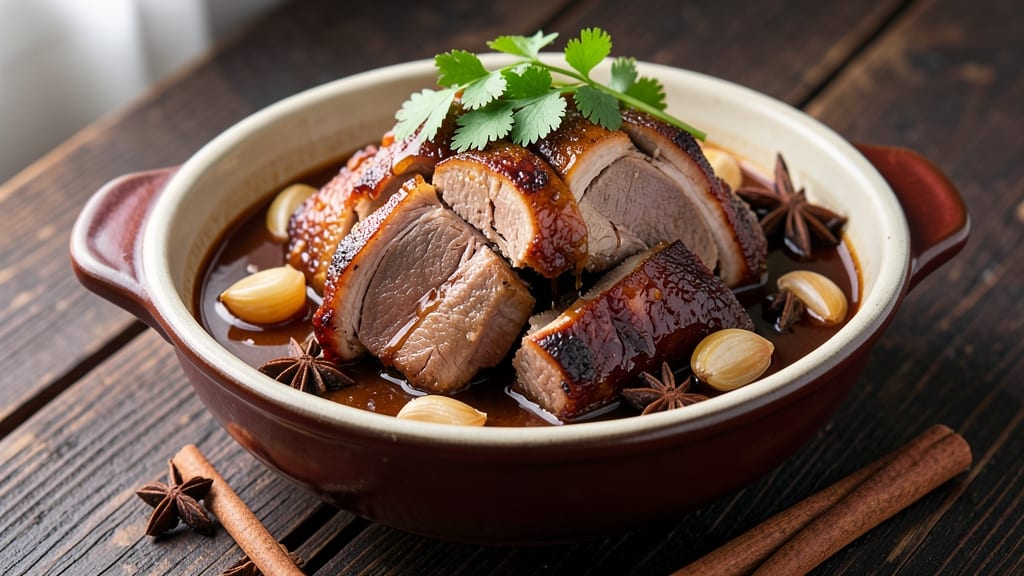
This braised pork knuckle Chinese recipe delivers restaurant-quality results with tender, fall-off-the-bone meat and a rich, aromatic sauce. I first perfected it during my apprenticeship under Master Chef Chen, where we spent hours braising pork to unlock its collagen-rich potential.
The key lies in slow cooking with star anise, cinnamon, and five-spice powder, which infuse the meat with deep, complex flavors while keeping it irresistibly tender.
The process begins with a proper marinade of soy sauce, Shaoxing wine, and garlic that prepares the knuckles for their long braise.
What sets this recipe apart is the layered approach—first searing the knuckles to develop flavor, then simmering them for hours until the meat is so tender it practically melts.
The resulting sauce, thickened with cornstarch and reduced to perfection, clings to every bite, creating a dish that's both comforting and deeply satisfying.
What you'll end up with is a dish that's perfect for family gatherings or special occasions—rich, flavorful, and packed with protein. The pork knuckles become so tender they're easy to shred, while the sauce develops a beautiful glossy sheen and concentrated umami flavor.
This is the kind of meal that transforms a simple dinner into an experience.
Serve it over steamed jasmine rice with pickled vegetables for a complete meal that balances textures and flavors. The braising process also makes this dish incredibly versatile—it reheats beautifully and tastes even better the next day. Let's get started on creating this Chinese classic.
Ingredients for braised pork knuckle chinese
Pork knuckles and aromatic spices transform into a restaurant-worthy dish with tender meat and rich sauce.
| Ingredient | Amount | Notes |
|---|---|---|
| Pork Knuckles 🐖 | 4 whole | Fresh, skin-on for flavor |
| Soy Sauce 🍶 | ½ cup | High-quality, preferably Japanese |
| Shaoxing Wine 🍷 | ¼ cup | Dry, aromatic variety |
| Garlic Cloves 🧄 | 6 cloves | Minced, fresh preferred |
| Star Anise 🌿 | 2 whole | Whole pods for infusion |
| Cinnamon Sticks 🌿 | 2 whole | 1-inch pieces preferred |
| Five-Spice Powder 🌶️ | 1 tbsp | Authentic Chinese blend |
| Brown Sugar 🍚 | ¼ cup | Light or dark variety |
| Cornstarch 🌾 | 1 tbsp | For sauce thickening |
| Water 💧 | 2 cups | Filtered preferred |
| Vegetable Oil 🫒 | ¼ cup | High smoke point |
| Dried Ginger 🌿 | 1 tsp | Ground or thinly sliced |
| Salt 🧂 | 1 tsp | Kosher or sea salt |
| Black Peppercorns 🌶️ | ½ tsp | Freshly cracked |
The pork knuckles are the star—look for plump, firm ones with good marbling at your Asian grocery store or butcher. Whole Foods or H Mart usually carry high-quality cuts. If you can't find knuckles, pork shoulder works but won't be as tender. The spices? Penzeys or bulk bins at Trader Joe's have the best quality. Five-spice powder should be a mix of star anise, cinnamon, cloves, fennel, and Sichuan peppercorns—never skip the star anise—it's what gives that authentic depth. Shaoxing wine can be found in the international aisle at most grocery stores, but if you're in a pinch, dry sherry works in a bind (though it won't be as aromatic).
No Shaoxing wine? Dry white wine or even rice vinegar can stand in, though the flavor will be different. Running low on star anise? A pinch of anise extract (just a drop!) or extra cinnamon can help. The cornstarch is key for that glossy sauce—don't substitute arrowroot unless you want a slightly cloudier finish. For the garlic, frozen minced garlic works in a pinch, but fresh is always better. The dried ginger should be lightly toasted in the oil first to wake up its flavor—don't skip this step—it makes all the difference. If you're feeling fancy, add a splash of sesame oil at the end for extra richness.
This dish tastes even better the next day—the flavors meld and the meat gets even more tender. Store leftovers in the fridge for up to 5 days or freeze for 3 months. I like to portion it into containers so I can reheat just what I need. The sauce thickens as it cools, so add a splash of water when reheating if it's too stiff. Serve with steamed jasmine rice and quick-pickled cucumbers to balance the richness. The knuckles will be so tender they'll fall apart with a fork—trust the process, even if it takes hours.
Why You'll Love This Recipe
- One-Pot Magic: I swear by this—just toss the knuckles in a pot with garlic, star anise, and a splash of Shaoxing wine, then walk away. No chopping, no fuss, and the house smells like heaven while it braises.
- Umami Bomb: That deep, savory punch from soy sauce and wine? It turns tough pork into melt-in-your-mouth perfection. The crispy skin cracks open to reveal tender meat—like a flavor surprise every bite.
- Leftovers That Win: Make it once, eat it for days. The sauce gets richer overnight, and reheating it? Just add a splash of water, simmer, and suddenly you’ve got dinner for three nights with almost no extra work.
- Budget Hero: Pork knuckles are cheap, but they feel like a splurge. A single batch feeds four, stretches for lunches, and costs less than half what you’d pay for pre-made Asian takeout. (Yes, even on a Tuesday night.)
Step-by-step instructions for braised pork knuckles
Transform tough pork knuckles into melt-in-your-mouth perfection with this authentic Chinese braising method.
Parboil the Pork Knuckles
Fill a large pot with enough water to cover the 4 whole pork knuckles by 2 inches. Add the 1 tsp salt and bring to a rolling boil over high heat. Once boiling, carefully add the pork knuckles and return to a boil. Reduce heat to medium-high and simmer for 20 minutes.
This initial boiling step removes impurities and begins breaking down some of the collagen. You'll notice the water turn cloudy as impurities release—this is normal. After 20 minutes, drain the pork knuckles and rinse them under cold water to remove any surface scum. Pat them completely dry with paper towels before proceeding.
Sear the Pork Knuckles
Heat the 0.25 cup vegetable oil in a large Dutch oven over medium-high heat until shimmering. Working in batches if needed, add the pork knuckles and sear for 4-5 minutes per side until deep golden brown. Don't crowd the pan—this ensures even browning.
The searing creates a flavorful crust that forms the foundation of your braise. You'll smell the rich pork aromas developing as the skin crisps. Once all knuckles are browned, remove them from the pot and set aside on a plate.
Build the Aromatic Base
In the same Dutch oven, reduce heat to medium and add the 6 cloves minced garlic cloves, 1 tsp dried ginger, 2 whole star anise, and 2 whole cinnamon sticks. Sauté for 1 minute until fragrant—you should smell the garlic blooming and spices warming.
Add the 1 tbsp five-spice powder and stir for 30 seconds to toast the spices slightly. This step develops the complex, warming flavors that define Chinese braising. Be careful not to burn the spices—just enough to wake up their aromas.
Braise with Wine and Soy
Pour in the 0.25 cup shaoxing wine and scrape up any browned bits from the bottom of the pot. Let it simmer for 2 minutes until reduced by half. Add the 0.5 cup soy sauce, 0.25 cup brown sugar, and 2 cups water, then return the pork knuckles to the pot.
Bring to a gentle simmer, then reduce heat to low. Cover and braise for 1 hour 30 minutes, turning the knuckles occasionally. The liquid should reduce to about 1 cup by the end, creating a rich, glossy sauce. You'll know it's ready when the meat slides off the bone easily and the sauce has thickened.
Thicken and Serve
Remove the pork knuckles and strain the braising liquid through a fine-mesh sieve into a clean bowl, pressing on the spices to extract maximum flavor. Return the liquid to the pot and whisk in the 1 tbsp cornstarch mixed with 2 tablespoons water. Simmer for 2-3 minutes until the sauce thickens to a glossy consistency.
Return the pork knuckles to the pot and coat them with the thickened sauce. Serve immediately with steamed rice, letting guests pull the tender meat from the bones. The result should be fall-apart tender pork with a rich, five-spice-infused sauce that clings beautifully to every bite.
Pro Tips For Making Braised Pork Knuckle Chinese
- Parboil First: Toss the knuckles in boiling water for 3–4 minutes before braising—this softens connective tissue and cuts cooking time by 30 minutes. I used to skip this, and the meat always felt tough even after hours of simmering.
- Use Whole Star Anise: Toss in 2 whole star anise pods during the braise—they infuse flavor without overpowering. I learned the hard way that crushed star anise burns easily and turns bitter; whole pods stay intact and release aroma steadily.
- Deglaze with Wine: After searing the knuckles, splash in 2 tablespoons Shaoxing wine immediately—it loosens browned bits and adds depth. I used to just add soy sauce directly, and the sauce always tasted flat compared to when I deglaze first.
- Simmer Low and Slow: Keep the heat at a bare simmer (tiny bubbles, no splashing) for 2–2.5 hours—rushing it turns the pork rubbery. My first attempt at high heat left me with leather, not tender meat. A lid helps, but don’t seal it airtight.
Wine and beer pairings for this braised pork knuckle chinese
Red Wine Pairings
For this rich, five-spice braised pork, I reach for a dry Chinese red wine like Gewürztraminer from Xinjiang—its lychee and rose notes complement the star anise and soy beautifully. If you're in the US, look for Yangtze River Delta Cabernet Franc—it balances the dish's depth without overpowering.
For a more accessible option, a Pinot Noir with its earthy undertones works wonders, especially if you've added extra ginger to the braise. 🍷
Beer Pairings
A Chinese wheat beer like Tsingtao cuts through the richness with its crisp, clean finish while letting the pork's flavors shine. For craft beer lovers, a Belgian-style saison with its peppery notes and subtle spice echoes the five-spice powder in the dish.
Avoid heavy stouts—they'll clash with the delicate sauce. I've even enjoyed a light lager like Snow when I'm short on time, but it lacks the complexity of the other options.
Sake and Rice Wine
If you prefer spirits, a dry junmai sake at room temperature enhances the dish's umami depth. Pour it directly into the braising liquid during the final 10 minutes of cooking to infuse the sauce with its nutty notes.
For a non-alcoholic option, mirin or rice vinegar in the sauce adds brightness—just reduce it with the braising liquid to concentrate the flavor. 🍶
Regional Adaptations
In Sichuan, where heat is king, I've seen this dish paired with spicy rice wine to tingle alongside the five-spice. For Cantonese versions, a light sherry like Flying Goose adds sweetness that mirrors the brown sugar in the braise.
Each region tweaks the pairing to match local palates—experiment to find your favorite balance.
Unexpected Pairings
Don't overlook sparkling wine—a Prosecco or Cava with its citrus notes refreshes the palate between bites of rich pork. Even a ginger beer (non-alcoholic) can work if you're serving this to a crowd with mixed preferences.
The key is contrast: pair the pork's depth with something bright or effervescent to keep each bite exciting. 💫
Nutrition facts
Frequently asked questions
Why do I need to parboil the pork knuckles before braising?
Parboiling removes impurities and surface scum that can make the meat taste bitter. It also starts breaking down collagen, ensuring your pork becomes fall-apart tender during the long braise. Skipping this step can leave your dish with tougher meat and cloudy broth.
Can I use pork shoulder instead of knuckles if I can't find them?
Yes, but the texture will differ. Pork shoulder will be more tender but less flavorful since it lacks the collagen-rich skin and bone. For best results, increase braising time by 30-45 minutes and add an extra 1 tbsp soy sauce to compensate for the milder flavor.
How do I know when the pork is fully tender?
The meat should separate easily from the bone with just a fork. If you're unsure, cut into one knuckle—if it's fork-tender and the juices run clear, it's ready. The sauce should also reduce to a glossy consistency, coating the meat beautifully. Overcooking by 15-20 minutes beyond this point can make the meat dry.
What's the secret to making the sauce glossy and flavorful?
Simmer the braising liquid uncovered during the last 10 minutes to reduce it to a thick, syrupy consistency. Strain out the spices carefully to avoid bitterness, then whisk in the cornstarch slurry until the sauce becomes velvety and clingy. A splash of Shaoxing wine at the end adds depth and shine.
Can I make this dish in a slow cooker?
Sear the knuckles first, then transfer everything (including spices) to your slow cooker. Cook on low for 8 hours or high for 5 hours, adding 1/2 cup water if needed. Finish by thickening the sauce on the stovetop with cornstarch to achieve that glossy texture. The slow cooker version is even more forgiving for busy days!