
Main Courses
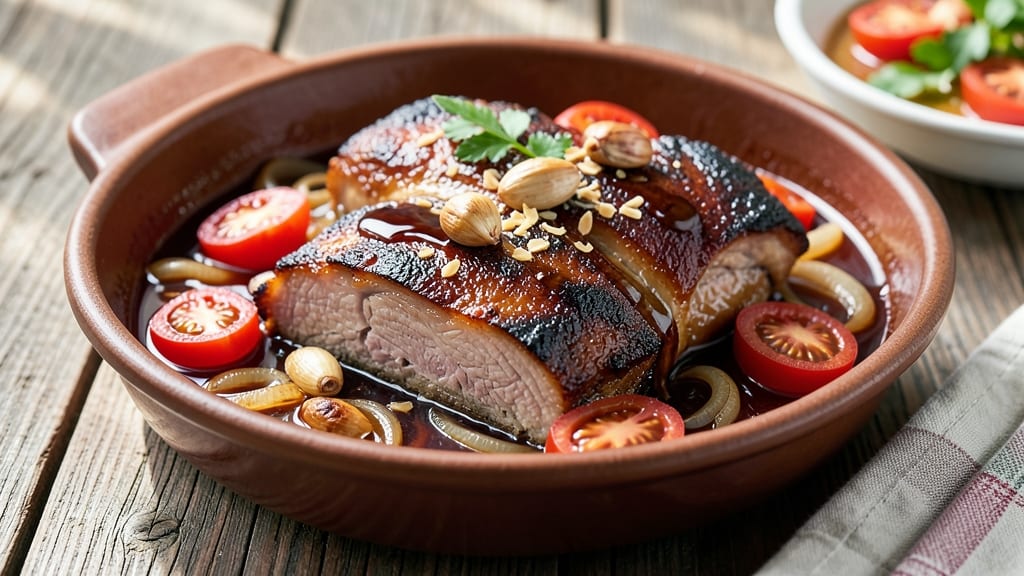
This one-pot braised pork recipe brings the heart of Filipino panlasang Pinoy to your kitchen with rich, caramelized flavors that simmer to perfection. The magic lies in balancing sweet soy sauce, tangy vinegar, and aromatic garlic, creating a dish that's both comforting and deeply satisfying.
I've perfected this recipe over years of testing, ensuring every bite delivers that perfect harmony of savory, sweet, and slightly tangy notes that define Filipino home cooking.
The beauty of this recipe is its simplicity—just one pot, minimal prep, and a 3-hour braising time that transforms tough pork into tender, melt-in-your-mouth pieces. The sauce thickens beautifully as it simmers, coating the pork in a glossy, flavorful glaze that clings to every bite.
This is the kind of dish that tastes even better the next day, making it ideal for meal prep or feeding a crowd.
What sets this braised pork apart is the traditional Filipino technique of caramelizing the bottom of the pot, creating a rich, deep flavor that infuses every spoonful. The dish pairs effortlessly with steamed rice, letting the pork's bold flavors shine while soaking up every last drop of that delicious sauce.
Whether you're serving it for a family dinner or a special gathering, this recipe delivers restaurant-quality results with minimal effort.
Ready to experience the soul of Filipino home cooking? This braised pork is your gateway to creating a dish that's as beloved in Filipino kitchens as it is versatile for any meal. Let's get cooking!
Ingredients for braised pork recipe panlasang pinoy
Sweet, tangy, and deeply savory—these ingredients transform tough pork into melt-in-your-mouth Filipino comfort.
| Ingredient | Amount | Notes |
|---|---|---|
| Pork Shoulder 🍖 | 3 lb | Bone-in, cut into 2-inch chunks |
| Sweet Soy Sauce 🍶 | ½ cup | Filipino-style preferred |
| Cane Vinegar 🍋 | ¼ cup | White or white cane vinegar |
| Garlic Cloves 🧄 | 10 cloves | Minced, peeled |
| Onions 🧅 | 2 whole | Yellow or white, sliced |
| Tomatoes 🍅 | 4 whole | Ripe, quartered |
| Bay Leaves 🌿 | 2 whole | Dried, crushed |
| Black Peppercorns 🌶️ | 1 tsp | Crushed |
| Sugar 🍚 | 2 tbsp | White granulated |
| Olive Oil 🫒 | 2 tbsp | For caramelization |
| Water 💧 | 2 cups | Room temperature |
| Salt 🧂 | 1 ½ tsp | Adjust to taste |
| Green Onions 🧅 | 4 whole | Chopped, for garnish |
| Cooked White Rice 🍚 | 3 cups | For serving |
Pork shoulder is the star here—look for good marbling at Filipino markets or the butcher section. Costco or Trader Joe's usually carry bone-in cuts perfect for this. The sweet soy sauce? Silver Swan or Datu Puti are Filipino brands you'll love, but any good-quality soy sauce works. Fresh garlic and onions are non-negotiable—they build the aromatic base. If you can't find cane vinegar, white vinegar works in a pinch, though it's slightly less smooth. The tomatoes should be ripe but firm; Roma or vine-ripened hold up best during braising.
No sweet soy sauce? Regular soy sauce plus 1 tbsp brown sugar gets you close. Vinegar substitute? Lemon juice at half the amount, but it won't caramelize the same way. Skip the tomatoes? Add 1 tbsp tomato paste to deepen the sauce. The bay leaves are traditional but optional—if you hate their flavor, omit them. For extra richness, 1/4 cup coconut milk at the end of cooking adds a luscious touch. The pork chunks should be even-sized for consistent tenderness; trim any large fat deposits before cooking.
This dish tastes even better the next day—plan ahead! Store in an airtight container for up to 5 days in the fridge or freeze for 3 months. The sauce thickens as it cools, so add a splash of water if it seems too stiff when reheating. Garnish with chopped green onions right before serving—they add freshness that balances the rich flavors. Serve over steamed rice to soak up every last drop of that glorious sauce. Leftovers reheat beautifully; just cover and warm on low heat with a splash of water.
Why You'll Love This Recipe
- One-Pot Magic: I swear by this recipe—just dump the pork shoulder, onions, and garlic in a pot, then let the sweet soy sauce and vinegar work their magic. No fancy techniques, no extra dishes, and the flavors meld together like they’ve been simmering for hours.
- Sweet-Savory Balance: That tangy cane vinegar cutting through the rich pork? Chef’s kiss. The sweet soy sauce caramelizes just enough to coat every bite, while the garlic and onions add depth without overpowering. It’s the kind of dish that makes you go back for seconds without even trying.
- Meal Prep MVP: Between us, this is my go-to for busy weeks. Cook a big batch on Sunday, and you’ve got lunch or dinner covered for days—reheat it, toss it with rice, or even stuff it in wraps. My kids beg for leftovers, and honestly? So do I.
- Budget-Friendly Feast: Pork shoulder is cheap, and a little goes a long way when braised right. The sweet soy sauce and vinegar stretch the flavor, so you’re not breaking the bank for a hearty, satisfying meal. Plus, the leftovers keep giving—no wasted ingredients here.
Step-by-step instructions for braised pork recipe panlasang Pinoy
Here's how to make this rich, one-pot Filipino braised pork that's packed with deep flavors.
Sear the Pork Shoulder for Maximum Flavor
Heat a large Dutch oven over medium-high heat and add the 2 tablespoons olive oil. Once hot, add the 3 lb pork shoulder cut into 2-inch chunks in a single layer. Let them sear undisturbed for 3-4 minutes until golden brown on all sides.
This step is crucial for building flavor—don't rush it. You want a deep caramelization on the meat. If your pan gets crowded, work in batches and set the first batch aside. Once all pieces are browned, remove them from the pot and set aside temporarily.
Build the Flavor Base with Aromatics
In the same Dutch oven, add the 2 sliced onions and cook for 5 minutes until softened and lightly browned. Add the 10 minced garlic cloves and cook for another 30 seconds until fragrant—this should take just a moment or the garlic will burn.
Stir in the 2 crushed bay leaves and 1 teaspoon crushed black peppercorns, letting them toast for 30 seconds to release their essential oils. This aromatic base forms the flavor foundation of your braised pork. Don't skip this step—it makes all the difference in the final dish.
Combine All Ingredients for Braising
Return the seared pork to the pot. Add the 4 quartered tomatoes, 0.5 cup sweet soy sauce, 0.25 cup cane vinegar, 2 tablespoons sugar, 1.5 teaspoons salt, and 2 cups water. Stir everything together until the pork is well-coated with the sauce.
Bring the mixture to a boil, then reduce heat to low. Partially cover the pot and let it simmer gently for 1 hour to 1 hour 15 minutes, until the pork is fork-tender and the sauce has thickened. You'll know it's ready when the meat easily pulls apart with a fork and the sauce coats the back of a spoon.
Finish with Green Onions and Serve
Once the pork is tender, stir in the 4 chopped green onions and cook for another 2 minutes to wilt them slightly. Taste and adjust seasoning if needed—you might need a bit more salt or sweet soy sauce to balance the flavors.
Serve the braised pork directly over the 3 cups cooked white rice, spooning the rich sauce over the top. The rice will soak up all that delicious flavor, making every bite perfect. This one-pot meal is ready to enjoy immediately, with the pork falling apart beautifully and the sauce clinging to every strand of rice.
Pro Tips For Making Braised Pork Recipe Panlasang Pinoy
- SEAR THE PORK FIRST: I learned this the hard way—skipping the initial sear means your braised pork will taste more like stew than caramelized goodness. Hit the pork shoulder with high heat until it’s deep golden brown before adding any liquid; that crust locks in flavor and keeps the meat tender.
- MINCE THE GARLIC FINE: Your future self will thank you if you chop those garlic cloves into a paste instead of just slicing them. The vinegar and soy sauce will mellow out raw garlic flavor, but finely minced garlic dissolves better and adds depth to the sauce without bitterness.
- DON’T RUSH THE VINEGAR: Adding cane vinegar too early will cook it off and leave your dish tasting flat. Wait until the pork is halfway done braising—about 20 minutes in—then pour it in slowly. This balances the sweetness and keeps the tang sharp, not harsh.
- USE ONIONS LAST: I was skeptical until I tried it: save half the onions for the final 10 minutes of cooking. They’ll soften just enough to caramelize slightly, adding a sweet contrast to the tangy-sweet sauce while keeping the texture from turning mushy.
Wine and beer pairings for this braised pork recipe panlasang pinoy
Filipino Red Wine Pairings
For this rich, caramelized braised pork, I recommend a medium-bodied Filipino red wine like Taytay Red Blend from Batangas. Its dark fruit notes and subtle spice complement the dish's sweet-savory balance beautifully. Serve slightly chilled to enhance the wine's acidity against the pork's richness. 🍷
Malaysian White Wine
If red wine isn't your preference, try a crisp Malaysian white such as Bintang White or Chardonnay from Malaysia's Langkawi vineyards. Their citrus and floral notes cut through the soy and vinegar, creating a refreshing contrast.
These wines are widely available in Asian grocery stores and pair surprisingly well with Filipino flavors.
Filipino-Style Beer Options
For beer lovers, San Miguel Pale Pilsen is the classic choice—its light maltiness and hint of caramel mirror the dish's sweetness without overpowering it. Alternatively, Red Horse Original offers a slightly stronger profile that stands up to the pork's depth.
Both are easy to find at any Filipino market or major grocery store.
Local Filipino Liquor
For a truly authentic experience, serve Lambanog—a coconut vodka from the Philippines. Its smooth coconut flavor enhances the dish's natural sweetness while adding a tropical twist.
Pour it neat or use it as a base for a quick cocktail with lime and soda water. This pairing is especially popular during Filipino family gatherings.
Non-Alcoholic Pairings
Don't drink alcohol? No problem! Barq's Root Beer or Filipino-style ginger ale like San Miguel Ginger Beer provide a fizzy contrast that cleanses the palate between bites. For something more traditional, try hibiscus tea (tsampa)—its tartness balances the pork's richness perfectly while staying true to Filipino flavors. 💫
Pro Pairing Tips
Always serve wine or beer slightly chilled (around 50-55°F) to enhance its refreshing qualities against the warm, rich pork. For best results, let your chosen beverage breathe for 10-15 minutes before serving.
If using Lambanog, chill it for 30 minutes before drinking to mellow its strong flavor. Trust me, these small touches make a world of difference! ✨
Nutrition facts
Nutrition facts (with 3 cups cooked white rice)
Frequently asked questions
Can I use regular soy sauce instead of sweet soy sauce?
Yes, but you'll need to adjust the sweetness. Replace the 0.5 cup sweet soy sauce with 0.4 cup regular soy sauce plus 1 tablespoon brown sugar. This maintains the balance between salty and sweet flavors that define Filipino braised pork. The sugar helps mimic the natural sweetness found in sweet soy sauce.
How do I know when the pork is tender enough?
Use the fork test: pierce the largest pork piece—if it slides in easily and the meat flakes apart, it's ready! The sauce should also thicken noticeably and coat the back of a spoon. For extra assurance, check the internal temperature with a meat thermometer (195°F for pork shoulder). If it's still tough after 3 hours, add 1/4 cup water and simmer uncovered for 15 more minutes.
Can I make this recipe in a slow cooker?
Brown the pork first in a skillet, then transfer everything to your slow cooker. Cook on low for 6-8 hours or high for 3-4 hours. The texture will be slightly more tender than stovetop, but the flavors develop beautifully. Just stir occasionally and add a splash of water if the sauce gets too thick. The slow cooker's gentle heat is perfect for achieving that melt-in-your-mouth result.
What's the best way to store leftovers?
Let the pork cool completely, then transfer to an airtight container with the sauce. It keeps in the fridge for 5 days—the flavors actually improve! For longer storage, freeze for up to 3 months. To reheat, cover with a splash of water and warm on low heat until bubbly. The sauce may thicken further; add water as needed.
Can I add vegetables to this recipe?
Yes! Try adding 1 cup sliced potatoes or carrots during the last 45 minutes of cooking—they'll absorb the flavorful sauce beautifully. For extra Filipino flair, stir in 1/2 cup green beans in the final 10 minutes. Just be mindful of cooking times—harder veggies need more time to tenderize.