
Main Courses
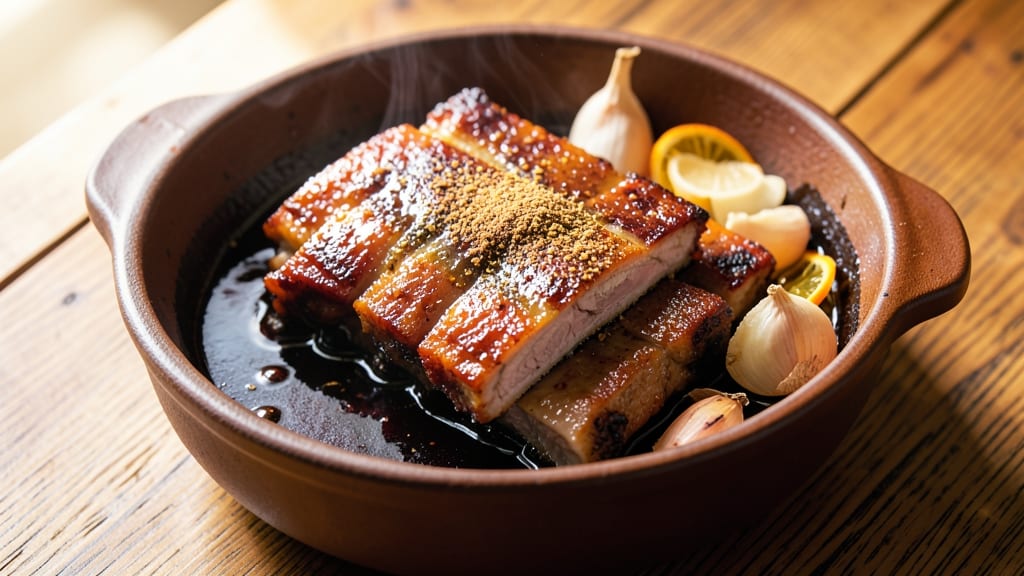
This braised pork ribs Filipino recipe brings the soul of Filipino comfort food to your table with its rich, aromatic tamarind broth and signature five-spice crust. 🌟 After years of perfecting braising techniques in my Atlanta kitchen, I’ve developed a method that delivers tender, fall-off-the-bone ribs with layers of sweet, sour, and savory flavors—just like my lola used to make.
The key lies in the slow simmer, where the tamarind and soy sauce meld into a glossy, deeply flavorful sauce that clings to every rib.
What sets this recipe apart is the balance of traditional Filipino ingredients—garlic, ginger, and black peppercorn—with the deep, caramelized crust that forms from the five-spice blend.
Unlike other braised pork recipes, this one marries the richness of pork with the bright tang of tamarind, creating a harmony that’s both comforting and complex. The process is straightforward but requires patience; the ribs braise for hours until they’re fork-tender, absorbing all the flavors of the broth.
By the time you’re done, you’ll have a dish that’s restaurant-quality yet deeply personal—perfect for family gatherings or a cozy weeknight dinner.
The ribs are so tender they practically melt in your mouth, while the sauce is rich enough to drizzle over steamed rice or use as a dip for garlic fried rice.
Every bite carries the warmth of home cooking, with just the right balance of sweetness from the tamarind and umami depth from the soy and vinegar.
Serve with classic Filipino sides like atchara (pickled papaya) or a simple garlic fried rice to round out the meal. This recipe is designed to impress, whether you’re cooking for a crowd or treating yourself to a taste of nostalgia.
Let’s get started on creating a dish that tastes like home.
Ingredients for braised pork ribs filipino
Filipino flavors meet slow-cooked perfection—just 14 ingredients for ribs that melt in your mouth.
| Ingredient | Amount | Notes |
|---|---|---|
| Pork Ribs 🥩 | 2 ½ lb | Bone-in, cut into 2-inch pieces |
| Tamarind Paste 🍯 | ½ cup | Filipino-style, not sweetened |
| Dark Soy Sauce 🍶 | ½ cup | Filipino-style, like Silver Swan |
| Five-Spice Powder 🌶️ | 1 tbsp | Filipino blend, or homemade mix |
| Garlic Cloves 🧄 | 6 cloves | Minced, aromatic |
| Fresh Ginger 🧅 | ½ cup | Finely grated, about 2 inches |
| Black Peppercorns 🌶️ | 1 tsp | Crushed, not ground |
| White Vinegar 💧 | ¼ cup | For tangy balance |
| Brown Sugar 🍚 | ¼ cup | Light or dark |
| Onion 🧅 | 1 whole | Yellow, sliced |
| Bay Leaves 🌿 | 2 whole | Dried, for depth |
| Olive Oil 🫒 | 2 tbsp | For searing ribs |
| Salt 🧂 | 1 ½ tsp | Kosher or sea salt |
| Water 💧 | 1 ½ cups | For simmering broth |
The ribs are the star, so grab bone-in, meaty cuts from the butcher section—they stay juicier. Costco or Filipino markets often have the best quality, but any grocery store ribs work if they're fresh. For the tamarind paste, Filipino stores or Asian markets carry the unsweetened kind—it's non-negotiable for that authentic tang. If you can't find it, substitute 2 tbsp lemon juice, but it won't be the same. The five-spice blend? Penzeys or bulk bins have the best quality—look for star anise, cloves, and fennel in the mix.
No tamarind paste? Lime juice plus 1 tsp sugar gets you close, but you'll lose that deep umami. Fresh ginger is ideal, but dried works at half the amount. The soy sauce matters—Filipino brands like Silver Swan or Toyo have that rich, molasses-like depth. Skip the light soy. For the five-spice, if you can't find a pre-mixed blend, toast whole spices and grind them fresh—game changer. The ribs can be prepped ahead: pat dry and refrigerate uncovered for 1 hour before cooking to render fat.
This dish tastes even better the next day—make extra! Store ribs and sauce separately in airtight containers for 4-5 days in the fridge. For longer storage, freeze the ribs with some sauce for up to 3 months. Reheat gently on low—no microwaving, or the sauce gets watery. The sauce alone keeps for 1 week in the fridge and freezes beautifully. Leftovers? Rice bowls or fried rice are perfect—just warm everything up.
Why You'll Love This Recipe
- One-Pan Magic: I swear by this recipe when I’m too tired to scrub pots—just sear the ribs, toss in the tamarind and soy, and let the oven do the work. The five-spice powder does all the heavy lifting while I sip my coffee.
- Tamarind Tang Kick: That first bite? Chef’s kiss. The tamarind paste cuts through the richness of the pork, balancing the deep, smoky notes of the dark soy sauce. It’s the kind of flavor that makes you reach for seconds without even thinking.
- Leftovers That Shine: Between us, this dish only gets better the next day. The ribs stay tender, the sauce thickens into a glossy glaze, and I’ve reheated portions straight from the fridge for lunch—no one ever complains.
- Budget-Friendly Feast: Pork ribs are cheaper than you’d think, and a single batch feeds my family of four plus leftovers for two more meals. The spices cost pennies, and the tamarind paste lasts forever—this is my go-to for stretching groceries without sacrificing flavor.
Step-by-step instructions for braised pork ribs Filipino recipe
Here's how to create tender, flavor-packed ribs with a rich tamarind broth and aromatic five-spice crust.
🔥 Step 1: Sear the Ribs for Maximum Flavor
Heat the 2 tbsp olive oil in a large Dutch oven over medium-high heat until shimmering. Pat the 2.5 lb pork ribs dry with paper towels—this ensures a good sear. Working in batches, add the ribs to the pot and sear for 3-4 minutes per side until golden brown. Don't crowd the pan; sear in batches if needed.
Here's the thing—this searing step develops that deep, caramelized crust that's essential for the final texture. You'll know it's ready when the ribs release easily from the pan and have a rich, golden-brown color. Transfer the seared ribs to a plate and set aside.
👨🍳 Step 2: Build the Aromatic Base
In the same Dutch oven (no need to wipe it clean—those browned bits are pure flavor), add the 1 whole onion sliced into half-moons. Cook for 5 minutes until softened and starting to caramelize. Add the 6 cloves garlic cloves and 0.5 cup fresh ginger, cooking for another 1 minute until fragrant.
Stir in the 1 tbsp five-spice powder and 1 tsp crushed black peppercorns, letting them toast for 30 seconds until you can smell their warm, aromatic notes. This step is where all the complex flavors develop—don't skip it. The spices should be visibly sizzling but not burning.
🥘 Step 3: Combine Wet Ingredients for Depth
Pour in the 0.5 cup tamarind paste, 0.5 cup dark soy sauce, 0.25 cup white vinegar, and 0.25 cup brown sugar. Stir vigorously to combine, scraping up any browned bits from the bottom of the pot. This mixture should look rich and slightly thick—like a dark, glossy sauce.
Add the 1.5 cups water and bring the mixture to a gentle simmer over medium heat. Let it cook for 5 minutes to allow the flavors to meld together. Here's where the tamarind's tangy sweetness and the soy sauce's umami come together—this is the foundation of your braising liquid.
🔥 Step 4: Braise Until Fork-Tender
Return the seared ribs to the Dutch oven, along with the 1.5 tsp salt and 2 whole bay leaves. The liquid should come about halfway up the ribs. Bring to a gentle simmer, then reduce heat to low and cover with a tight-fitting lid. Here's the key: you want a slow, steady simmer—not a rolling boil.
Simmer for 1.5 to 2 hours until the ribs are fork-tender and easily pull apart at the bones. You'll know they're done when the meat is so tender it practically falls off the bone. If the liquid reduces too much, add a splash of water to keep the ribs submerged. The ribs should be bathed in a rich, dark, slightly glossy sauce.
⏰ Step 5: Rest and Serve with Confidence
Once the ribs are tender, remove them from the braising liquid and transfer to a serving platter. Tent loosely with foil and let them rest for 10 minutes. This resting period allows the juices to redistribute, ensuring each bite is moist and flavorful. Discard the bay leaves before serving.
Ladle the tamarind-soy braising liquid over the ribs and serve immediately. The ribs should have a beautiful caramelized crust from the searing, with tender meat that practically melts in your mouth. Each bite delivers a perfect balance of sweet, tangy, savory, and aromatic five-spice flavors—this is Filipino comfort food at its finest.
Pro Tips For Making Braised Pork Ribs Filipino
- Sear the Ribs First: I learned this the hard way—skipping the sear means your ribs will absorb all the braising liquid instead of building flavor. Hit them with a hot pan, 2 tablespoons of oil, and let them brown deeply for 3-4 minutes per side before adding anything else. That crust locks in the juices and makes the tamarind-soy sauce cling better.
- Dissolve Tamarind Properly: Tamarind paste is stubborn—just tossing it in won’t work. Heat ¼ cup water with the paste in a small saucepan until it melts into a smooth syrup (about 5 minutes on medium). Strain out any grit, then add it to your braising liquid. This ensures the sauce coats the ribs evenly instead of clumping.
- Don’t Rush the Braise: Low and slow is non-negotiable here. After searing, cover the ribs with liquid and simmer at a gentle bubble—you should barely see movement. If you crank the heat to speed things up, the soy sauce will burn and the ribs will turn rubbery. Plan for at least 2 hours, stirring occasionally to prevent sticking.
- Bloom the Five-Spice: Tossing the five-spice powder dry into the pan is a waste. Toast the whole spices (or pre-ground powder) in the same oil you sear the ribs for 30 seconds until fragrant. Then add the garlic and let it sizzle for another minute. This releases the spices’ oils, making them 10x more flavorful in the finished dish.
Serving suggestions for this braised pork ribs filipino
Classic Filipino Sides
Steamed jasmine rice is the perfect canvas for this rich dish—its mild flavor lets the ribs shine while soaking up every drop of that tamarind-soy sauce. I always cook 2 cups uncooked rice with 3 cups water for a fluffy base.
For extra authenticity, serve with atchara (pickled papaya)—the tangy crunch cuts through the richness beautifully. 🌟
Garlic Fried Rice
Transform leftovers into garlic fried rice by sautéing 2 tbsp minced garlic in 1 tbsp oil until fragrant, then adding 3 cups cooked rice and breaking it up with a spatula.
Stir in 2 tbsp soy sauce and 1 tbsp chopped green onions, then mix in shredded ribs and a splash of the braising liquid. This turns a simple meal into a flavor-packed feast.
Simple Green Salad
A crisp green mango salad balances the richness with its bright acidity. Toss 4 cups shredded green mango with 1 tbsp rice vinegar, 1 tsp sugar, and ½ tsp salt.
Add sliced red onion and cilantro for texture. The sweet-tart contrast makes every bite of rib even more satisfying.
Garnish Like a Pro
Before serving, sprinkle ribs with chopped cilantro and toasted sesame seeds—just 1 tbsp each—for freshness and crunch. A drizzle of extra braising sauce elevates the presentation.
I also love adding thinly sliced scallions for a pop of color and onion flavor. These finishing touches make the dish look restaurant-worthy.
Drink Pairings
For a refreshing match, serve with calamansi soda—a Filipino citrus soda made from calamansi juice. Its bright acidity cleanses the palate between bites. Alternatively, a light lager like San Miguel balances the dish's richness perfectly. Avoid heavy wines or dark beers—they'll overpower the delicate flavors.
Make-Ahead Serving
If prepping ahead, store ribs and sauce separately in airtight containers for up to 4 days. Reheat ribs in the sauce over low heat for 10 minutes, stirring occasionally.
For a crowd, assemble everything in a slow cooker on low for 2 hours** before serving—this keeps the ribs warm and saucy. 💫
Nutrition facts
Frequently asked questions
Can I substitute regular soy sauce for Filipino dark soy sauce?
Filipino dark soy sauce (like Silver Swan) has a deeper, molasses-like flavor that's essential for this recipe. Regular soy sauce works in a pinch, but you'll lose that rich caramelized depth. For best results, mix ¼ cup regular soy sauce with ¼ cup molasses or 2 tbsp brown sugar to mimic the flavor profile.
How do I know when the ribs are fully tender?
The ribs are done when they pull apart easily at the bones with minimal resistance. Test by inserting a fork into the thickest part—if it slides in like butter, they're ready. The braising liquid should also be reduced and glossy, clinging to the ribs rather than pooling at the bottom.
Can I make this recipe in a slow cooker instead of a Dutch oven?
Brown the ribs first in a skillet, then transfer everything to a slow cooker. Use the low setting for 4-5 hours (instead of 1.5-2 hours on the stove). The ribs will still develop that tender texture, though the sauce may be slightly thinner. Add 1 tbsp cornstarch mixed with water at the end to thicken it.
Why does my sauce look too thin or too thick?
If the sauce is too thin, simmer uncovered for 5-10 minutes to reduce it. For a thicker sauce, mix 1 tbsp cornstarch with 2 tbsp water, stir into the sauce, and simmer until it reaches your desired consistency. The ideal sauce should coat the back of a spoon but still be pourable.
What's the best way to reheat leftovers?
Reheat ribs and sauce together in a skillet over low heat for 10-15 minutes, stirring occasionally. Avoid microwaving—the sauce can become watery. For extra richness, add a splash of water or broth to keep everything moist. Leftovers taste even better the next day!