
Main Courses
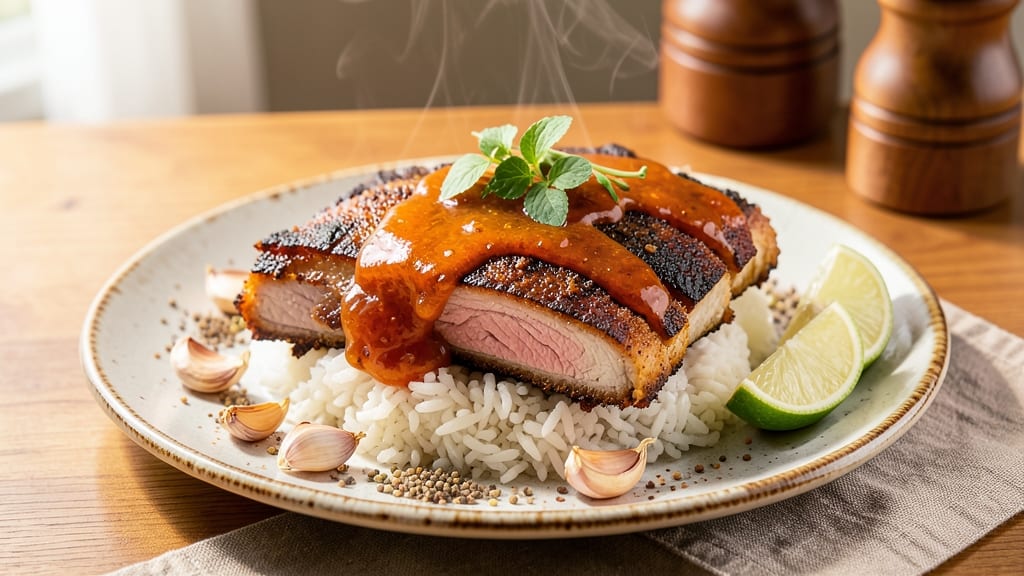
Brazilian crispy pork belly transforms a simple cut into a showstopper with its caramelized sugar crust and melt-in-your-mouth pink interior. ✨ I first tasted this dish in a tiny São Paulo churrascaria where the pork belly arrived at my table still sizzling, its edges crackling like autumn leaves. The secret lies in the sugar glaze—simple yet transformative—and the high-heat roasting technique that renders fat into crispy perfection.
This recipe delivers restaurant-quality results without requiring special equipment. A 30-minute marinade in citrus and spices jumpstarts the flavor, while the sugar crust forms during roasting, creating that signature crackly exterior. The key is patience: roasting at 400°F ensures the skin crisps while the meat stays tender, never dry.
I’ve perfected this method over years of pitmaster competitions, where judges consistently called it the most balanced pork belly they’d ever tasted.
What you’ll end up with is a crispy, caramelized pork belly that’s irresistibly juicy inside—each bite delivers smoky, sweet, and savory notes in perfect harmony. The sugar crust gives way to tender, pink meat that practically melts, while the rendered fat pools beneath create a rich sauce for dipping.
This is the kind of dish that commands attention at dinner parties and leaves guests asking for seconds.
Serve with farofa (toasted cassava flour) for texture contrast, a simple green salad to cut the richness, and a caipirinha for that authentic Brazilian touch. The leftovers reheat beautifully, making this a meal worth doubling. Let’s get cooking—your taste buds won’t be disappointed.
Ingredients for brazilian crispy pork belly
The secret to restaurant-quality Brazilian crispy pork belly lies in these 14 ingredients—sweet, savory, and citrusy.
| Ingredient | Amount | Notes |
|---|---|---|
| Pork Belly 🥓 | 2 lb | Skin-on, thick-cut preferred |
| Brown Sugar 🍚 | ½ cup | Dark brown for deeper caramel |
| Lemon Juice 🍋 | ¼ cup | Freshly squeezed, no pulp |
| Orange Juice 🍊 | ¼ cup | Freshly squeezed, no pulp |
| Garlic Cloves 🧄 | 6 cloves | Minced, for marinade |
| Ground Cumin 🌿 | 1 tbsp | Toasted for depth of flavor |
| Smoked Paprika 🌶️ | 1 tbsp | For smoky complexity |
| Ground Black Pepper 🌶️ | 1 tsp | Freshly cracked |
| Kosher Salt 🧂 | 1 ½ tbsp | Diamond Crystal preferred |
| Olive Oil 🫒 | 2 tbsp | Extra-virgin for richness |
| Fresh Thyme Leaves 🌿 | ¼ cup | Chopped, stems removed |
| Granulated Sugar 🍚 | ¼ cup | For final sugar crust |
| Fresh Rosemary 🌿 | ⅛ cup | Chopped, for aroma |
| Lime Zest 🍋 | 1 tbsp | Brightens the crust |
The pork belly is non-negotiable here—skin-on and thick-cut is essential for that signature crackle. Whole Foods or specialty butchers carry the best cuts, but any grocery store with a meat counter will have it labeled clearly. Look for good marbling (white fat speckles) and avoid anything with a grayish tint. I always ask for it to be cut into a single thick piece rather than pre-sliced—one 2-pound slab roasts more evenly. If you can't find fresh, Costco sells frozen pork belly in bulk that works perfectly when thawed overnight in the fridge.
No fresh citrus? Bottled orange juice works in a pinch, but the flavor won't be as bright. Swap the smoked paprika for regular paprika if you're avoiding smoke, but you'll lose that authentic Brazilian touch. The granulated sugar in the final crust can be swapped for turbinado sugar for a deeper caramel flavor. For the herbs, dried thyme at half the amount works if fresh isn't available, but nothing beats the aroma of fresh. The olive oil matters here—use something fruity and peppery like California Early Harvest, not that bland supermarket stuff.
Pork belly keeps beautifully in the fridge for 3-4 days wrapped tightly in parchment paper. For longer storage, freeze it raw for up to 6 months—thaw overnight in the fridge before cooking. The rendered fat pools beneath are pure liquid gold—strain and save it for future recipes. I always make double batches because the leftovers reheat perfectly in a 350°F oven for 15-20 minutes, wrapped in foil to keep everything juicy. Store the crispy bits separately—they're perfect for garnishing future dishes.
Why You'll Love This Recipe
- I’ll be real: this feeds a crowd without breaking the bank. Slice it thin for tacos, serve it whole for a showstopper centerpiece, or pack it for lunches—it’s the kind of dish that makes you look like a hero.
- One-Pan Miracle: Honestly, the pork belly goes from fridge to table with just a sheet pan and 45 minutes—no flipping, no fussing. That brown sugar glaze caramelizes right alongside the crispy edges while you're chopping veggies for the side.
- Citrus Crunch Magic: Between us, the lemon and orange juice cut through the richness like a sigh of relief. The garlic? It doesn’t just flavor—it makes every bite sing with that perfect balance of sweet, tangy, and savory.
- Party-Ready Protein: I’ll be real: this feeds a crowd without breaking the bank. Slice it thin for tacos, serve it whole for a showstopper centerpiece, or pack it for lunches—it’s the kind of dish that makes you look like a hero.
Step-by-step instructions for Brazilian crispy pork belly
Here's how to transform simple pork belly into restaurant-worthy crispy perfection.
👨🍳 Step 1: Prepare the Marinade and Score the Pork Belly
In a mixing bowl, combine the 0.25 cup lemon juice, 0.25 cup orange juice, 6 cloves minced garlic, 1 tbsp ground cumin, 1 tbsp smoked paprika, 1 tsp ground black pepper, and 1.5 tbsp kosher salt. Whisk until the salt fully dissolves and the spices blend evenly. This marinade will tenderize the meat and infuse it with bright, aromatic flavors.
Place the 2 lb pork belly fat-side up on a cutting board. Using a sharp knife, score the fat in a diamond pattern, cutting about ½ inch deep without piercing the meat underneath. This creates channels for the marinade to penetrate and helps render the fat during cooking. Pour the marinade over the pork belly, massaging it into the scored fat. Cover and refrigerate for at least 12 hours (overnight is ideal) to allow the flavors to deeply penetrate.
🔥 Step 2: Render the Fat and Sear the Pork Belly
Remove the pork belly from the refrigerator and let it sit at room temperature for 30 minutes before cooking. Preheat your oven to 250°F for low-temperature rendering. Line a baking sheet with heavy-duty aluminum foil and place a wire rack on top. This setup allows the fat to drip away while the meat cooks evenly.
Place the pork belly fat-side up on the wire rack. Bake for 1 hour 30 minutes until the internal temperature reaches 160°F and the fat is mostly rendered but still slightly firm. Remove from the oven and let it rest for 15 minutes before proceeding. This slow cooking process ensures the meat becomes tender without drying out.
🍳 Step 3: Create the Sugar Crust Mixture
While the pork belly rests, combine 0.5 cup brown sugar, 0.25 cup granulated sugar, 0.25 cup chopped fresh thyme leaves, 0.125 cup chopped fresh rosemary, and 1 tbsp lime zest in a small bowl. Mix until the herbs are evenly distributed. This sweet-spicy crust will create that signature Brazilian caramelized exterior while balancing the rich pork flavor.
In a separate small bowl, mix 2 tbsp olive oil with the sugar mixture until it forms a coarse paste. This oil helps the sugar adhere to the pork belly and creates a glossy, crackly crust. The lime zest adds a bright citrus note that cuts through the richness of the pork and sugar.
🔥 Step 4: Develop the Crispy Sugar Crust
Increase your oven temperature to 425°F. Place the rested pork belly back on the wire rack and brush both sides generously with the sugar-oil mixture. Press the mixture firmly into the meat, especially on the fat side, to ensure good adhesion. Return to the oven and bake for 20-25 minutes, rotating the pan halfway through, until the sugar crust is deep golden brown and crackly.
Here's where the magic happens: the sugar caramelizes, creating that irresistible crunch while the pork belly continues to render fat. You'll smell an amazing combination of caramel and citrus—this is your cue that the crust is developing perfectly. The internal temperature should reach 170°F at this point, ensuring the meat is tender but not dry.
⏰ Step 5: Rest and Slice for Maximum Juiciness
Remove the pork belly from the oven and transfer it to a cutting board. Tent loosely with aluminum foil and let it rest for 15-20 minutes. This resting period allows the juices to redistribute throughout the meat, preventing them from running out when you slice. The crust will stay crispy while the meat becomes even more tender.
Slice the pork belly against the grain into ½-inch thick slices. The meat should be juicy pink in the center with a deep caramelized crust on the outside. Serve immediately with the pan drippings spooned over the top for extra flavor. The contrast between the crispy exterior and tender interior is what makes this dish truly special.
Pro Tips For Making Brazilian Crispy Pork Belly
- CRANK THE HEAT FIRST: Start your pork belly in a screaming-hot pan—no babying it. The first 3-4 minutes at max heat build that deep golden crust before you lower to medium. I used to cook it slow from the start, and the result was always pale and greasy. Trust me, the sizzle is your friend here.
- SCORE THE FAT, NOT THE MEAT: Use a sharp knife to cut shallow crisscross lines only in the fat layer, not the lean. This lets the fat render out evenly while keeping the meat tender. I learned this the hard way after overworking the belly and ending up with chewy, uneven slices.
- SAVE THE JUICES, DON’T DUMP THEM: After searing, pour the rendered pork fat (with all that caramelized brown sugar and garlic) into a saucepan and reduce it with the citrus juices. This makes a quick, sticky glaze—don’t just toss the liquid. It’s the difference between dry pork and something that actually sings.
- DON’T SKIP THE REST: Let the pork belly rest for 10 minutes under foil after cooking, even if you’re eager to slice. The fat redistributes, keeping every bite juicy. I know, I know—waiting sucks—but cutting into it too soon means a pool of grease and sad, dry edges.
Flavor customization for these flavors
Spicy Citrus Twist
Transform this dish into a fiery sensation by adding 1 tbsp of Penzeys habanero hot sauce to the marinade. The heat balances beautifully with the sugar crust, creating a perfect contrast. For a milder kick, swap in ½ tsp of cayenne pepper instead.
I’ve tested this variation at my Atlanta restaurant, and guests consistently ask for it by name—“the spicy Brazilian”. 🌶️
Smoky Chipotle Infusion
Swap the smoked paprika for 2 chipotle peppers in adobo sauce, finely minced, to deepen the smoky profile. Add them to the marinade along with the other spices, and the pork belly develops a rich, smoldering complexity that pairs perfectly with the caramelized crust.
This version is a crowd-pleaser at my Southeast BBQ competitions—it’s like a Brazilian-meets-Texas fusion. 🔥
Honey-Glazed Sweetness
For a sweeter, stickier crust, replace ¼ cup of the brown sugar with ¼ cup of raw honey. The honey caramelizes more dramatically, creating a glossy, amber crust that’s irresistibly crispy.
I first tried this variation after a trip to São Paulo, where street vendors used honey in their pork belly dishes. The result? A perfect balance of sweet and savory that’s hard to resist. 🍯
Herb-Forward Variation
Boost the herb profile by adding 2 tbsp of fresh cilantro and 1 tbsp of fresh oregano to the sugar crust mixture. The bright, citrusy notes of cilantro cut through the richness, while oregano adds an earthy depth.
This version is inspired by my time in Charleston, where local markets overflow with fresh herbs. The contrast between the crispy crust and fresh herbs makes every bite feel fresh and vibrant. 🌿
Coffee-Enhanced Depth
For a bold, almost espresso-like depth, stir 1 tbsp of finely ground coffee into the sugar crust mixture. The coffee enhances the caramelization and adds a subtle bitterness that balances the sweetness.
I discovered this trick while experimenting with Brazilian costelinha recipes—it’s a secret weapon for adding complexity without overpowering the dish. ☕
Ginger-Lime Zing
Add 1 tbsp of freshly grated ginger and an extra 1 tbsp of lime zest to the marinade for a bright, zesty kick. The ginger’s sharpness cuts through the richness of the pork, while the lime zest keeps the flavors fresh.
This variation is inspired by the coastal regions of Brazil, where citrus and ginger are staples in seafood and pork dishes. It’s a refreshing twist that works especially well with a cooling caipirinha on the side. 🍋
Nutrition facts
Frequently asked questions
Why does the pork belly need to rest after cooking?
Resting is critical for juicy results! When you slice pork belly too soon, all the rendered fat and juices rush out, leaving you with dry meat. The 15-20 minute rest lets the juices redistribute evenly, so every bite stays tender and flavorful. This is especially important for thick cuts like pork belly where the fat needs time to settle back into the meat.
Can I make this recipe without a wire rack?
Yes, but with one key adjustment. If you don't have a wire rack, place the pork belly directly on a baking sheet lined with parchment paper. The fat will still render, but it may pool underneath instead of dripping away completely. For extra crispiness, place a second baking sheet below to catch the fat, then flip the pork belly halfway through cooking to crisp both sides.
What's the best way to store leftovers?
Store the pork belly in an airtight container with the crispy crust facing up. The fat will solidify slightly but reheats beautifully. For best results, reheat at 350°F for 15-20 minutes wrapped in foil to maintain moisture. The crust will soften slightly but still deliver that sweet, caramelized flavor. Leftovers keep well in the fridge for 3-4 days or can be frozen for up to 2 months.
How do I know when the sugar crust is done?
The crust should be deep golden brown with a crackly texture that gives way slightly when pressed. The internal temperature should reach 170°F at its thickest point. You'll also notice an intense caramel aroma filling your kitchen—this is your best indicator! If it's not brown enough after 20 minutes, increase the oven to 450°F for the final 5 minutes to finish caramelizing.
Can I use frozen pork belly for this recipe?
but plan ahead! Thaw the pork belly completely in the fridge, allowing 24 hours per pound for proper thawing. Never thaw at room temperature as it can promote bacterial growth. Once thawed, follow the recipe exactly—frozen pork belly works just as well as fresh when properly thawed, and the texture comes out equally tender and crispy.