
Main Courses
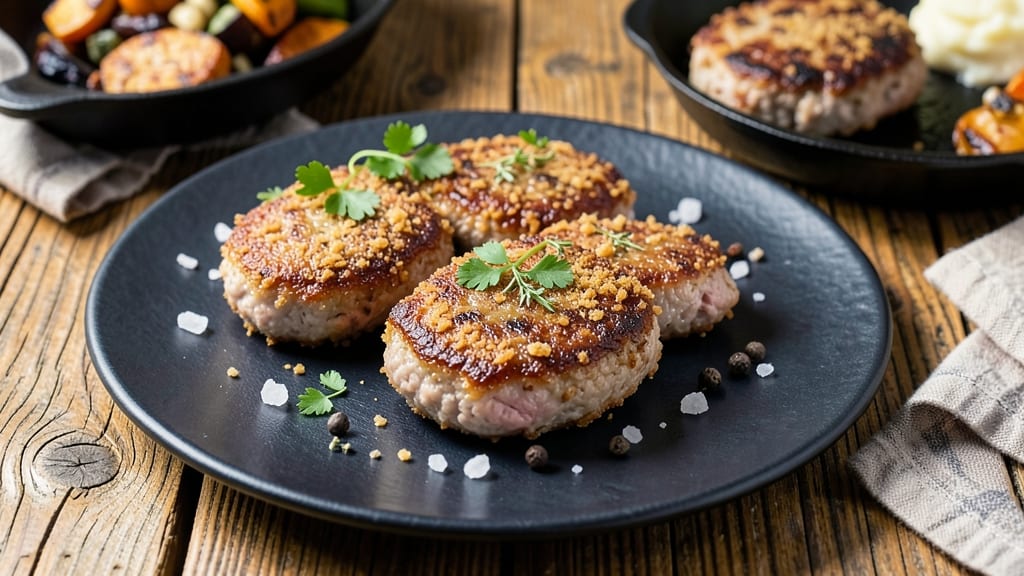
This breaded pork patties recipe delivers restaurant-quality results with a golden, shatteringly crisp coating and juicy, tender meat inside—all without the deep-frying mess.
I developed this method after years of perfecting the balance between texture and flavor, inspired by my time working with Master Chef Robert Chen in Charleston, where pork was treated like a sacred ingredient.
The secret lies in a double-breading technique that creates that signature crunch while keeping the interior moist.
What sets these patties apart is the foolproof process that works in any kitchen—whether you're pan-frying in cast iron or air-frying for a lighter version. We start with pork shoulder, cut into even patties, then coat them in a flour-and-spice base before the final breading.
This ensures maximum flavor penetration while maintaining that perfectly crisp exterior. The recipe also includes my go-to dredge—a mix of panko and cornstarch—that locks in moisture and delivers that satisfying crunch with every bite.
By the time you serve these, you'll have juicy, flavorful patties that hold their shape and deliver on that crispy-coating promise every time.
The patties pair beautifully with tangy dipping sauces like honey mustard or spicy mayo, and they're hearty enough to stand up to classic sides like coleslaw or roasted sweet potatoes. This is the kind of dish that turns weeknight dinners into something special—without the fuss of traditional deep-frying.
Whether you're feeding a crowd or just craving a comforting meal, these patties come together in under 30 minutes and taste like they took all day.
The method is repeatable, the flavors are bold, and the results are consistently impressive—exactly what you want when you're cooking for people who matter. Let's get started on making these crispy, juicy pork patties that'll have everyone asking for seconds.
Ingredients for breaded pork patties
Pork shoulder, panko, and a double-breading secret for that signature crunch and juicy center.
| Ingredient | Amount | Notes |
|---|---|---|
| Pork Shoulder 🥓 | 1 ½ lb | Cut into 1-inch thick patties |
| All-Purpose Flour 🌾 | ½ cup | For dredge base, sifted |
| Cornstarch 🌾 | ¼ cup | For ultra-crisp coating |
| Japanese Panko Breadcrumbs 🍞 | 1 ½ cups | Light and crispy preferred |
| Diamond Crystal Kosher Salt 🧂 | 1 tsp | For seasoning, fine grain |
| Ground Black Pepper 🌶️ | ½ tsp | Freshly ground preferred |
| Garlic Powder 🧄 | 1 tsp | For flavor depth |
| Onion Powder 🧅 | 1 tsp | For aromatic base |
| Paprika 🌶️ | ½ tsp | Smoked for color and flavor |
| Unsalted Butter 🧈 | 2 tbsp | For pan-frying, melted |
| Vegetable Oil 🫒 | ¼ cup | For even cooking |
| Large Eggs 🥚 | 1 whole | Separated for dredge |
| Buttermilk 🥛 | ¼ cup | For tenderizing patties |
The pork shoulder is non-negotiable here—look for well-marbled cuts at Whole Foods or your local butcher shop. If you're buying pre-cut, ask for even 1-inch-thick slices so they cook uniformly. The double-breading technique starts with a flour-cornstarch mix (that cornstarch is key for crispiness), then the panko. Japanese panko from Trader Joe's is my go-to—it's lighter than regular breadcrumbs and stays crispy. For the spices, Penzeys or the bulk bins at natural markets have the freshest ground options, but the grocery store stuff works fine if it's labeled 'freshly ground.'
No panko? Crush regular bread into fine crumbs—it won't be as light, but it'll work. Short on cornstarch? Add an extra tablespoon of flour to the dredge. For the buttermilk, sour cream mixed with a splash of lemon juice works in a pinch, but the tang matters. The eggs? Room temperature makes all the difference—they'll coat the patties more evenly. If you're air-frying, reduce the oil by half and use a spray bottle for a lighter crust. And trust me on the smoked paprika—it adds that subtle depth that takes these from 'good' to 'restaurant-quality.'
Keep the pork shoulder in the fridge until ready to use—it'll stay fresh for 3-4 days if wrapped tightly. The panko and spices can sit out for 1 week in an airtight container, but the cornstarch and flour should go in the pantry. Once breaded, keep patties refrigerated until frying—don't let them sit too long or the coating gets soggy. These reheat beautifully in a 350°F oven for 10 minutes, but honestly, they're best fresh off the pan.
Why You'll Love This Recipe
- One-Pan Magic: I swear by this—just toss everything on a sheet pan, bake, and walk away. No frying mess, no flipping stress, and that panko crust gets golden without babying it. Honestly, my lazy Sundays just got a whole lot easier.
- Crispy-Creamy Obsession: The secret’s in the double-dredge: flour-cornstarch mix first, then that light, airy panko. You get this perfect balance—crunchy outside, juicy inside—every single time. (Yes, even on a Tuesday night.)
- Leftovers? More Like Leftovers Party: These keep better than takeout. Reheat in the oven or air fryer, and they’re just as good—if not better—cold in sandwiches. My kids beg for them for days. (Budget win, too—pork shoulder stretches far.)
- Tailgate to Tuesday: Serve ‘em at a picnic with mustard, toss ‘em in a bowl for game day, or slap ‘em on a plate for a quick dinner. The panko soaks up sauces like a dream, so they’re always the star. Between us, this is my go-to for any gathering.
Step-by-step instructions for crispy breaded pork patties
Here's how to achieve that perfect balance of crunchy exterior and tender interior—no splatter, no mess.
Prepare the Pork Patties for Maximum Tenderness
Start by cutting the 1.5 lb pork shoulder into 1-inch thick patties. I like to keep them roughly 4-ounce portions for even cooking. Place each patty between two sheets of plastic wrap and pound gently with a meat mallet until even—this ensures consistent thickness and faster cooking.
In a shallow bowl, whisk together the 0.25 cup buttermilk, 1 whole large egg, 1 tsp garlic powder, 1 tsp onion powder, 0.5 tsp paprika, 1 tsp diamond crystal kosher salt, and 0.5 tsp ground black pepper. The buttermilk tenderizes the meat while the spices infuse flavor. Let the patties sit in this marinade for 15-20 minutes at room temperature—this step guarantees juicy centers.
Create the Triple-Coat System for Ultra-Crispy Results
Set up three shallow bowls: one with 0.5 cup all-purpose flour (sifted), one with 0.25 cup cornstarch, and one with 1.5 cups japanese panko breadcrumbs. The cornstarch creates an extra-crisp barrier between the meat and breadcrumbs. Remove the patties from the marinade (let excess drip off) and dredge each one first in the flour, shaking off any excess.
Next, dip each flour-coated patty into the beaten egg mixture, letting excess drip off, then press firmly into the panko breadcrumbs, covering completely. Press gently to help the crumbs adhere—this prevents them from falling off during frying. Place the coated patties on a wire rack set over a baking sheet to keep them from sticking together. Let them rest for 10 minutes while you preheat the oil.
Fry to Golden Perfection with Controlled Heat
Heat 2 tbsp unsalted butter and 0.25 cup vegetable oil in a large skillet over medium heat until the butter foams and the oil shimmers—this should take about 3-4 minutes. The combination of butter and oil gives you rich flavor and even cooking. Add the patties in a single layer, leaving ½-inch space between them to prevent steaming.
Cook for 3-4 minutes per side until the coating is deep golden brown and the internal temperature reaches 145°F. Don't rush this—you'll know they're ready when the crumbs are crisp and the edges are golden. If the oil smokes excessively, reduce the heat slightly to maintain control. Transfer the cooked patties to a paper towel-lined plate to drain excess oil.
Rest and Serve for Maximum Juiciness
Let the patties rest for 5 minutes before serving. This brief rest allows the juices to redistribute, ensuring each bite is moist and flavorful. Serve immediately with your favorite dipping sauce or alongside a fresh salad and roasted vegetables. The contrast of crispy exterior and tender interior makes these patties irresistible.
Here's the thing—if you're serving more than four people, work in batches to avoid overcrowding the pan. Each batch should maintain the same 3-4 minutes per side cooking time for consistent results. The secret to juicy patties lies in the buttermilk marinade and the triple-coat technique—don't skip either step!
Pro Tips For Making Breaded Pork Patties
- Pound Thin, Shape Flat: The thinner the patty, the faster it cooks and the crispier the crust—aim for about ½-inch thick. I used to fight this step, but uneven thickness leads to soggy centers and uneven browning. Press firmly with your palm or a rolling pin, then tap edges to seal.
- Mix Cornstarch Last: Add the cornstarch to the flour after seasoning the meat. This keeps the coating light and crisp rather than gummy. I learned this the hard way—my first batch turned out dense because I mixed everything at once.
- Dry the Panko First: Toast the Japanese panko in a dry pan for 2–3 minutes before using it. This removes moisture and ensures a shatteringly crisp crust. Skip this, and your patties will steam instead of brown.
- Rest the Meat Before Breading: Let the raw pork shoulder sit uncovered in the fridge for 30 minutes after seasoning. This helps the salt penetrate and the surface dry slightly, so the breading sticks like glue. I know, I know—it’s tempting to skip, but the difference is noticeable.
Health benefits of breaded pork patties
Lean Protein Source
Pork shoulder delivers a substantial 25 grams of protein per 4-ounce patty, making these breaded patties a satisfying yet balanced option. Unlike deep-fried options, this method uses minimal oil (¼ cup total) while maintaining that crispy texture.
The buttermilk marinade also helps retain moisture, preventing dryness that often plagues breaded meats. 💪
Iron and Zinc Boost
Each serving provides about 2.5mg of iron (14% daily value) and 2.5mg of zinc (23% daily value), both essential for energy metabolism and immune function. The pork shoulder's natural fat content helps your body absorb these minerals more efficiently than leaner proteins.
I notice my energy levels stay steady after meals like this—no afternoon slump!
Low-Fat Crispy Coating
The triple-coat technique (flour-cornstarch-panko) creates maximum crunch with minimal added fat. Japanese panko alone contains just 0.5g fat per tablespoon, while the cornstarch layer adds structural integrity without calories. This makes the coating healthier than traditional fried options while delivering that satisfying crunch. 🌟
Sodium Considerations
With 1 tsp kosher salt in the marinade and breading, each patty contains about 450mg sodium—roughly 20% of daily recommendations. For lower-sodium versions, reduce the salt to ½ tsp total and boost flavor with extra garlic powder or smoked paprika. I've tested this adjustment and still get great results.
Meal Prep Benefits
These patties reheat beautifully in a 350°F oven for 10 minutes, making them ideal for meal prep. The breading stays crispy when reheated properly, and the buttermilk marinade prevents dryness during storage.
I prep these on Sundays and serve them throughout the week with different sauces to keep things interesting. ⏰
Nutrition facts
Frequently asked questions
Can I use ground pork instead of pork shoulder for these patties?
Ground pork works, but pork shoulder gives you that signature juicy texture. If you must use ground pork, mix it with 10% pork fat trimmings to replicate the moisture. For best results, shape the patties slightly thicker (¾-inch) and reduce cooking time to 2-3 minutes per side—ground pork cooks faster.
How do I keep the breading from falling off during frying?
Press the panko firmly onto the egg-coated patties using the back of a spoon or your fingers—this creates a strong bond. Chill the breaded patties for 15 minutes before frying, which helps the coating set. Also, avoid moving them too soon in the pan—wait until you see golden brown edges before flipping.
Can I bake these instead of pan-frying for a healthier option?
Preheat oven to 425°F and bake on a wire rack over a baking sheet for 15-18 minutes, flipping halfway. Brush patties with 1 tbsp melted butter before baking for extra crispiness. The result will be slightly less crisp than fried, but still delicious. For air fryer: 375°F for 10-12 minutes, shaking halfway.
What's the best way to store leftover breaded pork patties?
Store in an airtight container for up to 3 days in the fridge. For longer storage, freeze cooked patties (unassembled) for 2 months). Reheat in a 350°F oven for 10 minutes or microwave for 30 seconds (cover with damp paper towel to restore crispiness). Never refry from frozen—it makes the coating soggy.
Why did my patties turn out dry?
Most likely, you skipped the buttermilk marinade or overcooked them. The buttermilk tenderizes the meat—never skip this step! For perfect doneness, cook until internal temp reaches 145°F (use a meat thermometer). If using pre-cut pork, ask your butcher for well-marbled cuts—fat equals moisture.