
Main Courses
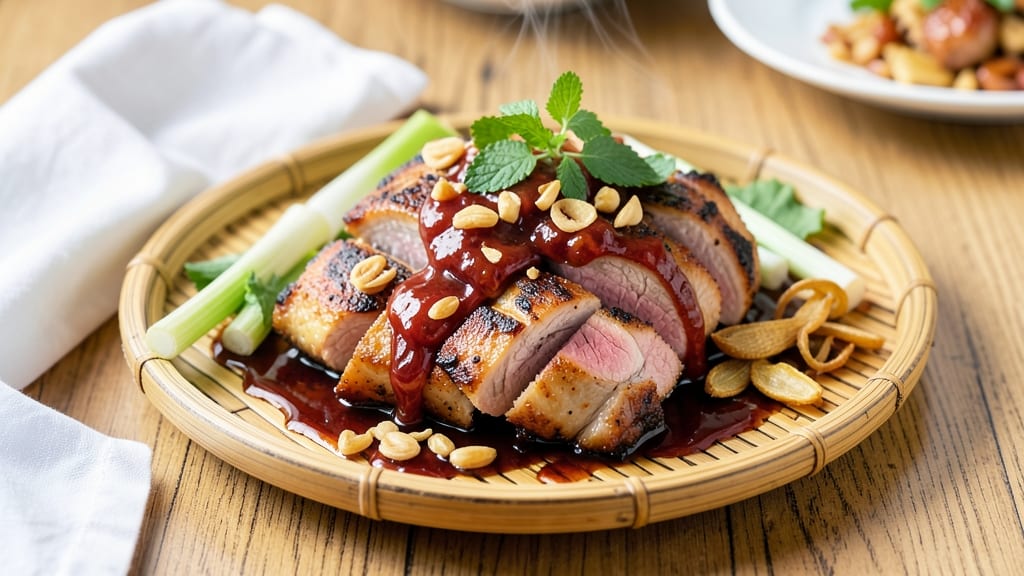
This Cambodian BBQ pork recipe brings the smoky-sweet flavors of Southeast Asia to your table with a marinade that transforms tough cuts into juicy, melt-in-your-mouth perfection. 🔥 The secret lies in tamarind's tangy depth and lemongrass's citrusy aroma, which tenderize the meat while building layers of complex flavor that grilling only enhances.
I first discovered this technique while studying under Master Chef Chen, where we learned that patience in marinating—at least 24 hours—is what separates good pork from extraordinary pork.
The recipe begins with a fragrant marinade of fish sauce, palm sugar, and fresh herbs like galangal and kaffir lime leaves, which infuse the pork with aromatic richness. Unlike many Western BBQ methods, Cambodian cooking embraces balance—sweet, salty, and umami all working in harmony.
The pork cooks low and slow over charcoal, allowing the glaze to caramelize into a sticky, glossy finish that locks in every drop of moisture. This isn't just a dish; it's an experience that transports you to the bustling streets of Phnom Penh with every bite.
By the time you serve this dish, you'll have tender pork that falls apart at the touch of a fork, its surface glistening with a sweet-tangy glaze that's impossible to resist.
The aroma alone will have everyone gathered around your table, and the first bite delivers that perfect marriage of smoky char and caramelized sweetness. This is the kind of recipe that turns a simple weeknight dinner into a celebration—no fancy ingredients or techniques required, just time and attention to detail.
Pair it with steamed jasmine rice and a side of quick-pickled vegetables to complete the meal. The acidity of the pickles cuts through the richness of the pork, while the rice soaks up every last bit of that delicious glaze.
Whether you're cooking for a family gathering or treating yourself to a taste of Cambodia, this recipe delivers restaurant-quality results with a method that's surprisingly approachable. Let's get started!
Ingredients for cambodian bbq pork
Fourteen ingredients transform tough pork into melt-in-your-mouth Cambodian BBQ perfection.
| Ingredient | Amount | Notes |
|---|---|---|
| Pork Shoulder 🥩 | 2 lb | Bone-in for best flavor |
| Fish Sauce 🍶 | ½ cup | Red Boat preferred |
| Palm Sugar 🍯 | ½ cup | Or substitute brown sugar |
| Tamarind Paste 🍈 | ¼ cup | Unsweetened, thick consistency |
| Lemongrass 🌿 | 1 whole | Bruised stems only |
| Galangal 🍃 | 1 piece | Substitute ginger if unavailable |
| Kaffir Lime Leaves 🍋 | 4 whole | Or substitute lime zest |
| Garlic Cloves 🧄 | 6 cloves | Peeled and smashed |
| Shallots 🧅 | 4 whole | Minced finely |
| Fresh Turmeric 🌿 | 1 tbsp | Grated fresh |
| Black Peppercorns 🌶️ | 1 tsp | Freshly cracked |
| Charcoal Briquettes 🔥 | 2 lbs | For smoky flavor |
| Jasmine Rice 🍚 | 2 cups | Uncooked, for serving |
The pork shoulder is non-negotiable—bone-in gives the most flavor, and Costco or local butchers often have it pre-cut. Look for good marbling, which means juicier meat. If you can't find palm sugar, brown sugar works in a pinch, though it won't be quite as authentic. For the aromatics, Asian markets are your best bet—lemongrass, galangal, and kaffir lime leaves all have that distinct Southeast Asian flavor that's hard to replicate elsewhere. If you're missing any of these, don't stress: ginger works for galangal, and lime zest can stand in for kaffir lime leaves. The fish sauce is crucial—Red Boat is the gold standard, but any good-quality brand will do.
No tamarind paste? Mix lime juice with brown sugar (1 tbsp lime juice + 1 tbsp sugar per 1 tbsp needed) for a quick substitute. The lemongrass and galangal can be tough to find, but most Asian grocery stores carry them. If you're using ginger instead of galangal, double the amount since ginger's flavor is milder. For the glaze, if you can't get palm sugar, honey or maple syrup will add sweetness, though the texture might differ slightly. The charcoal briquettes are key for that authentic smoky flavor—avoid lighter fluid, which can make the meat taste bitter.
Marinate the pork for at least 24 hours—trust me, it's worth the wait. The longer it sits, the more tender the meat becomes. Store the marinade in an airtight container in the fridge, and the pork will keep 3-4 days before cooking. If you're prepping ahead, you can even freeze the marinated pork for up to 3 months. The glaze can be made a day ahead and reheated gently before serving. Leftovers reheat beautifully—just warm them in a skillet with a splash of water to keep them moist.
Why You'll Love This Recipe
- Fewer Ingredients, Big Impact: I swear by this recipe—just five core ingredients (pork shoulder, fish sauce, palm sugar, tamarind, lemongrass) transform into something unforgettable. No 10-item spice lists or last-minute grocery runs here.
- Sweet-Sour Magic: That tamarind and fish sauce combo? It’s the secret weapon. The caramelized pork shoulder gets this sticky, tangy glaze that’s addictive—like a cross between a BBQ sauce and a Thai massaman, but way easier.
- Weeknight or Party Star: Make it for Tuesday dinners or double the batch for game day. The leftovers reheat beautifully, and it’s the kind of dish that makes you look like a hero when you serve it with rice and fresh herbs.
- Budget-Friendly Feast: Pork shoulder is cheap, and this recipe stretches it far. Honestly, I’ve fed six people for under $15 with this—plus, the flavors are so rich, no one complains about the portions. Win-win.
Step-by-step instructions for Cambodian BBQ pork
Here's how to transform tough pork shoulder into fall-apart tender Cambodian BBQ.
🔥 Step 1: Marinate the Pork Shoulder for Maximum Flavor
In a large bowl, combine the 2 lb pork shoulder, 0.5 cup fish sauce, 0.5 cup palm sugar, 0.25 cup tamarind paste, 1 tbsp fresh turmeric, and 1 tsp black peppercorns. Mix thoroughly with your hands, making sure the marinade coats every inch of the meat. This marinade works magic—it tenderizes the pork while infusing it with that signature sweet-savory Cambodian flavor.
Next, add the 4 whole shallots (minced), 6 cloves garlic (smashed), 1 piece galangal (pounded), and 1 whole lemongrass (bruised stems only). The galangal and lemongrass add that distinctive aromatic depth that makes this dish special. Cover the bowl and refrigerate for at least 4 hours, or preferably overnight. The longer it marinates, the more tender and flavorful your pork will be.
🔥 Step 2: Prepare the Charcoal Grill for Smoky Perfection
While the pork marinates, set up your grill using the 2 lbs charcoal briquettes. I like to use a two-zone fire—hot coals on one side for searing and cooler coals on the other for indirect heat. This gives you control over both browning and slow cooking. Let the coals burn until they're covered with white ash, then arrange them as needed for your two-zone setup.
Here's the thing—Cambodian BBQ isn't just about the marinade. The smoky flavor from the charcoal briquettes adds another layer of complexity. Once your coals are ready, place the pork shoulder on the cooler side of the grill, fat-side up. This allows the fat to render slowly while keeping the meat moist. Close the lid and let it cook low and slow.
⏰ Step 3: Cook Low and Slow Until Fork-Tender
Grill the pork shoulder for 4-5 hours on the indirect heat side, maintaining a temperature of 250-275°F. You'll know it's ready when it reaches an internal temperature of 195-203°F and the meat pulls apart easily with two forks. This low-and-slow cooking method is crucial—it breaks down the collagen in the pork, transforming tough muscle into tender, juicy goodness.
Every 30 minutes, flip the pork and baste it with any accumulated juices in the pan. This keeps the meat moist and adds extra flavor. If you notice the surface starting to dry out, you can tent it loosely with foil for the last hour of cooking. The key is patience—rushing will leave you with tough meat instead of the melt-in-your-mouth texture you're after.
🍳 Step 4: Glaze with Tamarind and Serve
Once the pork reaches the perfect temperature, transfer it to a cutting board and let it rest for 15 minutes. This resting period is non-negotiable—it allows the juices to redistribute throughout the meat. While it rests, brush it lightly with any leftover marinade from the bowl, focusing on the top and sides.
Slice the pork against the grain into ½-inch thick pieces. The juices should flow out as you cut—this is your sign of perfectly tender meat. Serve the Cambodian BBQ pork hot with the 2 cups jasmine rice you prepared earlier. The rice should be fluffy and slightly sticky, ready to soak up all that delicious pork juice and marinade.
Pro Tips For Making Cambodian Bbq Pork
- CHAR THE PORK IN STAGES: I learned this the hard way—don’t throw the pork shoulder straight into the marinade and then grill. First, sear it over high heat until it hits 160°F (71°C) internally, then pull it off the heat. The marinade will penetrate deeper after that initial cook, and you’ll avoid dry, overcooked edges that happen when raw meat absorbs too much liquid too fast.
- GRATE THE LEMONGRASS: Tamarind paste and fish sauce get all the glory, but fresh lemongrass is the real flavor anchor. Use the lower, whiter part of the stalk—it’s more aromatic—and grate it finely (no need to chop). If you’re short on time, freeze the stalk for 10 minutes first; it’ll grate like butter. (Yes, even if you’re impatient like me.)
- BALANCE THE SWEET-SOUR FACTOR: Fish sauce and palm sugar are a match made in heaven, but tamarind paste can easily overpower. Start with 1 tablespoon of tamarind paste, taste the marinade, then adjust—you can always add more, but you can’t take it out. If it’s too sharp, a pinch of salt or a splash of water helps, but don’t drown it.
- GRILL WITH A CLOSED LID: This isn’t just BBQ—it’s a slow-cooked, sticky glaze. After searing, lower the heat to medium and cover the grill with a lid (or foil) for the last 10-15 minutes. The steam keeps the pork moist while the sugar caramelizes into that glossy, sticky crust. Skip this, and you’ll end up with dry edges and a sad, thin glaze.
Wine and beer pairings for cambodian bbq pork
Riesling Balance
Cambodian BBQ pork’s sweet-tangy tamarind glaze calls for a crisp white wine with enough acidity to cut through the richness.
I reach for a dry Riesling from Germany’s Mosel region—think Dr. Loosen Blue Slate—where its bright citrus and mineral notes mirror the tamarind’s tang while standing up to the smoky char. The slight sweetness in some Rieslings actually enhances the glaze’s caramelized depth, creating a beautiful harmony.
Serve it slightly chilled (45-50°F) to let those vibrant flavors shine. 🍷
Sauvignon Blanc Contrast
For a lighter, more refreshing option, a New Zealand Sauvignon Blanc like Cloudy Bay brings zesty lime and passionfruit notes that complement the pork’s lemongrass and kaffir lime aromatics. The wine’s herbal brightness cuts through the pork’s fat, cleansing your palate between bites.
Look for one with a touch of residual sweetness—just enough to echo the tamarind without overpowering. Pair it with a 1-inch slice of lime on the rim of your glass for an extra Cambodian touch.
Local Craft Beer
If wine isn’t your thing, a witbier like Allagash White offers a fantastic alternative with its coriander and orange peel flavors. The beer’s effervescence helps reset your palate after each bite of rich pork, while the slight sweetness balances the tamarind’s acidity.
For a darker option, try a Belgian dubbel such as Rod Warre’s—its malty depth stands up to the pork’s smokiness without competing. Serve both at 48-52°F to preserve their crispness. 🍺
Regional Cambodian Pairings
In Cambodia, this dish is often paired with Angkor Beer, the country’s classic lager, which has a light, slightly sweet profile that complements the pork’s bold flavors.
For a non-alcoholic option, try coconut water chilled with a splash of lime juice—the natural sweetness and acidity mirror the tamarind glaze perfectly. Both pairings reflect how Cambodians balance rich, savory dishes with refreshing accompaniments to keep the meal light and vibrant.
Glaze Reduction Tip
If you have leftover glaze after cooking, reduce it slightly by simmering in a small saucepan for 3-5 minutes until it thickens into a syrupy consistency. Drizzle this concentrated glaze over the pork just before serving—it intensifies the flavors and makes every bite even more decadent.
This trick works wonders with both wine and beer pairings, creating a cohesive dining experience that feels intentional and restaurant-quality. ✨
Nutrition facts
Frequently asked questions
Can I substitute bone-in pork shoulder with pork loin for this recipe?
While pork loin is leaner and cooks faster, it won't give you the same rich flavor or tenderness. For best results, stick with bone-in pork shoulder—it has more connective tissue that breaks down during the long cook, creating melt-in-your-mouth texture. If you must use loin, reduce cooking time to 2-2.5 hours and monitor closely to avoid drying out.
What's the best way to store leftover Cambodian BBQ pork?
Store cooked pork in an airtight container in the fridge for up to 4 days. For longer storage, freeze it for 3 months—wrap tightly in plastic first to prevent freezer burn. Reheat gently in a skillet with a splash of water or microwave until warmed through (165°F internal temp). The glaze may thicken when reheating, so add a little water if needed.
How can I make this recipe without a charcoal grill?
Use an oven set to 275°F for the same low-and-slow effect. Place the pork on a rack over a baking sheet to allow air circulation. For smoky flavor, add wood chips to the sheet before placing the pork. Alternatively, use a grill pan on stovetop over medium-low heat, basting frequently with marinade. The cooking time will be similar (4-5 hours), but check with a meat thermometer.
Can I use this marinade on other meats like chicken or beef?
The marinade works beautifully on chicken thighs (cook for 30-40 minutes) or beef chuck roast (cook for 5-6 hours). For chicken, reduce marinating time to 12-24 hours to prevent over-tenderizing. With beef, increase the fish sauce slightly (0.6 cup) to enhance the umami. The tamarind glaze also pairs wonderfully with grilled shrimp or tofu for vegetarian options.
Why does my pork turn out dry even after following the recipe?
Dry pork usually means cooking too fast or not enough resting time. Always use a meat thermometer—pork is done at 195-203°F for shoulder cuts. If you're in a hurry, try brining the pork for 1 hour in a solution of 1 cup water + 1 tbsp salt before marinating. Also, never skip the 15-minute rest before slicing—this lets juices redistribute. For extra moisture, baste frequently during cooking.