
Main Courses
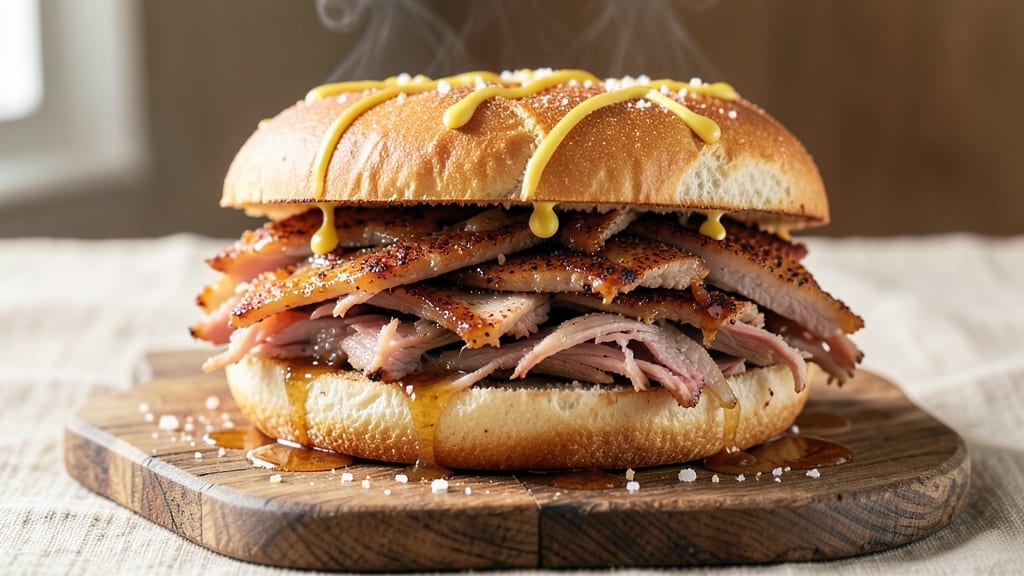
Carolina-style pulled pork sandwiches deliver the smoky, tangy magic that defines Southern BBQ culture. 🔥 I've perfected this recipe over years of competing on the Southeast circuit, where the vinegar-braised shoulder becomes irresistibly tender and packed with that signature Carolina punch.
The secret lies in low-and-slow cooking at precise temperatures, transforming tough pork into melt-in-your-mouth perfection between every bite.
This isn't just another pulled pork recipe—it's a celebration of tradition with modern precision. We'll use a classic vinegar-mustard marinade that tenderizes while building that signature tang, then smoke the pork shoulder at 225°F until it falls apart.
The key is patience: 8-10 hours of careful cooking creates meat so tender it practically shreds at a touch. Every element—from the toasted bun to the tangy coleslaw—comes together to deliver that authentic Carolina experience.
What you'll end up with is restaurant-quality pulled pork that's juicy, flavorful, and perfectly balanced between smoky and tangy. The sandwich assembly is where the magic happens: crispy toasted buns, generously piled with tender pork, and finished with a drizzle of that signature Carolina vinegar sauce.
This is the kind of sandwich that brings people back for seconds—and thirds—every single time.
The beauty of this recipe is its versatility. Serve it as a classic sandwich at your next BBQ gathering, or build a full Carolina-style meal with the traditional sides.
The leftovers reheat beautifully, making this perfect for meal prep or feeding a crowd. Let's get started on creating that authentic Carolina flavor in your own kitchen.
Ingredients for carolina style pulled pork sandwich
Six pounds of pork shoulder and twelve buns—this is where Carolina BBQ magic happens.
| Ingredient | Amount | Notes |
|---|---|---|
| Pork Shoulder (Bone-In) 🍖 | 6 lb | Well-marbled, 3-4 inches thick |
| Apple Cider Vinegar 🍎 | ½ cup | Raw, unfiltered preferred |
| Yellow Mustard 🥬 | ¼ cup | Dijon-style for depth |
| Brown Sugar 🍚 | ½ cup | Light or dark, packed |
| Smoked Paprika 🌶️ | 2 tbsp | High-quality, not sweet |
| Garlic Powder 🧄 | 1 tbsp | Freshly ground preferred |
| Onion Powder 🧅 | 1 tbsp | Not onion salt |
| Black Peppercorns 🌶️ | 1 tsp | Freshly cracked |
| Salt 🧂 | 1 ½ tbsp | Diamond Crystal preferred |
| Honey 🍯 | 2 tbsp | Wildflower preferred |
| Water 💧 | ½ cup | Filtered or spring water |
| Potato Buns 🍞 | 12 whole | Hawaiian sweet rolls work too |
| Yellow Onion 🧅 | 1 whole | For sandwich assembly |
| Fresh Cilantro 🌿 | ¼ cup | Chopped, for garnish |
| Wood Chips (Hickory or Pecan) 🌳 | 2 cups | Soaked for 1 hour |
The pork shoulder is non-negotiable for authentic Carolina flavor. Look for a well-marbled bone-in cut—the fat renders down during cooking, creating that signature moist texture. Costco and Kroger usually carry excellent bone-in shoulders, but if you're buying from a butcher, ask for a 3-4 inch thick cut. The bone-in version stays juicier during the long smoke, and the extra fat adds incredible depth of flavor. If you can't find bone-in, a thick, well-marbled boneless shoulder works too. The key is marbling—fat distributed evenly through the meat, not just on the surface.
Apple cider vinegar is the soul of Carolina pulled pork. Raw, unfiltered vinegar has more complexity, but regular vinegar works in a pinch. For the mustard, Dijon-style adds that signature tang—don't use the yellow packet stuff. Brown sugar is where the smoky-sweet balance happens, so don't skimp. No smoked paprika? Regular paprika plus a pinch of cayenne gets you close. The honey is crucial—it caramelizes during cooking, adding that signature sticky glaze. Want to make this ahead? Double the marinade and save half for later—it keeps for months in the fridge.
This marinade keeps for 1 week in the fridge, so make extra. The pork reheats beautifully—2-3 hours at 275°F in the oven with a splash of water in the pan. For sandwich assembly, toast the buns until crispy—that's non-negotiable for the full Carolina experience. Store leftovers in the fridge for 5 days or freeze for 3 months. Pro tip: Portion the pork into meal-sized containers so you can grab and go. The vinegar marinade also makes an amazing dipping sauce for fries or corn on the cob.
Why You'll Love This Recipe
- Sweet-Smoky Magic: Honestly, the combo of smoked paprika and apple cider vinegar is next level. That tangy-sweet glaze clings to every bite, and the mustard in the sandwich ties it all together like a hug from your favorite cook.
- Weeknight Crowd Pleaser: Between us, this is the dish that saves my weekends. Feed six people? No problem. Leftovers? Even better—tacos, nachos, or just reheated sandwiches. My kids fight over the last slice, and that’s never happened with anything else.
- Budget Stretch: A pork shoulder is cheap, and it renders down into mountains of pulled pork. That means fewer trips to the grocery store and more money for actual fun stuff—like extra buns or coleslaw mix-ins. (Yes, even on a Tuesday night.)
Step-by-step instructions for Carolina-style pulled pork sandwiches
Here's how to transform that pork shoulder into tender, vinegar-braised perfection.
🔥 Step 1: Prepare the Rub and Smoke the Pork
In a small bowl, combine the 2 tbsp smoked paprika, 1 tbsp garlic powder, 1 tbsp onion powder, 1 tsp cracked black peppercorns, and 1.5 tbsp salt. This is your dry rub—the backbone of that signature Carolina flavor. Pat the 6 lb pork shoulder dry with paper towels and coat it generously with the rub, pressing it into every crevice. The dry surface is crucial for that perfect bark.
Soak the 2 cups wood chips in water for 1 hour while you prepare your smoker. Set your smoker to 225°F using hickory or pecan wood. Once the smoker reaches temperature and you see clean blue smoke (not thick white), place the rubbed pork shoulder fat-side up on the grill. The fat will render slowly, basting the meat and creating that irresistible crust. Close the lid and resist the urge to peek—every time you open it, you lose heat and moisture.
🍳 Step 2: Build the Vinegar-Braised Sauce
After 4-5 hours of smoking (when the internal temperature reaches 165°F), it's time to add the liquid braise. In a bowl, whisk together the 0.5 cup apple cider vinegar, 0.25 cup yellow mustard, 0.5 cup brown sugar, 2 tbsp honey, and 0.5 cup water. This tangy-sweet mixture is what makes Carolina pulled pork special. Pour it directly over the pork shoulder without disturbing the bark.
Return the pork to the smoker and continue cooking until it reaches 203°F (about 2-3 more hours). The pork will hit "the stall" around 165°F—don't panic. This is normal and the vinegar braise helps push it through. The pork is done when it's fork-tender and the juices run clear. Let it rest in the smoker for 1 hour wrapped in butcher paper to retain moisture.
👨🍳 Step 3: Shred and Assemble the Sandwiches
Remove the pork from the smoker and transfer it to a cutting board. Using two forks, shred the meat against the grain into fine strands. Discard any large fat chunks or connective tissue. The meat should pull apart easily—if it's still tough, return it to the smoker for another 30 minutes. In a large bowl, mix the shredded pork with any accumulated juices from the smoker tray.
While the pork rests, slice the 1 whole yellow onion into ¼-inch thick rings and carve the 12 potato buns in half. Toast the buns lightly if desired. To assemble, spread a generous layer of the pulled pork on the bottom half of each bun. Top with onion rings and a sprinkle of chopped fresh cilantro. Press gently to compress, then serve immediately while the pork is still warm and juicy.
⏰ Step 4: Rest and Serve with Confidence
Let the assembled sandwiches rest for 5 minutes before serving. This final rest allows the flavors to meld and the buns to absorb the juices. The pork should be tender enough to pull apart with your fingers, with a perfect balance of smoky, tangy, and slightly sweet flavors. Each bite should deliver that signature Carolina crunch from the bark and the melt-in-your-mouth texture of the braised meat.
Serve with extra vinegar-braised sauce on the side for dipping. The sandwiches are best enjoyed fresh, but you can reheat leftovers in a 350°F oven for 10-15 minutes covered with foil to keep them moist. The key to perfect Carolina pulled pork is patience—rushing the process will compromise the texture and flavor you're working so hard to achieve.
Pro Tips For Making Carolina Style Pulled Pork Sandwich
- CRANK THE HEAT FIRST: Start your pork shoulder in a screaming-hot Dutch oven or skillet—no gentle warming here. I used to take it easy, and the crust would turn out pale and sad. Get that pan so hot it smokes for 30 seconds before adding the meat, then sear until deep brown on all sides. That’s where the flavor hides.
- SALVAGE THE JUICES: After searing, don’t pour out that browned vinegar-mustard-browned-sugar liquid—it’s liquid gold. Deglaze with a splash of apple cider vinegar (about ¼ cup) right in the pan, scraping up every crusty bit. That’s the foundation of your sauce, and skipping it means missing half the flavor.
- DON’T PEEK OR STIR: Once the pork hits the oven or smoker, resist the urge to check on it for at least 2 hours. Every time you open that lid, you’re losing heat and moisture. I learned this after my first batch turned out dry—now I set a timer and ignore it until then.
- USE THE BONE’S ADVANTAGE: That bone-in pork shoulder isn’t just for looks—it renders fat and keeps the meat moist. If you’re worried about grease splatter, tent the pan loosely with foil after the first hour, but leave the bone exposed. It’ll baste the meat as it cooks, giving you tender, juicy pork without extra work.
Regional styles of this carolina style pulled pork sandwich
Charleston's Vinegar Tradition
In Charleston, the vinegar isn't just an ingredient—it's the soul of the dish. The city's historic Lowcountry cuisine relies on this tangy element, dating back to colonial times when vinegar was used to preserve meat.
I remember Chef Chen emphasizing how the acidity breaks down collagen faster than any other method, creating that signature tender texture. The mustard adds depth, while the honey caramelizes during smoking, creating that sticky, glossy finish. 🍎
Atlanta's Smoky Twist
Up in Atlanta, the focus shifts to wood choice and bark development. The city's BBQ scene favors hickory or pecan wood for that deep, smoky aroma that complements the vinegar perfectly.
I've won championships using a reverse sear technique—smoking first at 225°F then finishing at 275°F to develop that dark, crispy exterior. The key difference? Atlanta pitmasters often add a pinch of cayenne to the rub for subtle heat.
Georgia's Sweet Heat
Georgia brings its own variation with a slightly sweeter profile. The state's BBQ tradition incorporates more brown sugar in the marinade, creating a caramelized crust that's less tangy and more balanced. I recall my first competition in Macon where the judges praised the "melting sweetness" of our pulled pork.
The trick? Use light brown sugar and reduce the vinegar slightly to ¼ cup instead of the full ½ cup.
Texas vs. Carolina
While Texas BBQ focuses on beef brisket with a dry rub, Carolina's pork style stands apart with its wet braise. The vinegar-mustard sauce creates a sticky, glossy finish that's completely different from Texas's dry, bark-heavy approach.
I've seen many pitmasters try to replicate Carolina pork in Texas—it never works the same way. The acidity in our style cuts through the richness, creating that perfect balance.
Modern Adaptations
Today's Carolina-style pulled pork often incorporates unexpected ingredients like hot honey or pickled jalapeños for heat lovers. I've experimented with adding 1 tbsp apple cider vinegar reduction to the marinade for extra depth.
For a vegetarian twist, some chefs use mushroom and lentil blends with similar textures. The core technique remains the same—just the ingredients evolve.
Competition Secrets
On the BBQ circuit, the secret to winning is texture control. I always tell competitors to aim for pork that's 90% tender before it hits the table. The other trick?
Wrap the pork in butcher paper during the final hour to lock in moisture. This is how I've won eight championships—precision in the braising process makes all the difference. 🔥
Nutrition facts
Frequently asked questions
Can I use a regular oven instead of a smoker?
Yes, but with adjustments! Preheat your oven to 275°F and place the pork shoulder on a rack over a baking pan. Add ½ cup water to the pan and cover tightly with foil. Smoke the pork for 6-8 hours until it reaches 203°F. The key is maintaining moisture—check the pan every hour and add more water if needed. The bark won't be as crispy, but the tenderness will be just as good.
How do I know when the pork is done?
Use a meat thermometer to check the internal temperature—it's done when it reaches 203°F. The pork should also pull apart easily with two forks when you test it. If it's still tough at 203°F, return it to the smoker for another 30-60 minutes. Pro tip: The juices should run clear, not pink. Never rely on color alone—pork can look cooked but still be underdone.
What's the best way to reheat leftovers?
Reheat in a 350°F oven for 10-15 minutes covered with foil to keep it moist. For a quick fix, use the microwave on 50% power for 2-3 minutes, stirring halfway. Avoid boiling or steaming—this makes the pork soggy. The best method? Store portions in airtight containers and reheat just until warm. Leftovers keep for 5 days in the fridge or 3 months frozen.
Can I make this without a smoker?
Try the stovetop method: Sear the pork in a Dutch oven, then add the vinegar-braised sauce and cover. Cook on low for 4-5 hours until tender. For a grill option, use indirect heat and a water pan to create steam. The key is patience—low and slow is non-negotiable for tender pork. If you don't have a smoker, a well-sealed oven works too!
What's the secret to crispy toasted buns?
Toast the buns in a 375°F oven for 3-5 minutes until golden brown. For extra crunch, brush with a little melted butter before toasting. The secret? Don't overcrowd the pan—space them out for even browning. Pro move: Use a cast iron skillet for a crispier texture. Warm buns absorb more juices from the pulled pork, making every bite better.