
Sauces & Condiments
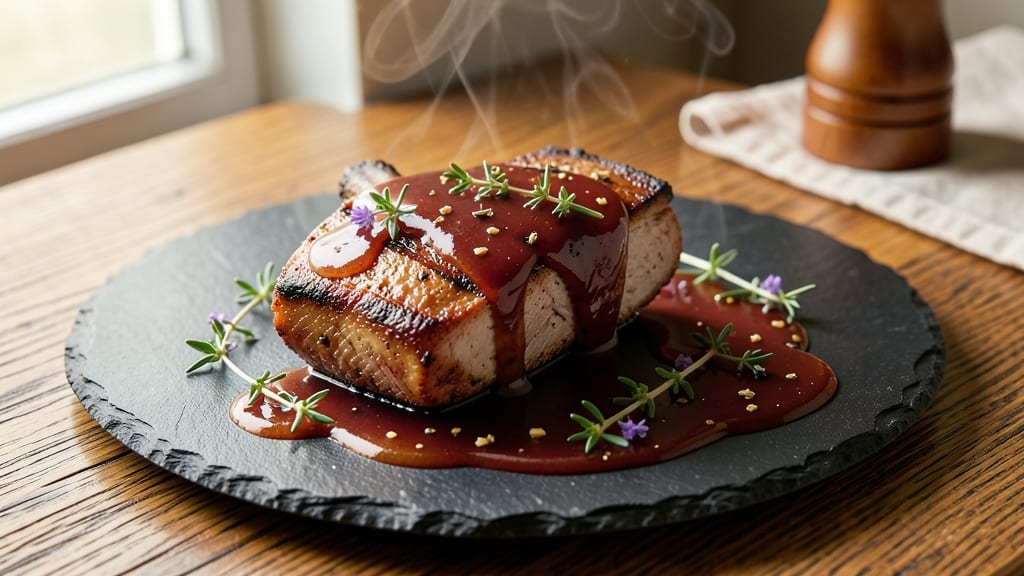
This Carrabba's pork chop marsala sauce recipe delivers restaurant-quality depth with just five simple ingredients and 30 minutes of hands-on time. The secret lies in proper deglazing and reduction—transforming Marsala wine into a rich, velvety sauce that clings perfectly to pork chops.
I've replicated the signature balance of sweet, tangy, and savory notes that make this sauce so irresistible.
The process begins with browning the pork chops for maximum flavor development, then deglazing the pan with Marsala wine to capture every caramelized bit. A blend of beef broth and butter creates a silky base that thickens beautifully as it reduces, while fresh thyme and garlic add aromatic complexity.
What you'll end up with is a glossy, wine-infused sauce that's rich yet balanced—never overpowering.
This sauce works equally well with pan-seared pork chops or grilled versions, elevating them from ordinary to extraordinary. The deep red color and velvety texture come together through careful reduction, ensuring each spoonful delivers that perfect Carrabba's-inspired flavor.
It's the kind of sauce that makes homemade meals feel like a night out.
Store leftovers in the refrigerator for up to 5 days or freeze for 3 months—it reheats beautifully and tastes even better the next day. The sauce's versatility means you can use it for other proteins too, like chicken or beef. Let's create this restaurant-quality sauce at home!
Ingredients for carrabba's pork chop marsala sauce
Five ingredients transform simple Marsala wine into restaurant-worthy pork chop sauce.
| Ingredient | Amount | Notes |
|---|---|---|
| Dry Marsala Wine 🍷 | ½ cup | Bold, dry variety preferred |
| Beef Broth 🥄 | ½ cup | Low-sodium preferred |
| Unsalted Butter 🧈 | 2 tbsp | Cold, cubed for best texture |
| Fresh Thyme Leaves 🌿 | ¼ cup | Or 1 tbsp dried thyme |
| Garlic Cloves 🧄 | 2 cloves | Minced, not powdered |
| All-Purpose Flour 🌾 | 1 tbsp | For thickening |
| Salt 🧂 | ½ tsp | Kosher or sea salt |
| Black Pepper 🌶️ | ¼ tsp | Freshly ground preferred |
The Marsala wine is the star—dry, bold varieties like Inzo or Antica Formula work best. Trader Joe's or Total Wine carry great options, but any dry red table wine in a pinch (just add 1 tsp sugar). Fresh thyme is ideal, but dried works at one-third the amount. I always grab extra thyme because it's so easy to overlook. For the beef broth, low-sodium is key—you'll be adding salt later, and you don't want to overdo it.
No Marsala wine? Dry red wine plus 1 tsp sugar mimics the depth. Fresh thyme? Dried oregano at half the amount gets you close. The butter needs to be cold—take it out of the fridge 10 minutes before use so it's soft but not melted. For the garlic, mincing it fresh (not using powder) makes all the difference. The flour is just to thicken—don't skip it, but don't overmix either. And trust me, the black pepper should be freshly ground if you've got it.
This sauce tastes even better the next day—store it in an airtight container in the fridge for up to 5 days. For freezing, portion into ice cube trays first, then transfer to a bag for up to 3 months. The sauce thickens as it cools, so if it's too stiff, just warm it gently with a splash of broth or water. Leftovers reheat beautifully—perfect for tossing with pasta or drizzling over grilled chicken.
Why You'll Love This Recipe
- One-Pot Magic: I swear by this recipe because it’s all in one pan—no chopping boards, no extra dishes. Just sear the pork, deglaze with Marsala, and let the wine and thyme work their magic while you stir. (Yes, even on a Tuesday night.)
- Marsala Magic: That first sip of reduced Marsala wine cutting through the butter? It’s like a little Italian hug for your taste buds. The garlic and thyme turn this from a simple sauce into something that tastes like it belongs in a restaurant.
- Leftovers Reimagined: Use the extra sauce on pasta, roasted veggies, or even mashed potatoes the next day. I’ve even drizzled it over grilled chicken—it’s the kind of flavor that doesn’t quit.
- Budget-Friendly Luxury: Marsala wine might sound fancy, but a bottle goes a long way here. A little goes far, and the beef broth stretches it even more. It’s restaurant-quality flavor without the price tag. (Here’s what sold me—it feels special, but the grocery bill doesn’t scream.)
Step-by-step instructions for Carrabba's pork chop Marsala sauce
Here's how to make that signature restaurant-style Marsala sauce at home.
Build the Flavor Base in Butter
Melt the 2 tbsp unsalted butter in a medium saucepan over medium heat. Once the butter has fully melted and begins to foam, add the 2 cloves minced garlic cloves and 0.25 cup fresh thyme leaves. Cook for 1-2 minutes until the garlic becomes fragrant and just starts to turn golden—this is when you'll smell that wonderful aromatic punch developing.
Watch the pan carefully here. Garlic burns quickly, so keep the heat at a steady medium. If the thyme leaves start to darken too much, reduce the heat slightly. You want the garlic to be golden but not crispy, and the thyme should just wilt slightly while releasing its earthy aroma into the butter.
Add Flour and Toast for Depth
Immediately after removing the pan from heat, sprinkle in the 1 tbsp all-purpose flour and whisk vigorously to combine. Return the pan to medium-low heat and cook for 1-2 minutes, stirring constantly, until the flour turns a light golden color. This process, called "toasting the flour," removes the raw taste and adds a nutty depth to your sauce.
This step is crucial for thickening the sauce properly. If you skip it, your Marsala will be too thin. Keep stirring to prevent the flour from clumping. You'll know it's ready when the mixture smells slightly toasty and looks like a fine, even powder with no flour streaks remaining.
Deglaze with Marsala Wine
Pour in the 0.5 cup dry Marsala wine and scrape up any browned bits from the bottom of the pan with a wooden spoon. These browned bits, called fond, are packed with flavor. Return the pan to medium heat and let the wine simmer for 3-4 minutes until it reduces by about half and becomes slightly syrupy.
Here's where the magic happens. The alcohol in the Marsala will cook off, leaving behind concentrated wine flavor. You'll notice the sauce darken and thicken slightly. If you taste it now, you'll get a preview of the rich, wine-forward flavor you're building. Don't rush this step—proper reduction is what gives restaurant-quality Marsala its depth.
Incorporate Broth and Simmer
Add the 0.5 cup beef broth, 0.5 tsp salt, and 0.25 tsp black pepper to the pan. Stir well to combine all ingredients. Bring the mixture to a gentle simmer, then reduce the heat to low and let it cook uncovered for 8-10 minutes, stirring occasionally. The sauce should thicken noticeably as it simmers, coating the back of a spoon.
This is where patience pays off. The sauce should reduce until it's thick enough to coat the back of a spoon but still remain smooth and glossy. If it thickens too much before reaching this point, you can add a splash of water or broth to adjust the consistency. Taste and adjust seasoning as needed—you might need a bit more salt or pepper to balance the wine's acidity.
Finish and Strain for Smoothness
Once the sauce reaches your desired consistency, remove it from heat. For a perfectly smooth sauce, strain it through a fine-mesh sieve into a clean saucepan. This removes any thyme stems or garlic pieces, giving you that restaurant-quality velvety texture. Return the sauce to low heat and let it warm through for 1-2 minutes before serving.
The finished sauce should be rich, glossy, and have a deep wine-red color. It should coat the back of a spoon but still be pourable. If you're serving it immediately with pork chops, you can keep it warm in the saucepan. For best results, serve it over the pork chops and garnish with additional fresh thyme leaves for a pop of color and fresh aroma.
Pro Tips For Making Carrabba'S Pork Chop Marsala Sauce
- DEGLAZE IMMEDIATELY: As soon as you pull those pork chops off the pan, grab that Marsala wine and start scraping—every last bit of browned bits. I used to let the pan sit, and half the flavor would vanish down the drain. A wooden spoon works best, and don’t rush; take 30 seconds to get it all.
- SALT THE BROTH: The beef broth needs seasoning before it hits the pan—don’t wait until the end. Add a pinch of salt (and a crack of black pepper) while heating it, or the sauce will taste flat. Trust me, the butter and wine will balance it, but this is the thing that matters most.
- LOW AND SLOW: After adding the Marsala, let it simmer on actual low heat—no medium, no rushing. If you crank it up, the alcohol burns off too fast, leaving a harsh, bitter taste. Five minutes on low gives the wine time to mellow and marry with the thyme and garlic.
- GARLIC FIRST: Smash those garlic cloves with the flat side of your knife before mincing—it releases more flavor. Add them to the pan before the Marsala, and let them sizzle for 10 seconds until fragrant. I was skeptical until I tried it; the difference is noticeable.
Serving suggestions for this dish
Pork Chop Pairings
This Marsala sauce is designed to complement perfectly seared pork chops, but it also works beautifully with bone-in or boneless cuts—just adjust cooking time accordingly. For a complete meal, pair with roasted garlic mashed potatoes or creamy polenta to soak up every last drop of sauce.
I love serving it with sautéed green beans or asparagus for a balanced, restaurant-quality plate. 🌿
Wine Pairings
The rich, wine-forward flavors of Marsala sauce call for complementary wine selections. A dry Chianti or Cabernet Sauvignon enhances the dish's depth without overpowering it. For white wine lovers, a Chardonnay with subtle oak notes works surprisingly well.
I always keep a bottle of Pinot Noir on hand—its lighter body lets the sauce's flavors shine. 🍷
Bread Service
No Marsala dinner is complete without crusty bread for dipping! Warm Italian breadsticks or a fresh baguette are perfect choices. For extra flair, brush the bread with garlic-infused olive oil before baking. I like to serve rosemary focaccia alongside the pork chops—its herby notes complement the sauce beautifully. 🥖
Vegetable Sides
Bright, fresh vegetables cut through the sauce's richness. Roasted Brussels sprouts with a balsamic glaze or sautéed spinach with garlic add vibrant contrast. For a heartier option, try creamy parmesan risotto—the buttery texture pairs wonderfully with the wine sauce.
I often roast carrots with thyme to echo the sauce's aromatic herbs. 🥕
Make-Ahead Tips
Prepare the sauce 1-2 days ahead for even deeper flavor development. Store it in an airtight container in the refrigerator, then reheat gently on the stovetop with a splash of broth.
For serving, keep the sauce warm in a slow cooker on low heat. I like to reheat it with a pat of butter to restore its silky texture. 💫
Garnish Ideas
Finish your dish with fresh parsley or thyme sprigs for a pop of color and brightness. A sprinkle of grated parmesan cheese adds umami depth, while a drizzle of truffle oil elevates the sauce to gourmet status.
For a sweet contrast, try a pinch of flaky sea salt—it balances the wine's acidity beautifully. 🧂
Nutrition facts
Frequently asked questions
Can I substitute Marsala wine with regular red wine?
Yes, but you'll need to adjust for sweetness. Use dry red wine like Cabernet Sauvignon and add 1 teaspoon sugar per ½ cup wine to mimic Marsala's balance of sweet and tart. The alcohol content will still cook off properly, but the flavor profile will be slightly less complex.
Why did my sauce turn out too thin?
This usually happens from one of three issues: insufficient reduction time, too much liquid added, or not toasting the flour properly. For the best consistency, simmer uncovered on low heat for the full 8-10 minutes and ensure your flour develops a light golden color before adding liquids. If needed, thicken with a cornstarch slurry (1 tbsp cornstarch + 1 tbsp cold water).
How do I prevent the sauce from being too alcoholic-tasting?
The alcohol cooks off during the 3-4 minute reduction phase, but if your sauce still tastes sharp, you likely rushed this step. Simmer uncovered until the wine reduces by at least half and you smell no alcohol fumes. For extra insurance, add 1 teaspoon sugar at the end to balance any lingering acidity. Patience is key here!
Can I make this sauce ahead of time?
This sauce actually tastes better the next day. Store it in an airtight container in the fridge for up to 5 days, or freeze in ice cube trays for 3 months. When reheating, add a splash of beef broth to restore its silky texture. The flavors deepen as it rests, making it perfect for meal prep.
What's the secret to getting that perfect restaurant-style color?
The deep red hue comes from proper reduction and the fond (browned bits) from the pan. Always deglaze with Marsala wine after searing pork chops, scraping up every bit from the bottom. For extra richness, add 1 teaspoon tomato paste with the broth. The longer you reduce (up to 10 minutes on low heat), the more intense the color becomes.