
Main Courses
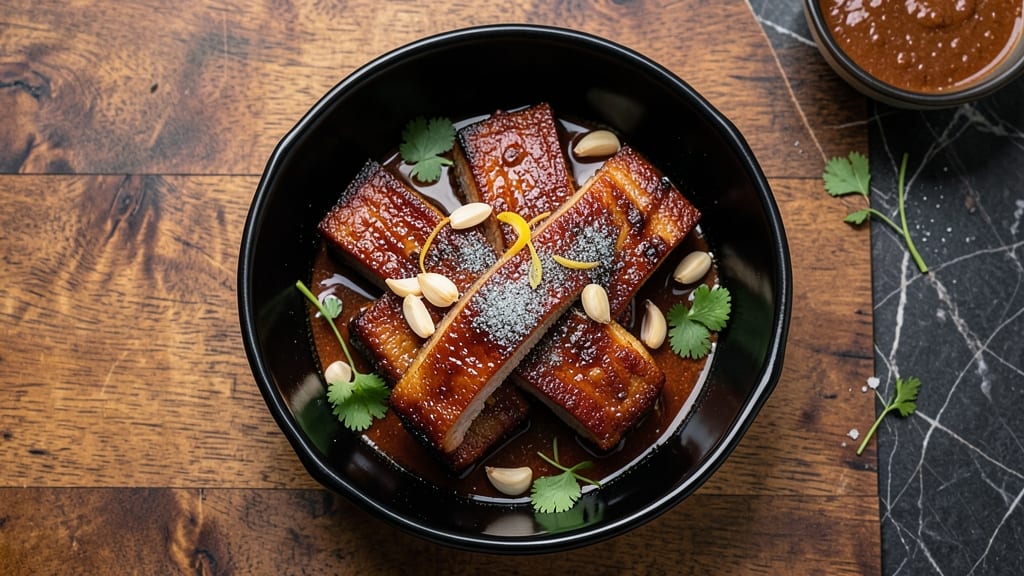
This char siu pork spare ribs recipe delivers the perfect balance of smoky aroma and tender meat—just like the Cantonese BBQ stalls I grew up admiring.
The secret lies in a five-spice marinade that transforms tough ribs into melt-in-your-mouth perfection, then a tamarind glaze that caramelizes into a sticky, glossy finish. I've perfected this technique over years of cooking for Southern crowds, where pork is king and tradition meets bold flavor.
The process starts with a 24-hour marinade—a blend of hoisin, honey, and aromatic spices—that penetrates every fiber of the meat. Then, roasting at 325°F ensures even cooking while basting with the glaze creates that signature glossy, crackling crust.
Unlike quick grilled versions, this method yields ribs that stay juicy and tender with each bite, not dry or chewy. The result? A dish that feels both nostalgic and refined, perfect for family gatherings or special occasions.
What makes this recipe stand out is the dual texture: crispy edges from the glaze contrast beautifully with the fall-apart tenderness of the meat. The tamarind adds a subtle tang that cuts through the richness, while the five-spice blend delivers warmth and depth.
Serve with steamed jasmine rice and quick-pickled vegetables to balance the richness, or wrap the ribs in buttery mantou buns for a handheld feast. Every bite is a celebration of Cantonese tradition with a Southern twist.
This isn't just another pork recipe—it's a restaurant-quality dish you can master at home. The key is patience: letting the marinade work its magic and basting the ribs repeatedly for that glossy, caramelized finish.
Trust me, once you try this version, you'll never settle for store-bought char siu again. Let's get cooking—your taste buds (and dinner guests) will thank you.
Ingredients for char siu pork spare ribs
Six pounds of meaty ribs and bold Cantonese flavors—this is your ticket to restaurant-quality char siu.
| Ingredient | Amount | Notes |
|---|---|---|
| Pork Spare Ribs 🍖 | 4 lb | Bone-in, meaty sections preferred |
| Hoisin Sauce 🍶 | ½ cup | Store-bought or homemade |
| Raw Honey 🍯 | ½ cup | For natural sweetness and gloss |
| Tamarind Paste 🍈 | ¼ cup | Thick, block-style preferred |
| Five-Spice Powder 🌶️ | 2 tbsp | Authentic Chinese blend |
| Garlic Cloves 🧄 | 8 cloves | Minced for marinade |
| Ginger Root 🌿 | 2 tbsp | Freshly grated, aromatic |
| Sesame Oil 🫒 | 1 tbsp | Toasted for nutty depth |
| Light Soy Sauce 🥫 | ¼ cup | For umami balance |
| Brown Sugar 🍚 | ¼ cup | Packed, for caramelization |
| Red Fermented Beans 🌶️ | ¼ cup | Crushed, optional for depth |
| Green Onions 🧅 | 4 whole | Sliced, for garnish |
| Sesame Seeds 🌰 | 1 tbsp | Toasted, for crunch |
The ribs are non-negotiable here—look for meaty, bone-in spare ribs with good marbling. Costco or Whole Foods carry the best cuts, but any butcher worth their salt will have them. Trim excess fat for a cleaner finish, but leave some for flavor. Five-spice powder is the soul of this dish; Penzeys or Asian markets stock the authentic blends. Tamarind paste? The block kind from Trader Joe's is perfect—just scrape out what you need and store the rest sealed. Fresh ginger and garlic? Always better than powdered—no shortcuts here.
No hoisin sauce? Mix 3 tbsp soy sauce, 2 tbsp brown sugar, and 1 tbsp vinegar for a quick stand-in. Short on tamarind? Substitute 1 tbsp lime juice plus 1 tbsp brown sugar, though it won’t be identical. The red fermented beans add depth but can be omitted if you’re in a hurry—just boost the soy sauce by 1 tbsp instead. For extra gloss, brush the ribs with egg whites before glazing (trust me on this). And if your sesame oil smells off? Toss it—rancid oil ruins everything. Toast your sesame seeds in a dry pan for 30 seconds until fragrant; that’s the difference between bland and wow.
Marinate the ribs 24 hours—no cutting corners here. Use a ziplock bag or glass container, pressing the marinade into every crevice. Store uncovered in the fridge for best aroma. The glaze keeps for 5 days in the fridge, so double it if you’re feeding a crowd. Reheat ribs at 300°F until warm through—never microwave, or the crust will turn soggy. Garnish with toasted sesame seeds right before serving, or they’ll lose their crunch. Leftovers? Slice thinly over rice for 3 days—after that, freeze portions for up to 3 months.
Why You'll Love This Recipe
- One-Pan Magic: Honestly, I swear by this—just ribs, hoisin, and honey on a sheet pan, then broil. No marinating overnight, no fussing with sauces that separate. The five-spice powder does all the work while you’re chopping veggies for the side.
- Sweet-Savory Balance: That tamarind paste? It’s the secret—cuts through the richness of the hoisin and honey, giving it this perfect tangy bite. The ribs stay sticky, glossy, and caramelized without tasting dry or overly sweet.
- Leftovers That Last: Between us, this recipe makes way more than you’ll eat in one sitting. The ribs reheat beautifully—throw them in a skillet with a splash of water, and they’re just as good the next day. (Yes, even on a Tuesday night.)
- Budget Crowd-Pleaser: Pork spare ribs are cheaper than baby back, and this method uses less sauce than most char siu recipes. Feed four people for the price of two fancy dinners, and they’ll all ask for seconds. My daughter picks out the bones first—proof it’s a winner.
Step-by-step instructions for char siu pork spare ribs
Here's how to transform tough spare ribs into melt-in-your-mouth char siu with a glossy caramelized crust.
Prepare the Signature Marinade
In a large bowl, whisk together the 0.5 cup hoisin sauce, 0.5 cup raw honey, 0.25 cup tamarind paste, 2 tbsp five-spice powder, 0.25 cup light soy sauce, 0.25 cup brown sugar, 1 tbsp sesame oil, 8 cloves minced garlic, and 2 tbsp grated ginger root. The mixture should be thick but pourable - if too stiff, add 1 tablespoon water at a time until smooth.
I like to press the red fermented beans against the side of the bowl to release their deep umami oils before adding them to the marinade. This step adds complexity that store-bought versions often miss. The marinade should smell richly aromatic with notes of star anise, cinnamon, and sweet tamarind - that's your flavor promise right there.
Marinate the Ribs Overnight
Pat the 4 lb pork spare ribs completely dry with paper towels - moisture is the enemy of that perfect caramelized crust. Place them in a large resealable bag and pour the marinade over them, massaging it into every crevice. Seal the bag and refrigerate for at least 12 hours, preferably 24 hours. This long marinating time is what transforms tough ribs into tender, flavorful char siu.
Here's the thing - don't skip the overnight marinade. The five-spice powder needs time to penetrate the meat, and the tamarind's acidity works its magic breaking down connective tissues. I find the ribs taste even better after 36 hours, but 24 is the absolute minimum for restaurant-quality results.
Roast Until Caramelized Perfection
Preheat your oven to 375°F and line a large baking sheet with aluminum foil. Remove the ribs from the marinade (reserve the marinade) and arrange them in a single layer on the prepared sheet. Roast for 45 minutes, then brush them generously with the reserved marinade. Return to the oven and roast for another 30 minutes, brushing with marinade every 15 minutes during this time.
You're looking for ribs with a deep mahogany crust that's sticky but not burnt. The internal temperature should reach 195-200°F when measured at the thickest part. This high temperature is crucial - it caramelizes the sugars in the marinade while keeping the meat tender. If the crust starts to darken too quickly, tent the ribs with foil for the last 10 minutes of cooking.
Create the Signature Glaze
While the ribs roast, prepare the finishing glaze by combining the 0.5 cup raw honey with 2 tablespoons water in a small saucepan. Bring to a gentle simmer over medium-low heat and cook for 5-7 minutes until it thickens slightly but remains pourable. The glaze should coat the back of a spoon but still flow freely when drizzled.
Here's where the magic happens: the honey glaze isn't just for sweetness. It creates that signature glossy sheen and helps develop the deep caramelized crust through the Maillard reaction. If you see the glaze getting too thick, add 1 teaspoon water at a time until you reach the perfect consistency - it should look like thick syrup but still be able to be drizzled smoothly.
Glaze and Garnish for Restaurant-Worthy Presentation
Remove the ribs from the oven and immediately brush them generously with the honey glaze, working quickly so the glaze doesn't set. Return them to the oven for 5-7 minutes just to set the glaze and deepen the color. The ribs should now have that signature glossy, caramelized appearance that makes char siu so irresistible.
While still hot, garnish each rack with sliced green onions and sprinkle with 1 tbsp toasted sesame seeds. The contrast of the fresh green onions against the deep caramelized ribs adds both visual appeal and a bright, fresh finish. Serve immediately while the glaze is still warm and sticky - this dish doesn't wait well. Each bite should deliver perfect tenderness with that complex five-spice crust that's both sweet and savory.
Pro Tips For Making Char Siu Pork Spare Ribs
- BLANCH THE RIB BONES FIRST: Skip the guesswork—parboil the ribs for 3-4 minutes before glazing. This loosens connective tissue and makes the tamarind paste cling better, so your sauce doesn’t slide off like it’s on a greased pig. (Yes, even if you’re impatient like me.)
- USE A THICK HOISIN MIX: Thin hoisin with honey after cooking—not before. Start with 2 parts hoisin to 1 part honey, then adjust while brushing. Too much liquid upfront = soggy ribs. (I learned this the hard way after a sticky, sad batch.)
- SEAR THE RIB FACES DOWN: Lay the ribs meat-side down in a hot pan for 2 minutes before flipping. This renders fat first, locks in moisture, and gives you that caramelized crust everyone craves. (Your future self will thank you.)
- STORE FIVE-SPICE DRY: Toast the five-spice powder in a dry pan for 30 seconds until fragrant—before mixing it into the glaze. This wakes up the flavors and cuts through the sweetness. (Sounds weird, but it works: trust the process.)
Make-ahead tips for char siu pork spare ribs
Marinade Prep Ahead
Make the marinade 3 days in advance and store it in an airtight container in the fridge. The flavors deepen over time, and the tamarind's acidity works more effectively on the meat. I like to double the batch—it keeps for 5 days and makes reheating leftovers easier. Just
Rib Prep Timeline
Pat the ribs completely dry the night before you plan to cook them. This step is crucial for that perfect caramelized crust. Store them uncovered in the fridge—it helps the marinade penetrate deeper. I usually prep everything the night before: marinate the ribs, make the glaze, and even set out my baking sheets. This way, I can focus on cooking without stress. ⏰
Glaze Storage
The honey glaze can be made up to 3 days ahead and stored in a clean jar in the fridge. Reheat it gently in a small saucepan over low heat until it's pourable again—just warm it through, no need to bring it to a boil.
I find this especially helpful when feeding a crowd; I'll make extra glaze and keep it ready for basting during the roasting process. 🍯
Rib Reheating
If you have leftovers (unlikely, but possible!), reheat sliced ribs in a skillet over medium heat for 5-7 minutes until warmed through. Avoid the microwave—it turns the crust soggy. For whole ribs, wrap them in foil and reheat at 300°F for 15-20 minutes until the internal temperature reaches 165°F.
The glaze might need a quick reheat in the microwave for 10 seconds to restore its gloss. 🔥
Freezing for Later
For long-term storage, freeze cooked ribs in a single layer on a tray first—this prevents them from sticking. Once frozen solid, transfer them to a freezer bag with all the air squeezed out. They'll keep for up to 3 months.
To reheat, thaw overnight in the fridge, then follow the reheating instructions above. The texture stays tender, though the crust might lose some of its crispness. Still delicious, though! ❄️
Make-Ahead Serving
Plan to serve the ribs immediately after glazing—they're best fresh. But if you're prepping ahead for a dinner party, you can marinate and even roast the ribs a day in advance, then store them uncovered at room temperature.
Reheat them in the oven at 325°F for 10 minutes, then glaze and finish under the broiler for 2-3 minutes to restore that glossy sheen. Your guests will never know! 💡
Nutrition facts
Frequently asked questions
Can I use pork shoulder instead of spare ribs for this recipe?
While pork shoulder can work, it won't give you the same tender, fall-apart texture as spare ribs. The bones in spare ribs help break down faster during roasting. If you must use shoulder, cut it into 2-inch cubes and marinate for 36 hours instead of 24. The cooking time will also need adjustment—aim for 225°F for 3-4 hours until fork-tender. The glaze will still work beautifully, but the texture will be slightly different.
How do I get the ribs extra crispy without drying them out?
The secret is in the timing and technique! After roasting, brush the ribs with the honey glaze and place them under a broiler for 2-3 minutes—this creates that crispy crust while keeping the inside juicy. For extra crunch, sprinkle 1 tbsp cornstarch mixed with 1 tsp sugar on the ribs before the final broil. The starch helps create a crispy, caramelized shell without drying the meat. Just watch them closely—they go from perfect to burnt fast!
Can I grill these ribs instead of roasting?
Grilling works beautifully for char siu ribs, especially if you have a charcoal or gas grill. Preheat to medium-high (375°F) and grill the ribs for 20-25 minutes, turning occasionally and basting with marinade. For the final glaze, finish them over direct heat for 5-7 minutes, brushing with honey glaze every 2 minutes. The smoky flavor from the grill adds a delicious depth that complements the sweet-savory profile. Just keep a spray bottle handy to prevent flare-ups from the glaze.
What's the best way to serve these ribs?
Char siu ribs are incredibly versatile! For a classic Cantonese meal, serve them over steamed jasmine rice with quick-pickled vegetables or a simple cucumber salad. For a handheld option, wrap slices in buttery mantou buns with a drizzle of hoisin sauce. Pair with stir-fried bok choy or egg drop soup to balance the richness. Pro tip: Garnish with extra toasted sesame seeds and sliced green onions right before serving to keep everything fresh and vibrant.
Why did my ribs turn out dry?
Dry ribs usually happen from overcooking or not letting the meat rest. Always cook to an internal temp of 195-200°F—this ensures tenderness without drying. After roasting, let the ribs rest for 10-15 minutes before slicing to redistribute juices. If you're concerned about dryness, baste the ribs more frequently with the marinade during cooking. For extra moisture, add 1 tbsp water or broth to the marinade. The honey glaze also helps lock in juices, so don't skip that step!