
Main Courses
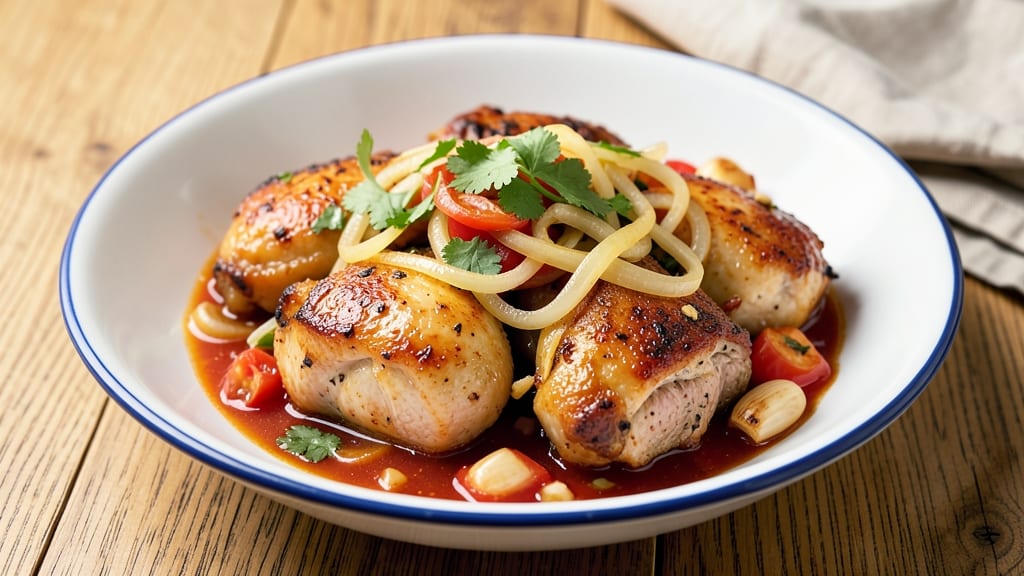
This one-pot Filipino chicken and pork afritada recipe delivers the comforting, tangy-sweet flavors of home with minimal effort—crispy edges on the meat and a rich tomato sauce that simmers into perfection. 🌟 As someone who grew up surrounded by the rich aromas of Filipino cooking, I know how transformative this dish is when made with tender pork and chicken, slow-cooked until fall-apart tender.
The secret lies in browning the meat first, creating that signature crispy texture while building deep flavor in the sauce.
The beauty of afritada is its versatility—traditionally tomato-based, but equally delicious without. I’ve perfected this recipe to balance sweetness, acidity, and umami, using a blend of tomatoes, vinegar, and soy sauce that cuts through the richness of the meat.
The result? A dish that’s hearty enough for a family dinner but simple enough for a weeknight, all in one pot with just 30 minutes of active prep.
What makes this recipe special is how it captures the soul of Filipino comfort food—warm, inviting, and packed with layers of flavor. The meat stays juicy and tender, while the sauce reduces to a glossy, slightly thickened consistency that clings to every bite.
Serve it over steamed rice with pickled vegetables (atchara) for the full experience, or enjoy it as-is for a satisfying meal.
Whether you're recreating a childhood memory or introducing someone to Filipino flavors, this afritada delivers restaurant-quality results at home. The technique is foolproof, and the flavors are unforgettable—just like the meals my family used to share. Let’s get cooking!
Ingredients for chicken and pork afritada filipino
Pantry staples meet Filipino flavors in this one-pot wonder with crispy edges and tender meat.
| Ingredient | Amount | Notes |
|---|---|---|
| Boneless Chicken Thighs 🍗 | 1 ½ lb | Cut into 1-inch pieces |
| Pork Shoulder 🥩 | 1 ½ lb | Cut into 1-inch cubes |
| Yellow Onion 🧅 | 1 whole | Sliced into half-moons |
| Garlic Cloves 🧄 | 6 cloves | Minced finely |
| Canned Tomato Sauce 🍅 | 28 oz | High-quality, no added sugar |
| Canned Crushed Tomatoes 🍅 | 15 oz | San Marzano preferred |
| White Vinegar 💧 | ¼ cup | Distilled preferred |
| Soy Sauce 🍜 | 2 tbsp | Light or regular |
| Brown Sugar 🍚 | 2 tbsp | Packed lightly |
| Bay Leaves 🌿 | 2 whole | Fresh preferred |
| Black Peppercorns 🌶️ | 1 tsp | Freshly cracked |
| Olive Oil 🫒 | 2 tbsp | Extra-virgin preferred |
| Salt 🧂 | 1 ½ tsp | Kosher or sea salt |
| Fresh Green Bell Pepper 🧅 | 1 whole | Sliced into strips |
The meat selection is key here. Pork shoulder gives the best texture—it stays juicy and tender when slow-cooked, while chicken thighs add richness. Cutting both into even 1-inch pieces ensures they cook at the same rate. Trader Joe's and Filipino markets often carry pre-cut pork shoulder, but if you're buying whole, ask the butcher to trim excess fat. For the tomatoes, San Marzano cans are worth the splurge—they're sweeter and less acidic, which balances the tangy vinegar perfectly. I always grab a few extra cans when I see them on sale; they keep for 18-24 months unopened.
No San Marzano tomatoes? Any high-quality crushed tomatoes work—just check the label for no added sugar. Vinegar too strong? Apple cider vinegar at half the amount mellows it out. The bell pepper is optional but adds a nice crunch; red bell peppers work just as well. For the soy sauce, Filipino brands like Silver Swan have a deeper flavor, but regular light soy sauce is fine in a pinch. The brown sugar might seem odd, but it's essential—it balances the acidity and adds that signature Filipino sweetness. Coconut sugar is a great 1:1 substitute if you prefer a less refined option.
This dish tastes even better the next day as the flavors meld. Store leftovers in an airtight container in the fridge for up to 5 days, or freeze portions for 3 months. I like to double the recipe and freeze half—perfect for lazy weeknights. The sauce thickens as it cools, so if it seems too thick after reheating, just add a splash of water or broth. Serve over steamed rice, and trust me, the first bite will transport you straight to a Filipino kitchen.
Why You'll Love This Recipe
- I’ll be real: this is my go-to for meal prep. The sauce clings to the meat, so it reheats beautifully, and the flavors only get better the next day. Pack it in containers, and you’ve got a hearty, satisfying lunch that feels like a restaurant meal.
- One-Pan Magic: Honestly, I swear by this recipe—just brown the chicken and pork, toss in the onions and garlic, then dump in that canned tomato sauce. No fancy layers, no stress, and the flavors meld together like they’ve been simmering for hours.
- Deep Umami Bomb: Between us, the pork shoulder turns incredibly tender while soaking up the tomato sauce, and that garlic? Oh, it caramelizes just enough to give every bite a rich, savory punch. The onions soften into sweet, jammy perfection—no need for fancy techniques, just patience.
- Lunchbox Hero: I’ll be real: this is my go-to for meal prep. The sauce clings to the meat, so it reheats beautifully, and the flavors only get better the next day. Pack it in containers, and you’ve got a hearty, satisfying lunch that feels like a restaurant meal.
Step-by-step instructions for chicken and pork afritada
Here's how to create a rich, tangy Filipino one-pot that delivers crispy meat edges and deep tomato flavor.
🔥 Step 1: Brown the Meat for Maximum Flavor
Heat the 2 tablespoons olive oil in a large Dutch oven over medium-high heat. Working in batches to avoid crowding, add the 1.5 lb boneless chicken thighs cut into 1-inch pieces and the 1.5 lb pork shoulder cut into 1-inch cubes. Let them sear undisturbed for 3-4 minutes until they develop deep golden brown crusts.
This browning step is crucial—it creates the Maillard reaction that gives afritada its deep, caramelized flavor. Stir occasionally, but don't rush it. You want those edges to turn rich brown before moving to the next step. If the meat releases easily from the pan, it's ready to move to a plate temporarily.
🍳 Step 2: Sauté Aromatics for Depth of Flavor
Once all the meat is browned, reduce heat to medium and add the 1 whole yellow onion sliced into half-moons. Cook for 5-6 minutes until softened and just beginning to caramelize. Add the 6 cloves garlic minced finely and the 1 whole fresh green bell pepper sliced into strips, cooking for another 2-3 minutes until fragrant.
Here's where the magic happens—the onions should be translucent with just a hint of color, and the garlic should smell intensely aromatic. If they start to brown too quickly, reduce heat slightly. These aromatics form the flavor base for your sauce, so take your time with this step.
🥘 Step 3: Build the Tangy Tomato Base
Pour in the 28 oz canned tomato sauce and 15 oz canned crushed tomatoes, scraping up any browned bits from the bottom of the pot. Add the 0.25 cup white vinegar, 2 tbsp soy sauce, 2 tbsp brown sugar, 2 whole bay leaves, and 1 tsp black peppercorns. Stir well to combine, then add the 1.5 tsp salt. Bring to a gentle simmer over medium heat.
The vinegar will make the sauce bubble vigorously at first—this is normal. Let it simmer uncovered for 10 minutes to develop the tangy flavor. You'll notice the sauce thicken slightly and the raw tomato smell mellow into something more complex. This is your flavor foundation.
🔥 Step 4: Simmer Until Meat is Tender and Sauce Thickens
Return the browned meat to the pot and stir to coat everything in the sauce. Add enough water to just cover the meat—about 1 cup. Bring to a gentle simmer, then reduce heat to low. Cover partially and let it cook for 1 hour to 1 hour 15 minutes, stirring occasionally, until the meat is fork-tender and the sauce has thickened to a glossy consistency.
Here's the key: you want the meat to be so tender it practically falls apart when pierced with a fork, but still hold its shape. The sauce should coat the back of a spoon and cling to the meat. If it's too thin, uncover and simmer longer—it'll thicken as it reduces. If it's too thick, add a splash of water.
⏰ Step 5: Finish and Rest for Perfect Texture
Once the meat is tender, remove the bay leaves and adjust seasoning if needed. Let the afritada rest for 10 minutes before serving. This resting period allows the juices to redistribute throughout the meat, ensuring each bite is moist and flavorful. The sauce will thicken slightly as it rests—this is perfect for serving.
Serve immediately with steamed rice to soak up that delicious, tangy sauce. The meat should have crispy edges from the initial browning, while the sauce remains silky and clings beautifully to every piece. This one-pot wonder delivers all the comfort of Filipino home cooking with minimal effort.
Pro Tips For Making Chicken And Pork Afritada Filipino
- BROWN THE PORK FIRST: I learned this the hard way—rushing to add everything at once means your pork stays bland. Sear the pork shoulder in chunks until deep golden (about 8-10 minutes), then pull it out. That crust locks in flavor when the tomatoes later simmer.
- SWEAT ONIONS LOW AND SLOW: High heat makes onions bitter, and afritada needs their natural sweetness. Cook the onions on medium-low for 12-15 minutes until translucent but not browned. If they start sticking, add a splash of water—this keeps the base flavor clean for the tomato sauce.
- SKIP THE CROWDED PAN: Packing too much meat at once steams it instead of browning. Work in batches: cook half the chicken and pork first, then set aside before adding the rest. The second batch will sear properly, not just sit in its own juices.
- ACIDIFY THE SAUCE EARLY: Tomato sauce alone can taste flat. After adding the canned tomatoes, stir in 1 tablespoon of vinegar (white or cane) or a splash of lemon juice. This brightens the flavor immediately—no waiting for long simmers to develop tang. (Yes, even if you’re impatient like me.)
Troubleshooting great chicken and pork afritada filipino
Meat Too Dry?
If your meat ends up dry, you likely didn’t brown it properly or simmered too long. I’ve seen this happen when people rush the browning step—those crispy edges are non-negotiable! Brown each batch until deeply golden (3-4 minutes undisturbed) and don’t overcrowd the pan.
For the pork, use pork shoulder (not lean cuts) as it stays juicy during long cooking. If it’s still dry, add 2-3 tbsp water or broth at the end and simmer uncovered for 5 minutes to reabsorb moisture. 💧
Sauce Too Thin?
The sauce should coat the back of a spoon but not be gluey. If it’s too thin, you probably didn’t simmer long enough. Uncover the pot and cook on medium-low heat for 10-15 minutes, stirring occasionally, until it thickens.
For extra richness, mash 1-2 bay leaves into the sauce or add 1 tbsp tomato paste to deepen the flavor. Pro tip: San Marzano tomatoes naturally thicken better than generic brands—worth the splurge! ✨
Sauce Too Acidic?
Too much vinegar or cheap tomatoes can make the sauce taste harsh. Balance it by adding 1 tbsp brown sugar or 1 tsp honey to mellow the acidity. If the tomatoes taste bitter, reduce the sauce uncovered for 5 minutes to evaporate excess acid.
For a smoother flavor, blend ½ cup of the sauce and stir it back in. I’ve also used apple cider vinegar at half the amount—it’s milder than white vinegar. 🍯
Meat Not Tender Enough?
If the pork or chicken isn’t falling apart after 1 hour 15 minutes, it’s likely because the cut was too lean or the heat was too high. Switch to low heat and add ½ cup water, then cover and cook for another 30 minutes.
For extra tenderness, braise the meat separately in the sauce for 20 minutes before combining everything. I’ve also had success with pork belly—it’s richer and more forgiving than shoulder. 🥩
Flavor Too Mild?
Afritada should sing with tangy, savory, and slightly sweet notes. If yours tastes bland, boost the umami with 1 extra tbsp soy sauce or ½ tsp fish sauce (Filipino markets carry this). For depth, add 1 tsp smoked paprika or ½ tsp ground coriander.
Don’t forget to taste as you go—adjust seasoning in 5-minute increments until it’s balanced. A splash of calamansi juice (if available) adds a bright citrus kick. 🌶️
Burnt Onions or Garlic?
Overcooking aromatics turns them bitter. Keep heat at medium and stir frequently—onions should soften but not brown, and garlic should sizzle for just 30 seconds. If they burn, remove the burnt bits immediately and start fresh.
For extra flavor without risk, sauté onions until translucent, then add garlic and cook for just 30 seconds before adding tomatoes. 🧅
Nutrition facts
Frequently asked questions
Can I substitute chicken thighs with chicken breast?
I don’t recommend it—the breast meat is leaner and dries out during the long simmering time. If you must use breast, cut it into ½-inch thick pieces and add them only after the pork has cooked for 45 minutes to prevent dryness. For best results, stick with thighs or use a 50/50 mix of thighs and breast.
What makes this afritada different from other Filipino tomato dishes?
The key lies in the crispy meat edges from proper browning and the perfect balance of tangy vinegar, sweet brown sugar, and umami soy sauce. Unlike other tomato-based dishes, afritada uses a mix of tomato sauce and crushed tomatoes for depth, plus the slow simmer creates a sauce that clings beautifully to the meat. The pork shoulder adds richness that chicken alone can't match.
How do I make this recipe without tomatoes?
For a tomato-free version, replace the tomato sauce and crushed tomatoes with 4 cups chicken broth and add 2 tbsp tomato paste for color. Boost the vinegar to ⅓ cup and add 1 tsp paprika for depth. The sauce will be lighter but still packed with the signature tangy-sweet flavor. This version works well if you're avoiding nightshades or just prefer a different texture.
Can I prepare this dish in an Instant Pot?
Brown the meat first in a skillet, then transfer to your Instant Pot with all ingredients except water. Cook on high pressure for 20 minutes, then do a natural release. The meat will be tender, but you may need to reduce the sauce separately on the stovetop to achieve the same thickness. For best results, use 1 cup broth instead of water to prevent a watery sauce.
What's the best way to reheat leftovers?
Reheat gently on the stovetop with a splash of water or broth to prevent drying. Cover and simmer on low heat for 10-15 minutes, stirring occasionally. For microwave reheating, cover with a damp paper towel and heat in 1-minute intervals until hot. The sauce will thicken further as it reheats—add a splash of water if needed. Leftovers actually taste better the next day as flavors meld!