
Main Courses
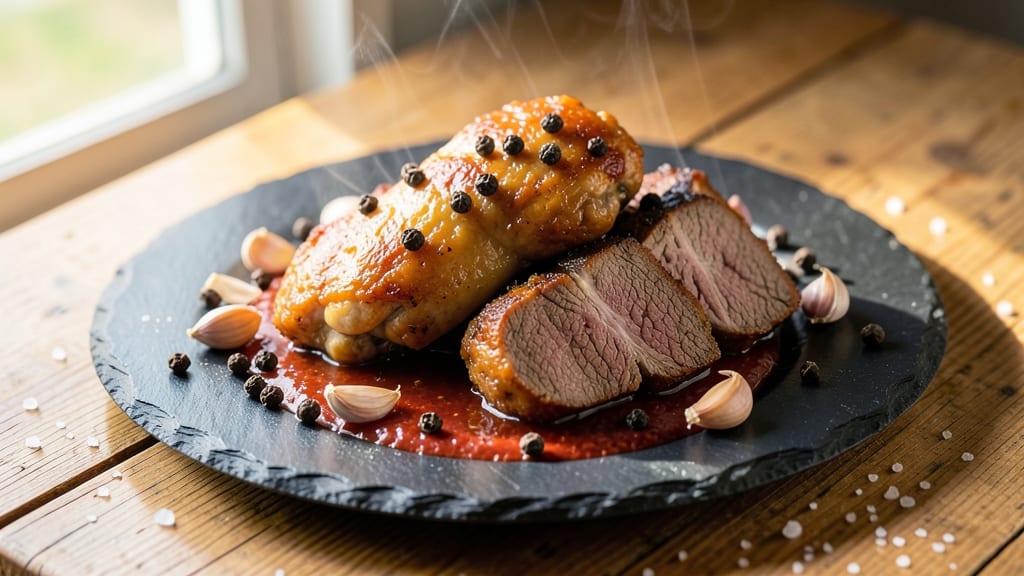
This Filipino-style chicken pork liver adobo transforms humble ingredients into a rich, tangy masterpiece—all in one pot. 🔥 The secret lies in balancing soy sauce's depth with vinegar's brightness, while garlic and black pepper build layers of warmth that linger long after the first bite.
I first tasted this dish at a bustling Manila market stall, where the sizzle of pork liver in a cast-iron pot filled the air with an aroma that stopped passersby in their tracks.
The beauty of this recipe is its simplicity: no fancy techniques, just time and patience. The pork liver—tender when cooked properly—absorbs the adobo's complex flavors while staying juicy, while the chicken adds heartiness. The key is simmering slowly, allowing the sauce to reduce and develop that signature glossy sheen.
I've made this dish countless times for family gatherings, and it never fails to impress, even with picky eaters.
What you'll end up with is a dish that's equally at home on a weeknight table or a holiday spread: golden-brown pork liver slices resting in a glossy, slightly sticky sauce that clings to every bite.
The aroma alone will have everyone gathering around the table, and the first taste will silence any doubts about home cooking. Serve it over steamed rice to soak up every last drop of that flavorful sauce.
This recipe also pairs beautifully with Filipino sides like atchara (pickled papaya) or a simple green salad to cut through the richness. The leftovers? Even better the next day as the flavors meld further. Let's bring this taste of the Philippines to your kitchen—it's simpler than you think.
Ingredients for chicken pork liver adobo
Humble ingredients that pack a flavor punch—this adobo brings Filipino comfort food to your table.
| Ingredient | Amount | Notes |
|---|---|---|
| Chicken Thighs 🍗 | 1 ½ lb | Bone-in, skin-on preferred |
| Pork Liver 🥩 | 1 lb | Fresh, trimmed of connective tissue |
| Garlic Cloves 🧄 | 8 cloves | Minced for rich flavor |
| Black Peppercorns 🌶️ | 1 tbsp | Crushed, not ground |
| Coconut Aminos 🍶 | ½ cup | Or soy sauce for gluten-free |
| White Vinegar 💧 | ⅓ cup | Distilled preferred |
| Fresh Ginger 🌿 | 1 ½ oz | Peeled, grated finely |
| Bay Leaves 🌿 | 2 whole | Dried for convenience |
| Olive Oil 🫒 | 2 tbsp | For searing |
| Sugar 🍚 | 1 tbsp | White granulated |
| Salt 🧂 | 1 ½ tsp | Kosher or sea salt |
| Water 💧 | 1 cup | For deglazing |
| Green Onions 🧅 | 3 whole | Sliced for garnish |
The pork liver is the star here, so pick the freshest you can find—look for vibrant color and firm texture at the seafood counter or Filipino markets. Costco or Asian grocery stores usually carry it pre-packaged, but if you're buying whole, ask for the darkest, most marbled pieces. Chicken thighs stay juicy while absorbing the adobo's rich flavors, so don't swap for breasts unless you're okay with drier meat. The garlic and ginger should smell bright and pungent—no musty aromas! For the coconut aminos, Lee Kum Kee is my go-to, but any brand with no added sugar works.
No coconut aminos? Soy sauce works in a pinch, though it'll be slightly less rich. Vinegar too sour? White wine vinegar at half the amount softens the acidity. Fresh ginger too spicy? Substitute with 1 tsp ground ginger, but you'll lose that fresh zing. The sugar might seem odd, but it balances the acidity—brown sugar works too. For extra depth, add a splash of calamansi juice if you can find it at Latin markets. And if you're worried about the liver's iron taste, don't be—the long simmer mellows it beautifully.
This dish tastes even better the next day as flavors meld. Store leftovers in an airtight container for up to 5 days in the fridge, or freeze for 3 months. I like to portion it into individual containers so I can reheat just what I need. The sauce thickens as it cools, so add a splash of water when reheating. Serve over steamed rice—it soaks up every last drop of that glorious sauce. And trust me, the green onions at the end aren't just for looks—they add a fresh finish that cuts through the richness.
Why You'll Love This Recipe
- Fewer Ingredients, More Flavor: I swear by this combo—just chicken thighs, pork liver, and a handful of garlic cloves. No fancy sauces or hidden pantry raids. The coconut aminos and peppercorns do all the heavy lifting, turning simple proteins into something rich and complex.
- Pork Liver Magic: Here’s what sold me—the liver adds this deep, almost umami punch that balances the chicken’s richness. It’s not fishy or gamey; it’s like a secret boost of savory depth that makes every bite feel special. (Yes, even on a Tuesday night.)
- One-Pot, Zero Guilt: Between us, this is my go-to when I’m too tired to clean up. One pot, 30 minutes max, and you’ve got a meal that tastes like it simmered all day. The liver softens just enough to melt in your mouth—no chopping, no fuss, just pure satisfaction.
- Budget-Friendly Feast: Honestly, I make this when I want to treat myself without breaking the bank. Pork liver stretches the dish, and the coconut aminos keep costs low while packing serious flavor. Leftovers? They’re even better the next day—perfect for lunches or a quick reheat.
Step-by-step instructions for Filipino-style adobo
This one-pot wonder delivers deep, tangy flavors that'll make your taste buds dance.
🍳 Step 1: Sear the Chicken and Pork Liver
Heat the 2 tablespoons olive oil in a large Dutch oven over medium-high heat until shimmering. Add the 1.5 pounds chicken thighs, skin-side down, and sear for 4-5 minutes until golden brown and crispy. Flip and cook another 3-4 minutes until the other side is golden too. Remove and set aside.
In the same pot, add the 1 pound pork liver and cook for 2-3 minutes per side until just browned—don't overcook or it'll get tough. The liver should still look slightly pink in the center. Remove and set aside with the chicken.
👨🍳 Step 2: Build the Adobo Base
Reduce heat to medium and add the 8 cloves minced garlic cloves, cooking for 30 seconds until fragrant. Add the 1.5 ounces grated fresh ginger and cook for another 30 seconds until the raw smell disappears. Here's the thing—don't rush this step. The aroma should be warm and inviting, not burning.
Add the 1 tablespoon crushed black peppercorns, 1 tablespoon sugar, and 1.5 teaspoons salt, stirring to toast the spices for 30 seconds until they release their oils. Pour in the 0.5 cup coconut aminos and 0.33 cup white vinegar, scraping up any browned bits from the bottom of the pot. This is where all the flavor lives.
🥘 Step 3: Braise Everything Together
Return the chicken and pork liver to the pot. Add the 1 cup water and 2 whole bay leaves, then bring to a gentle simmer. Here's the critical part: cover with a tight-fitting lid and reduce heat to low. Let it cook for 45-50 minutes until the chicken is fork-tender and the liver has absorbed all the flavors.
I like to check the liquid level after 20 minutes2-3 tablespoons water to keep everything moist. The chicken should be falling off the bone, and the pork liver should be tender but not mushy. Real talk: if you see any liquid remaining, simmer uncovered for the last 5 minutes to thicken the sauce slightly.
🍽️ Step 4: Finish and Serve
Remove the bay leaves and adjust seasoning if needed. The sauce should be rich, slightly tangy, and well-balanced. Taste it—you want that perfect harmony of sweet, salty, and umami. If it needs more depth, add a splash more coconut aminos or a pinch of salt.
Garnish with the 3 whole sliced green onions right before serving. This dish is best enjoyed immediately while the pork liver is still warm and the flavors are at their peak. Serve with steamed rice to soak up every last drop of that glorious adobo sauce.
Pro Tips For Making Chicken Pork Liver Adobo
- SEAR THE LIVER FIRST: Pork liver releases blood and cooks faster than chicken thighs—toss it in the pan first at high heat for 2-3 minutes until it just starts to brown. This stops it from turning rubbery while the chicken catches up, and the caramelized bits add depth to the adobo sauce.
- SMASH THOSE GARLIC CLOVES: Skip mincing—crush the garlic cloves with the flat side of your knife first. The released allicin burns slower, so you won’t get that bitter, overcooked garlic taste that ruins the dish. Plus, it sticks to the pan better for maximum flavor transfer.
- DON’T BOIL THE COCONUT AMINOS: Simmer the coconut aminos low and slow—if you let it bubble hard, it’ll turn bitter and cling like glue to your chicken. Keep it at a gentle simmer, and stir occasionally to prevent scorching. The sauce should coat the back of a spoon like syrup, not glue.
- SALT THE CHICKEN THIGHS 30 MINUTES EARLY: Chicken thighs have a lot of moisture, and salting them ahead lets the seasoning penetrate deeper. Toss them with 1 teaspoon of salt per pound (yes, even if they’re bone-in) and let them sit uncovered in the fridge. This keeps them juicy and ensures every bite is seasoned, not just the surface.
Dietary considerations for this recipe
Gluten-Free Adaptations
Traditional adobo uses soy sauce, but coconut aminos make this dish naturally gluten-free while keeping that signature umami depth. I always keep a bottle of Lee Kum Kee coconut aminos on hand—it’s my go-to for Filipino cooking.
The flavor profile is nearly identical to soy sauce, though slightly sweeter, which balances the vinegar perfectly. For extra authenticity, look for brands with no added sugar like Annie Chun’s or Kikkoman coconut aminos. 🌱
Liver Concerns?
Pork liver is nutrient-dense but can be intimidating for some. If you're worried about iron content or texture, start with half the amount (about ½ lb) to test your tolerance. The long simmer in this recipe mellows the natural iron taste, so it won’t overpower the dish.
For a milder flavor, add ½ cup sliced mushrooms along with the chicken—they absorb flavors beautifully and add umami without liver’s intensity.
Vegetarian Swap
Skip the liver entirely and use extra-firm tofu or hearts of palm for a plant-based version. Cut 1 lb firm tofu into cubes and pan-fry until golden before adding to the pot. Hearts of palm add a silky texture—just slice them into ½-inch rounds and simmer with the chicken.
Both options soak up the adobo sauce wonderfully, though tofu needs a 5-minute extra simmer to fully absorb flavors. 🌿
Protein Allergies
If chicken is off-limits, swap the thighs for pork belly slices (about 1 lb), which render fat beautifully and stay tender. For a seafood twist, use shrimp—peel and devein 1 lb large shrimp, then add them in the last 10 minutes of cooking to avoid overcooking.
Both alternatives work, but pork belly adds a richer mouthfeel that mimics the liver’s texture when cooked properly. Always check for cross-contamination if allergies are severe.
Low-Sodium Options
Reduce the salt to ½ teaspoon and use low-sodium coconut aminos (like Annie Chun’s) to cut sodium by 50%. Boost umami with 1 tablespoon fish sauce or 1 teaspoon miso paste—both add depth without extra salt.
For extra flavor, add 1 tablespoon tomato paste to the base while building the adobo. The acidity from vinegar and brightness from garlic will still shine through, keeping the dish vibrant. 💡
Nutrition facts
Frequently asked questions
Why does pork liver need to be cooked so quickly?
Pork liver cooks in 2-3 minutes per side because it's extremely tender and turns rubbery if overcooked. The goal is to just brown the outside while keeping the center slightly pink—this ensures a silky texture that absorbs the adobo flavors perfectly. Overcooking releases bitter compounds, so timing is everything!
Can I make this recipe without vinegar?
While vinegar creates adobo's signature tang, you can substitute with ½ cup lemon juice or ¼ cup white wine for a milder acidity. The dish will be less traditional but still delicious. For extra depth, add 1 teaspoon apple cider vinegar to maintain some of the original brightness.
How do I know when the chicken is fully cooked?
The chicken should reach 165°F internally and have no pink juices when cut. For bone-in thighs, check the thickest part near the bone. The skin should be crispy, and the meat should pull away from the bone easily. If using boneless thighs, 15-18 minutes of simmering after searing usually suffices.
What if my adobo sauce is too thin?
Simmer the sauce uncovered for 5-10 minutes to reduce it naturally. For a quicker fix, mix 1 tablespoon cornstarch with 2 tablespoons water, stir into the sauce, and cook for 2 minutes until thickened. Avoid over-thickening—you want a glossy, coatable consistency, not glue-like.
Can I prepare this dish ahead of time?
Yes! This adobo tastes even better the next day as flavors meld. Store in an airtight container for up to 5 days in the fridge. Reheat gently on low heat, adding 1-2 tablespoons water if the sauce has thickened. For freezing, portion into individual servings and freeze for up to 3 months—thaw overnight in the fridge.