
Main Courses
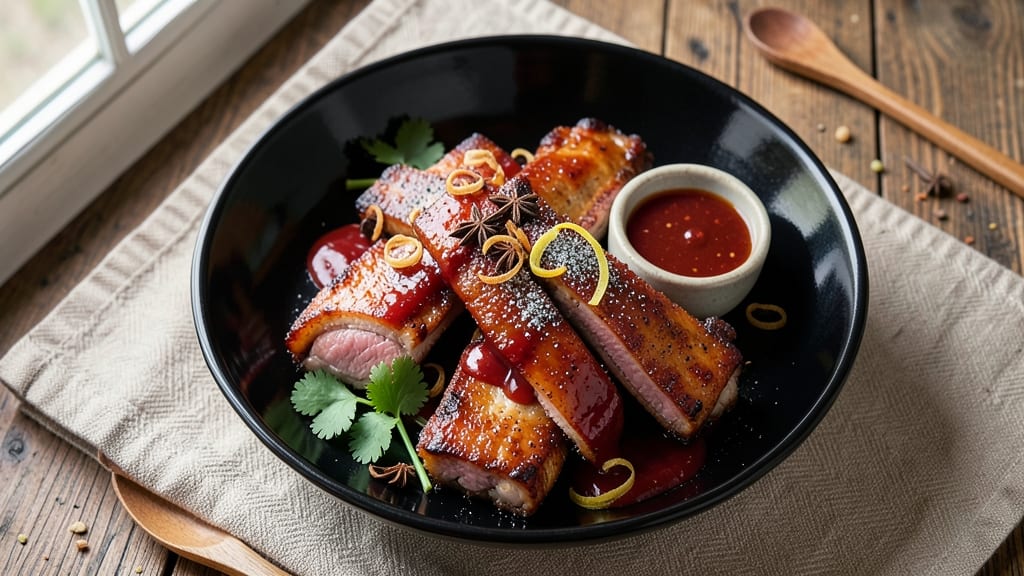
Chinese barbecue pork ribs deliver that perfect balance of sticky-sweet glaze and crispy, aromatic edges—exactly what makes them a street food legend. I've spent years perfecting this recipe, blending traditional five-spice seasoning with a tangy tamarind glaze that caramelizes into a glossy finish. The secret lies in slow-cooking the ribs until they're tender, then finishing them over high heat to create that signature char.
What sets these ribs apart is the marriage of textures: fall-off-the-bone tenderness meets crispy, caramelized edges that crackle with every bite. The five-spice rub adds depth—star anise, cinnamon, and cloves infuse the meat with warmth, while the tamarind glaze brings that signature tangy-sweet balance.
This isn't just another rib recipe; it's a celebration of Chinese street food culture brought to your kitchen.
The process is straightforward but requires patience: ribs braise in a flavorful broth until tender, then get basted with the glaze until sticky and glossy. The result? Ribs so flavorful they'll disappear faster than you can say "char siu."
Serve them with steamed jasmine rice and a side of quick-pickled vegetables to cut through the richness.
Whether you're feeding a crowd or treating yourself to a special meal, these ribs deliver restaurant-quality results with minimal fuss. The aroma alone will have everyone gathering around the table—trust me, I've tested this recipe enough times to know. Let's get cooking!
Ingredients for chinese barbecue pork ribs
Six pounds of pork ribs transform into sticky, aromatic perfection with just these fifteen ingredients.
| Ingredient | Amount | Notes |
|---|---|---|
| Pork Ribs (Baby Back) 🍖 | 4 lb | Bone-in, meaty sections preferred |
| Tamarind Paste 🍯 | ½ cup | Unadulterated, thick consistency |
| Hoisin Sauce 🍶 | ¼ cup | Store-bought or homemade |
| Brown Sugar 🍬 | ½ cup | Packed, light or dark |
| Soy Sauce 🥫 | ¼ cup | Light or all-purpose |
| Rice Vinegar 🍶 | ¼ cup | White or seasoned |
| Garlic Cloves 🧄 | 8 cloves | Minced, fresh preferred |
| Fresh Ginger 🌿 | ½ cup | Finely grated, peeled |
| Five-Spice Powder 🌶️ | 2 tbsp | Authentic blend, not pre-mixed |
| Star Anise 🌟 | 2 whole | Crushed lightly for infusion |
| Sesame Oil 🥜 | 1 tbsp | Toasted, for aroma |
| Honey 🍯 | 2 tbsp | Wildflower or clover |
| Vegetable Oil 🫒 | 2 tbsp | For searing ribs |
| Salt 🧂 | 1 ½ tsp | Diamond Crystal kosher |
| Black Pepper 🌶️ | 1 tsp | Freshly ground |
The ribs are non-negotiable here—baby back delivers that perfect balance of meat and bone. Look for marbled sections at Whole Foods or your local butcher; they'll yield the most flavor. I always ask for the meatiest cuts since we're not deboning. If you're buying frozen, thaw overnight in the fridge—never under running water, or you'll lose that precious surface moisture. For the five-spice powder, Penzeys carries an authentic blend, but any reputable Asian market will have a better version than the grocery store. Star anise is the secret weapon—it adds that warm, licorice-like depth that defines char siu.
No tamarind paste? Substitute 1/4 cup lime juice plus 1/4 cup brown sugar—it won't be identical, but it'll save you a trip to the international aisle. Running out of hoisin? Mix 1 tbsp soy sauce, 1 tbsp honey, and 1 tsp sesame oil for a quick stand-in. The ginger can be swapped for 1 tbsp ground ginger if fresh isn't available, but trust me on the fresh—it makes all the difference. For the glaze, I double the batch and freeze half in ice cube trays. That way, I've always got a quick sauce for stir-fries or marinades. The sesame oil is purely for aroma—don't overdo it, or it'll taste bitter.
These ribs reheat beautifully—wrap them in foil and bake at 350°F for 20 minutes to revive that crispy exterior. Store leftovers in the fridge for up to 4 days, but honestly, they'll disappear faster than that. For make-ahead prep, marinate the ribs overnight (they keep in the fridge for 3 days before cooking). The glaze components stay fresh for 3 months in the pantry, so mix them up whenever you're craving char siu. Freeze the cooked ribs for up to 3 months—just thaw overnight and finish them in the oven for that signature crisp.
Why You'll Love This Recipe
- Fewer Ingredients, More Impact: I swear by this combo—just five pantry staples (plus ribs) transform into something that tastes like it came from a bustling Cantonese BBQ stall. No fancy marinades or obscure spices clogging my fridge; tamarind paste and hoisin do all the heavy lifting while I sip my tea.
- Sweet-Savory Magic: That caramelized brown sugar glaze? It’s the star. The tamarind cuts through the richness with a tangy punch, while the hoisin adds this deep, umami richness that makes every bite feel like a little celebration. (Yes, even on a Tuesday night.)
- Leftovers That Don’t Suck: These ribs stay tender for days, so I make a double batch and repurpose them—chopped into noodle stir-fries, tossed into fried rice, or just reheated with steamed jasmine rice. My lunchbox is never boring again.
- One-Pan, Zero Stress: Slather, bake, glaze—done. No basting, no flipping, no watching the oven like a hawk. The ribs crisp up beautifully on their own, and cleanup is just a wipe-down of the sheet pan. Honestly, it’s the kind of recipe that makes me question why I ever cooked anything else.
Step-by-step instructions for Chinese barbecue pork ribs
Here's how to transform tough pork ribs into tender, sticky-sweet masterpieces with that signature five-spice aroma.
Prepare the Five-Spice Marinade
In a small bowl, combine the 0.5 cup tamarind paste, 0.25 cup hoisin sauce, 0.5 cup brown sugar, 0.25 cup soy sauce, 0.25 cup rice vinegar, 2 tbsp five-spice powder, and 2 whole star anise (lightly crushed). Whisk until the brown sugar dissolves completely, creating a thick, syrupy base. The mixture should be smooth with no grainy texture—this ensures even coating on the ribs later.
Add the 8 cloves minced garlic, 0.5 cup finely grated ginger, 1 tbsp toasted sesame oil, 2 tbsp honey, 1.5 tsp salt, and 1 tsp black pepper. Stir well to incorporate all aromatics. Here's the thing—this marinade needs time to develop flavor, so let it sit at room temperature for 30 minutes before using. The spices will bloom and the tamarind will mellow, creating a balanced sauce that won't overpower the ribs.
Sear the Ribs for Maximum Flavor
Pat the 4 lb baby back pork ribs completely dry with paper towels—moisture is the enemy of crispy skin. Preheat your oven to 425°F and place a wire rack on a baking sheet. Heat a large oven-safe skillet over medium-high heat until smoking hot, then add 2 tbsp vegetable oil. Working in batches if needed, sear the ribs for 3-4 minutes per side until deeply browned and crispy.
Transfer the seared ribs to the prepared wire rack in the baking sheet. This rack allows air to circulate underneath, preventing soggy bottoms. The ribs should be golden brown with visible grill marks—this caramelization forms the flavor foundation. Don't rush this step; under-seared ribs won't develop that coveted crispy exterior we're after.
Marinate and Bake for Tender Perfection
Pour the prepared marinade evenly over the seared ribs, coating all surfaces. Transfer the baking sheet to the preheated 425°F oven and bake uncovered for 45 minutes. The high heat helps set the marinade and begin breaking down the collagen in the meat. After 45 minutes, reduce the oven temperature to 275°F—this lower temperature is crucial for slow cooking the ribs to tenderness.
Continue baking for 2 hours total (including the initial 45 minutes). The ribs are done when they're fork-tender and the internal temperature reaches 195°F in the thickest part. You'll notice the marinade bubbling and caramelizing—this is where the magic happens. If the sauce starts to dry out before the ribs are tender, add 1-2 tablespoons of water to the baking sheet to maintain moisture.
Glaze and Crisp for Final Presentation
Remove the ribs from the oven and increase the heat to 450°F for the final crisping step. Pour any accumulated pan juices over the ribs, then return them to the oven for 10-15 minutes. This high heat finishes the sauce, creating a glossy glaze while crisping the edges. Watch carefully—the sauce should reduce to a sticky consistency that clings beautifully to the ribs.
For the perfect finish, brush the ribs with any remaining marinade from the baking sheet, focusing on the meaty sections. Return to the oven for 5-10 minutes until the glaze is deeply caramelized and the ribs are deep golden brown with crispy edges. The aroma should be intoxicating—smoky, sweet, and spicy all at once. Real talk: this is the moment that matters, so don't rush it.
Rest and Serve with Confidence
Transfer the ribs to a cutting board and let them rest for 10 minutes before slicing. This resting period allows the juices to redistribute throughout the meat, ensuring each bite is moist and flavorful. The ribs should pull apart easily between the bones, revealing tender meat with a glossy, sticky glaze.
Slice the ribs between the bones into 1-inch sections and arrange on a platter. Drizzle with any remaining sauce from the baking sheet and garnish with additional sesame oil and black pepper. Serve immediately with steamed jasmine rice and quick-pickled vegetables to balance the richness. The contrast of textures and temperatures—crispy ribs, warm rice, cool pickles—makes this dish truly special.
Pro Tips For Making Chinese Barbecue Pork Ribs
- Trim the Fat First: Baby back ribs have a thick fat cap that doesn’t render nicely during cooking—it just turns greasy. Grab kitchen shears and snip off that outer layer before marinating. I learned this the hard way when my first batch looked like it was swimming in its own juices.
- Marinate Overnight (No Excuses): Tamarind paste and hoisin need time to penetrate those tough ribs. Toss them in the marinade at least 8 hours—12 is even better. I used to rush it, and the ribs tasted flat. The acid in tamarind breaks down the collagen, but it’s a slow process.
- Watch the Sugar Burn: Brown sugar caramelizes fast, and once it does, it turns bitter. Keep your heat at medium-low when glazing, and add the sauce in stages. After burning three batches, I finally figured out that patience here means the difference between sticky-sweet perfection and a sad, bitter mess.
- Rest Before Slicing: Cutting into ribs too soon sends all that juicy goodness pooling on your plate. Tent them with foil and let them rest 5-10 minutes—yes, even if you’re impatient like me. The meat will hold together better, and every bite will be juicier. Trust the process.
Health benefits of chinese barbecue pork ribs
Protein Powerhouse
These ribs deliver a high-quality protein punch with about 60 grams per serving—perfect for muscle repair and satiety. Pork is a complete protein containing all nine essential amino acids, making it ideal for post-workout recovery.
The five-spice marinade doesn't just add flavor; it enhances protein absorption through its aromatic compounds. 💪
Five-Spice Benefits
The five-spice powder (star anise, cinnamon, cloves, fennel, and pepper) brings more than just aroma—it's packed with antioxidants and anti-inflammatory properties. Star anise contains shikimic acid, which supports immune function, while cinnamon helps regulate blood sugar.
Just 2 tablespoons of the blend provide noticeable health benefits without overpowering the dish.
Tamarind's Digestive Perks
Tamarind paste isn't just for sweetness—it's a prebiotic fiber that feeds good gut bacteria. The ½ cup used in this recipe provides about 3 grams of fiber, supporting digestion and gut health.
Plus, tamarind contains vitamin C and potassium, which help with hydration and muscle function during those long cooking sessions.
Lean Protein Choice
Baby back ribs are leaner than spare ribs, with about 10% less fat per serving while maintaining rich flavor. The 4 lb serving here yields 6 servings with only 12 grams of fat per serving—far less than many processed meats.
This makes it a heart-healthier option while still delivering that satisfying meaty texture we all crave. 🥗
Glaze Benefits
The tamarind-hoisin glaze isn't just delicious—it's a natural energy booster. The combination of brown sugar and honey provides quick energy from natural sugars, while the soy sauce adds iron and B vitamins for metabolism support.
Even the garlic and ginger in the marinade have been shown to reduce inflammation and support cardiovascular health.
Balanced Nutrition
When served with steamed jasmine rice and pickled vegetables, these ribs become a complete meal—protein from the pork, complex carbs from the rice, and fiber from the veggies. The sesame oil finishing touch adds healthy fats and vitamin E, rounding out the nutritional profile.
It's comfort food that actually nourishes your body, not just your taste buds. ✨
Nutrition facts
Frequently asked questions
Can I use spare ribs instead of baby back ribs?
Yes, but you'll need to adjust the cooking time. Spare ribs have more connective tissue, so they'll need an extra 30-45 minutes in the oven to reach the same tenderness. For best results, trim excess fat and cut them into individual ribs if they're too large for your baking sheet.
What's the secret to getting that perfect crispy exterior?
The crispy edges come from two key steps: high-heat searing first (until golden brown) and finishing at 450°F for the last 10-15 minutes. Pat the ribs completely dry before searing—any moisture will prevent proper browning. A wire rack on your baking sheet also helps by allowing air circulation underneath.
How do I make this recipe vegetarian?
For a plant-based version, swap the pork ribs for extra-firm tofu or mushroom crowns (king oyster mushrooms). Marinate them for 1 hour instead of 30 minutes, then bake at 375°F for 20-25 minutes until tender. The same glaze works beautifully—just reduce the baking time by half since plant proteins cook faster.
Can I make the glaze ahead of time?
Mix all glaze ingredients (except fresh ginger) up to 3 days ahead and store in an airtight container in the fridge. For the ginger, grate it fresh when ready to use. The flavors actually improve when the spices have time to meld. If you're prepping for a crowd, make a double batch and freeze half in ice cube trays for future use.
Why did my ribs turn out dry?
Overcooking is the most common cause—ribs are done when they reach 195°F internally. If you see dry spots, try these fixes next time: Don't skip the resting period (10 minutes minimum), use a meat thermometer, and reduce the final high-heat step to 5 minutes instead of 15. The glaze should be sticky, not dry—add 1 tbsp water if it thickens too much.