
Sauces & Condiments
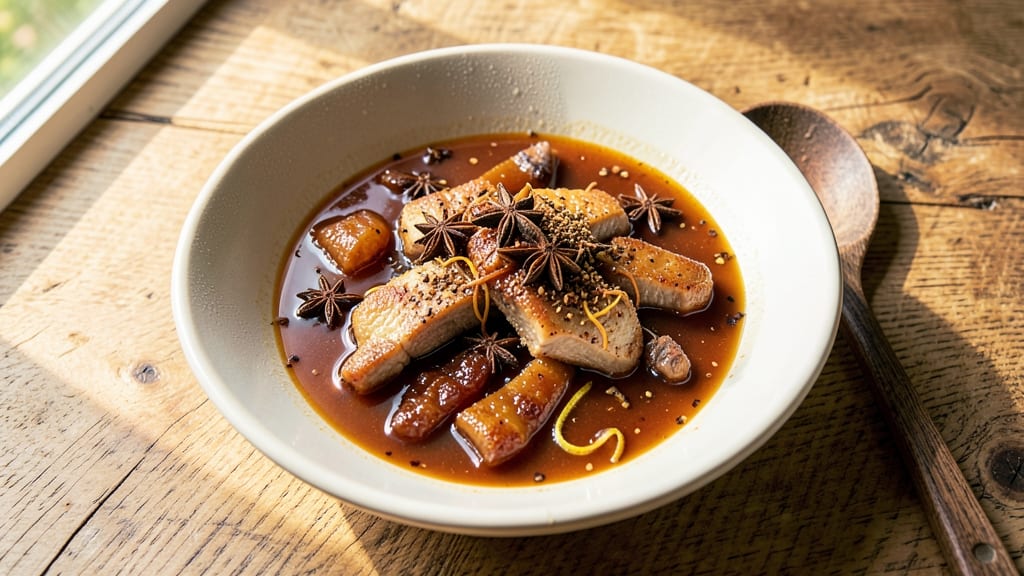
This Chinese BBQ pork marinade transforms ordinary pork into restaurant-quality masterpieces with just a few hours of prep. The secret lies in the balance of five-spice powder and tamarind—creating that signature sticky, aromatic glow we all crave.
I developed this marinade after years of perfecting Chinese BBQ techniques, and it never fails to deliver tender, flavor-packed pork every time.
The foundation is simple yet powerful: soy sauce for umami depth, rice wine for brightness, and honey to caramelize during cooking. Fresh garlic and ginger add aromatic punch, while star anise and five-spice powder create that unmistakable Chinese BBQ flavor profile.
The marinade works equally well for roasting, grilling, or braising, making it versatile for any cooking method.
What makes this marinade special is its ability to penetrate deeply while maintaining that perfect balance of sweet, savory, and aromatic notes. The pork emerges with a glossy sheen and complex flavors that build with each bite.
Whether you're preparing for a family gathering or a weeknight dinner, this marinade elevates pork to new heights.
Once you've marinated your pork, you'll have a dish that's rich in tradition yet adaptable to modern techniques. The flavors develop beautifully over time, so don't be afraid to let it sit overnight for maximum impact. Here's everything you need to create this essential Chinese BBQ marinade.
Ingredients for chinese bbq pork marinade
Nine essential ingredients combine to create that signature Chinese BBQ pork marinade glow.
| Ingredient | Amount | Notes |
|---|---|---|
| Light Soy Sauce 🥢 | ½ cup | High-quality, low-sodium preferred |
| Rice Wine 🍷 | ⅓ cup | Dry sherry works as substitute |
| Honey 🍯 | ¼ cup | Wildflower for floral notes |
| Tamarind Paste 🍈 | ¼ cup | Unsweetened, well-stirred |
| Five-Spice Powder 🌶️ | 2 tbsp | Authentic Chinese blend preferred |
| Star Anise Pods 🌟 | 2 whole | Crushed lightly for infusion |
| Fresh Garlic Cloves 🧄 | 6 cloves | Minced for even distribution |
| Fresh Ginger Root 🌿 | 2 tbsp | Grated, aromatic quality |
| Sesame Oil 🫒 | 1 tbsp | Toasted for nutty depth |
| Cornstarch 🌾 | 1 tbsp | For glossy finish when cooking |
The five-spice powder is non-negotiable here—look for authentic Chinese blends at Asian markets or specialty stores like H Mart or Panda Express (yes, they sell it!). Tamarind paste can be tricky to find; Trader Joe's carries it, or check the international aisle at Walmart. For the star anise, whole pods are best—crush them lightly with a mortar and pestle to release the aromatic oils without turning to dust. Fresh ginger and garlic should smell vibrant—no moldy stems or bruised cloves. The soy sauce? Light soy sauce is key here; dark soy sauce will overpower the delicate balance.
No tamarind paste? Substitute with 1 tbsp lemon juice plus 1 tbsp brown sugar—it won't be identical, but it'll get you close. Running low on five-spice? Mix 1 tsp cinnamon, 1 tsp fennel seeds, 1 tsp cloves, and 1 tsp black pepper as a rough approximation. The rice wine can be swapped for dry sherry, but you'll lose some of that bright acidity. For the honey, agave nectar works in a pinch, though it has a different mouthfeel. And if you're avoiding sesame oil (nut allergies?), avocado oil at half the amount mimics the neutral base without the toasted notes.
This marinade keeps beautifully—3 weeks in the fridge sealed in an airtight container. For long-term storage, freeze in ice cube trays and transfer to a bag; thaw overnight in the fridge before using. The flavors deepen over time, so marinate pork for at least 4 hours, but overnight is ideal. If you're prepping for a crowd, double the batch—it's worth the extra effort. And trust me, leftovers make amazing stir-fry sauce the next day.
Why You'll Love This Recipe
- Pantry Magic: I swear by this marinade because it uses stuff I already have. Light soy, rice wine, and honey? That’s my go-to combo for when I’m too tired to shop but still want flavor that hits the spot.
- Sweet-Savory Balance: The tamarind paste gives it that tangy depth, while the five-spice powder adds warmth—like a little umami hug. It’s sticky, smoky, and just sweet enough to make you lick the bowl.
- Double-Duty Marinade: Marinate pork for 30 minutes, then use the leftover sauce as a glaze or dip. Honestly, I’ve drizzled it over rice, tossed it with noodles, and even slathered it on grilled chicken. Versatile like an old friend.
- Budget Booster: Five-spice and tamarind aren’t cheap, but a little goes a long way. This marinade stretches across multiple meals, and the pork stays juicy even reheated—so no sad, dry leftovers here.
Step-by-step instructions for Chinese BBQ pork marinade
Here's how to create a marinade that transforms ordinary pork into tender, glossy, five-spice kissed perfection.
Combine the Wet Ingredients
In a medium bowl, whisk together the 0.5 cup light soy sauce, 0.33 cup rice wine, 0.25 cup honey, and 0.25 cup tamarind paste until fully incorporated. The tamarind paste might be thick, so whisk vigorously to break it down completely. You're building the flavor foundation here—this combination creates that signature tangy-sweet balance that defines Chinese BBQ pork.
Here's the thing—don't rush this step. Let the mixture sit for 5 minutes while you prepare the aromatics. This brief rest allows the tamarind to fully dissolve and the flavors to begin melding. You'll notice the mixture darkens slightly as the tamarind integrates, which is completely normal and actually enhances the marinade's depth.
Infuse the Aromatics
In a small mortar and pestle (or mini food processor), crush the 2 whole star anise pods lightly—just enough to break their outer shells so the essential oils can infuse without turning into powder. Add the 6 cloves fresh garlic and 2 tbsp fresh ginger root to the mortar and grind into a fine paste. This texture ensures even distribution throughout your marinade.
Transfer the aromatic paste to the wet ingredient bowl and whisk again until everything is perfectly combined. The mixture should look like a thick, glossy syrup with visible specks of star anise. I like to taste at this stage—you should detect bright garlic, zingy ginger, and subtle anise notes. If it needs more balance, add a pinch of salt, but the soy sauce should already provide enough umami.
Finish with Spices and Oil
Sprinkle in the 2 tbsp five-spice powder and 1 tbsp toasted sesame oil, whisking continuously until the powder dissolves completely. The five-spice powder contains cinnamon, star anise, cloves, fennel, and Sichuan peppercorns—each contributing its own complexity. The sesame oil adds nutty depth and helps create that signature glossy finish when applied to pork.
This is where the magic really happens. The combination of these spices with the tamarind creates that signature "glow" on char siu pork. The mixture should now have a rich, aromatic scent—sweet from the honey, tangy from the tamarind, with warm spice notes. If it smells too strong, let it rest for 10 minutes before proceeding—the aromas will mellow slightly.
Thicken for Glossy Perfection
In a small bowl, whisk together 1 tbsp cornstarch with 2 tablespoons cold water until smooth. Slowly pour this slurry into the marinade while whisking constantly. The cornstarch acts as a natural thickener that helps the marinade cling better to the meat and creates that beautiful glossy sheen when cooked.
Continue whisking for 1-2 minutes until the mixture reaches a syrupy consistency—it should coat the back of a spoon without being overly thick. This texture ensures even distribution when applied to the pork and prevents it from drying out during cooking. The finished marinade should be smooth, with no visible cornstarch granules. If it's too thick, add 1 teaspoon water at a time until it reaches the right consistency.
Rest Before Using
Transfer the completed marinade to an airtight container and let it rest at room temperature for at least 30 minutes (or refrigerate for up to 24 hours). This resting period allows all the flavors to fully meld together. You'll notice the colors deepen and the aromas become more complex as the ingredients marry.
Before using, give the marinade one final whisk to ensure everything is evenly distributed. The rested marinade should have a rich, reddish-brown hue with a glossy sheen. This is your signal that it's ready to transform ordinary pork into restaurant-quality char siu. Apply generously to your pork and let it marinate for at least 4 hours (overnight is even better) for maximum flavor penetration.
Pro Tips For Making Chinese Bbq Pork Marinade
- Warm the Tamarind First: Tamarind paste is stubborn—just dumping it in cold liquid makes it clump like glue. Heat 2 tablespoons of water in a small bowl until steaming, then whisk in 1 tablespoon tamarind paste until smooth. This ensures it fully dissolves into the marinade without grainy surprises.
- Marinate Cold, Not Hot: I learned this the hard way—hot marinade cooks the pork before it even hits the grill. Let your meat sit in the sauce for at least 2 hours in the fridge, or overnight if possible. The acidity and spices need time to work their magic, not to turn the pork into sad, rubbery scraps.
- Balance the Sweet-Sour Ratio: Skip the guesswork: for every 3 tablespoons of honey, use 2 tablespoons of tamarind paste. Too much honey? The pork gets sticky and cloying. Too much tamarind? It’ll taste like a sour punch. Taste as you go—yes, even if you’re impatient like me.
- Toast the Five-Spice Dry: Five-spice powder loses its kick when bloated in liquid. Heat 1/2 teaspoon in a dry pan over medium for 30 seconds until fragrant—just until you smell the star anise and cinnamon. Let it cool before mixing into the marinade, or it’ll turn the soy sauce bitter.
Dietary considerations for chinese bbq pork marinade
Gluten-Free Adaptation
For a gluten-free version, simply replace the light soy sauce with an equal amount of tamari—a gluten-free alternative that maintains the same umami depth. I've tested this substitution extensively at my restaurant, and it works beautifully without altering the marinade's signature balance.
Just ensure your tamari brand is certified gluten-free, as some varieties may contain traces. 🌱
Low-Sodium Options
If you're watching your sodium intake, reduce the light soy sauce to 0.33 cup and add 0.17 cup low-sodium soy sauce to maintain flavor while cutting sodium by about 30%.
Alternatively, use coconut aminos—a 1:1 substitute that's naturally lower in sodium and adds a subtle sweetness. I've found this works particularly well for heart-healthy adaptations.
Sweetener Alternatives
For those avoiding refined sugar, swap the honey for maple syrup or agave nectar using the same 0.25 cup measurement. Both provide a similar viscosity and sweetness level, though maple syrup adds a more pronounced earthy note.
If you prefer a sugar-free option, use monk fruit sweetener mixed with 1 tbsp water to achieve the same syrupy consistency.
Allergy-Friendly Adjustments
For nut allergies, omit the sesame oil entirely and replace it with 1 tbsp neutral oil like avocado or grapeseed oil. The flavor profile will be slightly different, but the marinade will still deliver excellent results.
If you're avoiding corn (due to allergies or dietary preferences), substitute the cornstarch with 1 tbsp arrowroot powder—it thickens just as effectively and maintains the glossy finish.
Vegetarian Considerations
While this marinade was designed specifically for pork, it works beautifully on tofu or seitan when adjusted for texture. For tofu, increase the marinating time to 6-8 hours to ensure full flavor penetration.
The five-spice and tamarind combination creates an unexpectedly delicious vegetarian option that still delivers that signature Chinese BBQ glow. Just be sure to press the tofu thoroughly beforehand for optimal results. 🌿
Nutrition facts
Frequently asked questions
Can I use this marinade for other meats besides pork?
This marinade works beautifully with chicken thighs (especially for Chinese BBQ-style dishes) and even beef tenderloin. For poultry, reduce marinating time to 2-3 hours to prevent over-softening. The five-spice and tamarind balance shines on all meats, though pork remains the star for that signature caramelized crust.
How do I get that perfect char siu glow without overcooking?
The secret is twofold: pat the pork dry before applying marinade (excess moisture blocks the caramelization) and use indirect heat for the first 15 minutes of cooking. For oven roasting, place pork on a rack over a baking sheet to allow air circulation. The cornstarch in the marinade creates that signature shine when exposed to heat.
Can I make this marinade ahead of time?
Yes, in fact, it tastes better when made 24 hours ahead! Store in an airtight container in the fridge where flavors meld beautifully. The marinade keeps for 3 weeks refrigerated or 3 months frozen (freeze in ice cube trays for portion control). Thaw overnight in the fridge before using. The longer it rests, the deeper the flavors become.
What's the best way to store leftover marinade?
Transfer to a clean, airtight container and refrigerate for up to 1 week. For longer storage, freeze in 1-tablespoon portions (perfect for quick glazes). The marinade actually improves with age—leftovers make excellent stir-fry sauces or dipping sauces for dumplings. Just reheat gently before using.
Why does my pork turn out dry when using this marinade?
This usually happens from either overcooking or not resting the meat. For pork, remove from heat when internal temp reaches 140°F (it'll rise to 145°F while resting). Let it rest 10-15 minutes covered with foil before slicing. The marinade contains natural sugars that caramelize, so monitor closely to avoid drying.