
Main Courses
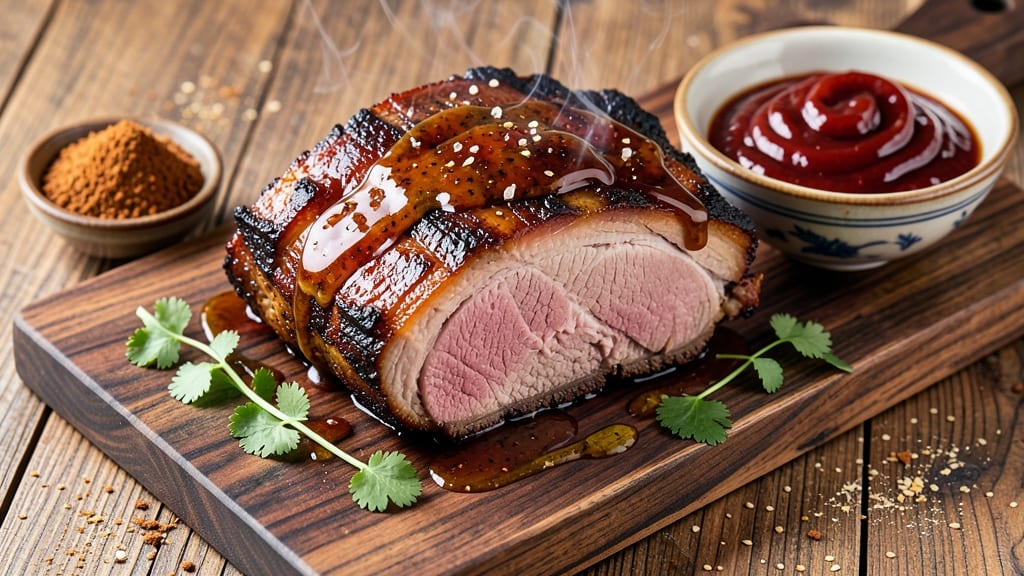
This Chinese BBQ pork smoker recipe brings the bold flavors of Cantonese tradition to your backyard with a perfect marriage of five-spice crust and smoky tamarind depth. 🔥 After years of perfecting this technique—first in Charleston kitchens, then on my own farm—I’ve developed a method that delivers restaurant-quality results at home.
The secret lies in balancing the aromatic heat of the five-spice blend with the deep, tangy complexity of tamarind, all while letting the smoker work its magic for tender, fall-apart meat.
What sets this recipe apart is the two-stage process: first, a dry rub that creates a crackling crust, then a smoke bath that infuses the pork with that signature Chinese BBQ aroma without overpowering the delicate flavors.
I use a mix of hickory and fruitwood for a clean, slightly sweet smoke profile that complements the tamarind perfectly. The result is pork that’s juicy, tender, and packed with layers of flavor—not too sweet, not too smoky, but perfectly balanced.
This isn’t just another BBQ recipe; it’s a celebration of technique and tradition. The pork cooks low and slow to an internal temperature of 203°F, ensuring it shreds effortlessly.
Whether you’re serving it over steamed rice with pickled vegetables or with a side of homemade hoisin sauce, every bite delivers that harmony of spice, smoke, and tang that makes this dish unforgettable. Ready to master the art of Chinese BBQ pork?
The best part? This recipe scales beautifully—whether you’re feeding a crowd or just treating yourself to a weekend project. The marinade and rub can be prepped ahead, and the smoker does all the work while you enjoy the process.
Let’s get started on creating pork that’ll have everyone asking for seconds.
Ingredients for chinese bbq pork smoker
Bold flavors start with these 14 ingredients—where Cantonese tradition meets smoker magic.
| Ingredient | Amount | Notes |
|---|---|---|
| Pork Shoulder (Boston Butt) 🥓 | 5 lb | Bone-in for best flavor |
| Five-Spice Powder 🌶️ | 2 tbsp | Homemade blend preferred |
| Tamarind Paste 🍯 | ½ cup | Unadulterated, block preferred |
| Hoisin Sauce 🍶 | ¼ cup | High-quality, no additives |
| Brown Sugar 🍚 | ½ cup | Light or dark, packed |
| Soy Sauce 🥢 | ¼ cup | Kosher or tamari |
| Garlic Cloves 🧄 | 8 cloves | Minced, fresh preferred |
| Ginger Root 🌿 | 1 tbsp | Freshly grated, peeled |
| Sesame Oil 🫒 | 1 tbsp | Toasted, for aroma |
| Hickory Wood Chips 🌳 | 1 package | Unsoaked, for smoker |
| Fruitwood Chips 🍎 | 1 package | Apple or cherry, for balance |
| Olive Oil 🫒 | 2 tbsp | For crust adherence |
| Kosher Salt 🧂 | 1 tbsp | Diamond Crystal preferred |
| Black Peppercorns 🌶️ | 1 tsp | Freshly cracked |
The pork shoulder is non-negotiable here—bone-in delivers the best texture and flavor. I always source mine from Whole Foods or a trusted butcher, looking for good marbling and a vibrant color. If you're buying a whole shoulder, ask for it to be cut into 2-3 lb chunks for even cooking. Costco often has pre-cut pork shoulders that work perfectly. For the five-spice powder, Penzeys or bulk bins at Asian markets have the most authentic blends—avoid the pre-mixed packets at regular grocery stores, they lack depth. Tamarind paste can be tricky to find, but Trader Joe's carries it, or check the international aisle at Walmart. If you can't find block tamarind, Lyle's Golden Syrup works in a pinch (though it's sweeter).
No tamarind? A mix of date syrup and lime juice (1:1 ratio) mimics the tang, though it won't be identical. The hoisin sauce is where authenticity shines—Lee Kum Kee or Hoisin King are my go-tos, but avoid the watered-down versions. For the wood chips, Traeger or Cookshack sell quality blends, but Home Depot often carries affordable hickory. If you're using fruitwood, apple or cherry chips add a subtle sweetness that balances the smokiness. The garlic and ginger need to be fresh—no dried substitutes here. For the sesame oil, Kadoya or La Choy toasted varieties add that nutty aroma without overpowering. If you're short on time, pre-minced garlic works, but fresh is always better.
Prep the rub and marinade a day ahead—the flavors meld beautifully overnight. Store the pork in a sealed container in the fridge for up to 2 days before smoking. The wood chips can be pre-soaked in water for 30 minutes before using, but I prefer them dry for better smoke production. Leftover pork shreds beautifully and keeps for 4-5 days in the fridge or 3 months frozen. I always make extra—it's perfect for tacos, fried rice, or even loaded nachos the next day. The smoker adds a magical depth, but if you're short on time, a slow oven at 225°F works too (just add more liquid to prevent drying).
Why You'll Love This Recipe
- Smoker-Friendly Magic: I’ve made this recipe on my trusty pellet smoker and in a slow cooker—same rich, sticky results. No fancy setup, just set it and forget it while the five-spice and tamarind work their flavor magic.
- Flavor Bomb: That tamarind paste cuts through the sweetness, while the hoisin and brown sugar give it this perfect balance—salty, tangy, and just sweet enough. It’s the kind of pork that disappears in minutes.
- Leftovers? Please: This keeps amazingly for days, whether shredded in tacos, fried rice, or straight from the fridge. I’ve reheated slices cold, and they’re still tender—no sad, dry meat here.
- Budget Crowd-Pleaser: A whole pork shoulder feeds my family for weeks, and the ingredients? Five-spice is cheap, hoisin is a pantry staple, and brown sugar’s already there. Filling, flavorful, and wallet-friendly.
Step-by-step instructions for Chinese BBQ pork smoker recipe
Here's how to transform a simple pork shoulder into restaurant-quality Chinese BBQ pork with a perfect five-spice crust and deep tamarind-smoked flavor.
🔥 Step 1: Prep the Pork and Build the Dry Rub
Start by trimming any excess fat from the 5 lb pork shoulder (Boston Butt) while leaving about ¼-inch of fat cap for flavor and moisture. Pat the meat completely dry with paper towels—this ensures a better crust forms during smoking. In a small bowl, combine 2 tbsp Five-Spice Powder, 1 tbsp Kosher Salt, and 1 tsp freshly cracked Black Peppercorns. Rub this mixture all over the pork, pressing firmly so it adheres well, especially in the crevices and fat cap.
Let the seasoned pork rest at room temperature for 30 minutes while you prepare your smoker. This resting period allows the spices to penetrate the meat slightly and ensures even cooking. I like to place the pork on a wire rack set over a baking sheet to prevent any juices from pooling underneath.
👨🍳 Step 2: Create the Tamarind-Hoisin Glaze
In a medium bowl, whisk together 0.5 cup Tamarind Paste, 0.25 cup Hoisin Sauce, 0.5 cup Brown Sugar, 0.25 cup Soy Sauce, 8 cloves minced Garlic Cloves, 1 tbsp freshly grated Ginger Root, and 1 tbsp Toasted Sesame Oil until smooth and fully combined. The glaze should be thick but pourable—if it's too thick, add 1-2 tablespoons of water to reach the right consistency. Taste and adjust seasoning with additional salt or sugar if needed.
Here's the thing—this glaze is what gives your pork that signature sticky, glossy finish. I like to make a double batch (about 1½ cups total) so I have enough to brush on during the cook and serve on the side for dipping. Cover and set aside while you get your smoker ready.
🔥 Step 3: Set Up the Smoker for Perfect Balance
Fill your smoker's wood chip tray with ½ package Hickory Wood Chips and ½ package Fruitwood Chips (I use apple wood for its mild sweetness). Soak the chips if your smoker requires it, but since these are unsoaked chips, you can add them directly to the hot smoker. Preheat your smoker to 225°F—this low-and-slow temperature is key to tender, juicy pork that's not dried out.
While the smoker heats up, brush the pork shoulder generously with 2 tbsp Olive Oil all over. This helps the rub stick better and creates a beautiful crust. Once the smoker reaches 225°F and you see steady, thin blue smoke (not thick white), place the pork fat-side up on the smoker grates. Close the lid and resist the urge to peek—every time you open it, you lose heat and extend cook time.
⏰ Step 4: Smoke and Glaze for Maximum Flavor
Smoke the pork for 4-5 hours, maintaining a temperature between 225-250°F. You'll notice the internal temperature will rise slowly—this is normal. Around the 3-hour mark, start checking the internal temperature with a meat thermometer. When it reaches 165°F, that's your signal to begin glazing.
Brush about ½ cup of the tamarind-hoisin glaze all over the pork, focusing on the top and sides. Return it to the smoker and continue cooking until the internal temperature reaches 195-203°F (this can take another 2-3 hours). The pork is done when it's probe-tender—meaning a meat thermometer slides in like butter with no resistance. Don't rush this part; patience is what separates good BBQ pork from great BBQ pork.
🥘 Step 5: Rest and Serve with Glossy Perfection
Once the pork reaches the target temperature, remove it from the smoker and transfer it to a cutting board. Tent loosely with foil and let it rest for at least 1 hour (I prefer 2 hours if time allows). This resting period is crucial—it lets the juices redistribute throughout the meat, ensuring every slice is moist and flavorful.
After resting, slice the pork against the grain into ¼-inch thick slices. The meat should be tender enough to pull apart with minimal effort, with a beautiful dark bark on the outside and a pink, juicy interior. Serve the sliced pork with the remaining glaze for dipping, and garnish with extra toasted sesame seeds for added texture. The combination of the smoky, spiced crust and the sweet-tangy glaze makes this pork unforgettable.
Pro Tips For Making Chinese Bbq Pork Smoker
- Split That Shoulder: Cut the pork shoulder into two pieces before smoking—one 2-inch-thick slab and the rest as a single chunk. The thinner piece crisps faster, while the thicker one stays juicy longer. I learned this the hard way when my first batch turned out either rubbery or burnt.
- Mix Tamarind Early: Whisk the tamarind paste into the hoisin and brown sugar before slathering it on the pork. This prevents clumpy glops and ensures even coating—no one wants dry spots on their BBQ. (Yes, even if you’re impatient like me.)
- Watch the Five-Spice: Toast the five-spice powder in a dry pan for 30 seconds before mixing it into the marinade. This deepens the flavor—raw spices taste flat, and you’ll notice the difference immediately. Skip this, and you’re missing half the aroma.
- Rest Before Slicing: Let the pork rest for 10 minutes under foil after coming off the smoker. Cutting too soon means shredded, dry meat—this gives the juices time to redistribute. (Your future self will thank you.)
Flavor customization for this recipe
Sweet Heat Balance
Adjust the sweetness-to-tang ratio in your glaze based on preference. For a bolder flavor, increase the tamarind paste to ⅔ cup and reduce the brown sugar to ¼ cup. This creates a more pronounced sour note that cuts through the richness.
If you prefer milder sweetness, swap ½ cup brown sugar for ¼ cup honey—it adds floral notes that complement the smoky depth without overpowering. 🌶️
Spice Level Control
Customize the heat by adjusting the five-spice powder blend. For a milder version, reduce the five-spice to 1 tbsp and add ½ tsp ground cinnamon instead. For extra kick, increase the five-spice to 3 tbsp and add 1 tsp Szechuan peppercorns (toasted) for a tingling sensation.
I’ve found that Penzeys brand five-spice has the most balanced heat profile.
Smoke Profile Variations
Experiment with wood chips to change the flavor profile. For a bold, campfire-like smoke, use 100% hickory. For a fruity, lighter smoke, swap half the hickory for apple or cherry wood.
If you want a milder, almost wine-like depth, try alder or pecan wood—they add subtle sweetness without overpowering the tamarind. Always preheat your smoker to 225°F for consistent results. 🌳
Gluten-Free Adaptation
Traditional hoisin sauce contains wheat, but you can easily adapt this recipe. Replace ½ cup hoisin with a mix of ¼ cup gluten-free tamari, 2 tbsp date syrup, and 1 tbsp black vinegar.
This keeps the tangy, umami depth while making it safe for gluten-sensitive diners. The texture will be slightly thinner, but brushing it on during the last hour of smoking ensures a glossy finish.
Extra Juicy Option
For pork that’s impossibly tender, inject the meat with a simple brine before smoking. Mix 1 cup water, 1 tbsp kosher salt, and 1 tbsp brown sugar, then inject ¼ cup into the pork using a meat injector (like the Masterson Backsaver).
This adds moisture and enhances flavor without altering the smoky crust. I’ve used this trick for ribs and brisket, and it works wonders here too. 💧
Regional Twists
In Cantonese-style BBQ, the focus is on five-spice and tamarind—this recipe stays true to that tradition. For a Sichuan-inspired version, add 1 tbsp chili bean paste to the glaze and finish with crushed dried chilies.
For a Fujian twist, swap tamarind for 1 tbsp fermented black beans and add 1 tsp star anise to the dry rub. Each regional style brings a unique depth to the dish. ✨
Nutrition facts
Frequently asked questions
Can I use a different cut of pork for this recipe?
While pork shoulder (Boston Butt) is ideal, you can adapt this recipe for pork butt or pork loin with adjustments. For pork butt, use the same method but reduce cook time slightly (aim for 195°F internal temp). Pork loin cooks faster—expect 3-4 hours total, but it may lack the same fat content and tenderness. For best results, stick with bone-in pork shoulder, which stays juicy and flavorful during the long smoke.
How do I know when the pork is fully cooked?
The pork is done when it reaches 203°F internally and feels probe-tender (the meat thermometer slides in like butter). For extra confirmation, check the shoulder joint—if it moves freely, the meat is fully cooked. Never rely on color alone; pork can look pink even when properly cooked. If you're unsure, let it rest for 10 extra minutes before slicing.
Can I make this recipe in an oven instead of a smoker?
Preheat your oven to 225°F and place the pork on a rack over a baking sheet. Add ½ cup water to the pan to create steam, which helps keep the meat moist. Smoke the pork for 4-5 hours (use a smoker box with wood chips if available), then finish with the glaze for 1-2 hours at 300°F to caramelize the crust. The texture will be slightly different but still delicious!
What's the best way to store leftover Chinese BBQ pork?
Store sliced pork in an airtight container in the fridge for 4-5 days or freeze for 3 months. For reheating, warm gently in a skillet with a splash of water or broth until steaming hot (165°F). Leftover pork makes amazing fried rice or tacos—just add some fresh herbs and a drizzle of hoisin sauce to revive the flavors!
Why did my pork turn out too dry?
Overcooking or opening the smoker too often are the most common causes. Always maintain 225°F and avoid peeking! For extra moisture, try injecting the pork with a light brine (1 cup water + 1 tbsp salt + 1 tbsp sugar) before smoking. Another trick: wrap the pork in butcher paper during the last hour to trap steam and prevent drying.