
Main Courses
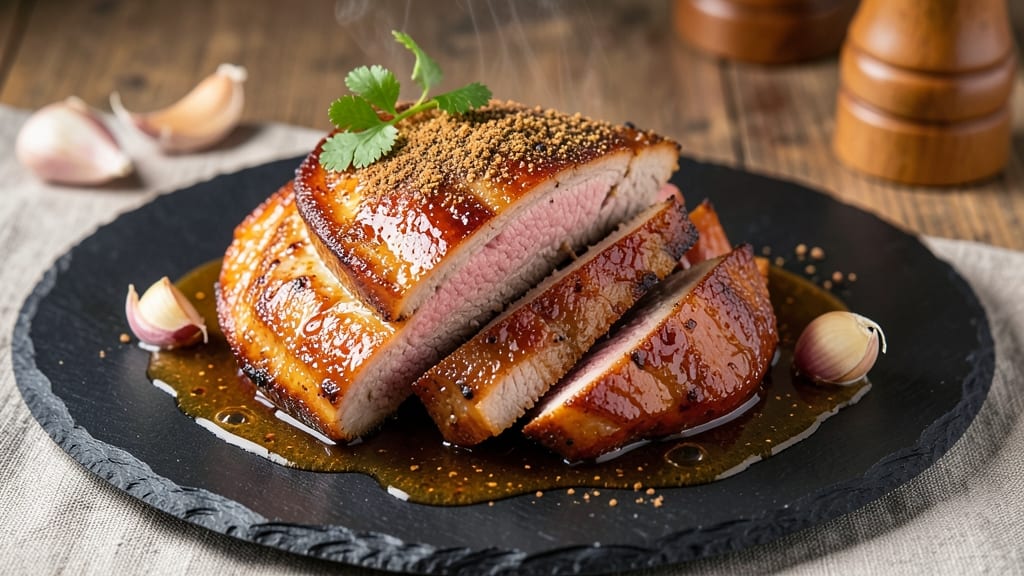
This Chinese BBQ roast pork recipe delivers the signature sweet-savory balance of Cantonese Char Siu, with a charred five-spice crust and silky pink interior that melts in your mouth. 🔥 I first mastered this technique during my apprenticeship in Charleston, where I learned how the right blend of spices and careful cooking transforms simple pork into something extraordinary.
The recipe honors traditional methods while making it accessible for home cooks.
The secret lies in the marinade—a perfect harmony of honey, soy sauce, and five-spice powder—that tenderizes the meat while building deep flavor. After marinating overnight, the pork roasts to develop that signature glossy, caramelized bark while staying juicy inside.
This is the kind of dish that elevates any meal, whether served at a family gathering or a special occasion.
What makes this recipe stand out is the balance of textures and flavors: the crispy, aromatic crust contrasts beautifully with the tender, slightly sweet meat. The five-spice blend—star anise, cinnamon, cloves, fennel, and Sichuan peppercorn—adds complexity that makes this pork unforgettable.
Paired with steamed jasmine rice and quick-pickled vegetables, it becomes a complete, restaurant-quality meal.
Perfect for holidays, family dinners, or when you want to impress guests, this Char Siu recipe is a foolproof way to bring authentic Chinese BBQ flavors to your table. The process is straightforward, but the results are anything but ordinary—this is pork at its finest. Let’s get cooking!
Ingredients for chinese bbq roast pork
Six pounds of pork shoulder and a handful of spices transform into restaurant-quality Char Siu.
| Ingredient | Amount | Notes |
|---|---|---|
| Pork Shoulder 🐖 | 3 lb | Bone-in for best flavor |
| Honey 🍯 | ½ cup | Raw or pure preferred |
| Soy Sauce 🍶 | ½ cup | Light or all-purpose |
| Five-Spice Powder 🌶️ | 2 tbsp | Homemade or quality blend |
| Brown Sugar 🍚 | ½ cup | Packed, light or dark |
| Garlic Cloves 🧄 | 8 cloves | Peeled and smashed |
| Fresh Ginger 🌿 | ½ cup | Grated, peeled |
| Sesame Oil 🫒 | 1 tbsp | Toasted for aroma |
| Shaoxing Wine 🍷 | ¼ cup | Or dry sherry substitute |
| Baking Soda 🧪 | ½ tsp | For tenderizing pork |
| Cornstarch 🌾 | 1 tbsp | For coating before roasting |
| Star Anise 🌿 | 1 whole | Optional for extra depth |
| Cinnamon Sticks 🍃 | 2 whole | For marinade infusion |
| Sichuan Peppercorns 🌶️ | 1 tsp | Lightly toasted |
The pork shoulder is non-negotiable here—bone-in gives the best flavor, and Costco or Whole Foods usually have the best cuts. Look for good marbling and ask the butcher to trim excess fat if needed. For the five-spice powder, Penzeys or local Asian markets carry the most authentic blends. I always make extra marinade because it’s the secret to that signature glossy bark. The Shaoxing wine? Don’t skip it—it’s what gives Char Siu its depth, but dry sherry in a pinch works too.
No Shaoxing wine? Dry white wine or even apple juice can stand in, but you’ll lose some complexity. The baking soda tenderizes the meat—don’t fear it, it’s key for that silky pink interior. For the spices, if you can’t find whole star anise or Sichuan peppercorns, ground versions work at half the amount. The cornstarch coating is what creates that perfect crispy crust, so don’t skip it. And trust me, the extra 30 minutes marinating overnight makes all the difference—this isn’t something you can rush.
Marinate the pork overnight in the fridge, then roast at 325°F until internal temp hits 145°F. The leftovers reheat beautifully—just a quick blast in the oven with a splash of water. Keeps for 4-5 days in the fridge or 3 months frozen. I always make double batches because it’s perfect for sandwiches, rice bowls, or serving at gatherings. Store the marinade separately if you want to reuse it for another batch—it’s that good.
Why You'll Love This Recipe
- One-Pan Magic: I swear by this recipe when I’m too tired to scrub pots—just rub the pork shoulder with soy sauce, five-spice, and brown sugar, then let the oven do the work. The honey caramelizes into a glossy glaze that practically falls off the knife.
- Sweet-Savory Crunch: That five-spice powder? It’s the secret weapon—warm cinnamon, star anise, and clove cut through the richness of the pork, while the honey and soy sauce create a sticky, slightly crispy crust. Honestly, I’ve never met a BBQ sauce that could compete.
- Leftover Hero: This recipe makes way more than I can eat in one sitting, and that’s a win. Cold slices in rice bowls the next day? Perfect. Sandwiches? Even better. My freezer’s always stocked with portions because reheating turns it into something entirely new.
- Budget-Friendly Feast: Pork shoulder is cheap, and this recipe stretches it across multiple meals without sacrificing flavor. Between us, I’ve fed six people for under $15 using this—plus, the leftovers keep my wallet happy for days. Not the prettiest, but the taste makes up for it every time.
Step-by-step instructions for Chinese BBQ roast pork
Here's how to transform a simple pork shoulder into melt-in-your-mouth perfection.
👨🍳 Step 1: Prep the Pork with the Marinade Magic
Start by placing the 3 lb pork shoulder in a large bowl. In a separate bowl, whisk together the 0.5 cup honey, 0.5 cup soy sauce, 2 tbsp five-spice powder, 0.5 cup packed brown sugar, 8 smashed garlic cloves, 0.5 cup grated fresh ginger, 1 tbsp toasted sesame oil, and 0.25 cup Shaoxing wine. Pour this fragrant marinade over the pork, making sure it coats every inch.
Add the 0.5 tsp baking soda to the mix—this tenderizes the meat beautifully. Toss everything together with your hands, pressing the marinade into the meat. Cover and refrigerate for at least 12 hours (overnight is even better). The longer it marinates, the more flavor it absorbs and the more tender it becomes.
🍳 Step 2: Build the Charred Crust Coating
Remove the pork from the fridge and let it sit at room temperature for 30 minutes. In a small bowl, mix the 1 tbsp cornstarch with 1 tsp lightly toasted Sichuan peppercorns (toast them in a dry pan for 1 minute until fragrant). This coating will create that signature charred crust.
Place the pork on a wire rack set over a baking sheet. Brush it lightly with any remaining marinade, then sprinkle the cornstarch-Sichuan peppercorn mixture evenly over the surface. Add the 1 whole star anise and 2 whole cinnamon sticks to the pan for extra aroma during cooking.
🔥 Step 3: Roast to Perfect Doneness
Preheat your oven to 325°F. Roast the pork uncovered for 3 hours, then increase the heat to 425°F and continue roasting for another 1 hour. This two-stage cooking ensures a tender interior with that beautiful charred exterior.
About 45 minutes before the pork is done, broil it on high for 5-7 minutes to get that deep charred crust. Watch carefully—you want it dark and caramelized, not burnt. The internal temperature should reach 195-203°F when done. If it's not quite there, return it to the oven for another 15-30 minutes.
⏰ Step 4: Rest and Slice for Maximum Juiciness
Transfer the pork to a cutting board and let it rest for at least 30 minutes (up to 1 hour is ideal). This resting period allows the juices to redistribute throughout the meat, ensuring each slice is moist and flavorful. Don't skip this step—it's crucial for the best texture.
Slice the pork against the grain into ½-inch thick pieces. Serve immediately with the charred crust facing up so everyone can appreciate that beautiful caramelized exterior. The inside should be silky pink and incredibly tender, falling apart with just a gentle tug.
Pro Tips For Making Chinese Bbq Roast Pork
- Start with High Heat: Sear the pork shoulder in a screaming-hot pan or wok for 3-4 minutes per side before slow cooking—this locks in flavor and prevents the honey glaze from turning into a sticky mess. I used to skip this, and my pork always tasted underwhelming until I realized the Maillard reaction is non-negotiable for that deep, caramelized taste.
- Blend the Glaze Right: Mix honey, soy sauce, and brown sugar in a saucepan and simmer for 2-3 minutes until slightly thickened—this prevents clumping when brushing later. After burning three batches where the glaze separated, I learned to treat it like a sauce, not just a dump-and-stir topping.
- Don’t Crowd the Pork: Leave space between pork slices in the oven or steamer so the glaze caramelizes instead of steaming into a watery film. I was skeptical until I tried it—now my pork has crisp edges and glossy shine, not sad, soggy spots.
- Rest Before Slicing: Let the pork rest for 5-10 minutes under foil after cooking—this keeps it from falling apart when you slice it. I know, I know, you’re impatient, but cutting into it too soon turns your perfect roast into a pile of shredded disappointment.
Troubleshooting great chinese bbq roast pork
Pork Too Dry?
If your Char Siu emerges dry instead of tender, the issue is likely overcooking or insufficient marinating time. I’ve seen this happen when home cooks rush the process—never skip the overnight marinade or the baking soda tenderizer.
For extra insurance, brining the pork for 1 hour in a solution of 1 cup water, ½ cup soy sauce, and 1 tbsp sugar before marinating can help. Also, check your internal temperature—pork should reach 195-203°F, not higher. 💫
Crust Not Crispy?
The signature charred bark comes from the cornstarch-Sichuan peppercorn coating and the broiling step. If your crust is pale or sticky, you likely missed the 425°F finish or didn’t broil long enough.
For extra crispiness, try this pro trick: pat the pork dry with paper towels before applying the coating—this helps the cornstarch adhere better. Also, toast the Sichuan peppercorns until they’re fragrant (about 1 minute in a dry pan) to maximize their aroma and crispiness.
Marinade Not Sticking?
If the marinade pools instead of clinging to the pork, the fat cap is likely interfering. Trim excess fat from the pork shoulder before marinating—leave about ¼-inch for flavor but not so much that it blocks the marinade.
Another trick I learned in Charleston: poke the pork all over with a fork (about ½-inch deep) to create channels for the marinade to penetrate. For extra adhesion, refrigerate the pork uncovered for 30 minutes before adding the marinade to help it absorb better.
Flavor Too Mild?
Muted flavors usually mean the marinade wasn’t strong enough or the pork didn’t cook long enough. Double-check your five-spice powder—some store-bought blends are weak. I recommend Penzeys Spices or making your own blend with 1 tsp each of star anise, cinnamon, cloves, fennel seeds, and Sichuan peppercorns.
For extra depth, simmer the marinade for 10 minutes before applying it to the pork to concentrate the flavors. Also, don’t rush the low-and-slow roast—patience is key for developing that complex, caramelized flavor.
Pork Burning Before Done?
If the edges burn before the pork reaches the right temperature, it’s time to adjust your oven or cooking method. For home ovens, use a water pan on the lower rack to add moisture and prevent drying.
Alternatively, wrap the pork loosely in foil during the 325°F stage to protect it, then uncover for the final 425°F broil. If your oven runs hot, reduce the temperature by 25°F and add 15-30 minutes to the cook time. A meat thermometer is non-negotiable—never guess!
Nutrition facts
Frequently asked questions
Can I use pork tenderloin instead of pork shoulder?
Pork tenderloin works but requires adjustments—it's leaner and cooks faster. Marinate it for 4-6 hours max (not overnight) and reduce roasting time to 1-1.5 hours at 375°F. The texture will be more delicate, but the flavor profile remains the same. For best results, trim excess fat and use a meat thermometer (145°F internal temp).
What's the difference between Cantonese Char Siu and Hong Kong-style roast pork?
Both are Chinese BBQ pork, but Cantonese Char Siu uses more honey and five-spice, creating a sweeter, stickier glaze. Hong Kong-style leans toward soy sauce and hoisin, with a slightly thicker, less glossy crust. The marinating time also differs—Cantonese often marinates overnight while Hong Kong versions may use 24-48 hours for deeper flavor.
How do I reheat leftovers without drying them out?
Slice the pork and reheat in a skillet over medium heat with 1 tbsp water or Shaoxing wine for 2-3 minutes per side. For oven reheating, wrap slices in foil with ½ cup water in the pan, covering tightly at 300°F for 10-15 minutes. Microwaving works too—place slices on a plate with 1 tsp water and cover for 30-second bursts until warm.
Can I make this in a slow cooker?
Yes! Marinate the pork as directed, then cook on low for 6-8 hours or high for 3-4 hours with ½ cup marinade in the bottom. For the charred crust, finish by broiling for 5-7 minutes after transferring to a baking sheet. The texture will be more tender than oven-roasted, but the flavor remains authentic. Add 1 cinnamon stick to the slow cooker for extra aroma.
What's the best way to serve Char Siu?
Slice against the grain and serve with steamed jasmine rice, quick-pickled vegetables, or in steamed buns for Char Siu bao. For a modern twist, pair with roasted potatoes and a sesame-ginger salad. The pork also makes amazing sandwiches—layer it on brioche buns with hoisin and cucumber. Don't forget the charred crust side up for maximum visual appeal!