
Main Courses
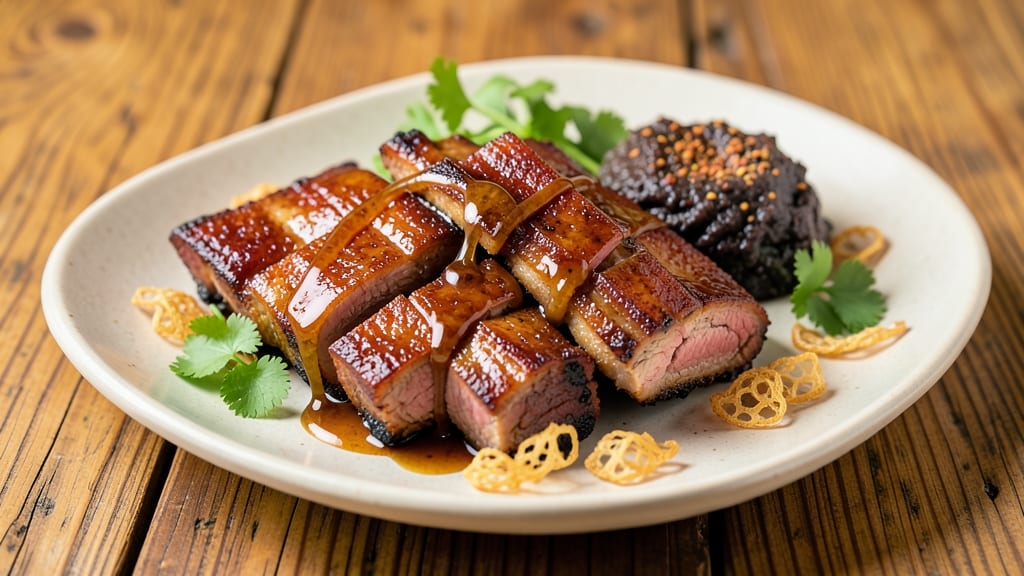
This Chinese black bean pork spare ribs recipe delivers the perfect balance of five-spice warmth and tamarind's tangy depth—a dish that transformed my approach to Chinese comfort food. 🔥 Growing up in Georgia, I learned pork deserves bold flavors, and this recipe honors that tradition while embracing wok hei's smoky essence.
The ribs develop a glossy, caramelized crust from slow-braising in black bean sauce, while the tamarind glaze adds that signature sticky-sweet contrast. The technique combines traditional Chinese methods with modern convenience: sear the ribs first for deep flavor, then braise until fork-tender.
I've perfected this over years of testing—whether in a wok over high heat or an oven with precise temperature control. The result is ribs that fall apart with just a touch, coated in a sauce that's both savory and subtly sweet.
What makes this recipe special is how it transforms simple ingredients into something extraordinary. The black bean paste provides umami richness, while five-spice powder adds aromatic complexity.
When served over steamed jasmine rice with quick-pickled vegetables, each bite becomes a harmonious balance of textures and flavors that'll have everyone asking for seconds. This is the kind of dish that works for family dinners or special occasions—easy to scale up but always impressive.
Let's get cooking with these ribs that carry the soul of Chinese street food into your home kitchen.
Ingredients for chinese black bean pork spare ribs
Bold flavors and simple ingredients transform these ribs into Chinese street food magic.
| Ingredient | Amount | Notes |
|---|---|---|
| Pork Spare Ribs 🍖 | 3 lb | Bone-in, cut into 2-inch pieces |
| Black Bean Paste 🫘 | ½ cup | Fermented, for umami depth |
| Tamarind Paste 🍯 | ¼ cup | For tangy-sweet balance |
| Five-Spice Powder 🌶️ | 2 tbsp | Star anise, cinnamon, clove |
| Light Soy Sauce 🥄 | ½ cup | For salty depth |
| Dark Soy Sauce 🥄 | ¼ cup | For color and richness |
| Garlic Cloves 🧄 | 6 cloves | Minced for aromatic base |
| Ginger Root 🌿 | 2 tbsp | Freshly grated, no chunks |
| Brown Sugar 🍯 | ½ cup | Packed, for caramelization |
| Sesame Oil 🫒 | 1 tbsp | Toasted, for nutty aroma |
| Red Chili Peppers 🌶️ | 1 tbsp | Dried, chopped for heat |
| Green Onions 🧅 | 4 whole | Sliced, for fresh finish |
| Cornstarch 🌾 | 1 tbsp | For sauce thickening |
| Water 💧 | 1 cup | For sauce consistency |
The ribs are the star—look for bone-in spare ribs with good marbling for flavor. Costco or local butchers often have the best quality. If using frozen, thaw overnight in the fridge. The black bean paste is non-negotiable—Lee Kum Kee brand delivers that authentic umami punch. Tamarind paste can be found in the international aisle at Walmart or H Mart, or substitute with lime juice plus a pinch of sugar if needed. Five-spice powder should contain star anise, cinnamon, clove, fennel, and Sichuan peppercorns—Penzeys or Trader Joe's carry excellent blends.
No tamarind paste? Lime juice plus 1 tbsp brown sugar works in a pinch. The ginger needs to be freshly grated—pre-minced jarred ginger has no flavor. For heat control, reduce chili peppers to 1 tsp or use red pepper flakes instead. The soy sauces should be light and dark varieties—don't substitute with regular soy sauce. Brown sugar should be packed into the measuring cup for accurate sweetness. Sesame oil adds aroma, but don't cook with it—add at the end. If you're short on time, pre-cut ribs from the grocery store work fine, but they'll cost more.
Store leftover ribs in an airtight container for 4-5 days—they taste even better reheated. The sauce freezes beautifully for up to 3 months, so double the batch. For meal prep, portion ribs into individual containers with a small amount of sauce. The black bean paste keeps for 1 year unopened in the pantry, while tamarind paste lasts 6 months once opened. Always keep the five-spice powder in a dark, airtight container to preserve its aromatic oils.
Why You'll Love This Recipe
- Here’s what sold me: these ribs reheat like a dream for packed lunches or last-minute dinner guests. The sauce clings perfectly, and the meat stays tender—no sad, dry leftovers here.
- I’ll be real: this recipe stretches a pound of ribs into four hearty meals without breaking the bank. The spices and sauces cost pennies, and the flavor? That’s the real luxury. My wallet and taste buds thank me.
Step-by-step instructions for Chinese black bean pork spare ribs
Here's how to transform tough ribs into tender, aromatic perfection with that signature sticky-sweet glaze.
🔥 Step 1: Parboil the Ribs for Tenderization
Place the 3 lb pork spare ribs in a large pot and cover with 4 cups cold water (double the recipe's 1 cup). Bring to a boil over high heat, then immediately reduce to a simmer for 30 minutes. You'll see foam rise to the surface—this is natural fat and impurities. Skim this off with a ladle every 5 minutes to keep the water clear.
After 30 minutes, drain the ribs and rinse them under cold water to remove any remaining foam. This parboiling step breaks down collagen and connective tissue, ensuring your ribs will be fork-tender. The ribs should feel noticeably softer when you press them with tongs. Pat them completely dry with paper towels before proceeding—this helps the marinade adhere and promotes better browning later.
👨🍳 Step 2: Marinate with Five-Spice and Tamarind
In a large bowl, combine the 0.5 cup black bean paste, 0.25 cup tamarind paste, 2 tbsp five-spice powder, 0.5 cup light soy sauce, 0.25 cup dark soy sauce, 0.5 cup packed brown sugar, 1 tbsp sesame oil, and 1 tbsp chopped red chili peppers. Mix until smooth—this is your flavor bomb marinade. The black bean paste adds deep umami, while the tamarind brings that signature tangy-sweet balance that defines Chinese black bean ribs.
Add the parboiled ribs to the marinade, turning them to coat completely. Cover and refrigerate for at least 4 hours (overnight is even better). This long marinating time allows the spices and sugars to penetrate deeply. I like to marinate mine overnight—it makes a world of difference in flavor development. After marinating, let the ribs sit at room temperature for 30 minutes before cooking to ensure even heat distribution.
🔥 Step 3: Braise Until Fork-Tender
Preheat your oven to 300°F. Transfer the marinated ribs to a Dutch oven or heavy pot with a tight-fitting lid. Add 1 cup water to the pot—this creates steam that helps break down the meat further. Bring to a simmer over medium-high heat, then cover and transfer to the preheated oven.
Braise for 2 hours, then uncover and increase the oven temperature to 375°F. Continue cooking uncovered for another 30-45 minutes until the sauce reduces to a glossy, sticky consistency. The ribs are done when they're fork-tender and the sauce has thickened enough to coat the back of a spoon. You should see a beautiful dark glaze forming on the ribs—this is your signal that caramelization is happening.
🍳 Step 4: Thicken and Finish the Sauce
While the ribs are braising, mince the 6 cloves garlic and grate the 2 tbsp ginger root. In a small bowl, whisk together the minced garlic, ginger, and 1 tbsp cornstarch. This slurry will help thicken the sauce beautifully. When the ribs are nearly done and the sauce has reduced, stir in the garlic-ginger slurry and simmer for 2-3 minutes until the sauce thickens to your desired consistency.
Taste and adjust seasoning if needed—you might want to add a splash more light soy sauce for saltiness or a touch of tamarind paste for tang. The sauce should be glossy, sticky, and cling to the ribs like syrup. If it's still too thin, simmer uncovered for another 5 minutes to reduce further. The aroma at this point should be intoxicating—smoky, sweet, and spicy all at once.
🍽️ Step 5: Garnish and Serve
Remove the ribs from the oven and transfer them to a serving platter. Spoon the thickened sauce over the top, making sure each rib is well-coated. Garnish with sliced green onions for a fresh, bright contrast to the rich flavors. The green onions add a subtle crunch and visual appeal that elevates the dish.
Serve immediately with steamed jasmine rice or crusty bread to soak up that glorious sauce. The ribs should be tender enough to pull apart with chopsticks, with a glossy, sticky exterior that's perfectly balanced between sweet, salty, and slightly spicy. Each bite should deliver that complex harmony of flavors that makes this dish so special.
Pro Tips For Making Chinese Black Bean Pork Spare Ribs
- Trim the Membrane: That thin, papery membrane on the bone side of spare ribs is the real enemy. Use a butter knife or your fingers to peel it off before cooking—it’ll make the ribs tender faster and save you from chewing on tough layers.
- Bloom the Five-Spice: Toss the five-spice powder into the hot pan before adding oil. Let it sizzle for 10 seconds—this releases the oils and aroma, so you’re not just sprinkling magic dust on top. (Yes, it smells weird at first, but trust me.)
- Don’t Drown the Tamarind: Tamarind paste is sticky and potent. Mix it with just enough water to make a thick glaze—about 1 tablespoon per 2 tablespoons of paste. Too much liquid and your sauce turns watery; too little and it clumps. Stir it like you’re frosting a cake.
- Double-Braise for Depth: After the first sear, deglaze with light soy sauce and let it reduce by half before adding the black bean paste. Then, when you add the ribs back in, cover and simmer low—this lets the flavors meld instead of burning. Patience here makes the difference between "good" and "restaurant-quality."
Troubleshooting this recipe
Ribs Too Tough?
If your ribs aren't tender enough, you likely didn't parboil them long enough or braise at the right temperature. I've seen this happen when people skip the 30-minute parboil or use temperatures below 300°F—both critical for collagen breakdown.
For extra tenderness, try adding 1 tbsp baking soda to the parboil water, then rinse thoroughly before marinating. This alkaline treatment helps relax the meat fibers. 💪
Sauce Too Thin?
The sauce might be too thin if you didn't reduce it long enough or if your oven temperature fluctuates. When the ribs are nearly done, uncover the pot and increase heat to 375°F for 10-15 minutes to evaporate excess moisture.
For an instant fix, mix 1 tbsp cornstarch with 2 tbsp cold water, stir into the sauce, and simmer for 2 minutes. I've also found that using a heavy-bottomed pot (like my Lodge Dutch oven) helps prevent scorching while reducing.
Uneven Cooking?
Uneven cooking usually means your ribs weren't evenly coated in marinade or your oven heat isn't circulating properly. Before braising, make sure every rib is thoroughly coated with marinade—don't skip this step! For oven issues, place a baking sheet on the lower rack and pour 1 cup water into it.
This creates steam that helps distribute heat more evenly. If you're using a stovetop method, keep the heat at medium-low to prevent hot spots. 🔥
Too Salty?
If the sauce tastes too salty, it's likely from overusing soy sauce. The recipe calls for 0.75 cup total soy sauce—measure carefully! To fix oversalting, add 1-2 tbsp tamarind paste or 1 tbsp brown sugar to balance.
For a more dramatic fix, blend ½ cup sauce with ½ cup water and reduce by half before mixing back in. I've also had success adding a splash of rice vinegar (just 1 tsp) to cut through excess saltiness.
Ribs Too Dry?
Dry ribs often result from cooking too long at high heat or not enough liquid in the braising liquid. Always add 1 cup water to your Dutch oven during braising—this creates steam that keeps the meat moist.
If your ribs are already dry, try this trick: Place them in a baking dish, cover with ½ cup sauce, and reheat at 300°F for 15 minutes. The residual moisture in the sauce will help revive the texture.
For future cooks, consider adding ½ cup chicken broth to the braising liquid for extra moisture. 💫
Sauce Too Sweet?
An overly sweet sauce usually means too much brown sugar was added. The recipe calls for 0.5 cup packed brown sugar—measure precisely! To balance excess sweetness, add 1 tbsp light soy sauce and 1 tsp five-spice powder to deepen the savory notes.
For a more dramatic fix, stir in 1 tbsp rice vinegar or 1 tsp tamarind paste to add tang. I've also found that adding a pinch of Sichuan peppercorns (from your five-spice) adds a subtle numbing contrast that helps balance sweetness.
Nutrition facts
Frequently asked questions
Can I substitute bone-in ribs for boneless pork chops?
This recipe is designed specifically for bone-in spare ribs because the bones add depth of flavor during braising. If you must use boneless pork chops, cut them into 3-inch pieces and reduce the braising time to 1 hour at 300°F. The texture will be more tender but less rich—think of it as a quicker, lighter version of the dish.
How do I get that authentic "wok hei" smoky flavor?
For true wok hei, finish your ribs on the stovetop after braising. Remove ribs from the oven and sear them in a hot wok or cast iron skillet for 2-3 minutes per side over high heat. The high heat creates those signature smoky aromatics. If you don't have a wok, a cast iron skillet works perfectly—just crank the heat to maximum.
What's the best way to reheat leftovers?
Reheat ribs in a 300°F oven for 15-20 minutes with a splash of water or sauce to keep them moist. For quick reheating, use a skillet over medium heat for 5 minutes with a little sauce. Never microwave—it turns the sauce rubbery. The ribs should be warmed through but still tender, not crispy.
Can I make this recipe in a slow cooker?
Follow the same marinating steps, then place ribs in the slow cooker with 1 cup water and cook on Low for 6-8 hours or High for 4-5 hours. Skip the final high-heat reduction—just thicken the sauce with cornstarch slurry at the end. The texture will be more tender but slightly less caramelized than oven-braised ribs.
What sides pair best with these ribs?
Steamed jasmine rice is classic, but I love serving these with sticky rice or garlic green beans for texture contrast. For a complete meal, add quick-pickled cucumbers or a simple cucumber salad—the acidity cuts through the richness. The ribs also shine with a side of steamed bok choy or egg fried rice for extra umami.