
Main Courses
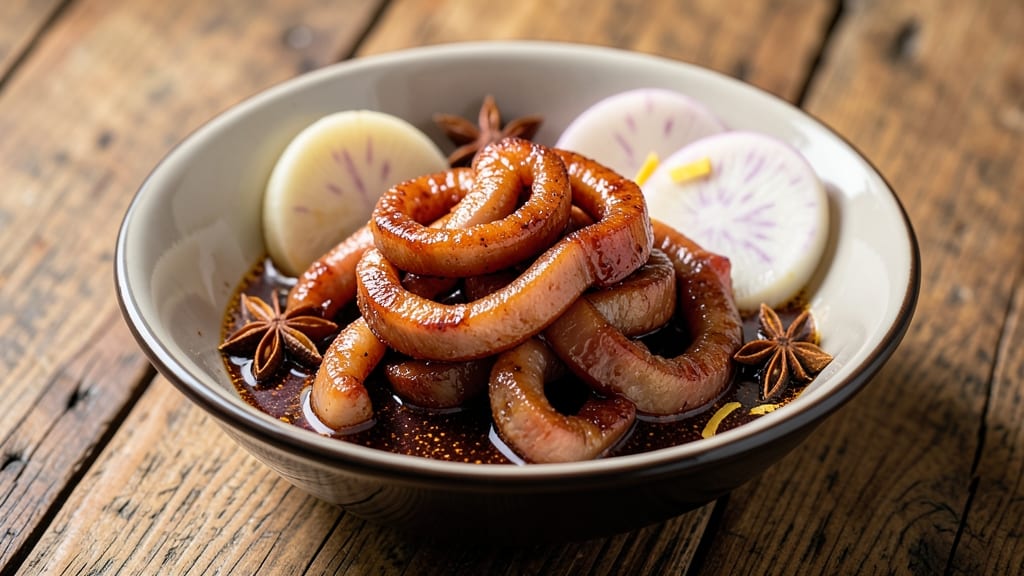
This Chinese braised pork intestine recipe transforms humble ingredients into a dish with deep five-spice aroma and silky, melt-in-your-mouth texture. After years of perfecting this technique in Charleston kitchens, I’ve developed a method that balances traditional Chinese braising with approachable home-cooking precision.
The secret lies in the slow simmer—where pork intestines become tender while absorbing the aromatic broth.
What makes this recipe special is its ability to deliver restaurant-quality results with simple ingredients and one-pot technique. We start with thorough cleaning and marinating to remove any impurities, then braise the intestines until they’re fork-tender.
The five-spice powder creates that signature Chinese glow, while soy sauce and star anise add depth that lingers on the palate.
By the time you serve this dish, you’ll have a rich, velvety braise that’s perfect for family gatherings or special occasions. The intestines absorb the flavorful broth, creating bite-sized morsels that are both satisfying and elegant.
Paired with steamed rice or crusty bread, it becomes a complete meal that honors tradition while feeling fresh and modern.
This recipe also offers flexibility—adjust the spice level to taste or add vegetables like daikon radish for extra texture. The braising liquid makes excellent leftovers, so you can enjoy this dish throughout the week. Let’s get started on creating something truly memorable.
Ingredients for chinese braised pork intestine
Simple ingredients elevated by slow braising and aromatic spices deliver restaurant-quality Chinese pork intestines.
| Ingredient | Amount | Notes |
|---|---|---|
| Pork Intestines 🥩 | 1 ½ lb | Cleaned, soaked overnight |
| Soy Sauce 🍶 | ½ cup | Light or dark variety |
| Star Anise 🌿 | 2 whole | Whole pods for infusion |
| Five-Spice Powder 🌶️ | 1 tbsp | Traditional Chinese blend |
| Daikon Radish 🥕 | 1 whole | Cut into 2-inch chunks |
| Ginger Root 🧄 | 2 tbsp | Freshly grated, peeled |
| Garlic Cloves 🧄 | 6 cloves | Minced, peeled |
| Green Onions 🧅 | ¼ cup | Sliced, for garnish |
| Sesame Oil 🫒 | 1 tbsp | Toasted, for finishing |
| Cornstarch 🌾 | 2 tbsp | For thickening broth |
| Water 💧 | 2 cups | For initial soaking |
| White Peppercorns 🌶️ | ½ tsp | Crushed, for depth |
| Salt 🧂 | 1 tsp | Kosher or sea salt |
| Sugar 🍯 | 1 tbsp | Balances acidity |
The pork intestines require thorough preparation. Source them from a trusted butcher or Asian market—they should be fresh, pale, and free of impurities. Soak them in cold water with 1 tbsp vinegar for at least 4 hours to remove any lingering odors. Penzeys or local Chinese grocers often carry pre-cleaned versions, which saves time. For the five-spice powder, look for authentic blends at specialty stores—they contain star anise, cloves, fennel, cinnamon, and Szechuan peppercorns. Diamond Crystal kosher salt is ideal for balancing flavors without overpowering the delicate texture of the intestines.
No star anise? Substitute with 1/4 tsp each of cinnamon and cloves, though the flavor won't be identical. Fresh ginger and garlic can be swapped for powdered, but use half the amount—fresh adds complexity. Daikon radish unavailable? Substitute with parsnips or turnips, though texture will differ slightly. The soy sauce should be light for a cleaner flavor, but dark adds depth. For extra richness, add 1 tbsp of oyster sauce—just ensure it's vegetarian if needed. The cornstarch slurry is critical for thickening; mix it with cold water to avoid clumping.
This dish tastes even better the next day as flavors meld. Store leftovers in the fridge for up to 5 days, covered with a thin layer of sesame oil to preserve freshness. For freezing, portion into airtight containers with broth and keep for 3 months. Reheat gently on the stove, adding a splash of water if the broth thickens too much. The braising liquid makes an excellent base for noodle soups or rice dishes—simply strain and reduce it for a quick sauce.
Why You'll Love This Recipe
- One-Pot Magic: I swear by this recipe—just dump everything in one pot, simmer, and walk away. The star anise and five-spice powder do all the heavy lifting while you sip tea or scroll through your phone.
- Umami Bomb: That first bite? Pure satisfaction. The soy sauce and daikon radish create this deep, savory punch that sticks with you—like a hug from your favorite Chinese takeout, but better.
- Leftover Legend: Between us, this dish tastes even richer the next day. I make a big batch on Sundays, and by Wednesday, it’s still my go-to for quick lunches—no reheating drama, just pure flavor.
- Budget Win: Pork intestines are cheap, and this recipe stretches them into something luxurious. Honestly, it’s my secret for feeding a crowd without breaking the bank—plus, the daikon radish adds freshness that keeps it interesting.
Step-by-step instructions for braised pork intestine with five-spice perfection
Transform humble pork intestines into silky, aromatic braised pork using traditional Chinese techniques.
Prepare the Pork Intestines for Cooking
Remove the soaked 1.5 lb pork intestines from the water and rinse thoroughly under cold running water. This removes any lingering impurities from the overnight soak. Using a sharp knife, trim off any remaining fat or connective tissue, then slice the intestines into 1-inch wide rings. The goal is to create even-sized pieces that will cook uniformly throughout.
In a large bowl, combine the sliced intestines with 0.5 cup soy sauce, 1 tbsp five-spice powder, 1 tsp salt, and 1 tbsp sugar. Use your hands to massage the mixture into the meat for 2-3 minutes, ensuring every piece is evenly coated. This marinade not only seasons but also begins tenderizing the collagen-rich tissue. Let the intestines rest for 15 minutes at room temperature before cooking.
Build the Aromatic Base
Heat a Dutch oven or heavy pot over medium-high heat and add 2 tbsp grated ginger root and 6 minced garlic cloves. Sauté for 1-2 minutes until the garlic turns golden and fragrant—this prevents bitterness. Add the 1 whole daikon radish cut into 2-inch chunks and cook for an additional 3 minutes until slightly softened but still holding shape.
Pour in 2 cups water and bring to a gentle simmer. Add the 2 whole star anise and 0.5 tsp crushed white peppercorns, then reduce heat to medium-low. Let the broth infuse for 10 minutes, allowing the star anise to release its anise-like aroma and the peppercorns to add subtle depth. This aromatic base will form the flavor foundation for the braised intestines.
Braise the Intestines Until Tender
Add the marinated intestines to the pot in a single layer, arranging them neatly. Pour in any remaining marinade from the bowl, then cover with a tight-fitting lid. Bring the liquid to a gentle simmer (small bubbles at the edges) and reduce heat to low. Braise for 1 hour and 15 minutes, stirring occasionally to prevent sticking.
After 45 minutes, check for doneness by piercing a piece with a fork—it should slide in easily with slight resistance. If the intestines aren't tender yet, continue cooking for another 15-20 minutes. The key is patience; the collagen must fully break down for that signature silky texture. Avoid boiling vigorously, as this can make the intestines tough.
Thicken and Finish the Braise
In a small bowl, whisk together 2 tbsp cornstarch with 2 tablespoons of the braising liquid until smooth. Slowly pour this slurry into the pot while stirring constantly. The mixture will thicken immediately, creating a glossy, velvety sauce that coats the intestines. Simmer for 2-3 minutes until the sauce reaches your desired consistency—it should cling to the back of a spoon.
Remove the pot from heat and stir in 1 tbsp toasted sesame oil. This final touch adds nutty depth and balances the dish's richness. Taste and adjust seasoning—you may need a touch more soy sauce or salt to harmonize the flavors. Let the braise rest for 5 minutes to allow the sauce to fully set.
Serve with Garnish and Traditional Pairings
Transfer the braised intestines to a warm serving platter, spooning the thickened sauce over the top. Garnish with 0.25 cup sliced green onions for freshness and color contrast. Serve immediately with steamed jasmine rice or mantou (steamed buns) to soak up the flavorful sauce.
For an authentic experience, pair with a side of quick-pickled vegetables or a simple cucumber salad. The contrast of crisp, cool vegetables against the warm, spiced intestines creates a balanced meal. Each bite should deliver tender, melt-in-your-mouth texture with layers of five-spice warmth and soy-sweetened depth.
Pro Tips For Making Chinese Braised Pork Intestine
- Blanch First, Then Boil: I learned this the hard way—skip the direct braising and blanch the intestines in salted boiling water for 3-4 minutes first. This removes the bitter off-flavors and tightens the collagen, so your final dish stays tender instead of turning into chewy rubber. (Yes, even if you're impatient like me.)
- Scrub the Radish: Daikon radish soaks up flavors like a sponge, but it also hides grit. Give it a good scrub under cold water, then slice it thick (about ½-inch) so it stays intact during the long braise. Thin slices disappear into mush, and no one wants that.
- Low and Slow Wins: After searing the intestines and adding the spices, resist the urge to crank the heat. Simmer at a gentle bubble—just enough to keep the liquid moving—so the five-spice and star anise infuse without burning. I’ve ruined batches by rushing this, and the aroma difference is night and day.
- Toast the Spices: Dry-toast the star anise and five-spice powder in a separate pan for 30 seconds until fragrant. This unlocks their oils and makes them work harder in the braise. (Sounds weird, but it works—trust the process.) Skip this, and your dish will taste flat, even if everything else is perfect.
Pro cooking tips for great chinese braised pork intestine
Marinating Magic
Never skip the marinade—this is where the five-spice powder works its magic. I use my hands to massage the intestines for 2-3 minutes because it ensures even distribution of the 1 tbsp five-spice powder and 0.5 cup soy sauce.
The sugar in the marinade isn't just for sweetness; it helps tenderize the collagen-rich tissue while balancing the soy's acidity. Let the intestines rest 15 minutes at room temperature before cooking—this prevents them from tightening up in the hot pot. 💫
Low and Slow Wins
The key to silky texture is patience—braise at low heat for 1 hour 15 minutes with a tight lid. I check doneness at 45 minutes by piercing with a fork; if it doesn't slide in easily, give it another 15-20 minutes.
The gentle simmer (small bubbles at edges) is crucial—boiling makes intestines tough. My Lodge Dutch oven maintains even heat better than nonstick pans, which can't handle the long cook time.
Star Anise Infusion
Don't just toss star anise into the pot—infuse it properly. Add the 2 whole pods to the simmering broth and let them steep for 10 minutes before adding the intestines. This releases maximum aroma.
I remove them after braising (they're easy to fish out with tongs) unless you want a stronger anise flavor. The pods add depth without overpowering, creating that signature Chinese glow in the sauce. 🌿
Cornstarch Slurry
For that restaurant-quality glossy sauce, mix 2 tbsp cornstarch with 2 tbsp braising liquid until completely smooth—no lumps! Pour it in slowly while stirring constantly. The sauce should thicken immediately, coating the intestines beautifully.
If it's too thin after 2-3 minutes of simmering, whisk in another ½ tbsp cornstarch mixed with water. The final sauce should cling to the back of a spoon.
Sesame Oil Finish
Add the 1 tbsp toasted sesame oil off the heat—this prevents it from burning and adds nutty depth. Stir gently so the oil emulsifies into the sauce rather than floating on top. The oil balances the dish's richness and enhances the five-spice aroma.
I always taste at this stage and adjust with a pinch of salt or extra soy sauce if needed. The resting time of 5 minutes lets flavors meld completely before serving. 🌟
Doneness Test
When testing doneness, look for three things: the fork should slide in easily, the intestines should feel tender to the touch, and the edges should curl slightly.
If they're still firm after 1 hour 30 minutes, add ¼ cup hot water to the pot and continue cooking for another 15 minutes. The collagen needs time to break down completely—rushing this step is the #1 mistake home cooks make with braised dishes. 💡
Nutrition facts
Frequently asked questions
Why do I need to soak pork intestines overnight?
Soaking removes impurities and natural odors that can linger even after cleaning. The 4-hour minimum (or overnight) in cold water with 1 tbsp vinegar ensures your final dish tastes clean and fresh. Trust me—skipping this step means risking a gamey flavor, no matter how long you braise!
Can I substitute pork intestines with other offal?
While pork intestines are traditional, you can try pork stomach or beef tripe in a pinch—but texture will differ. For best results, choose cuts with similar collagen content. If using beef, increase braising time to 2 hours and add 1 extra star anise pod for depth.
What if my braised intestines turn out too dry?
This usually means the heat was too high or the sauce reduced too much. Next time, maintain a gentle simmer (small bubbles at edges) and add ¼ cup hot water if the sauce thickens prematurely. The cornstarch slurry should only be added at the very end—2 tbsp max—to avoid over-thickening.
How do I make this dish vegetarian?
Replace pork intestines with shitake mushrooms (whole or sliced) or king oyster mushrooms for texture. Boost umami with 1 tbsp vegetarian oyster sauce and ½ cup coconut aminos instead of soy sauce. The five-spice blend and star anise will still shine through!
Can I prepare this ahead of time?
Yes! This dish tastes even better the next day as flavors meld. Store leftovers in the fridge for 5 days or freeze for 3 months. Reheat gently on the stove with a splash of water to restore moisture. The braising liquid makes excellent leftovers—strain and reduce it for a quick sauce for noodles!