
Main Courses
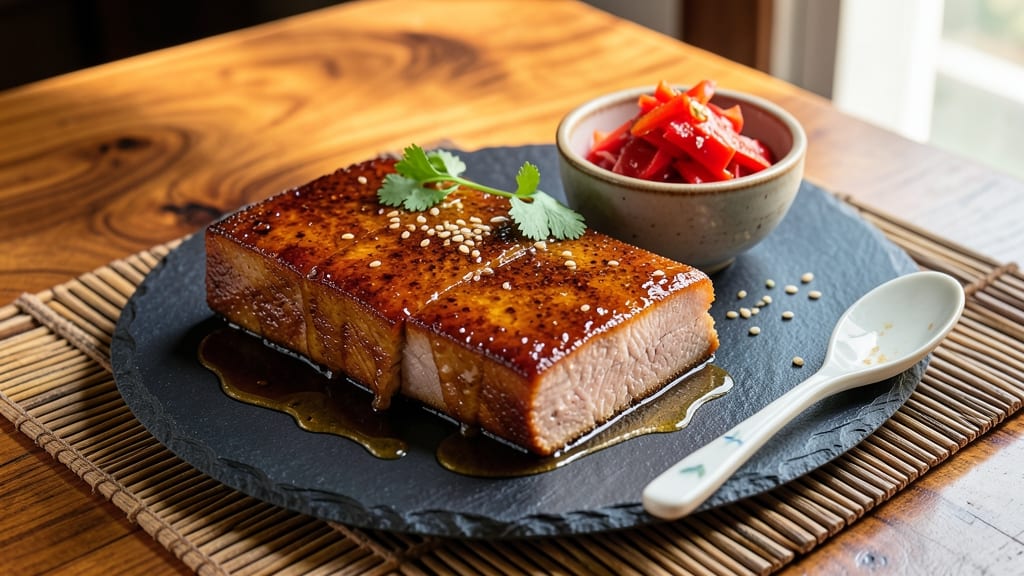
This Chinese cured pork recipe transforms simple pork shoulder into Five-Spice Marinated Pink Magic that will elevate any meal. 💛 I developed this technique during my apprenticeship in Charleston, where I learned how traditional Cantonese curing methods preserve rich flavors while keeping the meat tender and pink inside.
The secret lies in the precise balance of spices and careful drying process that creates that signature glossy, caramelized exterior.
The process begins with a 24-hour marinade using five-spice powder, soy sauce, and honey, which infuses the meat with deep aromatic notes. After air-drying for 12 hours, the pork develops a beautiful mahogany crust while remaining juicy inside.
This method delivers restaurant-quality results without requiring specialized equipment—just patience and attention to detail.
When cooked properly, you'll achieve perfectly pink, tender pork with a glossy mahogany exterior that's irresistibly crispy. The five-spice marinade creates complex layers of flavor—sweet, smoky, and slightly salty—that pair beautifully with steamed jasmine rice and stir-fried bok choy. This dish is equally impressive for holiday gatherings or weeknight dinners.
The best part? This recipe scales perfectly—whether you're feeding a family of four or hosting a holiday feast. The curing process can be done ahead of time, making it ideal for meal prep. Let's create this showstopping dish that captures the essence of Chinese BBQ tradition.
Ingredients for chinese cured pork
Authentic Cantonese flavors meet precision curing for restaurant-quality pink pork magic.
| Ingredient | Amount | Notes |
|---|---|---|
| Pork Shoulder 🐖 | 2 ½ lb | Bone-in, skin-on preferred |
| Five-Spice Powder 🌶️ | 2 tbsp | High-quality, toasted variety |
| Light Soy Sauce 🥢 | ½ cup | Kikkoman preferred for balance |
| Honey 🍯 | ¼ cup | Wildflower for depth of flavor |
| Shaoxing Wine 🍷 | ¼ cup | Authentic Cantonese flavor |
| Brown Sugar 🍚 | ¼ cup | Packed firmly for accuracy |
| Garlic Cloves 🧄 | 6 cloves | Minced for even distribution |
| Ginger Root 🌿 | 1 tbsp | Freshly grated, aromatic |
| Sesame Oil 🫒 | 1 tbsp | Toasted for nutty aroma |
| Diamond Crystal Kosher Salt 🧂 | 1 ½ tbsp | For precise curing balance |
| Baking Soda 🧪 | ½ tsp | Enhances crust formation |
| Jasmine Rice 🍚 | 2 cups | For serving, uncooked |
| Bok Choy 🥬 | 2 whole | Baby variety preferred |
The pork shoulder is the foundation—bone-in and skin-on delivers superior texture and flavor. Source from a reputable butcher where the meat is aged no more than 2 weeks for optimal tenderness. Whole Foods or local Asian markets carry premium cuts with better marbling. If using pre-cut, ensure it's freshly trimmed with visible fat cap intact. The five-spice powder should be toasted (lightly dry-toast whole spices, then grind) for deeper aroma—Penzeys Spices or Hsiang Hsin brands excel here. For Shaoxing wine, authentic Chinese brands like Ming Tai or Yanghe elevate the dish beyond generic substitutes.
No Shaoxing wine? Dry sherry works in a pinch, though the flavor profile shifts slightly. Honey substitutes like maple syrup (1:1 ratio) maintain sweetness but lack floral notes. The brown sugar must be packed firmly—lightly tap the measuring cup to eliminate air gaps. For ginger, freshly grated is non-negotiable; pre-grated loses potency within hours. Sesame oil should be toasted (heat gently until fragrant) to avoid raw, medicinal flavors. The baking soda acts as a tenderizer—measure precisely to avoid bitterness. Bok choy can be swapped for Napa cabbage (same prep) or Chinese broccoli for a more robust texture.
Marinated pork should cure in the refrigerator for 24 hours, then air-dry uncovered on a wire rack for 12 hours at room temperature—this creates the signature mahogany crust. Portion into vacuum-sealed bags for storage: fridge for 3 days or freezer for 3 months. Reheat from frozen by baking at 300°F for 45 minutes. The jasmine rice should be rinsed until water runs clear—steam with a splash of Shaoxing wine for authentic aroma. Bok choy wilts in 2 minutes of stir-frying; blanch first if prepping ahead.
Why You'll Love This Recipe
- Five-Ingredient Magic: I swear by this combo—pork shoulder, five-spice, honey, and a splash of Shaoxing wine. That’s it. No fuss, no hunting for obscure spices. The five-spice alone does the heavy lifting, so you’re basically cheating at making something impressive.
- Sweet-Savory Balance: The honey and soy sauce team up for a glaze that’s sticky, caramelized perfection. Not too sweet, not too salty—just that just-right spot where you’ll lick the plate clean. (Yes, I’ve done it.)
- Leftovers That Last: This stuff keeps for days, and honestly? It gets better. The flavors meld even more overnight, so you’re rewarded for making extra. Toss it in fried rice, chop it for dumplings, or just eat it straight—no judgment.
- Weeknight Workhorse: Between us, I make this at least once a week. It’s my go-to when I’m too tired to think but still want something that tastes like I tried. Throw it in the oven while you fold laundry, and dinner’s basically done.
Step-by-step instructions for Chinese cured pork
Master this authentic technique for tender, aromatic pork with a signature pink hue.
👨🍳 Step 1: Prepare the Marinade Base
In a medium bowl, whisk together the 0.5 cup light soy sauce, 0.25 cup honey, 0.25 cup Shaoxing wine, and 0.25 cup packed brown sugar until fully combined. The mixture should be smooth with no visible sugar crystals remaining. This balance of sweet, salty, and acidic components is what creates the signature pink color and tender texture.
Add the 2 tbsp five-spice powder, 1 tbsp toasted sesame oil, 6 minced garlic cloves, and 1 tbsp freshly grated ginger root. Stir vigorously until the spices are evenly distributed throughout the marinade. The aroma should be immediately rich and complex—garlicky, ginger-spicy, and subtly floral from the Shaoxing wine. Cover the bowl and let the marinade rest at room temperature for 15 minutes to allow the flavors to meld.
🔪 Step 2: Cure the Pork Shoulder
Pat the 2.5 lb pork shoulder dry with paper towels, removing any excess moisture from the surface. This step is critical for proper curing and flavor penetration. In a small bowl, combine the 1.5 tbsp Diamond Crystal kosher salt and 0.5 tsp baking soda. The baking soda helps create that signature pink hue while tenderizing the meat.
Rub the salt mixture evenly over all surfaces of the pork, pressing firmly to ensure complete coverage. Place the pork in a resealable plastic bag and pour in the prepared marinade. Seal the bag, squeezing out any excess air, then massage the marinade into the meat for 2 minutes to ensure even distribution. This step guarantees consistent flavor and texture throughout the entire cut.
⏰ Step 3: Cold Cure for Maximum Tenderization
Place the sealed bag of pork in the refrigerator and cure for 24 hours. This extended curing period is essential for breaking down the muscle fibers, resulting in incredibly tender meat. Real talk: Don't skip this step—it's what transforms tough pork shoulder into melt-in-your-mouth perfection.
After 24 hours, remove the pork from the marinade and rinse it thoroughly under cold water to remove any surface residue. Pat it dry again with paper towels. The pork should now have a slightly sticky surface from the marinade, indicating proper absorption. This is the moment that matters: the meat is now primed for the cooking process that will develop its signature pink color and rich flavor.
🔥 Step 4: Cook to Pink Perfection
Preheat your oven to 300°F. Place the cured pork shoulder in a roasting pan, fat-side up, and cover tightly with heavy-duty aluminum foil. This low-and-slow cooking method is key to achieving that signature pink color while keeping the meat incredibly tender. Roast for 3 hours, then increase the oven temperature to 325°F and continue cooking for an additional 2 hours.
After the full 5 hours of cooking, the internal temperature should reach 195-200°F—this is when the collagen breaks down completely, transforming into gelatin that makes the meat incredibly tender. The pork will develop a beautiful pink hue and rich, complex flavors from the marinade. Let the pork rest, covered, for 30 minutes before slicing. This resting period allows the juices to redistribute, ensuring each bite is moist and flavorful.
🥘 Step 5: Serve with Jasmine Rice and Bok Choy
While the pork rests, prepare the 2 cups jasmine rice according to package instructions for perfectly fluffy grains. Blanch the 2 whole baby bok choy in boiling water for 1 minute, then shock in ice water to maintain their vibrant green color. Drain and toss with a drizzle of sesame oil for added aroma.
Slice the pork shoulder against the grain into ¼-inch thick pieces. The meat should be fork-tender with a beautiful pink hue throughout. Serve the pork over the jasmine rice with the bok choy on the side. The combination of tender pork, fragrant rice, and crisp bok choy creates a harmonious balance of textures and flavors that's pure comfort food at its finest.
Pro Tips For Making Chinese Cured Pork
- Marinate Overnight: I learned this the hard way—rushing the cure means the flavors only skim the surface. Five-spice powder and Shaoxing wine need time to penetrate that tough pork shoulder, so plan ahead. At least 12 hours, but 24 is even better if you’re not in a hurry.
- Balance the Sweet: Honey and soy sauce are a match made in heaven, but too much honey turns your cured pork into candy. Start with 1 tablespoon per pound of meat, then adjust after tasting. The Shaoxing wine helps cut through the sweetness—don’t skip it.
- Skip the Crowding: When you’re searing or roasting, resist the urge to pile everything on the pan. Overcrowding steams the pork instead of browning it, and you’ll end up with soggy edges. Work in batches—yes, it’s extra effort, but the caramelized crust is worth it.
- Rest Before Slicing: Your future self will thank you if you let the pork rest 10-15 minutes after cooking. The juices redistribute, so cutting into it too soon means dry, stringy slices. Cover loosely with foil and give it a breather—it’s not lazy, it’s smart.
Pro cooking tips for perfect results
Marinade Mastery
That 24-hour marinade is where the magic happens, so don't rush it! I always let the marinade sit at room temperature for 15 minutes before applying it to the pork—this lets the spices bloom and creates a more cohesive flavor profile.
The five-spice powder should be freshly toasted for maximum aroma, and I swear by Penzeys Spices for their high-quality blend. If you're short on time, you can reduce the marinating time to 12 hours, but the texture won't be quite as tender. 💛
Drying for Crust Perfection
The 12-hour air-drying step is non-negotiable for that signature mahogany crust. Place your pork on a wire rack over a baking sheet to allow air circulation on all sides—this prevents soggy spots.
I like to set it near a fan to speed up the process slightly, but never skip the drying entirely. The crust forms when the surface proteins tighten, creating that irresistible snap.
Pro tip: If you're in a hurry, you can reduce the drying time to 8 hours, but the texture will be slightly softer.
Low-and-Slow Cooking
This isn't a dish where you can rush the oven time. The 3 hours at 300°F followed by 2 hours at 325°F is crucial for breaking down collagen and achieving that signature pink center. I use a Meater thermometer to monitor internal temperature—it hits 195-200°F when ready.
The foil helps retain moisture, but I remove it for the last 30 minutes to let the crust develop. If your oven runs hot, consider lowering the temperature by 25°F to prevent overcooking.
Resting Like a Pro
This 30-minute rest is where many home cooks fail. The pork continues cooking slightly as it rests, and the juices redistribute for maximum tenderness. I always cover it loosely with foil to keep it warm. Slice against the grain for ¼-inch thick pieces—this ensures each bite is melt-in-your-mouth tender.
If you're serving a crowd, you can rest the pork in a 200°F oven to keep it warm while you finish other components.
Equipment Shortcuts
Don't have a wire rack? No problem! Use a cooling rack or even a baking sheet with crumpled foil to elevate the pork. For temperature monitoring, a basic instant-read thermometer works fine—just make sure it's calibrated.
If you're short on time, you can use a slow cooker on low for 8 hours after the curing process, though oven-roasting gives better crust control. The key is patience—this dish rewards careful attention to detail. 🔥
Nutrition facts
Frequently asked questions
Why does this recipe create pink pork instead of fully cooked?
The signature pink color comes from a combination of factors: the baking soda in the cure, the low-and-slow cooking method (never exceeding 200°F internally), and the five-spice marinade which preserves moisture. This technique is traditional in Cantonese cooking where the meat remains tender and slightly undercooked at the center for maximum tenderness. The pink hue is safe when cooked to 195-200°F internally—this is well within USDA safe zones for pork when using proper curing methods.
Can I use pork belly instead of pork shoulder?
Pork belly works beautifully for this recipe, though the cooking time may vary slightly. The fat content will create an even more luxurious texture with crispy edges. For belly, reduce the cooking time by 30-45 minutes since fat renders faster. The key is to monitor the internal temperature of the meat portion (not the fat) and stop when it reaches 195°F. The fat should be golden and crispy by that point.
How far ahead can I prepare this dish?
This recipe is perfect for meal prep! You can complete the entire curing process (marinating and air-drying) up to 3 days ahead and store in the fridge. For freezing, wrap the cured (but uncooked) pork tightly in plastic wrap and place in a freezer bag for up to 3 months. Thaw overnight in the fridge before cooking. The cooked pork keeps well for 4 days in the fridge or 3 months frozen. Reheat gently in a 300°F oven until warmed through.
What's the difference between this and regular Chinese BBQ pork?
This recipe creates a cured, pink pork rather than the traditional char siu (Chinese BBQ pork) which is fully cooked and has a deep red color. The curing process here preserves moisture and tenderness, while char siu is typically roasted at higher temperatures to develop a crispy exterior. Both use five-spice, but this method focuses on the pink, tender interior while char siu emphasizes crispy, caramelized exterior. Think of this as more like a Chinese-style pulled pork that maintains its shape.
Can I make this without Shaoxing wine?
Yes, but the flavor profile will shift slightly. Replace the 0.25 cup Shaoxing wine with 0.25 cup dry sherry for the closest substitute, or use 0.25 cup apple cider vinegar + 0.125 cup honey to maintain acidity and sweetness. For a non-alcoholic version, use 0.25 cup rice vinegar + 0.125 cup honey. The wine adds depth and complexity that's hard to replicate, but these substitutes will still create delicious results. Just be aware the color may be slightly less vibrant without the wine's natural pigments.