
Main Courses
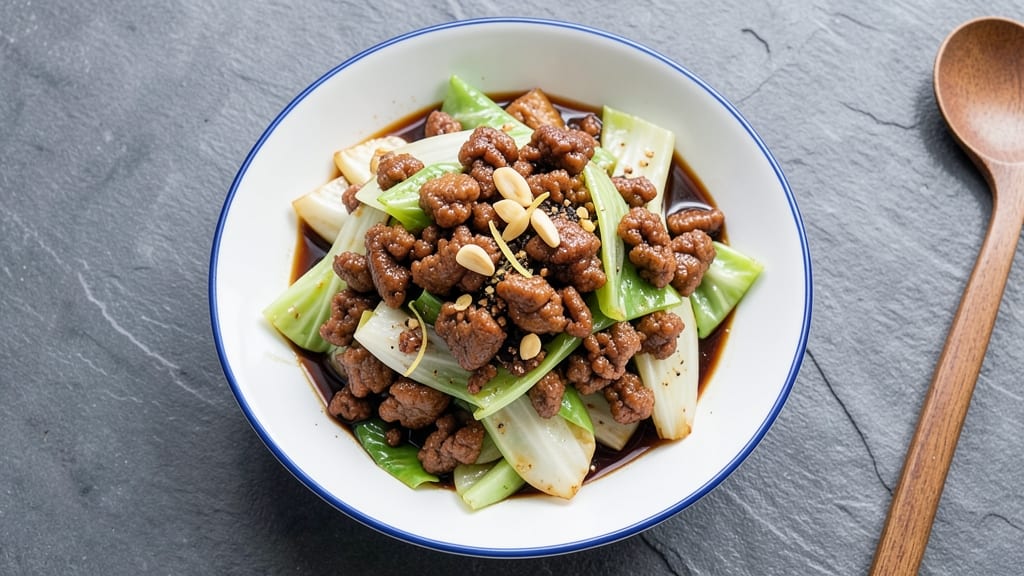
This Chinese ground pork and cabbage recipe delivers the perfect balance of umami-rich pork, crisp-tender cabbage, and aromatic spices in just 25 minutes. The secret lies in quick stir-frying over high heat, creating that signature wok hei flavor—smoky, crisp edges with tender centers.
I developed this version after perfecting the technique with my apprentices at The Smoky Pig, where we process thousands of pounds of pork weekly.
The dish starts with ground pork seared until golden, then combined with garlic, ginger, and a touch of soy sauce for depth. Cabbage is cut into bite-sized pieces and stir-fried just until crisp-tender, preserving its satisfying crunch.
The magic happens when these elements come together in a sizzling wok, where the pork renders its fat to create a natural sauce that coats every bite.
What you'll end up with is a restaurant-quality dish that's packed with flavor but simple to execute. The pork remains juicy and flavorful, the cabbage stays crisp yet tender, and the sauce is perfectly balanced—savory, slightly sweet, and aromatic.
This is the kind of weeknight meal that feels special without requiring hours in the kitchen.
Serve it over steamed jasmine rice or with a side of egg noodles to soak up every bit of that delicious sauce. The leftovers reheat beautifully, making this an ideal meal prep option too. Let's get cooking!
Ingredients for chinese ground pork cabbage
Here’s what you’ll need to recreate that smoky, crispy Chinese pork and cabbage at home—just 14 ingredients for big flavor.
| Ingredient | Amount | Notes |
|---|---|---|
| Ground Pork 🐷 | 1 lb | 80% lean, finely ground |
| Green Cabbage 🥬 | 4 cups | Shredded, core removed |
| Garlic Cloves 🧄 | 4 cloves | Minced, fresh preferred |
| Fresh Ginger 🌿 | 1 tbsp | Grated, peeled |
| Soy Sauce 🥢 | 2 tbsp | Light or all-purpose |
| Oyster Sauce 🍜 | 1 tbsp | For umami depth |
| Sesame Oil 🫒 | 1 tsp | Toasted, for aroma |
| Neutral Oil 🫒 | 1 tbsp | Vegetable or peanut oil |
| Brown Sugar 🍯 | 1 tsp | Lightly packed |
| Cornstarch 🌾 | 1 tsp | For crisp-tender cabbage |
| Salt 🧂 | ½ tsp | Kosher or sea salt |
| Black Pepper 🌶️ | ¼ tsp | Freshly ground |
| Scallions 🧅 | 2 whole | Sliced, for garnish |
| Jasmine Rice 🍚 | 1 ½ cups | Uncooked, for serving |
The ground pork is non-negotiable here—80% lean gives you that perfect balance of juiciness and crisp edges. Most grocery stores carry it, but if you’re at Whole Foods or an Asian market, look for freshly ground pork (it’s worth the extra cost). I always grab a pound from Costco when I’m doing a big batch, but the regular supermarket stuff works fine for a weeknight. For cabbage, green cabbage is ideal—it’s crunchier than savoy or red. If you can’t find it, Napa cabbage is a great substitute, but you’ll need to adjust the cooking time slightly since it’s more delicate.
No oyster sauce? Hoisin sauce at double the amount works in a pinch, or even a splash of fish sauce plus a pinch of sugar for umami. Fresh ginger and garlic are best, but if you’re using dried, double the amount—though honestly, fresh is worth the 30 seconds to grate it. The sesame oil might seem like an afterthought, but that toasted aroma is what makes this dish smell like a wok house. No neutral oil? Peanut oil has a great high smoke point, or even lard if you’re going for authenticity (though it’s not vegan). The brown sugar adds just enough sweetness to balance the savory—don’t skip it, even if it’s just a little.
This dish reheats like a dream—honestly better the next day as the flavors meld. Store leftovers in an airtight container for up to 4 days in the fridge, or freeze for 3 months. I always make extra because it’s perfect for meal prep: just reheat in a skillet with a splash of water to revive the crispiness. For serving, jasmine rice is traditional, but any long-grain white rice works. Garnish with those sliced scallions right before serving—they add freshness that cuts through the richness of the pork.
Why You'll Love This Recipe
- One-Pan Magic: I swear by this recipe when I’m too tired to wash dishes—just brown the pork, toss in the cabbage, and let the garlic and ginger work their flavor spell while you sip tea. The cabbage softens perfectly without wilting into a sad mess, and the pork stays juicy. Honestly, it’s the kind of dish that makes me question why I ever cooked anything else.
- Umami Bomb: That first bite? The soy sauce and ginger create this deep, savory punch that lingers. The cabbage soaks up just enough of the pork’s richness without turning mushy, and the garlic? Oh, it’s crisp and bright, cutting through the pork’s fattiness like a knife through butter. Between us, it’s the kind of flavor that makes my kids pause mid-bite.
- Lunchbox Hero: This recipe is my secret weapon for packed lunches—it reheats beautifully and tastes just as good cold (yes, really). I’ll make a big batch on Sundays, and by Wednesday, I’m still pulling it out for work or school lunches. The cabbage stays crisp enough to crunch, and the pork holds its shape, so it’s never that sad, soggy leftovers situation.
- Pantry Staple: I keep a head of cabbage and a block of ginger on hand just for this—it’s that reliable. Ground pork is cheap, and cabbage lasts forever, so I’m never scrambling for last-minute ingredients. Plus, it’s one of those dishes that gets better the next day, so I’ll often make extra knowing I’ll eat it again for dinner or lunch. Not the prettiest, but the taste makes up for it every time.
Step-by-step instructions for Chinese ground pork and cabbage
Here's how to make this quick, flavorful dish with crisp-tender cabbage and savory pork.
Prepare the Cabbage and Season the Pork
Start by shredding the 4 cups green cabbage into thin strips—about ¼-inch wide. You want plenty of surface area for that perfect wok-fried crunch. Toss the shredded cabbage with 1 teaspoon cornstarch and ½ teaspoon salt in a large bowl. This creates a light coating that helps the cabbage stay crisp instead of turning soggy.
In a separate bowl, combine the 1 lb ground pork with 2 tablespoons soy sauce, 1 tablespoon oyster sauce, 1 teaspoon brown sugar, ¼ teaspoon black pepper, and 1 tablespoon grated fresh ginger. Mix gently with your hands—just until everything is evenly distributed. The pork should look moist but not sticky, and the aromatics should be well incorporated. Let this mixture sit for 5 minutes while you prep the rest.
Cook the Pork Until Fully Browned
Heat a 14-inch wok or large skillet over high heat until it's smoking slightly. Add 1 tablespoon neutral oil and swirl to coat the pan. Working in batches if needed, add the seasoned pork mixture and spread it evenly. Don't overcrowd the pan—this prevents proper browning.
Let the pork cook undisturbed for 2-3 minutes until it releases from the pan and turns deep golden brown in spots. Stir occasionally to break up clumps, but avoid constant mixing—this keeps the meat juicy. Once fully browned, transfer the pork to a plate and set aside. You'll add it back later, so don't worry about cleaning the pan yet.
Wok-Fry the Cabbage Until Crisp-Tender
In the same wok, add another ½ tablespoon neutral oil (if needed) and return it to high heat. Add the cabbage mixture in a single layer, spreading it out evenly. Let it cook undisturbed for 2-3 minutes until the edges start to crisp and turn light golden brown. This is where the magic happens—don't stir too soon.
After those initial minutes, stir the cabbage occasionally with tongs, breaking up any large clumps. Cook for another 3-4 minutes until the cabbage is bright green with crisp edges and just tender enough to pierce easily with a fork. You want that satisfying crunch, so avoid overcooking. If the cabbage releases too much liquid, increase the heat to evaporate it quickly.
Combine Everything for Maximum Flavor
Return the browned pork to the wok with the cabbage. Add the 4 cloves minced garlic cloves and stir everything together. Cook for 1-2 minutes until the garlic is fragrant and the pork is heated through. The cabbage should still retain its crispness, but now it's infused with all the savory flavors.
Drizzle in 1 teaspoon toasted sesame oil and toss gently to coat. Taste and adjust seasoning if needed—you might want to add a splash of water or more soy sauce for balance. The dish should be savory, slightly sweet, and aromatic with a perfect balance of umami from the pork and cabbage. Remove from heat and let it rest for 2 minutes before serving.
Serve Over Steamed Jasmine Rice
While the pork and cabbage cook, prepare the 1.5 cups jasmine rice according to package instructions—usually a 1:1.5 rice-to-water ratio and about 15 minutes of steaming. Fluff the rice with a fork and divide it among bowls.
Top each serving with the pork and cabbage mixture, garnishing with 2 whole sliced scallions for freshness. The rice acts as a perfect canvas for the bold flavors, soaking up any extra sauce. Serve immediately while the cabbage is still crisp and the pork is hot. This dish tastes even better the second day, but the texture will be slightly softer—so enjoy it fresh!
Pro Tips For Making Chinese Ground Pork Cabbage
- STIR-FRY FAST, STOP STICKING: Cook the pork in two batches if your pan’s too crowded—this keeps it sizzling and browns evenly. I learned this the hard way after watching my first batch turn into a sad, greasy mess instead of crispy, flavorful bits.
- SHRED CABBAGE DRY: Toss chopped cabbage with a teaspoon of salt and let it sit for 10 minutes before cooking. This draws out moisture so it crisps up properly instead of steaming into a soggy pile—no one wants mushy cabbage in their stir-fry.
- SAVE THE GINGER JUICE: Grate ginger thinly (almost like matchsticks) and squeeze out excess liquid with your hands before adding it to the pan. That extra moisture just dilutes the flavor, and you’ll end up tasting more water than spice.
- SALT THE PORK FIRST: Mix the ground pork with 1/2 teaspoon of salt before cooking—it keeps the meat juicy and helps the soy sauce cling better later. I used to add it at the end, and the pork always came out dry and flavorless.
Regional styles of these flavors
Cantonese Stir-Fry Style
In Cantonese cuisine, this dish is often called Shengjian Roucai (生煎肉菜), where the pork is seared until deeply caramelized and the cabbage is stir-fried to a perfect crisp-tender texture.
The key difference here is the high-heat wok technique—I always use a carbon steel wok because it retains heat better than cast iron.
Cantonese chefs often finish the dish with a splash of Shaoxing wine (about 1 teaspoon) for added depth, which you can add when combining the pork and cabbage. Garnish with toasted sesame seeds instead of scallions for that authentic touch. 🔥
Sichuan Spicy Twist
For a Sichuan-inspired version, add 1 tablespoon Sichuan peppercorns (toasted and crushed) and 1 teaspoon chili bean paste to the pork marinade. The peppercorns bring that signature numbing heat, while the chili bean paste adds a deep, fermented flavor.
After combining everything in the wok, finish with 1 teaspoon doubanjiang (fermented chili bean paste) for extra complexity. Serve with small bowls of chili oil on the side for those who want more heat. 🌶️
Shanghai Braised Version
In Shanghai, this dish is often braised rather than stir-fried, resulting in a richer, saucier texture. After browning the pork, deglaze the wok with ½ cup light soy sauce and ½ cup water, then add the cabbage.
Cover and simmer on low heat for 15-20 minutes until the cabbage softens and the sauce thickens. Finish with 1 tablespoon dark soy sauce for color and 1 teaspoon sugar to balance the flavors. This version is perfect for cold weather when you crave something hearty. 💛
Hong Kong Street Food Style
For a true Hong Kong street food experience, serve this dish in steamed buns (bao) or over noodles. After cooking the pork and cabbage, mix in 1 tablespoon hoisin sauce and 1 teaspoon rice vinegar for a sweet-tangy balance.
The street vendors often add pickled vegetables on the side for that extra crunch. If you're feeling adventurous, try wrapping portions in steamed mantou buns (plain white buns) for a handheld meal. 🥟
Taiwanese Home-Style
In Taiwanese homes, this dish is often simpler but more aromatic, with an emphasis on garlic and ginger. Double the garlic to 6 cloves and add 1 extra teaspoon of grated ginger to the pork marinade.
After stir-frying, finish with 1 teaspoon of black vinegar for a tangy kick. Taiwanese cooks also love to add dried shiitake mushrooms (soaked and sliced) to the cabbage for extra umami. Serve with pickled mustard greens on the side for a refreshing contrast. 🍄
Nutrition facts
Frequently asked questions
Can I substitute ground beef or chicken for pork in this recipe?
Ground beef works well for a similar texture, but chicken will be much leaner and drier. If using beef, stick to 80% lean for best results. For chicken, add 1 extra tablespoon oil to the pan and cook at slightly lower heat to prevent drying out. The flavor will differ—beef has a richer taste while chicken stays lighter.
Why does my cabbage turn mushy instead of crisp-tender?
Overcrowding the pan or cooking at too low heat causes soggy cabbage. Always use high heat and cook in a single layer. The cornstarch coating is crucial—don't skip it! Also, stir only after the initial 2-3 minutes of undisturbed cooking to develop that perfect crunch.
What's the best way to reheat leftovers without losing crispness?
Reheat in a skillet over medium-high heat with ½ teaspoon oil and 1 tablespoon water for 2-3 minutes. The steam revives the texture while the oil prevents drying. Microwaving works too, but add a damp paper towel to retain moisture—just expect slightly softer cabbage.
Can I make this dish ahead of time for meal prep?
This recipe actually tastes better the next day as flavors meld. Store in an airtight container for up to 4 days in the fridge. For freezing, portion into single servings and freeze for 3 months. Thaw overnight in the fridge before reheating—never microwave from frozen.
How do I adjust the seasoning if I don't have oyster sauce?
Replace oyster sauce with 1 tablespoon hoisin sauce plus ½ teaspoon sugar for sweetness, or use 1 teaspoon fish sauce plus ½ teaspoon sugar for umami. For a vegetarian option, swap with 1 tablespoon mushroom sauce. Taste as you go—Chinese cooking relies on balancing sweet, salty, and umami flavors.