
Main Courses
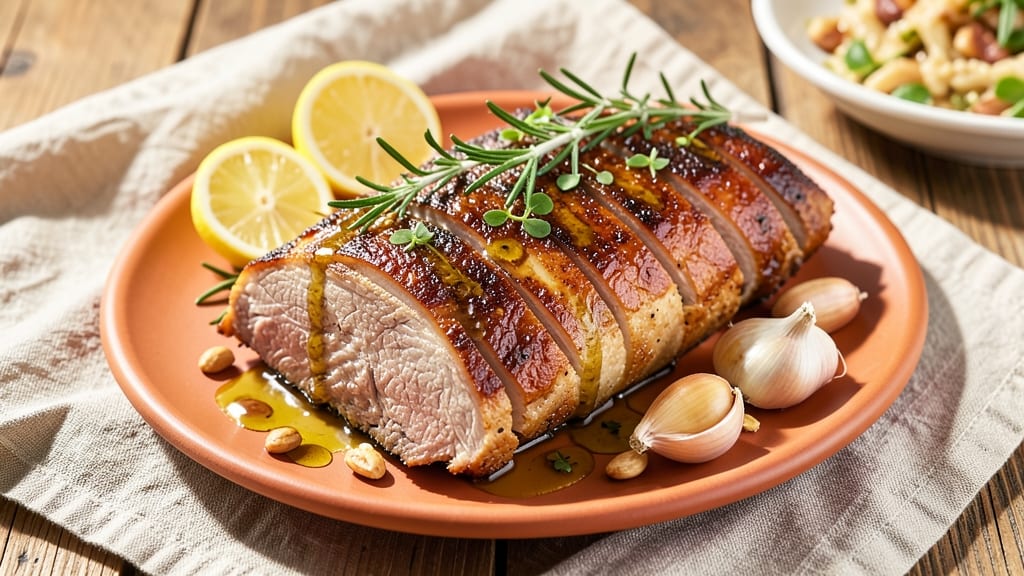
This Mediterranean pork loin recipe delivers restaurant-quality results with just a few simple ingredients and a technique I've perfected over years of cooking for crowds. The secret lies in a bright lemon-herb marinade that tenderizes while building flavor, combined with high-heat roasting that creates those coveted crispy edges.
I developed this recipe during a particularly busy week when I needed a showstopper main that required minimal hands-on time but maximum impact.
The magic happens when you let the marinade work its magic for at least 4 hours (overnight is even better), allowing the citrus and herbs to penetrate deeply. Roasting at 425°F ensures that crispy bark you can't get with slow cooking, while the interior remains perfectly tender.
What you'll end up with is a golden-brown roast with caramelized edges and juicy, herb-infused meat that practically falls apart.
This dish pairs beautifully with roasted Mediterranean vegetables and a simple couscous salad, creating a complete meal that's elegant enough for company but simple enough for weeknight dinners. The bright lemon and fresh herbs cut through the richness of the pork, balancing each bite perfectly.
The best part? It's a technique that works equally well for pork tenderloin or even chicken.
Serve with a crisp white wine or refreshing lemon-herb cocktail to complete the Mediterranean experience. The aroma alone will have everyone gathering at your table, and the first bite will have them asking for seconds. Let's get cooking—this is pork loin at its finest.
Ingredients for mediterranean pork loin
Bright lemon, fragrant herbs, and crispy edges—this Mediterranean pork loin needs just a handful of ingredients.
| Ingredient | Amount | Notes |
|---|---|---|
| Pork Loin 🥩 | 2 ½ lb | Center-cut, 1.5-inch thick |
| Extra-Virgin Olive Oil 🫒 | ½ cup | High-quality, fruity flavor |
| Fresh Lemon Juice 🍋 | ½ cup | From 2-3 lemons, freshly squeezed |
| Garlic Cloves 🧄 | 8 cloves | Minced, fresh preferred |
| Fresh Rosemary 🌿 | ¼ cup | Chopped, stems removed |
| Fresh Thyme 🌿 | ¼ cup | Leaves only, chopped |
| Fresh Oregano 🌿 | ⅛ cup | Chopped, or 1 tbsp dried |
| Dried Oregano 🌿 | 1 tsp | Substitute for fresh if needed |
| Salt 🧂 | 2 tsp | Diamond Crystal preferred |
| Black Pepper 🌶️ | 1 tsp | Freshly ground preferred |
| Honey 🍯 | 1 tbsp | For glaze, optional |
| Mustard 🥬 | 1 tbsp | Dijon for extra flavor |
| Red Wine Vinegar 🍷 | 1 tbsp | For tangy depth |
The pork loin is the star, so pick a center-cut piece—it's more tender and holds up better to high heat. I always grab mine from Whole Foods or my local butcher shop where they can cut it to the right thickness. Thicker than 1.5 inches? Trim it down—you want even cooking. The fresh herbs make all the difference here, but if you're short on time, dried oregano at one-third the amount works in a pinch. Just don't skip the garlic—it's the backbone of that Mediterranean flavor. For the olive oil, Trader Joe's has a great affordable option, but spend a little more if you can for something with real fruity notes.
No fresh rosemary or thyme? Dried works at half the amount, but it won't have that same bright punch. Running low on lemon juice? Substitute lime juice—it's got a similar tang. The honey glaze is optional but worth it for that caramelized finish. If you don't have honey, maple syrup or agave will do. The Dijon mustard adds depth—regular yellow mustard works too, but you'll miss that extra layer of flavor. For the vinegar, balsamic works too, but red wine vinegar gives you that classic Mediterranean tang. Pro tip: Make the marinade ahead and let it sit in the fridge—it gets even more flavorful as it sits.
This roast tastes even better the next day, so make extra if you can. Store leftovers in an airtight container in the fridge for up to 4 days, or freeze for 3 months. The marinade itself keeps for 5 days in the fridge if you want to prep ahead. I always slice it against the grain for those perfect tender bites. Serve with roasted potatoes or a simple green salad to let the pork shine—it's rich enough to stand on its own.
Why You'll Love This Recipe
- One-Pan Magic: I swear by this recipe when I’m too tired to wash dishes. The pork sizzles in its own juices while the garlic and rosemary infuse the oil—no extra pans, no stress, just flavor that sticks to everything.
- Herb-Citrus Bomb: That bright lemon juice cutting through the richness of the pork? It’s like a Mediterranean vacation in your mouth. The rosemary adds earthy depth, and the olive oil ties it all together—simple ingredients, but the taste is next-level.
- Weeknight to Dinner Party: Make it for Tuesday night or impress guests on Saturday—same effort, different vibes. Slice it thin for wraps, serve it whole for a showstopper, or toss it into salads. It’s the kind of dish that works for both lazy and fancy moments.
- Leftovers That Don’t Suck: Between us, most pork leftovers turn dry. Not this. The lemon keeps it juicy, and the rosemary makes it taste even better the next day. I portion it out for lunches or reheat slices for sandwiches—zero guilt, all satisfaction.
Step-by-step instructions for Mediterranean pork loin roast
Here's how to create a juicy, herb-infused pork loin with perfectly crispy edges that'll impress everyone.
Prep the Pork Loin for Maximum Flavor
Start by patting the 2.5 lb pork loin completely dry with paper towels—this is crucial for crispy edges. I like to work in a well-ventilated area since pork can be a bit messy. Place the pork on a cutting board and make a few shallow slashes about ½-inch deep across the top, being careful not to cut all the way through. This helps the marinade penetrate deeper and creates more surface area for browning.
In a small bowl, whisk together ½ cup fresh lemon juice, 1 tbsp Dijon mustard, 1 tbsp red wine vinegar, and 1 tbsp honey until smooth. This bright, tangy marinade will infuse the pork with Mediterranean brightness. Pour it over the slashed pork and massage it into the cuts using your hands. Let it marinate at room temperature for 30 minutes while you prep the herb mixture.
Create the Herb Paste and Coat the Pork
In a food processor, pulse together 8 cloves minced garlic, ½ cup extra-virgin olive oil, ¼ cup chopped fresh rosemary, ¼ cup chopped fresh thyme, ⅛ cup chopped fresh oregano, 1 tsp dried oregano, 2 tsp salt, and 1 tsp black pepper until you have a coarse paste—don't over-process or it'll turn into a fine powder. The texture should be thick enough to cling to the pork but still spreadable.
Spread this herb paste all over the marinated pork, pressing it into the slashes and coating every inch of the surface. This ensures maximum flavor penetration and that beautiful golden crust. Wrap the pork loosely in plastic wrap and refrigerate for at least 4 hours (overnight is even better). The cold helps the flavors meld while keeping the pork tender.
Sear the Pork for Crispy Edges
Remove the pork from the fridge 30 minutes before cooking to bring it to room temperature. Preheat your oven to 400°F and heat a large oven-safe skillet over medium-high heat. Add the pork to the skillet and sear for 4-5 minutes per side until deep golden brown. You're looking for a crust that's almost caramelized—this is where all the flavor happens.
Here's the thing—don't move the pork around too much while searing. Let it develop that crust undisturbed. If it starts to smoke, reduce the heat slightly. Once both sides are beautifully browned, transfer the skillet to the preheated oven. This high-heat start creates that coveted crispy exterior while keeping the inside juicy.
Roast to Perfect Medium Doneness
Roast the pork for 20-25 minutes until the internal temperature reaches 145°F when measured with a meat thermometer in the thickest part. This should give you medium doneness—juicy on the inside with that crispy exterior. If your oven runs hot, you might need to reduce the temperature to 375°F after the first 10 minutes to prevent overcooking.
Real talk: The pork will continue cooking slightly after you remove it from the oven (carryover cooking), so it's better to pull it out when it's just shy of your target temperature. Tent it loosely with foil and let it rest for 10-15 minutes before slicing. This resting period is non-negotiable—it lets the juices redistribute so every slice stays moist and flavorful.
Slice and Serve with Pan Sauce
Once rested, slice the pork into ½-inch thick medallions against the grain for maximum tenderness. To make the pan sauce, place the skillet with the pork drippings over medium heat. Add ¼ cup water and scrape up all those delicious browned bits from the bottom of the pan. Simmer for 2-3 minutes until slightly thickened, then drizzle over the sliced pork.
Serve immediately with the crispy edges facing up so everyone can see that beautiful caramelization. The combination of bright lemon, aromatic herbs, and that perfect texture makes this Mediterranean pork loin a showstopper. Pair it with roasted vegetables or crusty bread to soak up all that flavorful pan sauce.
Pro Tips For Making Mediterranean Pork Loin
- Sear First, Then Roast: Don’t skip the high-heat sear in your skillet—this locks in those Mediterranean flavors and builds a crust that’ll make your pork loin taste like it came from a taverna. After 2-3 minutes per side on medium-high, pull it off the heat and let it sit for a full minute before transferring to the oven (yes, even if you’re impatient like me).
- Slice Garlic Thinly: I used to crush those cloves with the flat side of my knife, but thin slices actually caramelize better and melt into the pork without turning bitter. Aim for paper-thin slivers—about 1/16-inch—and toss them in the olive oil before searing so they soften into the meat instead of sitting as chunks.
- Don’t Overcrowd the Pan: Pork loin releases a ton of juices when seared, and if you pile everything in there, you’ll steam the meat instead of browning it. Work in batches if needed—start with just the pork, garlic, and rosemary sprigs, then add the lemon juice and any veggies after the initial sear.
- Rest Under Foil: Cutting into your pork loin right after roasting is how you end up with dry slices. Instead, transfer it to a foil-lined tray, tent loosely with more foil, and let it rest for 5-10 minutes. The residual heat keeps it juicy while you finish the pan sauce—trust me, your knife will thank you.
Troubleshooting this dish
Pork Too Dry?
Overcooking is the #1 reason pork loin turns out dry. Use a meat thermometer—pull the pork when it hits 140°F internal temp, then let it rest for 10-15 minutes.
The temperature will rise to 145°F during resting (carryover cooking). I've ruined many a pork loin by cutting into it too soon—patience pays off! 💪
Uneven Cooking?
Thickness matters! If your pork loin varies in thickness, trim it to 1.5 inches before cooking. For extra insurance, place thicker sections on the oven rack or a wire cooling rack over a baking sheet.
This allows heat to circulate evenly on all sides. I always test my oven's hot spots by baking a tray of cookies—if one side browns faster, rotate your pork halfway through.
Marinade Not Sticking?
Slash the pork ½-inch deep in a crosshatch pattern before marinating—this creates pockets for the marinade to penetrate. For extra adhesion, mix 1 tbsp cornstarch into your marinade before applying. The starch acts like a glue, helping the herbs and oils cling to the meat.
I learned this trick from my time in Charleston—it makes all the difference with fatty cuts like pork loin.
Crust Not Crispy?
High heat is key for that golden crust. Sear the pork in a cold skillet over medium-high heat—this ensures maximum contact and even browning. If your pork isn't getting crispy, try this pro move: After searing, broil for 2-3 minutes at the end of cooking.
Keep a close eye on it to avoid burning! A cast iron skillet works best for this technique.
Herb Flavor Weak?
Fresh herbs make all the difference—don't substitute dried 1:1. Use half the amount of dried herbs if you must, but fresh gives that bright, aromatic punch. For extra flavor, make an herb butter by mixing softened butter with chopped herbs and spread it on the pork before roasting.
I keep a stash of fresh rosemary and thyme from my garden—nothing beats homegrown herbs for flavor.
Pan Sauce Too Thin?
Deglaze properly by adding ¼ cup water or white wine to the hot pan after removing the pork. Scrape vigorously with a wooden spoon to lift all those flavorful browned bits (fond). Simmer for 3-5 minutes until slightly reduced.
For a thicker sauce, mix 1 tsp cornstarch with 1 tbsp cold water, then stir it into the pan sauce at the end. This trick works wonders for any pan sauce!
Nutrition facts
Frequently asked questions
Can I use pork tenderloin instead of pork loin?
Yes! Pork tenderloin works beautifully—it's leaner and cooks faster, so reduce the marinating time to 2-3 hours and roast at 375°F for just 15-20 minutes until it reaches 145°F internally. The herb crust will still form perfectly, but slice it thinner (¼-inch) since tenderloin is more delicate. The lemon-herb marinade enhances its natural tenderness.
How do I adjust this for a crowd?
Double the recipe and use a large roasting pan or two 12-inch cast iron skillets for even browning. For 8-10 servings, increase to 5 lb pork loin and marinate 6-8 hours. Roast at 400°F for 30-35 minutes, checking temp with a thermometer. Keep the pork warm in a 200°F oven while slicing. Pro tip: Use a meat slicer for clean, even cuts.
What's the best way to reheat leftovers?
Slice leftovers and reheat in a skillet over medium heat with 1 tbsp olive oil and 2 tbsp water for 3-4 minutes until warmed through. Never microwave—it makes pork tough. For whole slices, wrap in foil and bake at 325°F for 10-12 minutes until internal temp hits 165°F. The crispy edges won't survive, but the meat stays juicy.
Can I grill this instead of roasting?
Preheat grill to medium-high (400°F) and oil the grates well. Sear the marinated pork for 4-5 minutes per side until browned, then move to indirect heat. Cover and cook 15-20 minutes, turning occasionally, until 145°F internal. For extra smoky flavor, add ½ cup wood chips (cherry or hickory work best) to the grill. Finish with a quick broil if you want crispier edges.
Why does your recipe call for lemon juice instead of wine?
The lemon juice creates a bright, fresh flavor that cuts through the richness of the pork, while wine adds depth but can overpower the delicate herb notes. For a wine version, substitute ¼ cup dry white wine for the lemon juice and add 1 tbsp honey to balance acidity. The wine version works beautifully with roasted peppers or olives as a side.